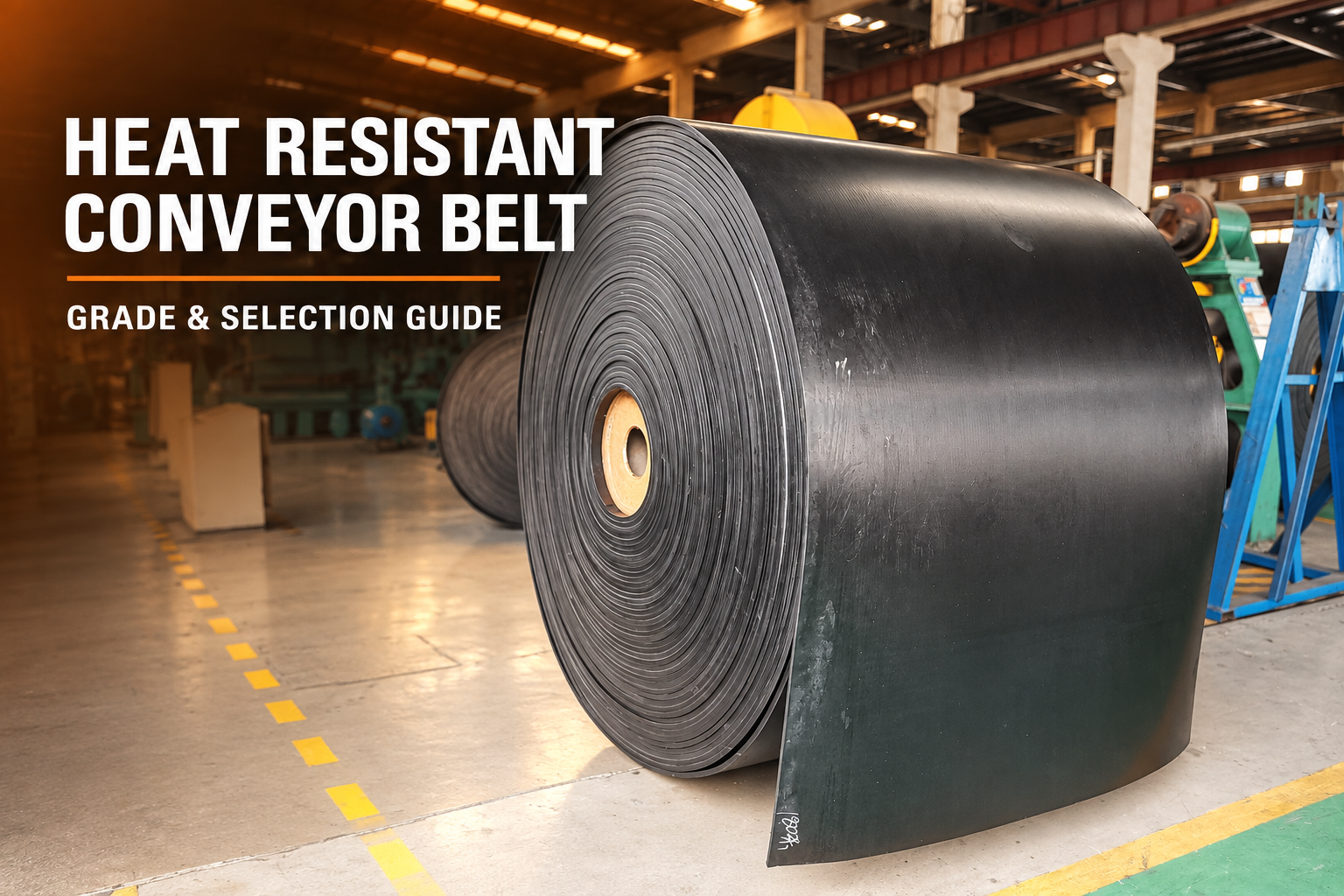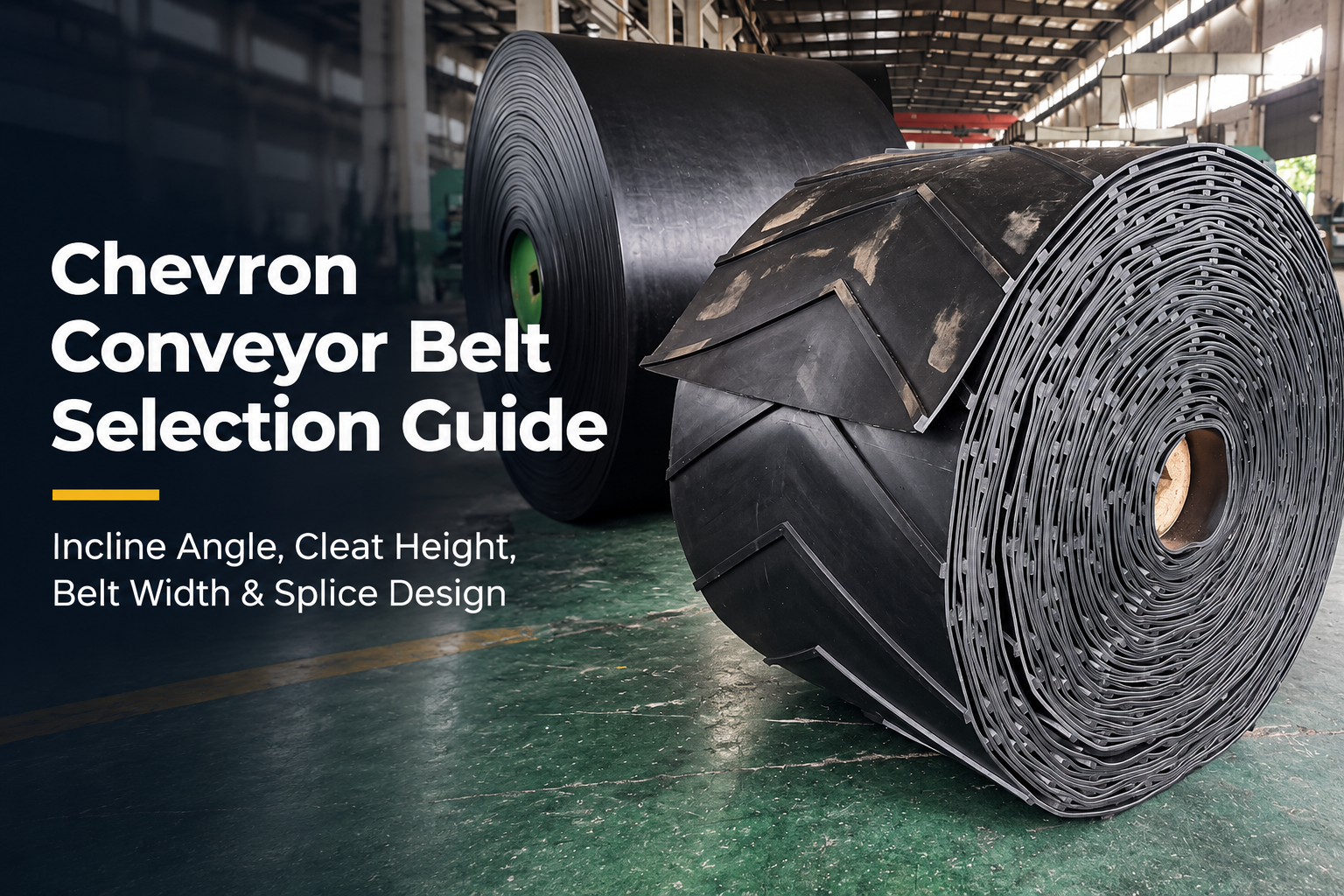

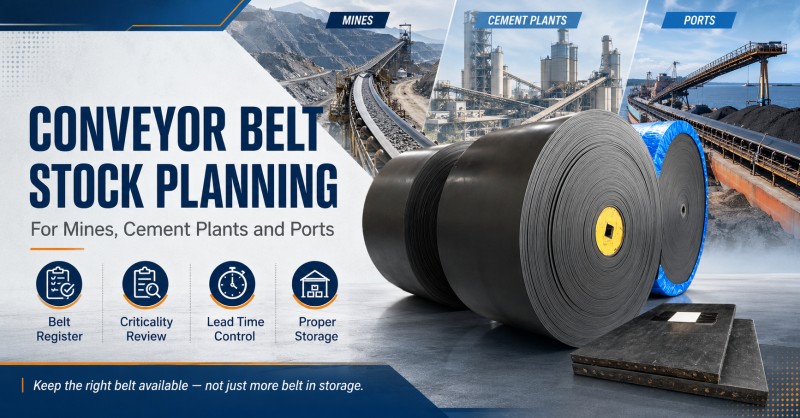
Two belts can have the same width and nominal tensile rating yet be poor substitutes for each other. One may be built for sharp ore and heavy impact, another for hot clinker, and a third for wet, corrosive cargo handling. Treating all three as the same conveyor belt stock item creates a warehouse that looks well supplied but cannot support an emergency replacement.
A better spare belt inventory starts with the operating duty, the importance of each conveyor line, and the real replenishment time. Historical consumption matters, but it is not enough. A belt that has never failed may still justify an exact spare when it serves a single-point-of-failure conveyor with no bypass and a long manufacturing or shipping cycle.
Start with a Belt Register, Not a List of Roll Numbers
Stock planning should begin with a technical register for every operating belt. It links the installed belt to its duty, construction, splice, and replacement constraints. Without it, procurement teams may compare price per meter while missing differences that affect compatibility.
Record the conveyor ID, installed length, width, carcass, nominal strength, plies or ST rating, cover thickness and grade, edge type, splice, pulley diameters, troughing, take-up travel, and current condition. Add material, lump size, loading height, speed, incline, operating hours, and exposure to heat, oil, flame, moisture, or chemicals.
For general-use textile belting, buyers may reference ISO 14890 or an agreed DIN, RMA, SANS, or BS specification. Steel cord construction is addressed separately under ISO 15236. Flame behavior, electrical conductivity, and heat resistance are separate properties. "EP 1000 belt" does not define them all.
Match Conveyor Belt Stock to the Working Condition
The correct replacement conveyor belt must run on the actual conveyor without creating a new problem. More strength or cover thickness is not automatically safer. A heavier, stiffer belt can demand larger pulleys, different take-up behavior, or another splice procedure.
|
Operating area |
Typical stock concern |
What buyers should verify |
|
Mine crushing and conveying |
Impact, cuts, gouging, long centers, high tension |
Lump size, drop height, carcass or ST rating, rip risk, splice design |
|
Cement raw material lines |
Abrasion, dust, off-center loading |
Cover grade, loading control, cleaner and idler condition |
|
Clinker or hot-material lines |
Heat aging, cover hardening, splice exposure |
Normal and peak material temperature, contact time, belt construction |
|
Port terminals |
Wet cargo, salt, seasonal peaks, vessel schedule pressure |
Cargo type, corrosion environment, fire or antistatic requirement, line redundancy |
Mining conveyor belt stock
A mining conveyor belt may suffer local impact damage before the carcass is generally worn. Record loading-zone cuts, mistracked edges, longitudinal grooves, and splice deterioration. These marks help decide between an exact full belt, a replacement section, or repair materials, and whether impact support, chute correction, idlers, or tracking must be fixed first.
Long, high-tension or steel cord systems tolerate less substitution. Include the approved splice design, compatible materials, tooling, and belt-pulling access. For underground mining, confirm project and jurisdictional safety requirements; a surface belt should not be assumed acceptable.
Cement conveyor belt stock
A cement plant rarely needs one universal grade. Limestone and raw-material routes face abrasion, impact, dust, and transfer problems. Clinker or other hot-material conveyors need a heat-resistant cover selected from measured duty. Carryback around pulleys and idlers can also cause local heating, mistracking, and wear.
Keep separate stock codes for normal abrasion-resistant belts and heat-resistant cement conveyor belts, even when width and nominal strength are identical. Otherwise, a visually similar roll may be issued to the wrong line during a shutdown.
Port conveyor belt stock
Ports combine high throughput with schedule-driven risk. A shiploader or main transfer conveyor may become critical during a vessel window. Stock should reflect peak-season plans, bypass capacity, cargo changes, and the time to move a heavy roll to the installation point.
Cargo compatibility also matters. Coal, ore, fertilizer, grain, and oily bulk materials may require different cover or safety properties. Confirm the actual cargo range before sharing one spare across several port conveyors.
Classify Each Belt by Criticality and Substitutability
A practical criticality review asks: What happens if this belt stops, and how quickly can the operation recover? Consider production, safety or environmental exposure, vessel or kiln schedules, bypasses, repair access, and splicing crew mobilization.
|
Stock class |
Typical situation |
Planning approach |
|
Insurance spare |
No bypass, high operational consequence, long replenishment |
Hold an exact or pre-approved replacement |
|
Operational spare |
Important line with temporary workaround |
Set a reorder point and review condition frequently |
|
Shared spare |
Several conveyors have verified compatibility |
Use one controlled specification and an allocation rule |
|
Order on demand |
Low-criticality line, short supply path, acceptable downtime |
Maintain complete RFQ data and supplier approval |
Substitutability must be verified. A shared roll should match the most restrictive line for width, strength, cover compound, pulley compatibility, splice, and safety requirement, with enough usable length after trimming and splicing.
Convert Lead Time into a Reorder Decision
Replacement lead time is more than factory production. It may include technical approval, manufacturing, inspection, packing, export documents, transport, customs, inland delivery, site handling, crew availability, and the next safe shutdown.
For routine stock, use expected demand during replenishment plus a contingency allowance. For low-frequency insurance spares, average annual usage is a weak guide; criticality, belt condition, and supply uncertainty matter more.
Review the trigger whenever production rate, material source, loading geometry, operating hours, or transport route changes. A mine expansion, a higher clinker output, or a new port cargo can make the old stock policy obsolete even when the conveyor itself has not changed.
Plan the Form of Stock, Not Only the Quantity
Inventory is not always "one full belt or none." A site may hold an exact full-length spare, an approved shared roll, short section-replacement lengths, and controlled splice kits. The mix depends on failure modes and installation capability.
Track splice-kit compatibility, batch, storage requirements, and supplier-stated shelf life. A sound roll is not an emergency replacement if the correct materials, trained crew, pulling equipment, or vulcanizing capacity are unavailable.
Store Spare Belts So They Remain Usable
Conveyor belt stock is a preserved engineering asset. ISO 5285 and supplier instructions cover storage and handling. Protect rolls from sunlight, ozone sources, oils, solvents, corrosive liquids, excessive moisture, sharp objects, and rough handling.
Keep roll identification and weight visible, inspect wrapping and banding, and secure the roll against movement. Lift with a rated bar through the core and suitable equipment, not a sling around the circumference. Inspect long-stored belts under supplier guidance before installation.
Records should show receipt date, specification, length, location, condition checks, and damage. Use a controlled first-in, first-reviewed practice; the oldest roll may not be the correct roll.
Use Condition Data to Adjust Spare Belt Inventory
Routine inspections turn spare planning into a maintenance decision. Record wear, cuts, edge fraying, splice condition, mistracking, carryback, pulley lagging, seized idlers, entrapment, sag, and off-center loading. This separates belt consumption from conveyor faults that may damage the replacement.
Use clear escalation thresholds. A growing longitudinal cut on a critical mining line may trigger immediate procurement and a planned section replacement. Heat cracking on a cement conveyor may require both a replacement order and a review of material temperature or cooling. Repeated edge damage at a port may point to loading or tracking correction rather than a higher stock quantity.
RFQ Information for a Replacement Conveyor Belt
An emergency quotation moves faster with a complete technical file. Photos show damage, but not carcass strength, cover compound, elongation, cord arrangement, or adhesion.
|
RFQ item |
Details to provide |
|
Belt identification |
Conveyor tag, original data sheet, belt marking, current supplier reference |
|
Dimensions |
Width, installed length, required roll length, cover thickness, edge type |
|
Construction |
Fabric type and plies or ST rating, nominal strength, breaker or rip protection |
|
Duty |
Material, lump size, density, temperature, oil or chemical contact, incline |
|
Conveyor data |
Speed, pulley diameters, trough angle, take-up, loading and impact conditions |
|
Installation |
Splice method, required kit, roll size limit, delivery point, shutdown date |
|
Compliance |
Applicable ISO, DIN, RMA, SANS, BS, fire, antistatic, or project requirements |
Compare construction, cover grade, tolerances, test basis, length, packing, documents, and delivery scope. A lower price may reflect a thinner cover, different carcass, excluded splice kit, or longer logistics path.
Frequently Asked Questions
How much conveyor belt stock should a mine keep?
There is no universal number. Base the quantity on line criticality, verified interchangeability, belt condition, complete replenishment time, and the consequence of waiting. A single-point-of-failure conveyor with a custom steel cord belt may justify an exact insurance spare, while a short secondary line may be ordered on demand.
Can one replacement conveyor belt be shared by several lines?
Yes, but only after engineering verification. Width alone is not enough. Confirm strength, carcass, cover compound, thickness, pulley compatibility, splice design, safety properties, and available length for every intended conveyor.
Should a cement plant stock a heat-resistant belt for all conveyors?
No. Heat-resistant construction should be selected for measured thermal duty. Using it on every line can increase cost and may not address abrasion, oil, flame, or other requirements. Keep stock codes linked to the actual duty.
What should be checked when a spare belt has been stored for a long time?
Review the roll identification, wrapping, banding, edge condition, storage history, contamination, deformation, and supplier guidance. For prolonged storage, ask the manufacturer whether inspection or sample testing is required before splicing and installation.
What is the biggest mistake in emergency replacement planning?
Keeping a belt roll without confirming the full installation package. The belt, splice system, crew, lifting and pulling equipment, access plan, and shutdown authorization must all be available. Missing one of them can leave the conveyor stopped despite having stock.
Before You Place the Order
A useful plan answers four questions: Which lines cannot wait, which belts are truly interchangeable, how long replenishment takes, and what condition triggers the next order. Review the answers whenever duty or logistics changes.
For a replacement quotation, provide the belt register, working condition, criticality class, required delivery date, and applicable standard. SINOCONVE can review fabric and steel cord conveyor belt requirements against project needs and prepare production, inspection, packing, and delivery information for the RFQ. The objective is simple: keep the correct belt available, not merely more belt in storage.