
For many export buyers, the phrase car transmission belt often refers to the belt used around the engine accessory drive rather than the gearbox transmission itself. In practical purchasing language, the same item may also be called an auto transmission belt, auto belt, car belt, multi-ribbed belt, PK belt, or serpentine belt. The naming is not always clean, so the first job is to confirm what the belt is actually driving.
A 6PK1735 belt is usually discussed as a six-rib PK profile belt with a 1735 length code. That code is useful, but it is not a full application check. Two belts with the same printed code can still behave differently if the rib rubber, tensile cord, back surface, molding control, storage condition, or pulley system is different. For distributors and repair parts buyers, this is where the conversation becomes more technical than simply asking for the cheapest 6PK belt.
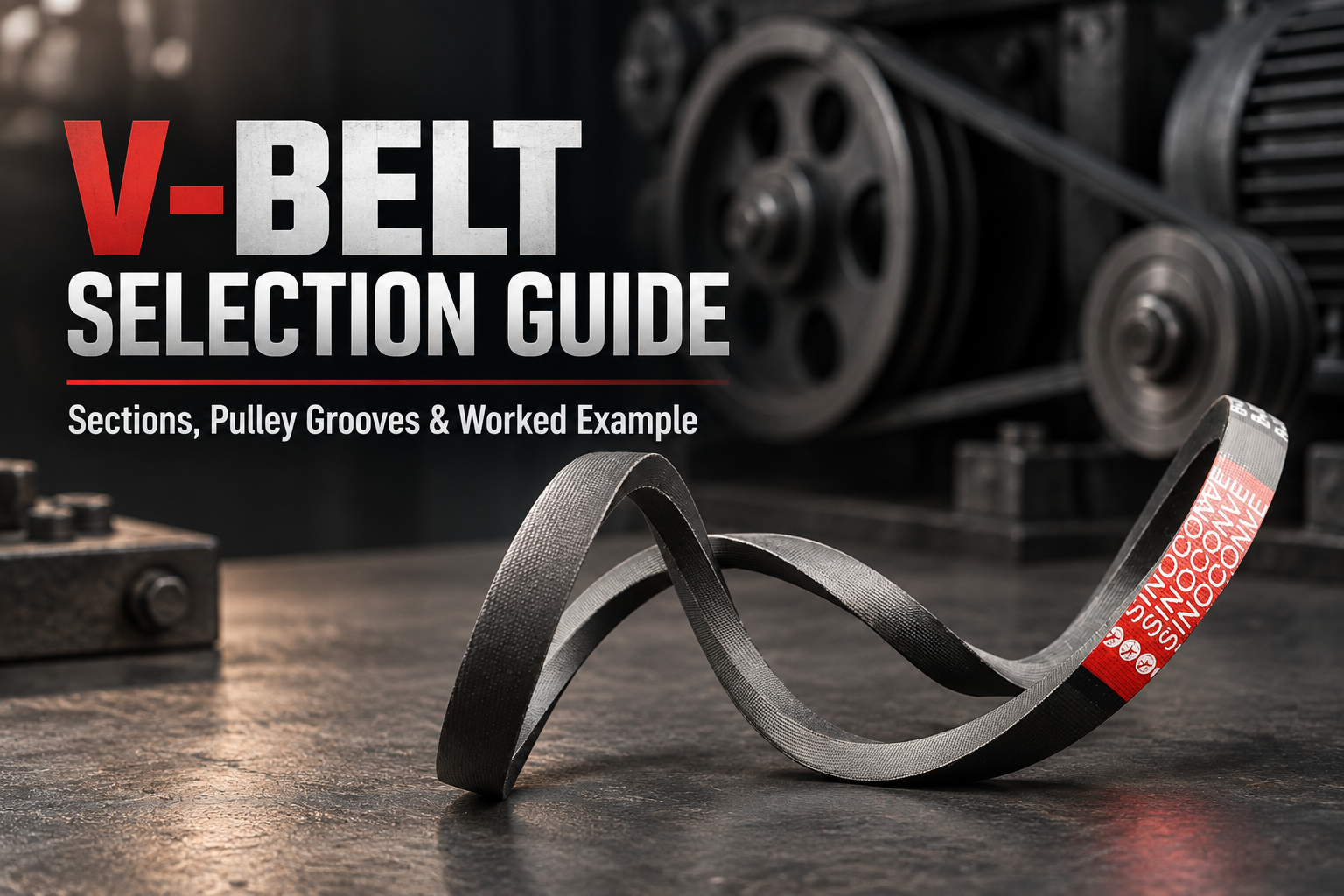
SINOCONVE supplies automotive and industrial belt products for power transmission applications, including PK belts, V-belts, timing belts, rubber belts, and customized belt orders. For a car belt like 6PK1735, the real value is not only the belt itself. It is whether the supplier can help buyers reduce wrong-code orders, unstable batches, unclear packaging, and repeated after-sales questions.
What the 6PK1735 Code Tells You - and What It Does Not
The code gives a starting point. It does not prove compatibility with every vehicle or pulley layout. This matters for aftermarket buyers who source by part number, sample, or cross-reference list. A wrong length may still install with force, but the tensioner position can move outside its proper working range. A wrong rib profile may sit poorly in the pulley grooves. A belt with poor rib geometry may be quiet at first and then start chirping after heat cycles.
|
Code / Detail |
What it usually means |
What buyers should still confirm |
|
6PK |
Six-rib PK multi-rib profile |
Rib pitch, pulley groove match, and whether the vehicle uses a one-sided or special routing belt |
|
1735 |
Length code commonly treated as around 1735 mm |
Effective length standard, OE cross-reference, and tensioner position after installation |
|
EPDM rubber |
Modern belt compound used for heat and aging resistance |
Actual compound quality, rib wear behavior, batch stability, and storage condition |
|
Automotive accessory drive |
Runs alternator, A/C compressor, water pump, power steering pump, or other accessories depending on vehicle layout |
Vehicle model, engine code, pulley map, tensioner condition, and idler pulley wear |
A buyer who only sends “6PK1735, best price” leaves too much room for error. The better inquiry includes the old belt photo, printed code, vehicle model or application list, pulley-side photo if available, expected packaging, order quantity, and any branding requirement. That saves time before production and prevents a small code issue from becoming a full shipment problem.
Why EPDM Changed the Way Auto Belts Are Checked
Older automotive belts often showed aging through visible cracking. Many modern EPDM belts do not always age in the same obvious way. They can lose rib material gradually, similar to tread wear, while still looking acceptable from a quick top-side inspection. That is one reason a belt that “looks fine” may still slip, chirp, or lose grip in the pulley grooves.
For an auto transmission belt supplier, this changes the quality discussion. Flexibility and heat resistance matter, but rib wear, profile accuracy, cord stability, and pulley fit matter just as much. A smooth back surface or clean printed mark does not tell the whole story.
|
Old way of judging a car belt |
Why it is not enough now |
Better check |
|
Counting cracks on the back |
EPDM belts may show less visible cracking even as ribs wear |
Check rib depth, glazing, noise, and pulley groove contact |
|
Choosing by code only |
Same code does not always mean same compound or rib accuracy |
Confirm sample, drawing, OE number, or vehicle application |
|
Replacing the belt only |
Noise may come from pulley misalignment or a weak tensioner |
Inspect tensioner, idler pulleys, pulley grooves, and belt path |
|
Assuming higher hardness is better |
A belt that is too stiff may run poorly on compact layouts |
Match compound, cord, rib profile, and pulley diameter |
Where the Belt Usually Gets Blamed Too Quickly
When an auto belt squeals after startup, the belt is often replaced first. Sometimes that fixes the issue. Sometimes the new belt starts making noise again because the actual cause is pulley misalignment, an aging tensioner, contamination, or worn pulley grooves. In that case, changing the belt only resets the clock; it does not solve the drive system problem.
The same pattern appears in aftermarket complaints. One buyer says the belt is noisy. Another says the belt walks off one pulley. A third says the rib side wears too quickly. These are not all the same failure. The belt may be wrong, but the surrounding hardware may also be wrong.
|
Observed issue |
Possible cause |
What to check before blaming the belt |
|
Cold-start squeal |
Temporary slip, weak tensioner, moisture, pulley contamination |
Tensioner travel, pulley surface, belt routing, rib glazing |
|
Belt walks off pulley |
Pulley misalignment, damaged idler, wrong rib seating |
Pulley alignment, bearing play, groove wear, belt width |
|
Rib surface becomes shiny |
Slip, high heat, pulley mismatch, weak tension |
Pulley groove contact, accessory load, tensioner function |
|
Edge frays |
Belt rubbing against flange or misaligned pulley |
Pulley offset, idler angle, installation path |
|
Repeated early replacement |
System issue, wrong code, poor cross-reference, bad storage |
Vehicle application, old belt code, date/storage, supplier batch control |
EPDM Rubber, Rib Geometry, and Tensile Cord: What Actually Matters
A car transmission belt does not transfer power only because the rubber is “good.” It transfers power because the rib profile sits correctly in the pulley, the tensile cord holds length stability, and the compound keeps enough flexibility through heat cycles. If any one of those points is wrong, the belt may still install but not run well.
EPDM rubber is commonly valued for heat and aging resistance in automotive accessory drive belts. But compound alone is not a guarantee. If rib molding is inconsistent, the contact area changes from rib to rib. If cord placement is unstable, the belt may not track evenly. If the back surface or side trim is poorly controlled, the belt can show edge noise or uneven running.
For the SINOCONVE 6PK1735, the useful product story should not be “advanced belt, better performance.” Buyers have heard that too many times. The better story is: stable rib profile, suitable EPDM compound, controlled length, clean marking, export packing, and application confirmation before mass shipment.
Choosing a 6PK1735 Auto Belt for Distribution or Repair Use
A workshop may buy one belt for one vehicle. A distributor thinks differently. The distributor needs consistent marking, carton labels, clean batch records, packing that survives shipping, and fewer cross-reference disputes. That is why an auto belt order should be treated as a product program, not only a spare part.
|
Buyer type |
Main concern |
Useful confirmation before order |
|
Automotive parts distributor |
Correct cross-reference and repeatable packaging |
Printed code, carton label, barcode, sample approval, packing style |
|
Repair chain or workshop supplier |
Reduced comeback repairs |
Vehicle list, tensioner notes, common failure symptoms |
|
OEM / private label buyer |
Brand consistency and batch control |
Logo, belt marking, artwork, carton design, inspection standard |
|
General importer |
Price, MOQ, lead time, shipment safety |
Quantity, mixed models, export packing, after-sales rules |
Price still matters, of course. But the cheapest auto transmission belt can become expensive if the code is wrong, the rib profile is inconsistent, or the packaging causes confusion in the market. For SINOCONVE, the idea of Save Time, Save Money fits naturally here: reduce back-and-forth confirmation before production, reduce wrong-code shipments, and reduce repeated customer complaints after sale.
What to Send Before Asking for a Quotation
A complete inquiry is not complicated. It simply needs to describe the belt and the market expectation clearly enough that the supplier does not have to guess.
|
Information to send |
Why it matters |
|
Printed belt code such as 6PK1735 |
Confirms the basic rib number and length code |
|
Old belt photo, front and back |
Shows rib wear, marking style, back surface, and edge condition |
|
Vehicle model or OE cross-reference if available |
Reduces wrong-application risk |
|
Required material or market preference |
EPDM, heat resistance expectation, aftermarket grade level |
|
Branding requirement |
Belt printing, sleeve, carton, barcode, private label |
|
Quantity by model |
Helps plan production and mixed shipment |
|
Target market and packing style |
Different markets may prefer different labels, languages, and cartons |
|
Complaint history if replacing a current supplier |
Noise, edge fray, wrong length, poor marking, packaging damage |
Common Purchasing Mistakes with Auto Belts
The first mistake is treating all 6PK1735 belts as interchangeable. The second is copying a competitor part number without checking the vehicle application. The third is ignoring the tensioner and pulley system when evaluating a complaint.
Another common mistake is over-focusing on visual appearance. A clean black belt with clear white printing may still have poor rib control. On the other hand, a belt that looks simple may perform well if the compound, cord, and molding are consistent. For B2B buyers, sample testing should include installation fit, rib seating, noise after running, and packaging clarity, not only surface appearance.
FAQ
Is a car transmission belt the same as a timing belt?
No. In many export contexts, car transmission belt may refer to an accessory drive belt or multi-ribbed PK belt. A timing belt controls engine timing and should not be confused with a serpentine or PK belt.
What does 6PK1735 mean?
It usually refers to a six-rib PK profile belt with a 1735 length code. Buyers should still confirm the vehicle application, OE reference, and pulley layout.
Why do EPDM belts sometimes look good but still slip?
EPDM belts may wear through rib material rather than showing obvious cracking. Rib wear, glazing, weak tension, or pulley misalignment can all reduce grip.
Can SINOCONVE support private label auto belt orders?
Yes. Branding, printed marks, sleeves, cartons, packaging style, and sample confirmation can be discussed based on buyer requirements.
What information is most useful for a 6PK1735 inquiry?
Send the belt code, old belt photos, vehicle or OE reference, expected material, quantity, packaging requirement, and any market complaint history if available.
Final Note for Automotive Belt Buyers
A 6PK1735 car belt looks like a small component, but it sits inside a system that depends on pulley alignment, tensioner condition, rib geometry, compound stability, and correct application matching. For buyers comparing auto belt suppliers, the best starting point is not only price. It is whether the supplier can help confirm the code, control the batch, support packaging, and reduce repeat problems after shipment.
That is where a SINOCONVE auto transmission belt program can be more useful than a one-time quotation. The goal is not to make the belt sound complicated. The goal is to prevent a simple belt order from becoming a recurring customer complaint.