
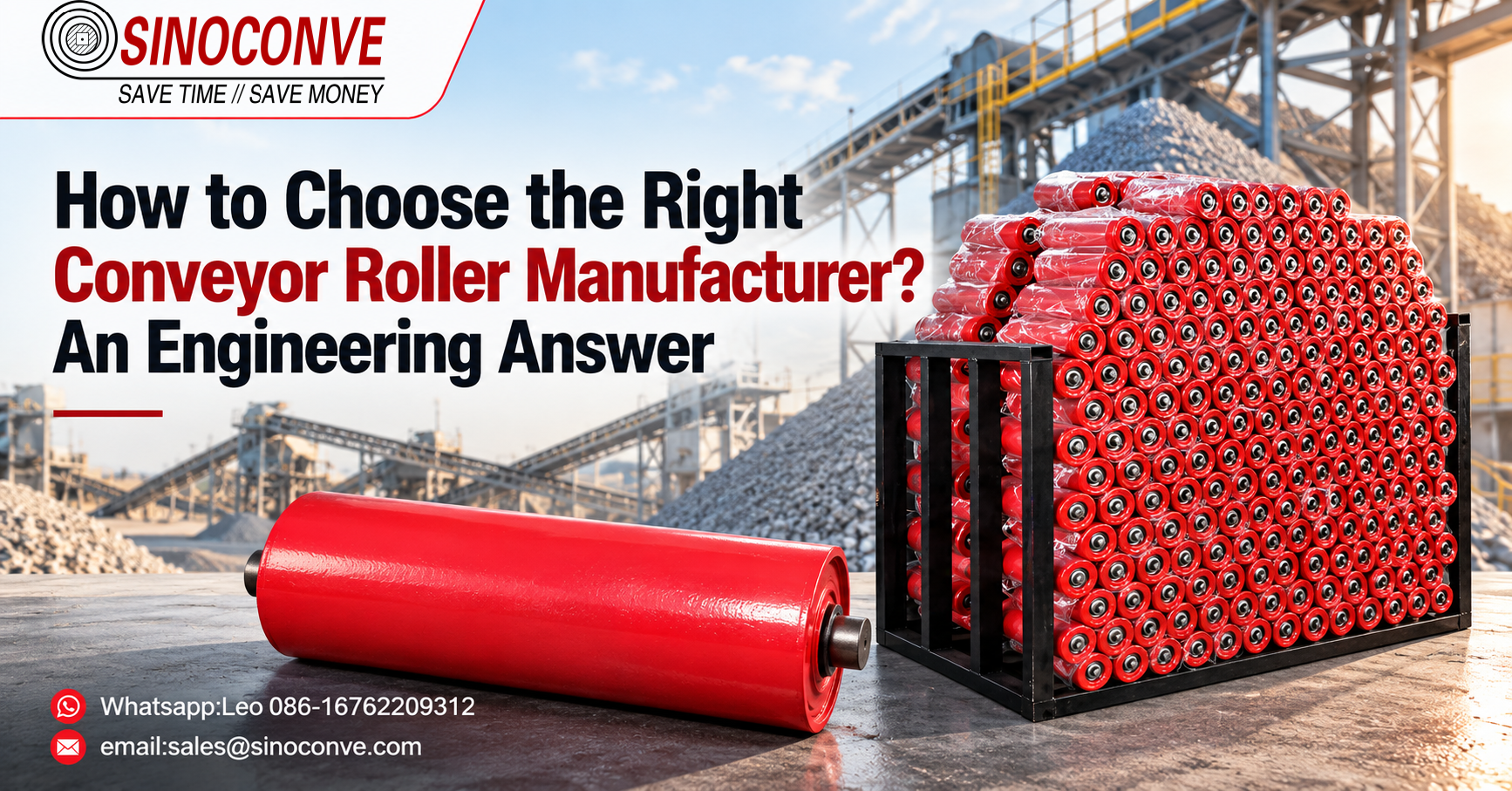
Choosing the right conveyor roller manufacturer comes down to five checks taken in a fixed order: requirement match, manufacturing capability, quality evidence, delivery and after-sales support, and commercial terms last. Run them out of order and you will spend a week comparing quotations for parts that are not the same part. Three decades around bulk handling lines have taught us that almost no roller failure is genuinely a price problem; each one traces back to a duty that was misread, a capability that was assumed, a test record that was never requested, or a delivery date nobody wrote into the contract. This guide hands you that five-gate sequence, the questions that close each gate, a pilot-batch protocol, and a total-cost formula you can recompute with your own line numbers.

01The Evaluation Order That Works: Five Gates, In Sequence
The instinct to open a roller sourcing project by collecting quotations is understandable, and it is also the most expensive habit in the category. A quotation is an answer to a question, and if the question was never defined the answer carries no information. Two factories can both quote an outside diameter of 89 mm at the same figure and be selling different objects: one with a 3 mm tube wall and a stamped end cap, the other with a 4.5 mm wall and a machined cap. That gap stays invisible on a spreadsheet and shows up at month nine on a dusty return strand.
So we treat supplier selection as a sequence of gates rather than a weighted scorecard. Every gate carries a question, an evidence standard and a reject rule. You do not open gate three until gate two is answered, because the cost of each gate rises sharply as you move down the list. A phone call is free. A factory audit costs two days of travel. A pilot batch costs a pallet and six weeks. A wrong qualification costs a shutdown, and that bill arrives with no warning. As a conveyor belt manufacturer we sit on the supply side of this question, which is exactly why we can tell you which gates buyers most often skip.
Why the Sequence Matters More Than Any Score
A scorecard lets a weak supplier win on volume of documents; a sequence cannot, because one unanswered gate stops the whole process. When a cement plant near a 42 °C clinker corridor asked us to help re-tender its roller supply, the previous award had gone to the highest aggregate score rather than the strongest evidence. The winning file carried eleven certificates and no batch record at all. The file that lost carried four documents, one of them a run-to-run diameter plot covering nine production lots. The plant re-ran the tender on the gate sequence, and the second award failed 3 percent of incoming rollers instead of 19 percent. The rollers did not become better. The questions did.
What Each Gate Rejects Before the Next One Opens
Gate one removes suppliers who cannot make the duty at all. Gate two removes those who can make one, but not the same one twice. Gate three removes suppliers whose evidence would not survive a stranger re-performing it. Gate four removes those who cannot hold a date or support an installation. Gate five, the one everyone starts with, is the only gate that is genuinely about money, and it is the last gate because it is the least informative on its own. The table below sets out what each gate asks and what a weak answer exposes.
| Gate | The question it answers for you | Evidence that closes the gate | What it rejects when the answer is thin |
|---|---|---|---|
| 1. Requirement match | Does the supplier's range cover the duty you actually run, or only the average of it | A written duty summary matched line by line against their roller families and comparable projects | Suppliers who offer a single roller family for every application on the site |
| 2. Capability verification | Can the factory make this roller the same way in lot forty as in lot one | Tube forming and welding method, bearing and seal sourcing, dedicated tooling list, and a plant walk-through | Trading desks that resell rollers without a production line standing behind them |
| 3. Quality evidence | Do the load and runout numbers exist, and can a stranger reproduce them | Raw test data tied to a named speed, run-to-run batch records, and current gauge calibration certificates | Suppliers whose evidence is a glossy brochure rather than a recorded measurement |
| 4. Delivery and after-sales | Can they hold the promised date, and will they stand behind it once the pallet lands | Lead-time breakdown by production stage, a spare-part list, written warranty terms and a named service contact | Suppliers who quote a lead time with no internal structure visible behind the number |
| 5. Commercial terms | Does the total cost of ownership work, not just the figure at the top of the sheet | Unit price, minimum order quantity, payment terms and the total-cost inputs described later in this article | Suppliers who look cheapest only because their parts are not equal to the rest |
02Requirement Match: Define the Duty Before You Compare Suppliers
Before a supplier list exists, write a one-page duty summary. It is not a specification sheet and it is not the same thing as a roller datasheet; it is the reality of the line written in plain numbers. Get the belt width, the belt speed in m/s, the material being carried, the ambient and material temperature, the environment such as wet, dusty, corrosive or washdown, the tonnage per hour and the shift pattern onto that page. Every supplier in the market can respond to those inputs, and a conveyor belt supplier who cannot is telling you something useful before you spend a day on the tender.
The Four Duty Inputs Nobody Should Ever Guess
Four inputs decide most of the roller specification, and all four are usually missing from a first enquiry. They are the expected load at the position, the surface speed at the roller, the contamination exposure, and the consequence of failure. Load is stated as a radial figure in kN, with an impact factor added for every transfer point. Speed is stated in m/s and then converted to roller revolutions per minute for the diameter you intend to use. Contamination is stated as a named condition rather than a vague adjective. Consequence is stated as the hours of lost output if a roller seizes at the worst possible moment of the shift.
One caution on load, because it costs more plants money than any other omission. Buyers often quote the static load and forget the dynamic and impact components entirely. Under a 300 mm lump size at a transfer chute the impact load can be several times the steady load, and a roller sized only for steady load will show race brinelling within weeks. Where a plant runs a long overland section, the roller duty also travels with the main industrial conveyor belt choice, so the duty page is worth building once and reusing.
How Duty Class Shrinks the Supplier List
Once the duty page exists, the candidate list usually falls by more than half before an enquiry is even sent. A workshop that only produces light stamped shells cannot serve an impact position no matter how attractive its price looks. A supplier with no salt-spray chamber cannot demonstrate a port-terminal roller. A factory with no seal test bench cannot prove a fine-dust design, and a plant running abrasive quarry feed will need that proof on file. Duty class is the filter, and it is free to apply. The table below maps each input to the suppliers it removes.
| Duty input | What you should state on the page | Which suppliers it removes from the list |
|---|---|---|
| Expected load at the position | Radial load in kN, plus an impact factor at every transfer and loading point | Makers of thin shells and light bearing seats who quote on price alone |
| Belt speed at the roller | Belt speed in m/s, converted to roller revolutions per minute for the chosen diameter | Suppliers who cannot attach a load figure to a named running speed |
| Contamination exposure | A named condition such as fine dust, continuous washdown, or salt-laden coastal air | Suppliers with nothing above an open or simple shielded seal in their range |
| Consequence of failure | Hours of lost output and the cost of each hour if a roller seizes on the critical section | Suppliers with no bearing life data and no stoppage history to defend |
| Material and temperature | Bulk material description, ambient temperature and material temperature in °C | Suppliers with no high-temperature grease or bearing clearance option available |
03Capability Verification: What a Roller Manufacturer Must Prove
A quotation tells you what a company says it can do. A capability check tells you what the building can actually do. We ask for the production route from steel coil to packed roller, and we ask for it as a numbered sequence of steps rather than a summary, because a trading desk can recite a route it does not own but tends to stumble on the detail. When the answer includes the phrase "we work with a partner for tube cutting", that is a fact and not automatically a fault. It does, however, move the tolerance risk onto a third party you will never get to audit, and a roller supplier feeding an abrasive line has to own the joints on a rubber conveyor belt as much as the shell itself.
Tube, Bearing and Seal Capability
Roller quality is decided at three component interfaces: the tube-to-endcap joint, the bearing seat, and the seal. A factory that forms its own tube controls wall thickness and roundness directly; one that buys tube to a stated wall also inherits whatever the mill shipped. Bearing brand matters far less than bearing seat control, because even a premium bearing in a loose seat fails early and quietly. Seals are the third interface and the one most often left unproven, which is why a fine-dust position deserves a supplier who can describe labyrinth depth and lip material rather than simply name a seal type. Our own note on the sealed conveyor roller manufacturer route explains why dust, not load, kills most rollers in aggregate plants.
Tooling, Repeatability and In-House Testing
Repeatability is a tooling question long before it becomes a quality complaint. Ask how the end cap is produced, whether the forming tool is dedicated to that one size, and how often it is pulled for maintenance. A dedicated tool with a fixed maintenance interval produces the same cap in lot forty as in lot one. A shared tool adjusted between runs is precisely where slow diameter drift begins, and drift is the failure mode that individual inspection certificates are least able to catch. This is the kind of detail a real conveyor belt factory can describe without preparation, because the schedule on the wall is its own.
Field note from our engineers: On a port terminal job we asked for the diameter plot covering twelve consecutive production lots. The first lot measured 89.02 mm and the twelfth measured 89.31 mm. That is a drift of 0.29 mm that never appeared on a single inspection certificate, because every lot passed on its own terms. On the line the drift surfaced as uneven belt tracking and edge wear after roughly seven months of service. Nothing was out of tolerance in isolation. The pattern was.
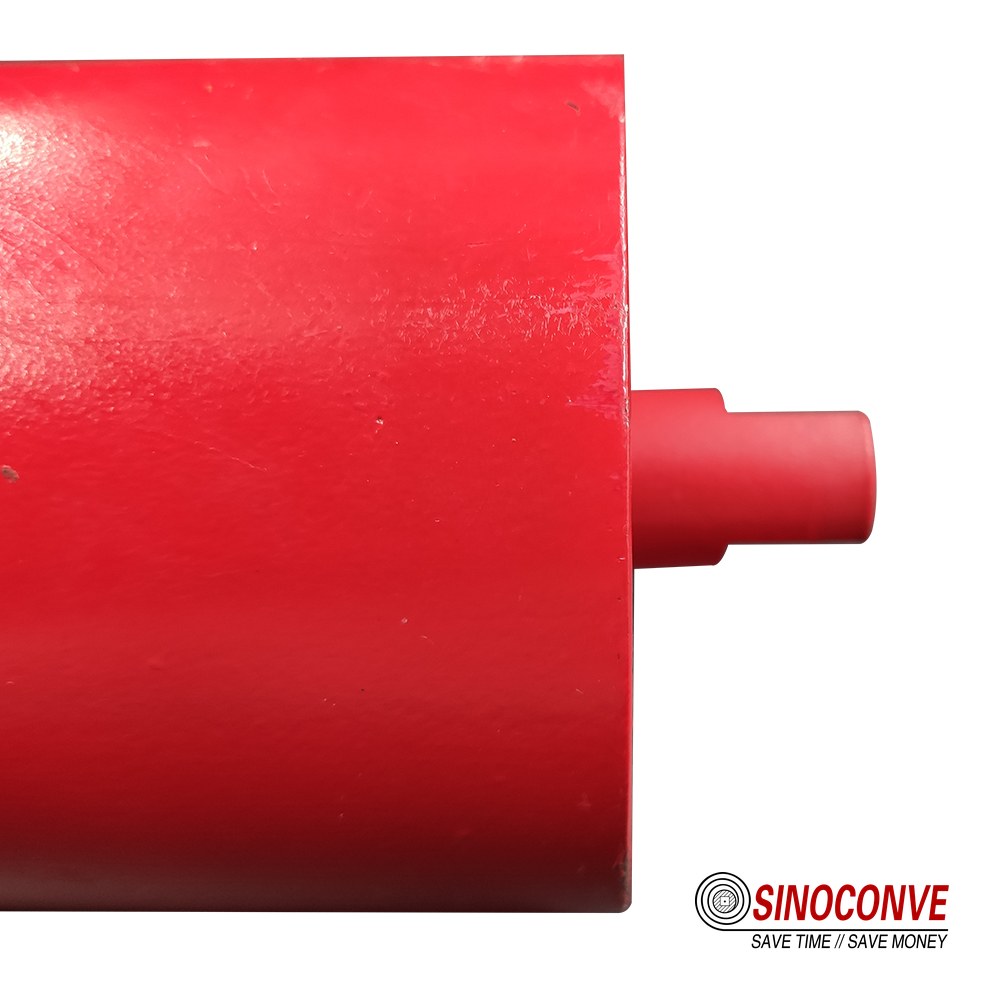
Tube, bearing seat and seal are the three interfaces where roller quality is actually decided.
04Quality Evidence: Documents and Numbers That Survive an Audit
Evidence is not paperwork. Evidence is a measurement that somebody outside the factory can repeat from the raw numbers supplied. When we evaluate a roller supplier we ask for data sets rather than certificate logos, and we then try to reproduce one value per data set from their own figures. If a report states a dynamic load capacity of 8.9 kN at 500 rpm but the dimensions printed beside it do not produce 8.9 kN through any sane formula, the report is decoration. A buyer does not need to be a metallurgist to run that check; a calculator and ten minutes are enough.
Certificates and Reports You Can Re-Perform
Ask for the load figure with the running speed attached, the radial runout figure with the measurement station described, the seal test method with its duration and medium, and the coating thickness with the gauge named. Recognised roller standards help enormously here, because a supplier working to one of them has measured radial runout, axial runout and load capacity in a defined way. Ask which standard and which clause a report follows, then check that the report actually shows that measurement rather than a pass stamp. Where a plant also buys belting, the same discipline applies to the cover-grade certificates on the belt that the rollers support. Buyers who want the fuller picture of a belt family, including grades and cover compounds, can start from our rubber conveyor belt cover grades reference.
Batch Consistency Records and the Calibration Trail
A single passing sample proves a sample. A batch record proves a process. Ask for the last six to twelve lots of the exact size you intend to buy and plot one measured value per lot: outside diameter, runout, or start-up torque. A stable plot with normal scatter is a manufacturing process. A plot that walks steadily in one direction is a wearing tool or a drifting parameter, and you will feel it on the belt edge before any certificate turns red. This record is also the cheapest thing to ask for, and it is the document most often missing from a supplier whose evidence is otherwise impressive. For lower-volume buyers consolidating several sizes, our wholesale conveyor belts catalogue shows how families are grouped when a single purchase order has to cover a mixed roller set. The table below shows what each document proves and how to test it.
| Evidence item | What it actually proves to you | How a buyer checks it without extra metres of paperwork |
|---|---|---|
| Load capacity data | That the roller can carry a stated radial load at a named speed, not at an unnamed one | Recompute the figure from the printed dimensions and confirm the speed is attached |
| Runout measurement | That the shell and the shaft are concentric enough to keep the belt tracking straight | Ask where the dial gauge sits and repeat the check on two incoming pieces |
| Seal test method | That the seal holds against the specific medium your line throws at it, not a generic liquid | Confirm the medium, the duration and the acceptance level are all written down |
| Coating or plating thickness | That a corrosion or wear coating is real and even, rather than decorative | Ask for the gauge type and check thickness at three points on one roller |
| Batch consistency record | That the process repeats, which no single-sample test can ever demonstrate on its own | Plot one value across six to twelve lots and look for drift rather than scatter |
| Gauge calibration certificate | That every other number on this table rests on a measuring tool that is still trustworthy | Check the certificate date is inside the calibration interval and matches the gauge used |
Most suppliers will send the first document without argument and grow quieter as the list moves down. That silence is information. A supplier that produces the batch plot and the calibration trail on request is one whose first-page numbers you can lean on. A supplier that offers a certificate wall but no plot is selling confidence, not evidence. Where a site corrodes rollers faster than it wears them, the same reasoning shows up in a different record; our note on the corrosion resistant conveyor roller supplier path sets out which coating and material claims need a salt-spray duration behind them.
05Sample and Pilot-Batch Validation: From First Article to Production Release
A sample is a promise and a pilot batch is a test, and buyers who confuse the two inherit the difference later.A first article tells you whether the plant understood the drawing. A pilot batch tells you whether the plant can hold that understanding across a shift, a tool change and a raw-material lot change.We have never released a roller supplier to full production on the strength of a single courier envelope, and no plant that has paid for an unplanned shutdown would want us to. By this stage the supplier should also be able to talk about the roller set as part of a system, and our overview of the conveyor roller range is a reasonable place for the maintenance team to align on families before the pilot starts.
What to Measure on the First Article
Inspect the first article against every dimension that drives fit and tracking, and mark up which ones are critical. Outside diameter and face length set the line geometry; runout sets the tracking; start-up torque sets the energy the drive spends before the belt moves; and shaft-end geometry sets the mounting. Measure at least eight pieces rather than one, because a single first article mostly proves that someone walked to the machine. The same thinking a careful transmission belt manufacturer applies to a drive belt holds for a roller: a component only becomes good when it works inside the assembly, not when it passes alone on a bench.
Two tests do most of the work in a pilot. The first is a loaded run on a test frame or a real section for a set number of hours, with periodic checks of temperature rise at the bearing and of start-up torque. The second is a contamination or corrosion exposure matched to your environment, run for a fixed duration with an acceptance level agreed before the test begins. Both tests are cheap relative to a failed section, and both need their pass condition written down in advance, because a test with no agreed threshold always seems to pass at the plant and fail on the line.
How to Judge Pass or Fail Without Argument
Write the acceptance rules before the samples ship, not after the results arrive. A workable set is: dimensions within the drawing tolerance for all pieces measured, runout inside the agreed band, start-up torque below the stated ceiling, bearing temperature rise steady after the run-in period, and no seal ingress after the exposure test. Every one of those is a number with a boundary, so the discussion becomes arithmetic rather than opinion. Where a component sits in a heavy loading zone the exposure test changes character entirely, and our note on the impact roller supplier route explains why shock loading needs its own evidence before any supplier is released.
Scaling From Pilot to Production Release
Release the supplier to production only when the pilot batch, not the sample, has met every rule, and then release it in steps rather than in one jump. A first production order of one section, then two, then the full set gives you three chances to catch a scale-up problem before it reaches the whole line. Ask the supplier to hold the same tool, the same bearing source and the same seal grade across those orders, and to tell you in writing if any of the three changes. The table below sets out a workable stage plan with its pass rules.
| Stage | Sample size and duration | Pass rule agreed before the samples ship |
|---|---|---|
| First article inspection | Eight to twenty pieces from one lot, measured within a week of arrival | Every piece inside the drawing tolerance for diameter, face length and runout |
| Loaded run test | A representative section run for 300 hours at production speed and load | Bearing temperature rise steady after run-in and no increase in start-up torque |
| Contamination or corrosion exposure | Four to eight pieces exposed for 96 to 240 hours in a defined medium | No seal ingress, no loss of turning freedom and no coating breakdown past the limit |
| Pilot batch release | One full section of the conveyor, installed and monitored for one month | Zero unplanned roller stops attributable to the new supplier during the period |
06Delivery, Spares and After-Sales: The Costs Between the Quotation Lines
Delivery is where a good technical decision meets a bad schedule, and it is usually the second most expensive gate after quality. A supplier who quotes six weeks without being able to break that number down is quoting a hope rather than a plan. We ask for a lead-time structure instead of a figure: how long raw tube takes to arrive, how long forming and welding take per lot, how long assembly takes, and how much of the total sits in inspection and packing. When a supplier cannot split six weeks into parts, the risk is not a wrong number. The risk is that nobody inside that company owns it.
Lead Time Is a Structure, Not a Number
A structured lead time lets you plan around a shock. If tube supply is four of the six weeks and forming takes three days, then a tube shortage is your real exposure and you can hedge it with a buffer order. If assembly is the long pole, you can ask for a partial shipment so the critical section is dressed first. A single number gives you nothing at all to manage, and it quietly encourages the buyer to treat a forecast as a fixed date.
Spares, Interchangeability and Warranty Terms
Rollers wear unevenly, and a plant that cannot buy a single replacement in the same size keeps a full spare set on the shelf at its own cost. Ask whether the supplier will hold the drawing for the exact size, whether one spare can be ordered below the standard minimum, and whether the bearing and seal are standard catalogue parts or the supplier's own. Interchangeability matters most where a plant already runs several suppliers, because a mixed roller set with three different shaft-end geometries is a maintenance trap dressed up as flexibility.
Warranty wording deserves the same attention. A clause that covers "manufacturing defects" tells you almost nothing until the supplier states what counts as proof, how the failed piece is returned, and how quickly a replacement ships. We once watched a claim drag for eleven weeks over a single missing batch number. The same discipline governs every rotating part on the line: a V-belt manufacturer who cannot trace a belt back to its batch has exactly the same problem honouring a warranty, which is why traceability is the shared requirement across drives and rollers alike.
07Total Cost of Ownership: A Worked Example You Can Recompute
Total cost of ownership is the only comparison that ends a unit-price argument, and it is far simpler than its name suggests. For a population of rollers on a defined section, almost everything scales with how often you replace them. Install Z rollers, run H hours a year, and let a roller survive L hours on average, and the annual replacement count is simply Z multiplied by H and divided by L. That one line is the spine of the whole model, and it takes about a minute to set up on a scrap of paper.
The One-Line Total-Cost Formula
Annual cost equals annual replacements multiplied by the all-in cost of one replacement. The all-in cost has three parts: the price you pay per piece, the cost of the unplanned downtime that a share of the failures cause, and the labour each change consumes. As one expression it reads annual cost = (Z × H ÷ L) × (P + u × d × D + a × R). Here P is your quoted unit price, u is the fraction of replacements that fail unplanned, d is downtime hours per such event, D is the cost of one lost production hour, a is labour hours per roller change, and R is your labour rate. Not one term in that expression is a market figure pulled from a report; every one is your own number, and you should write it down before you open any quotation.
Feeding Your Line Numbers Into It
Take a realistic population. A plant installs 1,200 rollers across its carrying and return strands, runs 6,000 hours a year, and is comparing two suppliers. Supplier A is quoted at price P and its rollers average 24,000 hours. Supplier B is quoted at 0.85P, a fifteen percent saving, and its rollers average 16,000 hours. The replacement counts deliver the first surprise. A works out at 1,200 × 6,000 ÷ 24,000 = 300 rollers a year. B works out at 1,200 × 6,000 ÷ 16,000 = 450 rollers a year, which is fifty percent more parts because each one lasts a third less.
Now set those counts against the price. Supplier A's annual parts spend is 300 × P, or 300P. Supplier B's is 450 × 0.85P, or 382.5P. The cheaper quotation spends about 27.5 percent more on parts every single year, before one hour of downtime is counted. Add the downtime and labour terms and the gap widens further, because a roller that wears out earlier also tends to fail unplanned more often, and every unplanned failure is changed at the worst possible time of day.
The Break-Even That Settles the Argument
Turn the comparison around and you get a rule you can apply in the meeting itself. If two roller types differ only in life and price, then the cheaper one's unit price must fall below the other's by at least as much as its life falls short. Here B lasts two-thirds as long, so B must be priced below two-thirds of A just to break even on parts alone, and lower still once downtime and labour are added. Put your own numbers into the formula and the answer becomes arithmetic rather than argument. A supplier quoting fifteen percent less for a part lasting a third less is not offering a saving; it is offering a slower and more expensive way to buy the same service.
| Line term | Supplier A | Supplier B | What the row tells you |
|---|---|---|---|
| Installed rollers on the section (Z) | 1,200 rollers across carrying and return strands | The same 1,200 rollers, so the population is identical | The population cancels out, which leaves life and price to decide |
| Annual operating hours (H) | 6,000 hours a year on a three-shift pattern | 6,000 hours, unchanged because the plant sets the schedule | Operating pattern is fixed and falls out of the comparison |
| Mean roller life (L) | 24,000 hours on the stated duty and environment | 16,000 hours, one third shorter on the identical duty | Life is the one input that drives every other number in the model |
| Annual replacements (Z × H ÷ L) | 300 rollers a year for the whole section | 450 rollers a year, fifty percent higher than supplier A | Shorter life means more parts, more changes and more disturbance |
| Unit price (P) | Your quoted figure, written simply as 1.00P | Fifteen percent lower, written as 0.85P | This is the only row a price-only buyer ever reads |
| Annual parts spend | 300P a year on replacement rollers | 382.5P a year, roughly 27.5 percent more than A | Cheaper per piece, dearer per year, which is the whole lesson |
| Unplanned failure share (u) | One in a hundred replacements stops the line | Four in a hundred stop the line, four times the disruption | Early failures cluster and almost always land outside planned windows |
| Downtime per event (d) and hour cost (D) | 1.5 hours of lost output at your own cost per hour | The same 1.5 hours, but multiplied by four times the events | Downtime multiplies the failure count, never the unit price |
| Annual all-in total cost | The lower figure once life, downtime and labour are counted | The higher figure despite the friendly unit price | This is the line the purchase decision should actually rest on |
08Questions to Ask Before You Issue the RFQ
The gate sequence only works if the questions actually get asked, and they are best sent before the RFQ rather than after the quotation lands on your desk. Send them as a short pre-qualification sheet, request written answers, and keep those answers on file, because the same sheet becomes your incoming inspection plan and your re-order checklist a year later. A reseller will answer the capability questions slowly and the price question quickly, and that tempo is itself a result. When a plant buys belting and rollers together, a sharp conveyor belt distributor often flags a roller duty the buyer had not considered, simply because they see the whole line.
The Pre-Qualification Sheet, Grouped Into Four Blocks
Group the sheet into capability, quality, delivery and commercial blocks, and keep each written answer to a line or two so it stays usable. Under capability, ask who forms the tube, which shop produces the end cap, and whether the bearing source is locked or free to change between lots. Under quality, ask for the load figure at a named speed, the runout measurement method, the seal test medium and duration, and the last six batch records for the size you intend to buy. Under delivery, ask for the lead-time breakdown stage by stage, the minimum order for a single spare, and the name of the person who will own a field problem. Under commercial, ask for unit price, minimum order quantity, payment terms and what is permitted to change the price between repeat orders.
| Question block | The questions that matter most in this block | What a weak or evasive answer looks like |
|---|---|---|
| Capability | Who forms the tube, which shop makes the end cap, and is the bearing source fixed across lots | Answers that describe the product but never name the process or the plant |
| Quality | Load at a named speed, runout method, seal test medium and duration, last six batch records | A certificate list offered in place of a single repeatable measurement |
| Delivery and service | Lead-time breakdown by stage, minimum order for one spare, and a named field contact | A single lead-time figure with no stages and no owner named behind it |
| Commercial | Unit price, minimum order quantity, payment terms, and what can move the price later | A price with no minimum stated and no note on what changes it next time |
09Common Traps in Conveyor Roller Manufacturer Selection
Four traps account for most of the roller sourcing failures we are asked to untangle. Each one feels like sensible economy at the moment it is set, and none of them requires a dishonest supplier. They are shortcuts a buyer takes when the correct step looks slower or dearer than the alternative.
The price-only trap survives because a fifteen percent difference is visible this week while a life difference stays invisible for two years. The sample-only trap is its twin, because a hand-picked sample proves that the supplier can make one good roller, not that it can make four hundred the same. The tolerance trap is quieter still. Buyers specify an outside diameter and skip the runout band, then spend months chasing belt wander on a section that uses three suppliers whose runout differs by a tenth of a millimetre. The fourth trap, ignoring spares and lead time, produces a roller that fits and lasts and still stops the line because the replacement will not arrive for nine weeks.
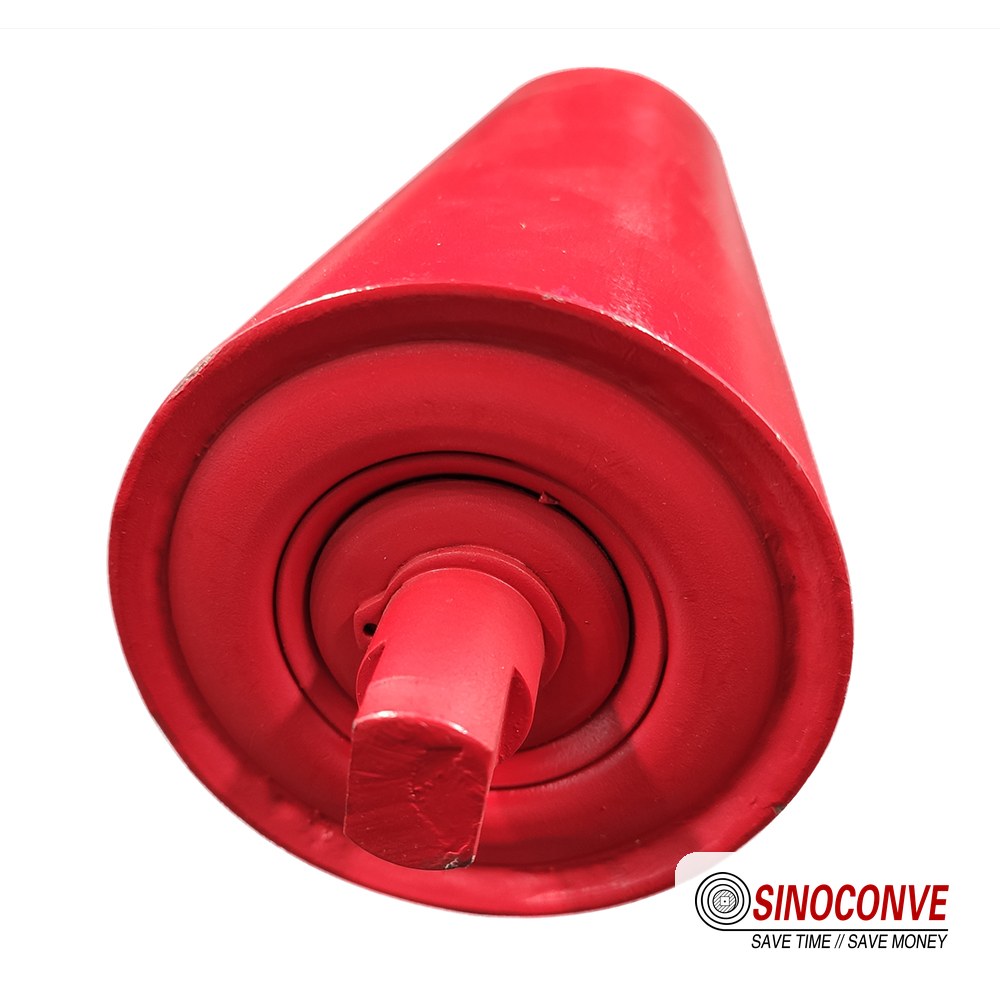
A mixed roller set with three different shaft-end geometries is a maintenance trap, not flexibility.
Tolerance and batch consistency are where the real damage hides, because every individual piece can pass while the assembled set still fails. If every roller in a shipment runs 0.08 mm over the target diameter and all of them drift the same direction, no single piece breaks its stated limit, yet the belt is now supported on a surface shaped differently from the one that was sampled. That is why the batch plot collected at gate three outranks any single inspection certificate. For a plant that also tracks belt alignment, our EP conveyor belt tracking guide connects roller runout to the wander symptoms a maintenance team actually sees.
10Choosing Who vs Checking What: How This Guide Fits With Our Roller Specification Guide
This article answers a commercial question: who should make your rollers, and how do you prove that they can repeat. Its companion piece answers a technical question: whether a given roller is correct for the duty in front of it, and what the load, speed, seal and material figures on a drawing actually mean. The two questions are genuinely separate, and buyers who merge them usually end up skipping one of them. A capable factory can still be quoting the wrong roller for your duty, and a perfectly specified roller from an incapable plant will not repeat itself in lot forty.
Two Questions, Two Documents, One Tender File
Start with the specification guide when the drawing itself is still open, because there is little point auditing a factory against a roller you have not yet defined.Start here when the drawing is settled and the real question has narrowed to which of three factories can deliver it reliably. Once both are done, keep the two documents together in the tender file: the specification guide sets the acceptance criteria and this guide sets the supplier qualification. Our conveyor roller types and load ratings walkthrough carries the specification side in full detail.
11Where Roller Sourcing Pressure Comes From
Roller sourcing pressure is not the same everywhere, and knowing where it originates sharpens the questions you send. In hard-rock mining and quarrying the enemy is impact and abrasion at the loading zone. In port bulk terminals it is salt-laden air acting on a continuous duty cycle. In aggregate and cement plants it is fine dust combined with elevated temperature. Each environment pushes a different gate to the front of the queue, and a supplier strong in one is not automatically strong in the next.
Matching the Environment to the Gate That Leads
Around iron ore and hard rock the impact gate leads, so ask for shock-load evidence and bearing seat design before anything else, and treat load ratings at a named speed as the first filter. On a port bulk material handling quay the corrosion gate leads, so a salt-spray duration and a coating thickness outrank a marginal load advantage. In a quarry or aggregate plant the contamination gate leads, so seal class and labyrinth design take first attention. The framework itself never changes; only the order of the gates moves. Our mining and quarrying overview lists the duty classes we meet most often on these sites.
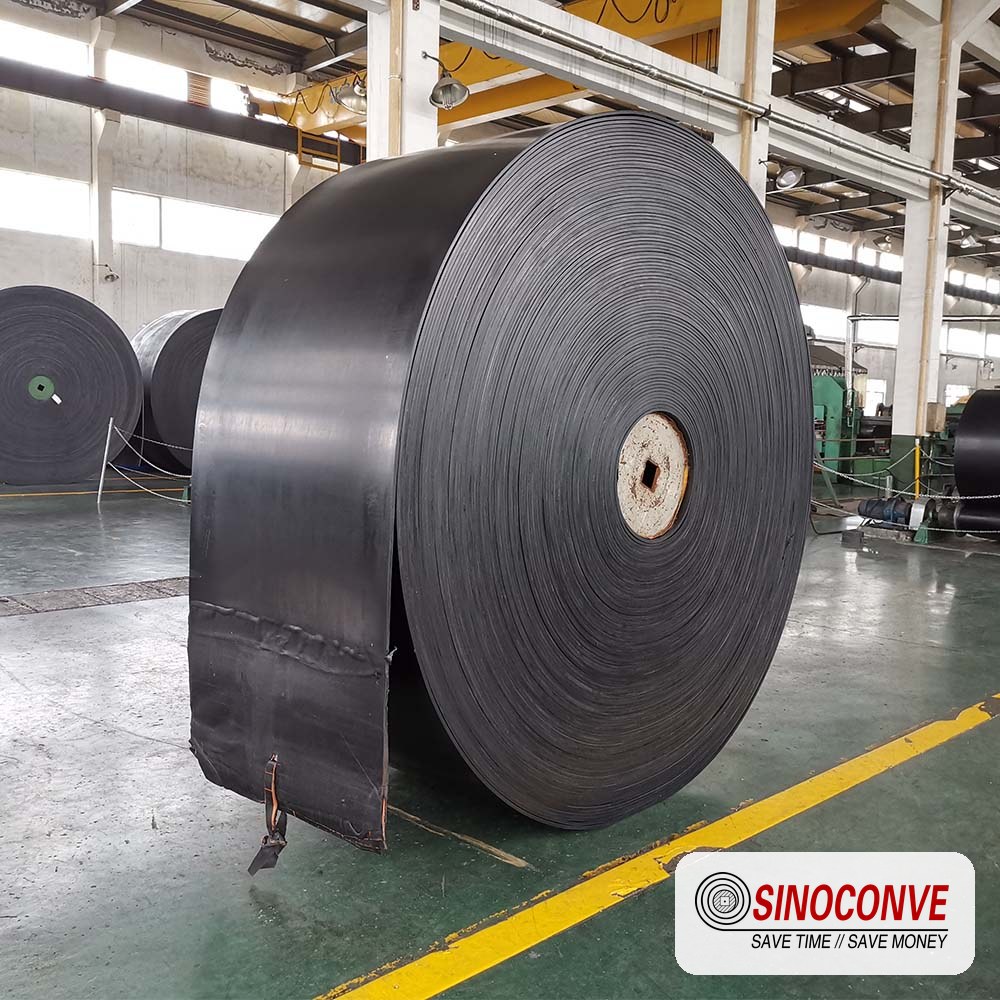
The factory walk-through should follow the route from tube forming to the test bench, in sequence.
12Turning the Framework Into a Repeatable Order Process
A framework only pays back once it becomes routine. Write the duty page once, keep the pre-qualification sheet on file, and re-run the pilot protocol whenever a supplier changes a tool, a bearing source or a seal grade. Those three documents will qualify every roller supplier you deal with from here on, and they take less than a day to write once.
Send us your duty page and your size list and we will answer the capability, quality, delivery and commercial blocks in writing, with the batch records attached. If a roller duty turns out to be an impact position rather than a support position, we will tell you before you buy, because discovering that on the line is the expensive version of the same conversation. Start it on our contact page, or read the related rollers and belting below while you finish mapping the line.

13Frequently Asked Questions
How long should it take to qualify a new conveyor roller manufacturer?
Budget six to ten weeks for a full qualification and resist the urge to compress it. The first article inspection takes about a week, the loaded run adds two to four weeks depending on your test frame, the exposure test adds another one to two weeks, and the pilot section needs a month of genuine service. A supplier who offers to jump straight to a full order after a single sample is telling you which gate they expect you to skip.
Do I really need to visit the factory, or is a video walk-through enough?
A visit is worth the two days above a certain spend, and you can set that threshold yourself. For a first order of a few hundred pieces a structured video walk-through works, provided you actually see tube forming, end-cap production, assembly and the test bench in sequence rather than a slow pan around a warehouse. Above a few thousand pieces, spend the travel budget.
Is the cheapest roller ever the right choice?
Sometimes, and only when two conditions hold at once. The first is that the cheaper roller's life is close enough to the better one that the annual replacement count barely moves. The second is that downtime on that section is genuinely cheap because no production sits behind it, such as a standby or bypass line. If either condition fails, the cheap roller loses on the total-cost arithmetic before you even count the maintenance hours.
What if my best candidate is a distributor rather than a factory?
Then audit the factory standing behind the distributor, not the distributor's catalogue. Ask which plant will actually produce the size you are quoting, and whether you may hold the drawing and the batch records for that plant. A distributor adds real value when it consolidates sizes and carries stock. It adds risk when it cannot tell you who formed the tube.
How many samples should I test before releasing a roller supplier?
Eight to twenty pieces for the first article, and never fewer than eight. One sample mostly proves that somebody walked to the machine that day. If the size is new to the plant, or the duty is at all severe, add four to eight more pieces into the exposure test so that you are judging a small population rather than an anecdote.
What does a fair warranty on rollers actually look like?
A fair warranty names the period, names what counts as proof, and names how a claim is settled. Look for at least twelve months from delivery, a defined evidence package such as a batch number and a photograph, and a stated replacement lead time. A clause that merely promises quality, with no period and no process attached, is not a warranty in any useful sense.
How do I compare two roller options that are not the same size?
Reduce each option to the same two numbers: annual replacement count and all-in cost per replacement. Once both are expressed that way, the size difference drops out and the comparison becomes arithmetic. This is the exact structure of the total-cost formula earlier in this article, and it works just as well for different diameters, different seal classes, or different suppliers.
Do I need to follow a formal roller standard to buy well?
No, but you need something that plays the same role. A recognised standard gives you a defined way to measure runout, load and seal performance, which is what makes supplier data comparable in the first place. If you cannot point to a standard, write your own acceptance figures down and put them in the RFQ. Either way, what matters is a number with a boundary, not a promise.
How often should I re-qualify an existing roller supplier?
Re-qualify whenever the risk changes, not on a calendar alone. A new tool, a new bearing source, a new seal grade, a shift to a different line or a step up in order volume are all triggers worth acting on. In steady production with no change to the part, an annual batch-record review plus an incoming spot check will normally be enough.
14Related Products You May Need
- Conveyor rollers and idlers for carrying, return and impact positions across the line.
- Rubber conveyor belts with cover grades matched to abrasive and dusty bulk duty.
- Chevron and patterned belts for inclined sections on the same handling system.
- The full product range when one enquiry has to cover belting, rollers and drives together.
- Request a roller quotation once your duty page and size list are ready to share.
15Related Blog Posts
- Roller types, materials and load ratings for the full specification side of this decision.
- Sealed rollers for fine dust on why contamination, not load, finishes most rollers early.
- Corrosion-resistant roller supply for coating and material claims that need a test behind them.
- Impact rollers at loading zones for shock-load evidence at transfer and feed points.
- Rollers and pulleys for port systems covering salt air and continuous terminal duty.
- Splicing buyer checklist for the joint decisions that sit alongside roller selection.
- Belt tracking guide for tying roller runout back to the wander you see on the line.