
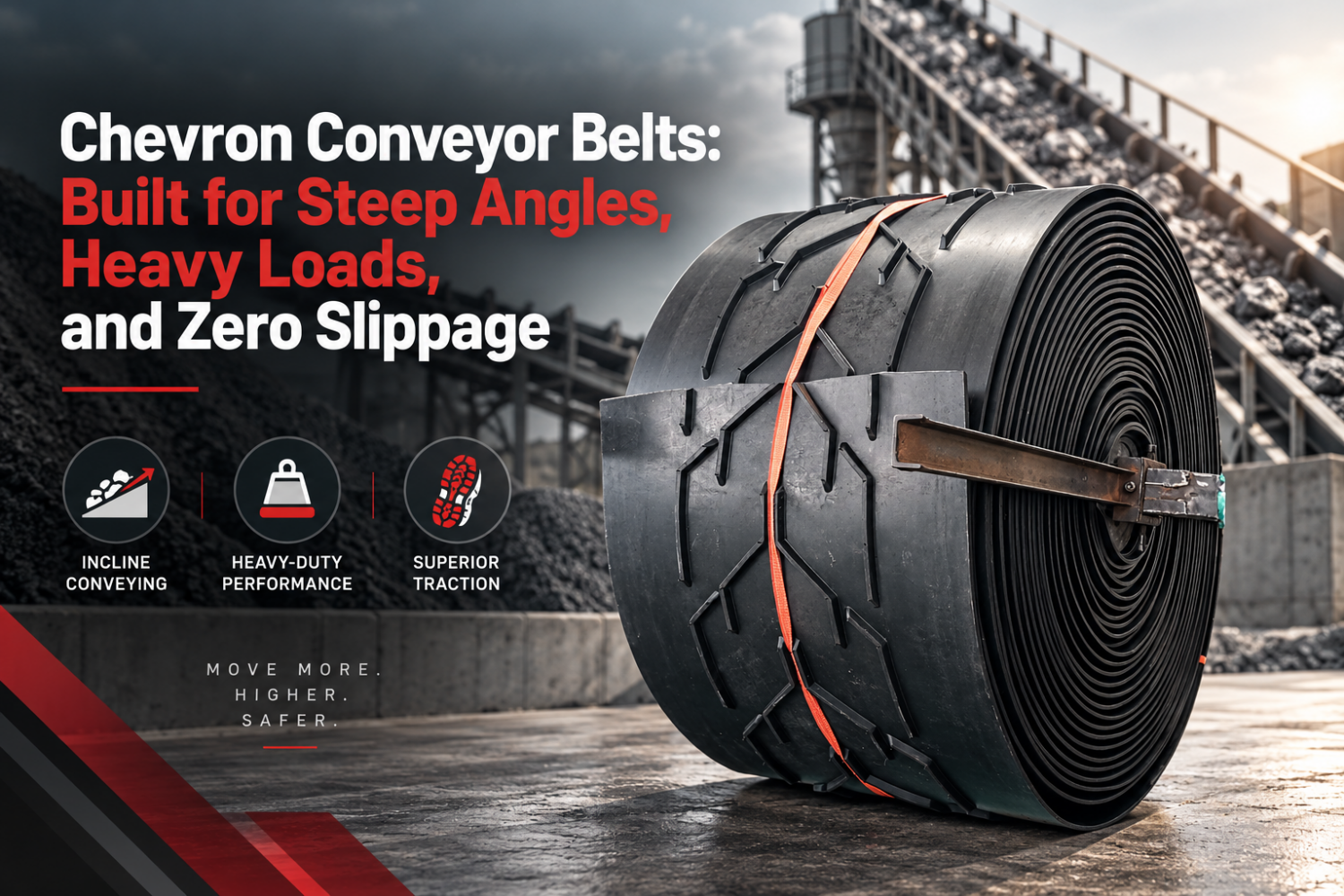
Chevron Conveyor Belts: Built for Steep Angles, Heavy Loads, and Zero Slippage
In industrial bulk handling where materials must be transported on steep slopes, standard flat belts often reach their physical limits—resulting in material rollback, spillage, reduced throughput, and excessive strain on drive systems.
Chevron conveyor belts (also known as cleated or patterned rubber belts) are engineered with integrally molded V-shaped cleats that provide continuous mechanical grip for elevating bulk materials at incline angles up to 40°. Whether handling crushed aggregates, damp ores, agricultural grains, or packaged goods, SINOCONVE Chevron belts ensure smooth flow, zero slippage, and maximum system uptime.
01What Makes Chevron Conveyor Belts Ideal for Incline Transport?
Standard flat belts rely solely on surface friction between the rubber cover and the conveyed material. When the conveyor incline exceeds the material's angle of repose (typically 15° to 22°), material slides backward.
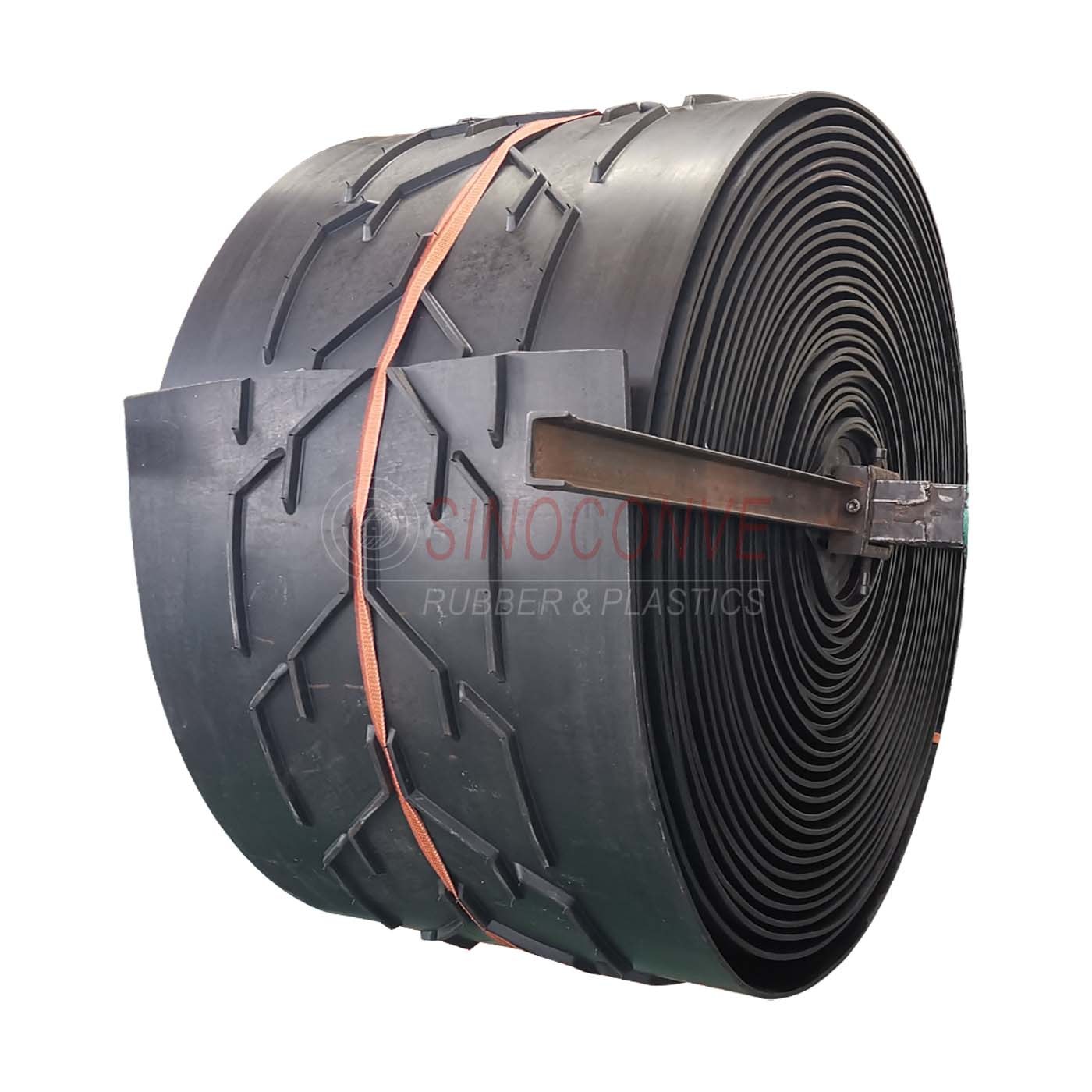
Chevron belts solve this by molding raised rubber profiles (cleats) directly into the top cover during the vulcanization process. These cleats act as continuous retaining pockets that mechanically trap and support the material column, allowing stable conveying on slopes from 20° up to 40° without structural spillage or surge loading.

02Core Advantages: Traction, Load Capacity, and Operational Efficiency
- Maximum Incline Capability (Up to 40°): Cleat heights ranging from 5 mm to 32 mm+ enable high-capacity conveying across steep trajectories where flat belts cannot operate.
- Zero Slippage in Wet, Sticky, or Dusty Conditions: The mechanical interlock between cleats and bulk materials prevents slippage even when handling damp coal, washed sand, or slurry-coated ores.
- Reduced Material Rollback & Spillage: Prevents costly material loss and minimizes dust generation along the conveyor transfer line.
- Heavy-Duty Carcass Construction: Built with multi-ply EP (Polyester-Nylon) or NN (Nylon-Nylon) synthetic fabric carcasses to resist high tensile stress, puncture, and impact loading.
- Self-Cleaning Cleat Geometry: Symmetrical open-cleat designs allow fine materials and moisture to shed easily, preventing sticky buildup.
03Key Applications: Where Chevron Belts Outperform Flat Belts
Chevron rubber conveyor belts are widely deployed across industries where vertical rise must be achieved in limited horizontal space:
- Quarrying & Mining: Crushed stone, gravel, sand, iron ore, bauxite, and mineral tailings (up to 35° incline).
- Agriculture & Grain Handling: Wheat, corn, soybeans, animal feed pellets, and chemical fertilizers (20°–30° incline).
- Cement & Building Materials: Clinker, limestone, raw meal, gypsum, and bagged cement.
- Ports & Bulk Terminals: High-speed vessel loading/unloading, stockyard stackers, and mobile transfer conveyors.
- Recycling & Waste Processing: Municipal solid waste, shredded scrap plastics, compost, and biomass fuel.
- Wood & Paper Industry: Wood chips, sawdust, bark, and recycled pulp.
04Chevron Cleat Pattern Selection Guide
Selecting the correct cleat geometry determines both conveying capacity and return-side roller wear. Below is an engineering comparison of common Chevron patterns:
| Pattern Type | Key Features | Recommended Materials |
|---|---|---|
| Open V-Pattern | Continuous drainage path; self-cleaning on return run; smooth idler transition. | Crushed rock, gravel, coal, dry grain, clinker |
| Closed V-Pattern | Enclosed pockets for maximum material retention; prevents fine powder rollback. | Fine sand, powdered lime, dry cement, seed, potash |
| U-Shape Cleats | Rounded corners minimize impact damage and product bruising. | Potatoes, sugar beets, citrus, cartons, fragile packages |
| Y-Pattern / Multi-V | High cleat density for steep inclines (30°–40°) with wet or slurry feeds. | Wet sludge, crushed damp ores, washed aggregates |
| C- / T-Cleats (High Profile) | Deep vertical profiles (25 mm–32 mm+) for extreme angles and bulky items. | Bagged products, recycling bales, bundled wood waste |
05Engineering Parameters: How to Specify Your Chevron Belt
When ordering or replacing a Chevron conveyor belt, ensure the following parameters match your conveyor layout and material properties:
| Design Factor | Engineering Recommendation |
|---|---|
| Incline Angle & Cleat Height | • 18° – 25°: 5 mm – 10 mm cleat height (low profile) • 25° – 32°: 15 mm – 20 mm cleat height (medium profile) • 32° – 40°: 25 mm – 32 mm+ cleat height (high profile) |
| Carcass Tension & Plies | EP200 to EP630+ (2 to 5 plies) selected according to motor power, conveyor center-to-center distance, and belt speed. |
| Minimum Pulley Diameter | Higher cleats require larger drive and tail pulleys to prevent rubber flexing fatigue and cleat root cracking. (e.g., 25 mm cleats typically require ≥ 400 mm drive pulley). |
| Rubber Cover Grade | DIN 22102 Grade X/Y for heavy abrasion; MOR/OR for oily grains & fertilizers; Heat-resistant (HR) grades for clinker up to 150°C. |
| Return-Side Idler Clearance | Use disc-type return idlers or spiral return rollers to prevent cleat wear on the return run. |
06Why Global Operators Choose SINOCONVE Chevron Belts
SINOCONVE is a professional manufacturer of heavy-duty industrial conveyor belting, exporting certified solutions to over 100 countries worldwide. Our Chevron belts feature:
- One-Piece Vulcanized Molding: Cleats are integrated directly into the top cover rubber under high-pressure vulcanization (never cold-glued), eliminating cleat detachment risks under extreme loads.
- Complete Pattern Inventory: V-shape, Y-pattern, U-pattern, and custom cleat pitches engineered for high conveying volume.
- Tailored Fabric Carcasses: EP100 to EP630, NN synthetic plies, and optional transverse rigidity layers for enhanced stability.
- Specialized Rubber Formulations: High abrasion resistance (≤90 mm³ DIN loss), oil resistance, flame retardance, and sub-zero cold resistance (-40°C).
- Custom Dimensions: Belt widths from 400 mm up to 2,200 mm; cleat heights from 5 mm to 32 mm.
- Fast Turnaround & Rigorous QC: Factory-direct tensile testing, adhesion testing, and international export packaging.
07Frequently Asked Questions (FAQ)
Q1: What is the maximum angle of incline for a Chevron conveyor belt?
A: Depending on the material lump size, moisture content, and cleat height (15 mm–32 mm), Chevron belts operate effectively at inclines between 20° and 40°. For vertical angles above 45° to 90°, corrugated sidewall conveyor belts are recommended.
Q2: Why are integrally molded cleats superior to cold-bonded cleats?
A: Integrally molded cleats are cured simultaneously with the belt's top cover during high-temperature vulcanization. This creates a homogeneous molecular bond that withstands severe shear forces, whereas cold-bonded cleats are prone to peeling under heavy or abrasive loads.
Q3: How do I choose between Open-V and Closed-V chevron patterns?
A: Open-V patterns allow liquid and fine debris to drain along the center groove, making them ideal for lumpy, wet, or self-cleaning applications. Closed-V patterns form enclosed pockets that prevent dry powders, fine grains, and sand from sliding down the center line.
08Ready to Move Materials Uphill?
Whether your facility handles wet coal, abrasive ores, bulk grain, or packaged goods, SINOCONVE Chevron conveyor belts provide the exact friction and mechanical control required to overcome steep elevation challenges.
📩 Looking for a customized chevron profile recommendation or factory-direct quotation? Visit our home page or contact our engineering team. We provide detailed technical drawings and quotations within 24 hours.

Products You May Need
| Chevron Conveyor Belt Moulded V/Y/U profiles for steep-angle incline conveying up to 40°. |
Rubber Conveyor Belt Heavy-duty multi-ply fabric belts for general bulk material handling. |
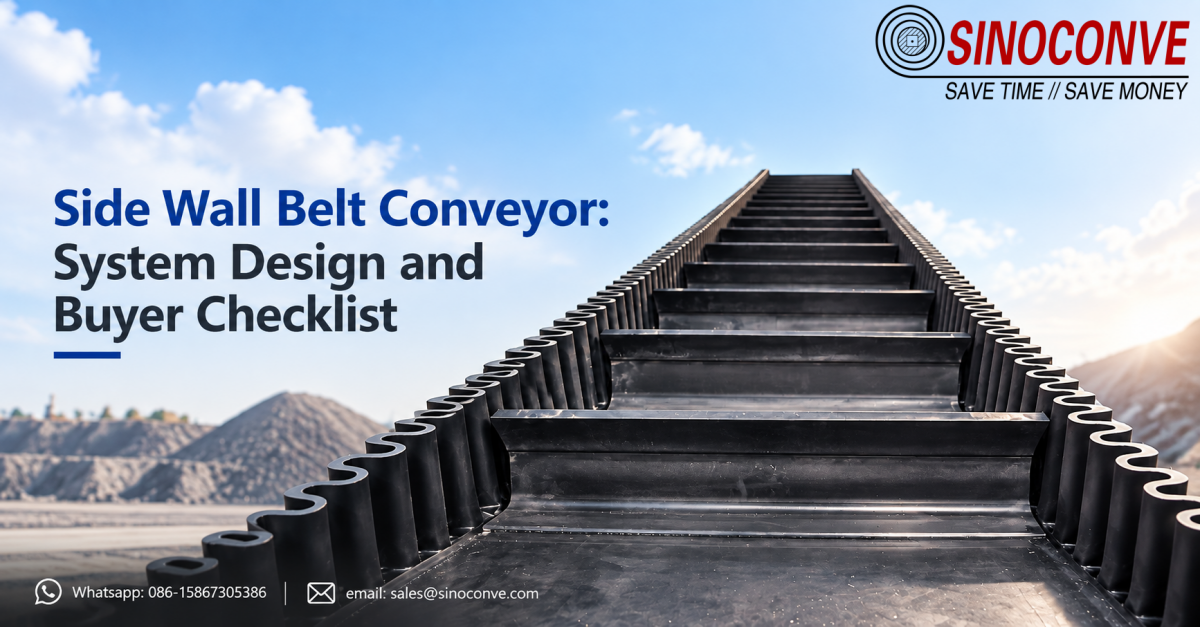
| Sidewall Conveyor Belt Corrugated sidewalls and cross cleats for vertical and 90° steep lifts. |
EP Rubber Conveyor Belt High-modulus polyester carcass for low elongation and shock resistance. |
| Full Product Catalog Explore our complete line of industrial belting, skirts, and accessories. |
Contact Engineering Team Submit belt width, incline angle, and lump size for exact profile sizing. |
Related Blog Posts
- Unleashing Efficiency: Chevron Rubber Conveyor Belt
- EP vs NN Conveyor Belt: Which Fabric Carcass Should You Choose?
- Sidewall Conveyor Belts: Space-Saving Solutions for Steep Transport
- Heat Resistant Rubber Conveyor Belt: Modern Solutions
- Conveyor Belt Sourcing Guide: How to Reduce Downtime
- How Importers Can Reduce Supply Risk When Choosing an Industrial Belt Supplier