
A conveyor belt order can look routine until the replacement date moves, the specification turns out to be incomplete, or the shipment arrives without the test documents needed for site approval. By then, purchasing is no longer comparing unit prices. Production is waiting for a component that may take weeks to remake and ship.
That risk is more relevant in a less predictable trading environment. The WTO's March 2026 outlook expects merchandise trade growth to slow and warns that transport disruption and higher energy costs remain downside risks. The OECD's Supply Chain Resilience Review reaches a practical conclusion for firms: resilience comes from navigating risk through agile, adaptable, and aligned supply chains rather than assuming disruption can be eliminated.
For conveyor belt sourcing, this means qualifying the supplier, specification, quality inspection plan, lead time, and replacement strategy before a bulk order is released. A reliable conveyor belt supplier should do more than quote width, length, and price. The supplier should help turn the application into a complete manufacturing and inspection requirement.
Start With Replacement Risk, Not the Supplier List
A belt used on a critical crusher discharge, mine overland route, kiln feed line, or port conveyor carries a different commercial risk from a belt on a non-critical transfer. Before contacting manufacturers, buyers should classify the consequence of failure: can the plant continue at reduced capacity, is a bypass available, and how long would a replacement take to install?
This determines how much verification is justified. A low-risk standard belt may be sourced through a normal approved-vendor process. A high-risk belt may need engineering review, factory inspection, witnessed testing, retained samples, splice support, and spare-belt planning.
|
Risk question |
Why it matters |
Sourcing response |
|
What happens if the belt fails? |
Defines the cost of downtime |
Set the level of supplier and inspection control |
|
Is the belt standard or custom? |
Affects replacement availability |
Approve drawings, markings, and construction before production |
|
How long is installation? |
A short belt change may still require a long shutdown |
Plan splice crew, equipment, and site access |
|
Is a qualified spare available? |
Determines emergency exposure |
Set minimum stock or reorder trigger |
|
Has the old belt failed early? |
The previous specification may be wrong |
Investigate failure before repeating the order |
Turn the Conveyor Duty Into a Complete RFQ
A quotation is only as comparable as the information sent to each supplier. Requests such as 'EP belt, 1000 mm wide' leave the conveyor belt manufacturer to assume the material, strength, covers, standards, and operating duty. Different assumptions produce different prices and make supplier comparison unreliable.
A practical RFQ should include the application, conveyor data, material condition, existing belt code, failure history, splice requirement, inspection scope, packaging, and destination. For a replacement, photos of the marking, top and bottom covers, edges, splice, pulleys, loading point, and damaged area can prevent repeated technical questions.
|
RFQ information |
Example |
Reason |
|
Material and condition |
Sharp limestone, wet fines, 0-180 mm |
Guides cover compound, impact, and cleaning review |
|
Conveyor data |
Length, lift, speed, capacity, angle |
Supports strength and belt-width checks |
|
Belt construction |
EP500/4, steel cord, chevron, sidewall |
Defines the product family |
|
Covers and standard |
5+2 mm, specified abrasion grade |
Creates a measurable quotation basis |
|
Pulley and splice data |
Pulley diameters and hot-splice requirement |
Checks flexibility and installation compatibility |
|
Failure evidence |
Edge wear, splice opening, early cover loss |
Helps correct the replacement specification |
|
Commercial scope |
Quantity, packing, destination, required date |
Supports production and lead-time planning |
Verify Whether the Supplier Can Manufacture the Required Belt
A company website can show many belt types without proving manufacturing capability. Ask which operations are performed in-house: fabric preparation, calendering, forming, vulcanization, steel-cord assembly, inspection, marking, and packing.
For a custom or OEM conveyor belt, confirm that the factory has produced the same belt family, width, strength, compound, or profile. Capability in standard EP belts does not automatically prove capability in steel cord, sidewall, heat-resistant, or flame-resistant products.
|
Supplier evidence |
What it should show |
Buyer follow-up |
|
Factory and process overview |
Relevant machinery and production steps |
Request a live audit, video call, or dated records |
|
Similar production history |
Experience with the requested construction |
Ask for anonymized examples or batch records |
|
Capacity statement |
Realistic output and width/length limits |
Check current loading, not only theoretical capacity |
|
Technical response |
Reasoned specification rather than copied wording |
Ask why the proposed belt fits the application |
|
Quality system |
Controlled procedures, records, and corrective action |
Verify certificate scope and issuing body |
Use ISO 9001 as a Process Signal, Not a Product Guarantee
ISO 9001 provides a framework for a quality management system and helps organizations deliver consistent products and improve processes. It is useful supplier evidence, but it does not prove that a particular conveyor belt complies with the buyer's technical specification.
Check that the certificate is current, issued by a credible certification body, and covers the relevant manufacturing site and activity. Then verify product controls separately: incoming material inspection, compound identification, production traceability, dimensional checks, physical testing, nonconformance handling, and final release.
Define the Product Standard and Test Plan Before Production
The order should identify the applicable belt standard and the properties that will be reported. ISO 14890:2026 covers rubber- or plastics-covered textile conveyor belts for general surface use. Steel cord construction is addressed by the ISO 15236 series. Other projects may specify DIN, RMA, SANS, AS, or customer standards. The quality inspection scope should name the governing requirement clearly.
Do not accept a quotation that lists several standards without stating which values will govern the order. If requirements conflict, the contract should define the priority. The inspection plan should also state test methods, frequency, acceptance values, reporting format, and whether the buyer or a third party will witness any tests.
|
Inspection area |
Typical check |
Required evidence |
|
Dimensions |
Width, length, total gauge, cover thickness |
Inspection sheet with tolerances |
|
Carcass or cords |
Ply/cord construction and tensile rating |
Product datasheet and production records |
|
Rubber performance |
Tensile, elongation, abrasion, ageing, or special resistance |
Laboratory test report |
|
Adhesion |
Cover-to-ply, ply-to-ply, or cord adhesion |
Test values and method |
|
Surface and edges |
Defects, marking, edge construction, profiles |
Final visual inspection record |
|
Packing and identification |
Roll number, length, weight, direction, protection |
Packing list and roll photographs |
Use Sampling Carefully for Bulk Orders
ISO 2859-1:2026 defines acceptance sampling plans for inspection by attributes. It can help buyers and suppliers agree how many units or rolls will be checked for visible and dimensional characteristics in a lot. It should not be used as a substitute for critical performance testing or process control.
For bulk orders, separate the inspection plan into three groups: checks performed on every roll, tests performed by batch, and destructive tests performed on agreed samples. Define what happens when a result fails - retest, expanded sampling, segregation, rework, or rejection - before production begins.
Approve Samples Without Mistaking a Sample for the Bulk Order
A sample can confirm colour, surface, marking, profile, packaging, and selected test properties. It cannot prove consistency across a bulk order or show full-roll winding, edges, and splice behaviour.
For an OEM conveyor belt, approve the artwork, belt code, construction, dimensions, compound, tolerances, packaging, labels, and batch requirements in writing. Bulk production should still require batch-specific records.
Break Lead Time Into Stages
A single statement such as '30 days lead time' is difficult to manage. Ask for milestone dates covering technical approval, materials, production, testing, packing, export, transit, customs, and site delivery.
The production date is not the arrival date. WTO reporting continues to highlight trade-policy uncertainty, transport disruption, and fuel-cost risks. Build a buffer around transit and customs.
|
Lead-time stage |
Risk to confirm |
Control action |
|
Technical approval |
Late drawing or specification changes |
Freeze the order data before scheduling |
|
Raw materials |
Special fabric, steel cord, or compound unavailable |
Confirm stock or procurement date |
|
Production queue |
Factory capacity committed to other orders |
Request planned start and finish dates |
|
Testing and inspection |
Reports or witness dates delay release |
Book inspection before production ends |
|
Packing and logistics |
Roll handling, vessel space, customs documents |
Confirm packing drawing and shipping plan |
|
Final delivery |
Port, border, or local transport disruption |
Hold schedule buffer and track milestones |
Plan OEM Marking and Packaging Before the Belt Is Made
OEM requirements can delay an otherwise standard order when they are discussed too late. Confirm the belt marking text, logo artwork, model code, repeating distance, ink colour, roll labels, neutral or branded packaging, document language, and carton or pallet marks before production.
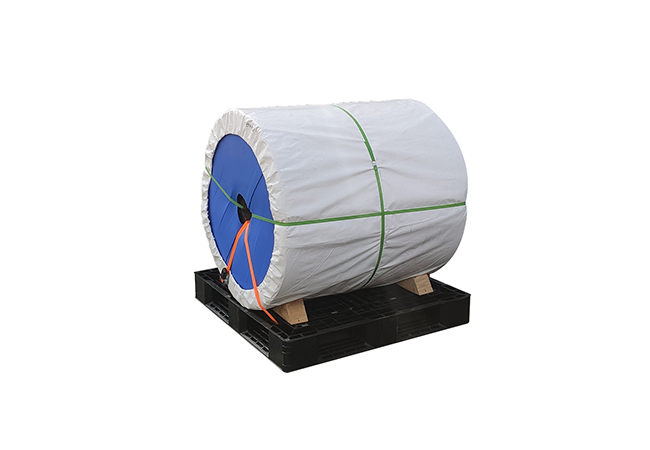
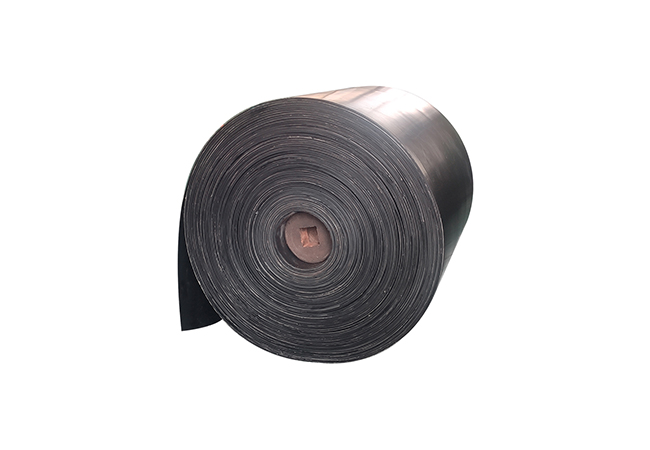
For heavy rubber belts, packaging is functional protection. The roll needs secure winding, suitable cores or lifting points, edge protection, moisture protection where required, and clear identification. The buyer should approve how the roll will be unloaded and stored at destination, especially when a single roll is heavy or unusually wide.
Compare Total Replacement Cost, Not Price per Metre
The cheapest quotation is not always the lowest-cost replacement. Compare price with expected service, inspection, splicing, freight, installation, downtime, and the risk of a second replacement.
The comparison should remain evidence-based. Do not accept unsupported lifetime promises. Ask what construction or compound difference is expected to improve performance and which operating assumption supports that recommendation.
Supplier Evaluation Checklist
|
Checklist item |
Acceptable evidence |
Warning sign |
|
Application review |
Written recommendation linked to conveyor data |
Quotation issued without technical questions |
|
Manufacturing capability |
Relevant process, size, and product history |
Factory capability described only in general terms |
|
Specification control |
Approved datasheet and drawing |
Different codes across quotation, sample, and contract |
|
Quality management |
Valid certificate plus product records |
Certificate used as the only quality evidence |
|
Testing |
Methods, values, frequency, and traceable reports |
Generic test report unrelated to the batch |
|
Lead time |
Stage dates and material confirmation |
One delivery promise with no production plan |
|
OEM control |
Approved artwork, marking, labels, and packing |
Branding left until production is complete |
|
After-sales response |
Defined contact, complaint process, technical support |
No process for nonconformance or field failure |
Red Flags Before a Purchase Order Is Released
Red flags include recommending a belt without application data, refusing to separate cover and total thickness, using certificates from another factory, providing unclear test methods, changing the construction between documents, or promising an implausible delivery date.
Another red flag is an immediate upgrade to a stronger or thicker belt without investigating the old failure. Edge wear, splice opening, trapped-material grooves, heat cracking, oil swelling, and tensile overload require different corrections.
FAQ
How do I verify a conveyor belt manufacturer?
Verify the legal company and manufacturing address, audit the relevant production processes, review similar product records, confirm the quality-system scope, and require batch-specific product documents.
Is ISO 9001 enough to approve a conveyor belt supplier?
No. ISO 9001 is useful evidence of a quality management system, but the belt must still be evaluated against the required product standard, specification, tests, and application.
Should buyers place a sample order before a bulk order?
A sample or pilot can confirm construction, appearance, markings, and some test values. Bulk production still needs an approved specification and batch inspection plan.
What affects conveyor belt lead time?
Technical approval, raw materials, factory loading, belt construction, vulcanization, testing, inspection, packing, inland transport, export documents, transit, and customs all affect final delivery.
What should be inspected before shipment?
Confirm dimensions, construction, covers, test values, surface and edges, marking, roll identification, packaging, quantity, and required documents.
How can buyers reduce belt replacement downtime?
Investigate the old failure, approve the correct specification early, qualify more than one supply option where practical, maintain a critical spare or reorder point, and arrange splice and installation resources before delivery.
Final Sourcing Advice
A reliable sourcing process converts operating risk into measurable supplier requirements. Start with the conveyor duty and failure history, qualify the manufacturer's actual capability, approve the specification and OEM details, define inspection and test evidence, and manage lead time by milestones. This does not remove global sourcing risk, but it reduces the chance that a replacement belt becomes an avoidable production emergency.