Conveyor Cleaning System: System Design and Buyer Checklist
A conveyor cleaning system only works when it is scoped as one subsystem, with the boundary drawn from the discharge pulley along the return strand to the bin, screw conveyor or dewatering endpoint that finally accepts the recovered material. This guide sets out that boundary and the four interfaces that decide performance: the load point and skirt boards, the return strand and its idlers, the discharge endpoint, and the recovered-tonnage capacity behind it. A component matrix then maps each family, primary and secondary scrapers, ploughs, spray boxes, air knives, brush rollers and vibratory devices, to the strand zone it covers and the conflict risk with adjacent equipment. It works the water, air or neither rule, the seven design variables that stretch the scope, a four-checkpoint maintenance plan with thresholds, a worked endpoint calculation for a 1,200 mm belt, a procurement checklist and five witnessed acceptance criteria.
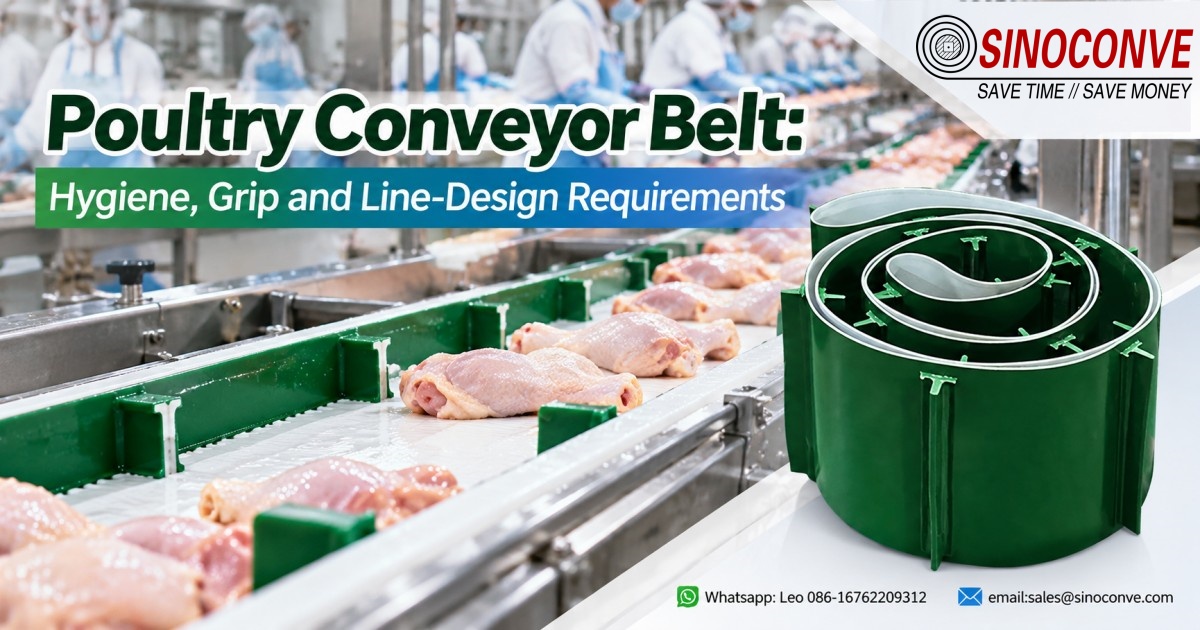
Poultry Conveyor Belt: Hygiene, Grip and Line-Design Requirements
Poultry processing asks one belt to survive hot rendered fat, standing water, bone splinters and knife tips, and a washdown cycle that runs several times a shift with hot chlorinated chemistry. This guide maps every station from live-hang and crate return through cut-up, deboning and portioning to grading, weighing and packing, and recommends the right belt for each. It compares food-grade PVC, PU and polyolefin under fat, cold and sanitizer exposure, explains why blue and white are functional HACCP colours rather than styling, and shows how bone and knife damage becomes a foreign-body risk. Acceptance testing, a procurement checklist, minimum pulley diameters and a simple total-cost sum round out the decision map.
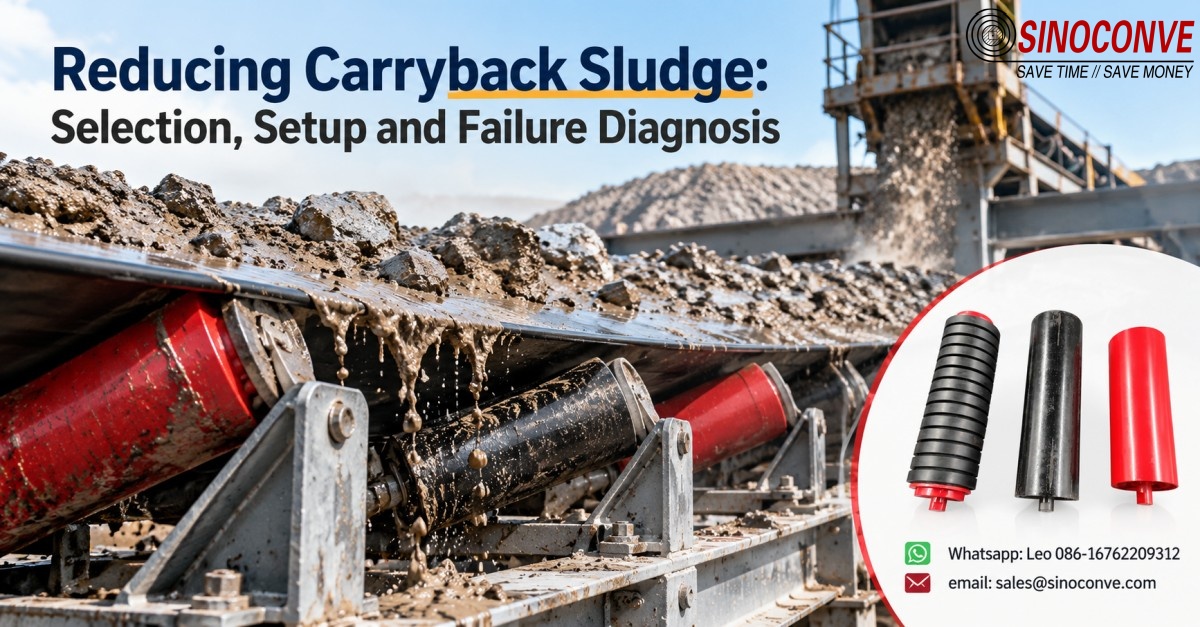
Reducing Carryback Sludge: Selection, Setup and Failure Diagnosis
Carryback only becomes a real problem once it turns to sludge: wet fines that pack the return idlers, force the belt off centre and trip the line. This guide explains why adding another scraper rarely fixes reducing carryback sludge, and where the money belongs instead. It walks the cause chain from adhesion to secondary buildup, transfer-point containment with skirtboards and chutes, return-side flow control, wash-water volume and reuse, solid-liquid separation, and a worked sump-sizing example for a 1,200 mm belt moving 1,000 t/h at 2.8 m/s. It closes with a six-reason failure diagnosis, shift-level cleaning routines, an RFQ checklist and the commissioning mistakes that quietly undo a good design.
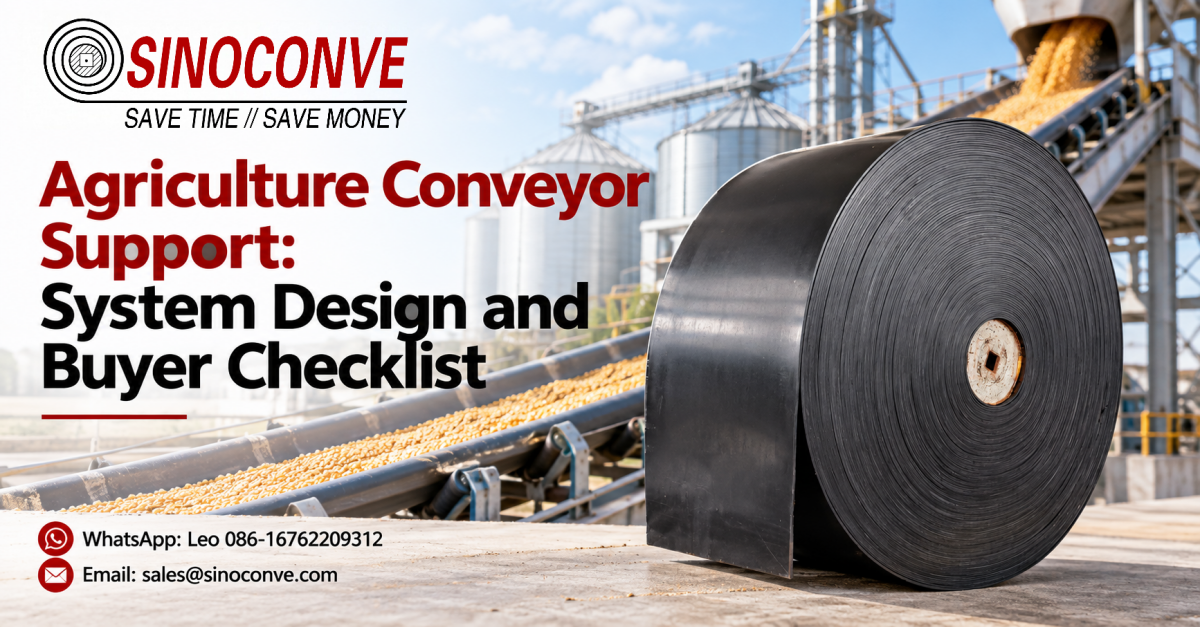
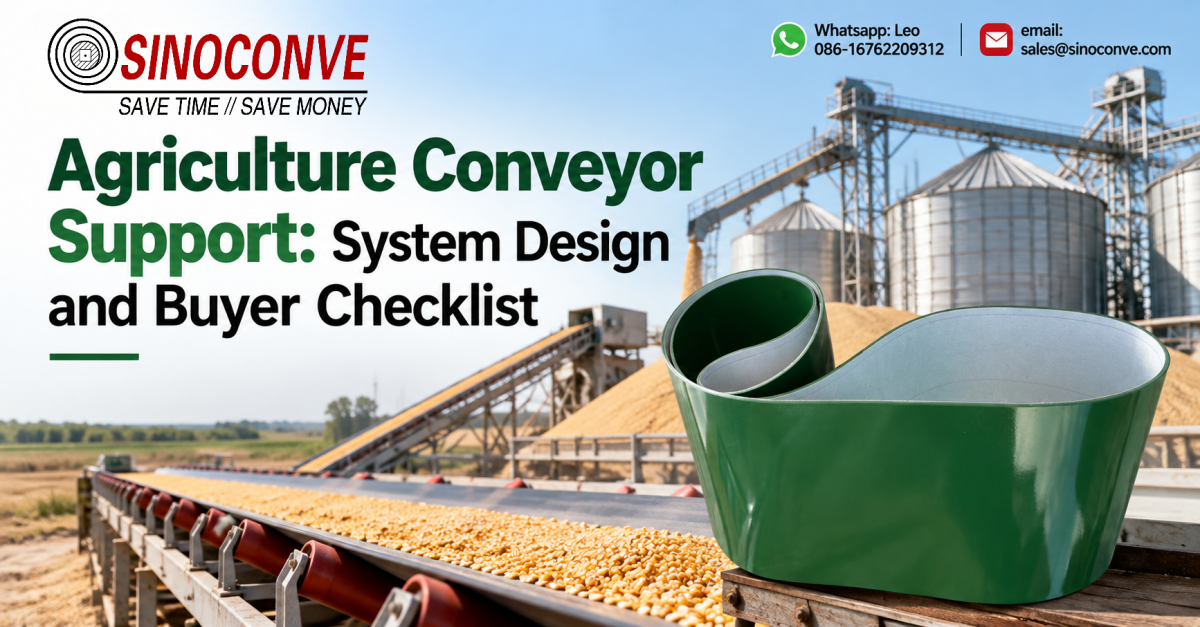
Agriculture Conveyor Support: System Design and Buyer Checklist
Farm conveying support is spaced from load, not from habit. On grain or produce running up to about 0.6 tonnes per metre, this guide sets carry idlers at roughly 1.2 to 1.5 metres and frame bays at 2.0 to 3.0 metres, then tightens both around every loading and transfer point. On mobile or portable units the limiting factor is frame stiffness under wind and uneven ground, so support spacing is reduced before belt tension is increased. Idler spacing, frame and truss spacing, load calculations and troughing angle each get a dedicated section. Open-air exposure, dust and chaff accumulation, ground conditions and foundations, maintenance access, and drive and take-up support are all covered. It finishes with an inspection route, a buyer checklist and expected service lives for support components.
Fruit Conveyor Belt: Hygiene, Grip and Handling Requirements
Fruit damage on a belt is a drop-height problem and a belt-softness problem before it is anything else, and both are settled at the drawing stage. This guide holds every transfer drop under 150 mm where the fruit allows it and specifies belt hardness around Shore A 55 to 70 for soft fruit, moving to Shore A 75 to 85 only for hard fruit. It explains why a belt that grips cleanly on an incline can still bruise fruit on level ground, because an aggressive pattern concentrates contact pressure into the skin instead of spreading it. Bruising thresholds by fruit type, surface texture rules, slopes and drop heights, and hygiene planning around juice and sugar residue are all covered. Cleaning without damaging the belt, belt type by fruit category, grading line interfaces and soft transfer points follow. It closes with inspection points, splicing advice and a buyer checklist.
Return Side Belt Cleaning: Components, Positioning and Failure Diagnosis
Return side belt cleaning is decided in the first 300 mm, not at the blade. This guide shows how to place a primary cleaner within 25 mm of the pulley face, mount a secondary cleaner roughly one belt width downstream, and set tip pressure around 20 to 40 newtons per 100 mm of belt width for a polyurethane tip. It compares primary and secondary blades, brush rolls, air knives and ploughs, and explains which duty each one suits. Mounting position, blade pressure, wear limits and tip material hardness are covered with working figures. Separate sections deal with the interaction between cleaners, belt tracking, sticky buildup and the discharge chute. A failure diagnosis chart addresses smearing, chattering and edge damage, followed by inspection intervals, a retrofit checklist and a method for measuring cleaner performance.