
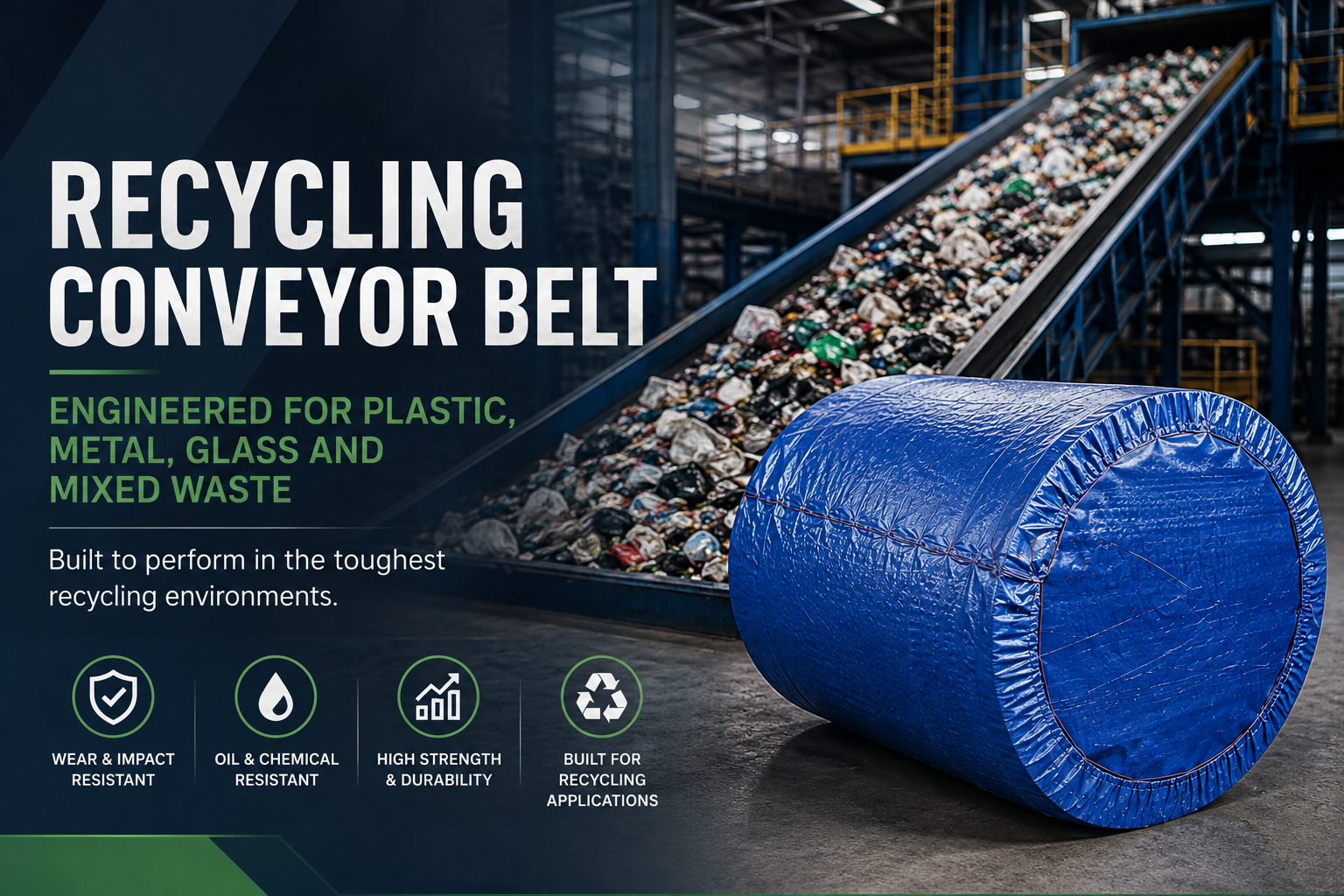
Recycling Conveyor Belt Manufacturer for Plastic, Metal, Glass and Mixed Waste
A recycling conveyor belt rarely handles a clean, consistent material stream. Plastic film can arrive with broken glass. Metal scrap may have sharp edges or oily residues. Mixed municipal or industrial waste can change in bulk density, moisture, particle size and contamination from one load to the next. For a recycling plant buyer, that variability makes supplier selection more important than simply comparing belt width and unit price.
A capable recycling conveyor belt manufacturer should be able to translate the actual waste stream and conveyor conditions into a workable belt specification, explain what needs to be verified before production, and provide documentation that lets the buyer check what is being supplied. This guide focuses on that procurement process: what information to put in an RFQ, what manufacturing capability matters, what evidence to request, and how to reduce the risk of ordering a belt that fits dimensionally but does not fit the duty.
Quick Answer for Recycling Plant Buyers
Do not qualify a recycling conveyor belt supplier from a catalog description alone. Start with the waste stream, loading conditions, contamination, conveyor geometry and current failure mode. Then verify the proposed cover, carcass, belt dimensions, surface or cleat configuration, splice requirements, manufacturing capability, inspection documents and commercial terms before comparing quotations.
1. Why Recycling Conveyor Belts Are a Different Procurement Problem
In a quarry, the conveyed material may remain relatively predictable. A recycling line can be much less stable. One conveyor may receive plastic packaging, another ferrous or non-ferrous scrap, and another a mixed fraction containing glass, paper, wood, metal and residual waste.
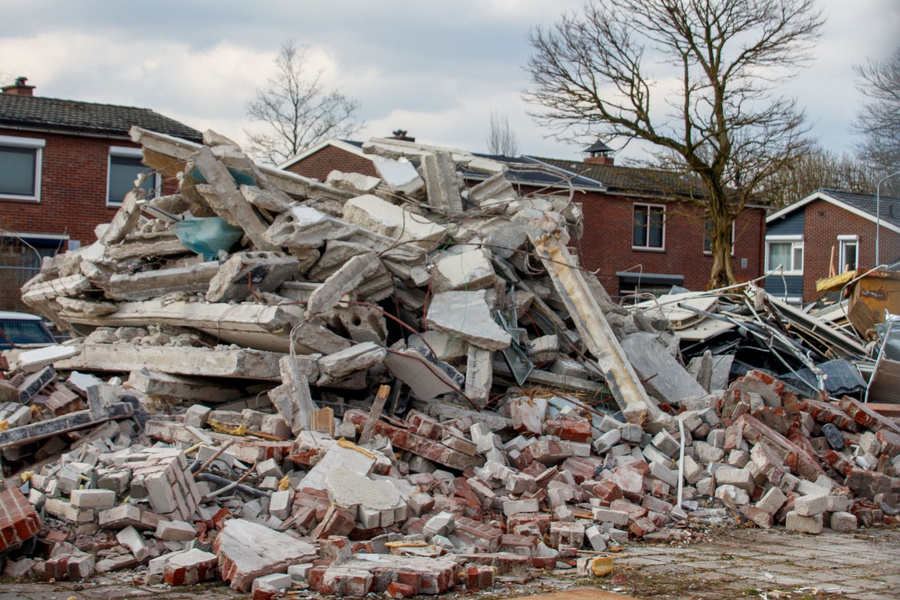
That changes how a buyer should prepare the specification. “Waste sorting belt” or “rubber conveyor belt for recycling” describes the application, but it does not tell a manufacturer what the belt must withstand.
| Material Stream | Likely Operating Concern | What the Buyer Should Verify | Why It Matters |
|---|---|---|---|
| Plastic and packaging waste | Variable shapes, light fractions, contamination and possible incline conveying | Surface configuration, containment, belt tracking and actual loading pattern | A belt designed only around tensile strength may not address material control. |
| Metal scrap | Sharp edges, impact, cutting, oil or grease contamination | Cover resistance, carcass protection, loading-zone conditions and contamination | Cutting and impact are not the same failure mechanism as gradual abrasion. |
| Broken glass | Cutting, gouging and localized cover damage | Cover construction, impact conditions and transfer-point design | Sharp fragments can damage a belt even when general wear resistance appears adequate. |
| Mixed waste | Changing density, moisture, sharp objects and unknown contaminants | Worst credible operating condition rather than average material only | The most damaging fraction may determine the required belt construction. |
The practical lesson is simple: specify the belt around the dominant failure risks, not around the industry name. SINOCONVE's guide to rubber conveyor belt materials and failure risks provides additional background on how the cover and carcass perform different jobs in an industrial belt.

2. Start the RFQ With the Waste Stream, Not the Belt Price
A useful recycling conveyor belt RFQ should make it possible for the manufacturer to understand the application before quoting a construction. For an existing plant, the current belt specification is a useful starting point, but it should not automatically become the new specification if the old belt has been failing.
Describe what is actually transported. Is the stream mostly rigid plastic, plastic film, shredded material, metal parts, glass cullet or unsorted waste? Are sharp pieces occasional or continuous? Is oil or grease present? Is the material wet? What is the largest expected piece, and how does material enter the conveyor?
Loading deserves particular attention. Material dropped from height can create impact damage that is different from normal running wear. A belt can therefore show severe damage near the loading zone while looking relatively healthy elsewhere. In that situation, simply asking for a more abrasion-resistant belt may not address the real problem.
RFQ Warning
If the existing belt has cuts, edge damage, swelling, delamination, abnormal wear or repeated splice problems, include photographs and describe where the damage starts. Failure information can be more useful to the supplier than sending dimensions alone.
3. Match the Belt to the Dominant Recycling Failure Mechanism
3.1 Abrasion, Cutting and Impact Should Not Be Treated as One Problem
Recycling buyers often use “wear resistant” as a catch-all specification. The term is too broad for mixed waste.
Abrasive fines can gradually remove cover material. Broken glass or sharp metal can cut or gouge the surface. Heavy pieces landing at a transfer point introduce impact. These mechanisms can occur together, but they should still be identified separately because the appropriate belt construction and system checks may differ.
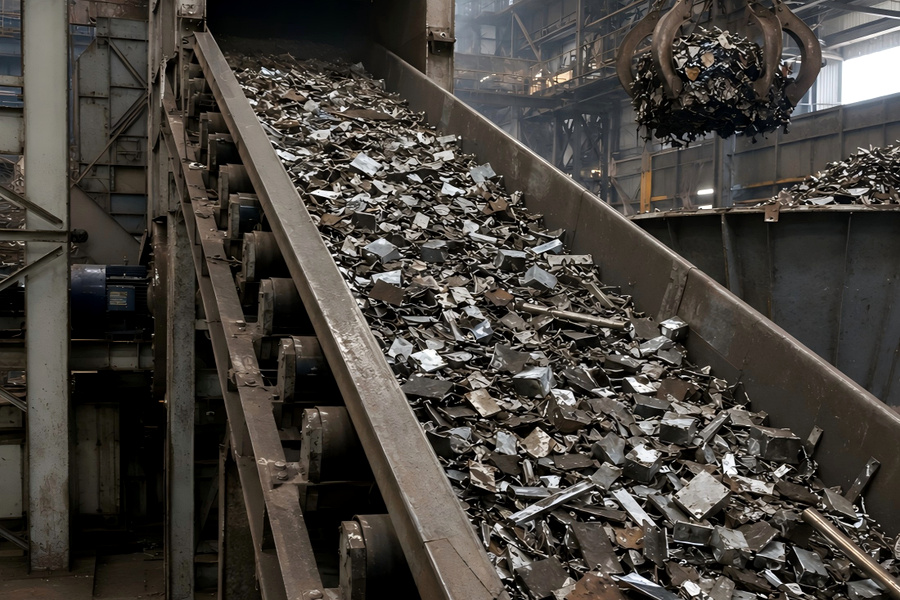
For buyers evaluating a rubber conveyor belt, the discussion should therefore include both the cover and the carcass rather than only overall thickness. The supplier also needs to understand the loading zone, transfer arrangement and any recurring edge damage.
3.2 Oil Contamination Changes the Cover Requirement
Recycling streams are not always dry. Scrap components, industrial waste and recovered parts may carry lubricants, grease or processing residues. Repeated oil exposure can affect unsuitable rubber compounds, so contamination should be declared during RFQ preparation rather than discovered after installation.
The useful questions are: what type of contamination is present, how frequent is exposure, and does the belt simultaneously face cutting, abrasion, heat or moisture? Oil resistance is one requirement; it does not automatically solve the other failure mechanisms.
For applications where oily waste is a significant part of the stream, buyers can review SINOCONVE's oil resistant conveyor belt buying guide before preparing the specification.
3.3 Incline and Containment May Change the Belt Geometry
Some recycling conveyors lift shredded material or sorted fractions between separation, processing and baling stages. If material rolls or slides back on an incline, changing only the rubber compound will not solve the conveying problem.
Cleats or sidewalls may be considered where the conveyor layout and material behavior require additional retention. Their dimensions should be selected around the actual material, incline and conveyor arrangement rather than copied from another line.
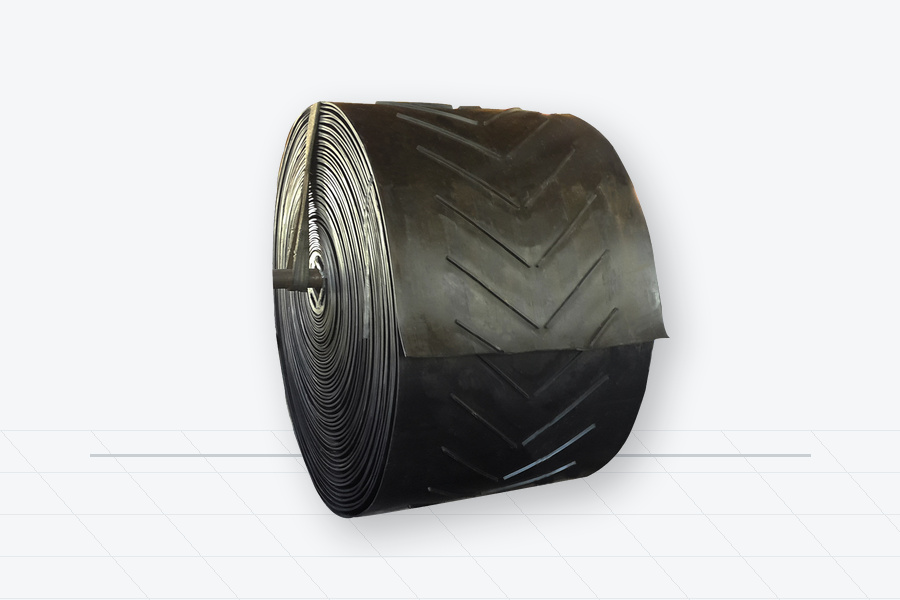
This is especially important with mixed waste because oversized or irregular pieces can interact differently with cleats and containment features. The supplier should receive information on particle or piece size and conveyor geometry before recommending the configuration.
4. What to Verify in a Recycling Conveyor Belt Specification
Once the application risks are clear, the RFQ can move from “waste sorting belt required” to a specification that competing suppliers can answer consistently.
| RFQ Item | What the Buyer Should Provide | What to Verify With the Manufacturer |
|---|---|---|
| Waste stream | Material types, contamination, sharp pieces, moisture and largest pieces | Whether the proposed cover is intended for the identified exposure |
| Belt dimensions | Width, length and required thickness where specified | Manufacturing tolerance and final supplied dimensions |
| Strength / carcass | Existing approved specification or conveyor design data | Proposed carcass type and rating against the application |
| Loading | Capacity, loading method, drop conditions and transfer details | Impact and cover-protection implications |
| Conveyor geometry | Incline, pulley information and relevant drawings | Compatibility with belt construction, profiles, cleats or sidewalls where required |
| Splice | Current or required splice method | Compatibility with the supplied belt and installation plan |
| Documentation | Required standard, inspection or test-document requirements | What documentation will be supplied with the order |
Buyer Tip: If every parameter is not available, send the existing belt specification, conveyor drawing, nameplate information and clear photographs. A responsible supplier should distinguish confirmed data from parameters that still require engineering review rather than filling gaps with assumptions.
5. How to Qualify a Recycling Conveyor Belt Manufacturer
For a bulk order, the belt itself is only one part of supplier risk. Procurement also needs evidence that the factory can manufacture the required construction consistently and inspect it before shipment.
5.1 Check Whether the Factory Can Actually Manufacture Your Specification
SINOCONVE's conveyor belt factory was established in 1988 and has more than 35 years of manufacturing experience. According to the company's current production information, the conveyor belt operation has more than 200 employees, including 26 engineers and 15 quality-control personnel, as well as a laboratory.
The factory operates eight fabric conveyor belt production lines and two steel-cord conveyor belt production lines. Its stated annual capacity is 10 million meters of fabric conveyor belt and 3 million meters of steel-cord conveyor belt. Current manufacturing information lists belt widths from 100 mm to 3000 mm, thicknesses from 3 mm to 100 mm, fabric ratings from EP100 to EP600 and steel-cord ratings from ST500 to ST7500.
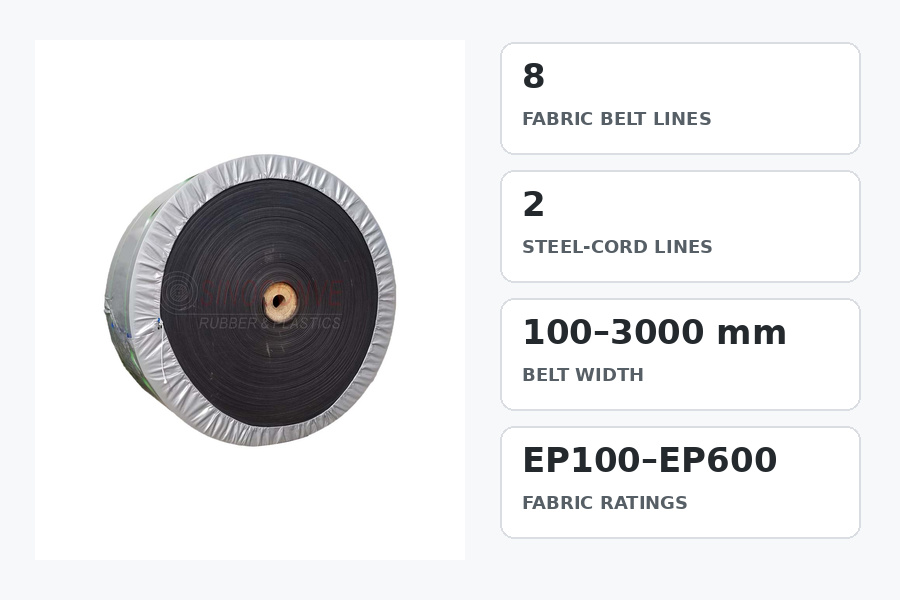
Specification Note: These ranges describe manufacturing capability. They are not a recommendation that a recycling plant needs the highest available rating. The required construction still depends on conveyor design and duty.
5.2 Ask How Quality Is Controlled, Not Only Whether QC Exists
SINOCONVE's stated inspection process begins with incoming raw-material checks. Production is monitored during manufacturing, and completed products undergo testing and final inspection before shipment. Product test reports can be supplied, and third-party testing can be arranged where a customer has special standard requirements.
For procurement, the useful step is to define required documentation before placing the purchase order. Ask which properties will be inspected for your specific belt, what report will accompany the shipment, and what acceptance requirements will be used.
A certificate name alone should not replace product-level verification. The buyer needs to know whether the documents being reviewed relate to the management system, the belt specification, a material property or a particular test.
5.3 Confirm Customization Before Comparing Quotations
Recycling plants often need more than a generic stock belt. SINOCONVE states that its conveyor belts can be customized according to customer requirements, with OEM/ODM support and customization based on drawings, samples and specified requirements.
The company manufactures conveyor belts to order rather than relying on general finished-product stock. That makes complete RFQ data particularly important: the quotation and production plan should be based on the belt the plant actually needs.
6. Compare Suppliers on Evidence, Not Marketing Claims
A lower unit price can be attractive, especially for a long belt or a multi-line recycling project. But a commercial comparison is incomplete when one quotation clearly defines construction and inspection while another contains only width, length and price.
A practical supplier comparison should ask whether each bidder has addressed the same application and the same specification.
| Supplier Qualification Check | What Good Evidence Looks Like | Purchase Risk if Missing |
|---|---|---|
| Application review | Supplier asks about material, contamination, loading, conveyor geometry and failure history | Quotation may be dimensionally correct but technically incomplete |
| Construction definition | Cover, carcass, dimensions and special configuration are clearly stated | Different quotations may not represent equivalent products |
| Manufacturing capability | Factory can show capability relevant to the required belt type and dimensions | Higher risk of specification mismatch or unclear production responsibility |
| Inspection and reports | Required checks and deliverable documentation are agreed before production | Buyer may have little evidence for incoming acceptance |
| Commercial terms | MOQ, production time, payment and packaging are defined in the quotation | Unexpected cost or schedule issues after order placement |
| After-sales process | Supplier explains what evidence is required if a product-quality issue occurs | Slower dispute resolution when a problem appears |
For a new supplier, standard samples or small test samples may also be useful where they can meaningfully verify a required property. SINOCONVE states that such samples can be provided subject to the application and request.
7. MOQ, Lead Time and Packaging Should Be Part of the Technical Purchase
SINOCONVE's stated minimum order quantity for conveyor belts is 50 meters. Standard production lead time is normally around 30 days; urgent orders may be reviewed for an accelerated production channel, with a stated typical urgent range of 15–20 days. Final timing should still be confirmed against the actual specification, quantity and production schedule before the purchase order is released.
Packaging also matters for international recycling plant procurement. SINOCONVE can use PVC board and iron-sheet protection for conveyor belts, with palletizing where required, to help protect the belt during transportation. Customized logos and packaging can also be discussed.
Buyers should include destination, required quantity, roll configuration and any packaging restrictions in the RFQ. This gives the manufacturer enough information to quote the commercial package rather than only the belt itself.
8. RFQ Checklist for a Waste Sorting Belt
Before sending a bulk-order inquiry, prepare the information that directly changes belt selection or quotation accuracy:
- Material: plastic, metal, glass, shredded waste, mixed waste or another recovered fraction.
- Contamination: oil, grease, moisture, chemicals or other relevant exposure.
- Material behavior: approximate largest piece, sharp edges and whether heavy pieces create impact.
- Belt dimensions: required width and length, plus the approved thickness where applicable.
- Current specification: existing belt construction, strength rating and cover information if known.
- Operating duty: capacity, belt speed, loading method and hours of operation where available.
- Conveyor layout: incline, pulley information, transfer points and relevant drawings.
- Special geometry: smooth, cleated, chevron or sidewall configuration if already established by the conveyor design.
- Failure evidence: photos and descriptions of cuts, wear, swelling, edge damage, mistracking or splice problems.
- Procurement requirements: quantity, destination, required documentation, applicable standard and target delivery date.
If you are still determining the belt construction, SINOCONVE's rubber conveyor belt selection guide explains why material, reinforcement, surface and operating conditions should be reviewed together.
9. Frequently Asked Questions
What conveyor belt is suitable for mixed waste recycling?
There is no single belt specification for all mixed waste. The decision depends on the actual stream and its dominant risks: abrasion, sharp glass or metal, loading impact, oil contamination, moisture, incline and conveyor tension can all change the required construction. Send the supplier material and conveyor data rather than ordering only by application name.
Should a recycling plant use an abrasion-resistant belt?
It may be appropriate when abrasive wear is the dominant mechanism, but abrasion resistance alone does not address every recycling duty. Sharp scrap can create cutting or gouging, heavy pieces can create impact, and oily material can require a different cover property. Diagnose the existing wear pattern before changing the specification.
When should an oil-resistant conveyor belt be considered?
Oil resistance should be discussed when waste or scrap repeatedly carries oils, grease or similar contamination that can affect the belt cover. Tell the manufacturer what the contamination is and whether exposure is occasional or continuous. Also disclose other simultaneous risks such as abrasion or sharp scrap.
Do inclined recycling conveyors need cleats or sidewalls?
Not automatically. The need depends on incline, material behavior, particle size, required containment and conveyor design. Where material slides back or needs additional containment, a cleated conveyor belt or sidewall configuration may be considered after the application data are reviewed.
What documents should I request from a conveyor belt factory?
Start with the agreed product specification and define the required inspection or test documentation before production. If a project requires a particular standard or third-party verification, put that requirement into the RFQ and purchase agreement rather than assuming that a general certificate covers the finished belt.
Can SINOCONVE manufacture custom recycling conveyor belts?
Yes. SINOCONVE states that conveyor belts can be manufactured according to customer requirements and supports OEM/ODM development based on drawings, samples and specific operating requirements. Final construction should be confirmed against the recycling application before production.
What is SINOCONVE's MOQ for conveyor belts?
The stated MOQ for conveyor belts is 50 meters. Because the belts are manufactured to customer requirements rather than held as general finished-product stock, buyers should provide specification and quantity details when requesting a quotation.
10. Prepare the Application Data Before Requesting a Quote
A recycling conveyor belt manufacturer should do more than quote a black rubber belt at a requested width. For plastic, metal, glass and mixed waste, the useful supplier discussion starts with what reaches the belt, how it is loaded, what has failed before and which conditions the new belt must tolerate.
Ready to Prepare Your Recycling Conveyor Belt RFQ?
Prepare the waste type, belt width and length, existing strength or construction if known, conveyor layout, loading conditions, photos of current belt damage, quantity, destination and any required test or documentation standard. Send the information to sales@sinoconve.com or submit it through the SINOCONVE inquiry page. Providing application data at the RFQ stage makes it easier to compare the proposed construction, documentation and commercial terms before production begins.
Related Products
Industrial rubber conveyor belt solutions for bulk material handling applications. For recycling projects, specify the actual waste stream, operating conditions and required construction when requesting a quotation.
SINOCONVE Conveyor Belt Products
Browse SINOCONVE conveyor belt and related industrial belt products when comparing belt types for sorting, transfer and material-handling systems.
Use the product catalog as a starting point for product discovery, then confirm the final recycling belt specification against the actual conveyor and material conditions.

Related Articles
- Oil Resistant Conveyor Belt: What Buyers Should Check First — useful for recycling lines handling oily scrap, industrial waste or contaminated material.
- Rubber Conveyor Belt Selection Guide for Industrial Lines — explains how material, construction and operating conditions affect belt selection.
- Discover the Efficiency of Cleated Conveyor Belts — relevant where sorted or shredded recycling material must be conveyed on an incline.
- Sidewall Rubber Conveyor Belt: Applications and Selection — covers containment and steep conveying considerations, including recycling and waste-processing applications.