
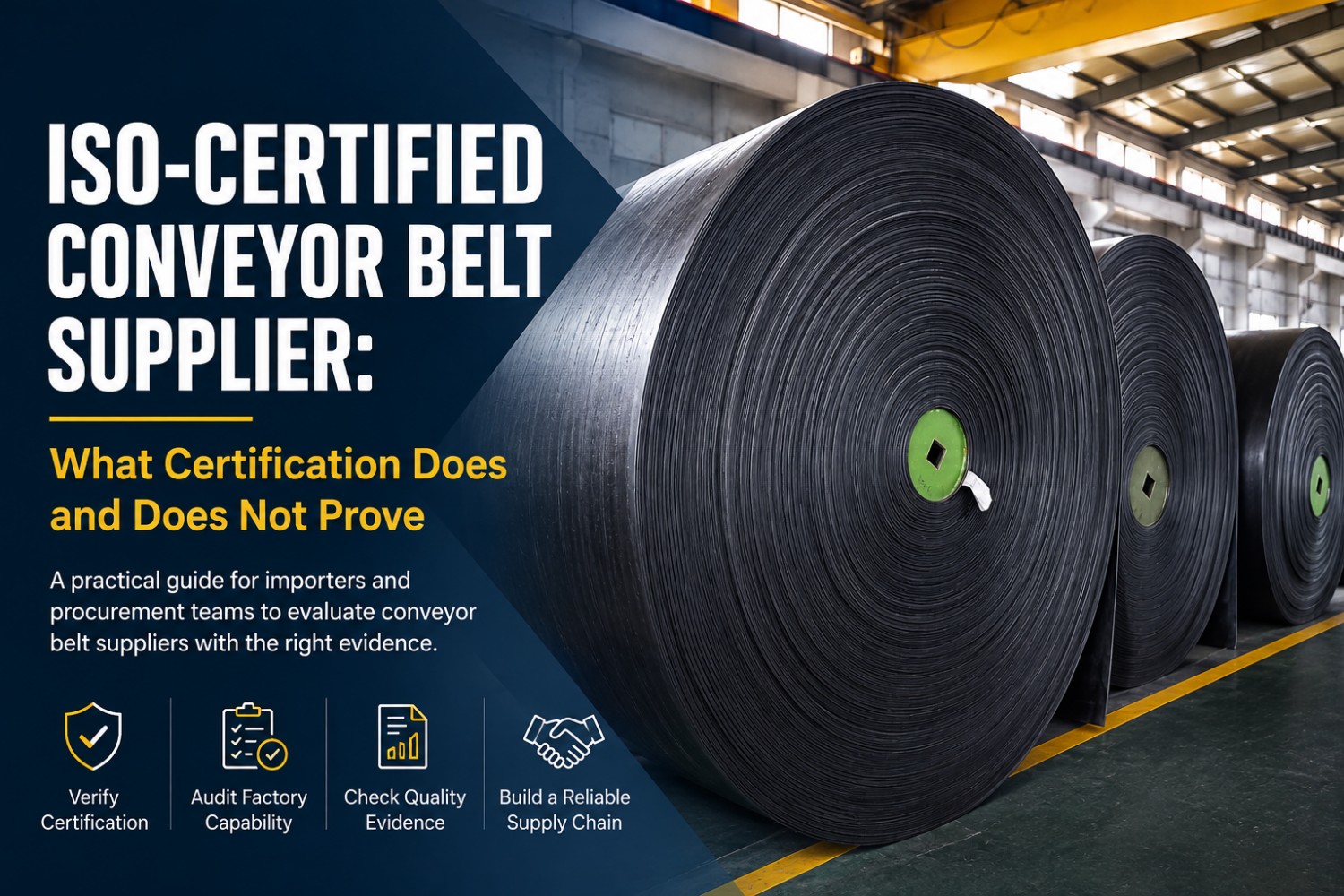
ISO-Certified Conveyor Belt Supplier: What Certification Does and Does Not Prove
An ISO certificate can help an importer screen a conveyor belt supplier, but it should not close the qualification process. A management-system certificate tells procurement something about how a manufacturer organizes and controls its processes. It does not, by itself, prove that the belt in your next container has the required carcass, cover grade, dimensions, adhesion, abrasion performance, flame resistance, or other project-specific properties.
This distinction matters when sourcing from an overseas conveyor belt factory. Buyers may be comparing several China factories, working against a tender specification, or trying to reduce the risk of inconsistent repeat orders. In each case, the useful question is not simply, “Are you ISO certified?” It is: What does the certificate cover, and what separate evidence proves that my order meets my specification?
Treat ISO certification as one part of supplier qualification, not as product approval. Verify the certificate's standard, validity, certified organization, manufacturing-site coverage and scope. Then separately verify the conveyor belt specification, applicable product standard, manufacturing capability, inspection plan, test reports, traceability, packing and commercial terms.
1. What Does “ISO-Certified Conveyor Belt Supplier” Actually Mean?
The phrase can be misleading because ISO standards cover different subjects. For industrial sourcing, buyers first need to identify which ISO standard appears on the certificate.
ISO 9001, for example, specifies requirements for a quality management system. Certification against it provides independent confirmation that the organization's management system has been assessed against the applicable requirements. ISO itself develops standards but does not certify companies; certification is performed by external certification bodies.
That distinction already gives procurement two useful questions:
- Which ISO standard is the supplier certified against?
- Which certification body issued the certificate?
But the review should go further. A certificate should be checked for the legal organization named on it, manufacturing location or locations covered, certification scope, certificate status and validity. A certificate for an unrelated business activity or another facility should not automatically be treated as evidence for the factory producing your conveyor belts.
“ISO certified” is incomplete information. Ask for the actual certificate and compare its organization, address, scope and applicable standard with the supplier and manufacturing site you are qualifying.

2. What ISO 9001 Certification Can Tell a Conveyor Belt Buyer
For a procurement team, ISO 9001 can be useful evidence of a structured quality management framework. The standard addresses areas such as controlled processes, responsibilities, documented information, performance evaluation, corrective action and continual improvement.
Those controls matter in industrial belt manufacturing because consistency is not created by final inspection alone. An order moves through specification review, raw-material control, production, inspection, handling and release. Repeat orders also depend on whether the approved requirements can be reproduced rather than reinterpreted each time.
For an importer evaluating a new conveyor belt supplier, an appropriate management-system certificate can therefore support the supplier-qualification file.
It is particularly useful when the buyer needs evidence for a vendor approval procedure, corporate sourcing policy or tender documentation.
But it remains one layer of evidence.
3. What ISO Certification Does Not Prove
This is where many supplier comparisons become too simple. An ISO 9001 certificate should not be interpreted as automatic confirmation of the technical conformity of every conveyor belt produced by the factory.
| Buyer Assumption | What Certification Can Support | What Still Needs Separate Verification |
|---|---|---|
| “The factory has ISO 9001, so this belt meets my specification.” | Evidence concerning the supplier's quality management system. | Order-specific construction, dimensions, properties and acceptance requirements. |
| “ISO certified means every belt has been independently tested.” | The relevant management system has been assessed. | Which tests are performed on the product, test frequency, results and order traceability. |
| “An ISO certificate proves the factory can make my belt.” | A certified management framework may support controlled production. | Actual production equipment, width/strength capability, construction experience and technical review. |
| “ISO certification means the product meets every international conveyor belt standard.” | Only what is within the applicable certification scope. | The exact product standard and specified test requirements for the purchase order. |
The commercial implication is important. Two suppliers can both present quality-management certificates and still quote materially different belts against an incomplete RFQ. Certification does not remove the need for a controlled technical specification.
4. Management-System Certification and Conveyor Belt Product Standards Are Different
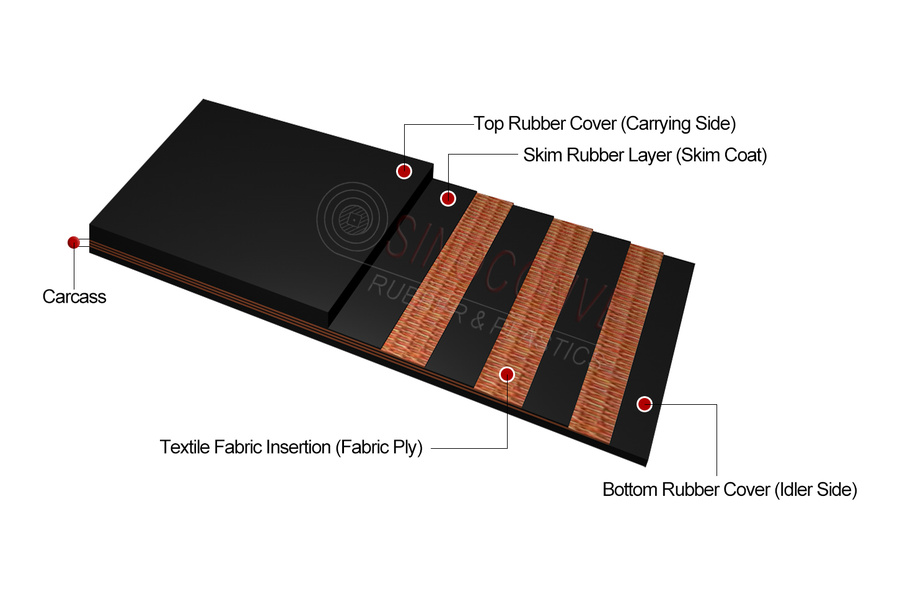
Importers should keep supplier management-system evidence separate from product specification and conformity evidence.
ISO 9001 concerns quality management systems. Conveyor belts can also be manufactured and evaluated against product-specific standards depending on their construction, application and contractual requirements.
For example, ISO 14890:2026 specifies requirements for rubber- or plastics-covered conveyor belting of textile construction for general surface use on flat or troughed idlers. Steel-cord conveyor belts are addressed separately by the ISO 15236 series.
This means an RFQ should not simply state “ISO conveyor belt.” Procurement should identify the applicable product specification or customer standard and define what must be verified for the actual belt being purchased.
Condition: The RFQ says only “EP conveyor belt, ISO standard.”
Risk: Buyer and supplier may interpret construction, cover properties, tolerances or testing requirements differently.
Specification implication: State the exact applicable standard and revision where required, then define the order-specific belt construction, dimensions, performance requirements and documentation.
5. What Importers Should Verify Beyond the ISO Certificate
5.1 Confirm That the Factory Can Manufacture the Required Belt
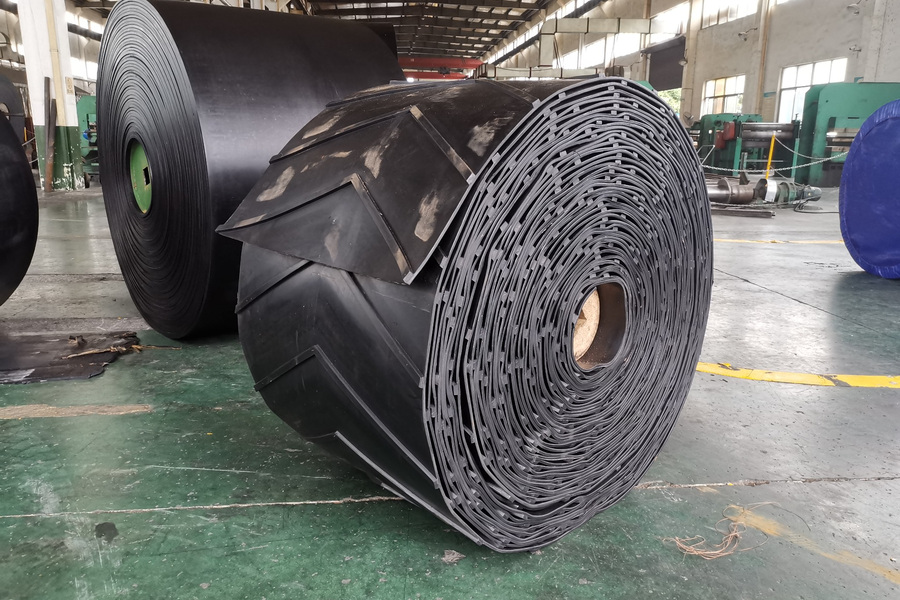
A certificate does not tell you whether a production line can manufacture the required width, reinforcement type or strength range. Those questions need factory-level evidence.
SINOCONVE's provided manufacturing information states that its conveyor belt operation has more than 200 employees, including 26 engineers and 15 quality-control personnel, with one laboratory. The factory information identifies eight fabric conveyor belt production lines and two steel-cord conveyor belt production lines.
The supplied production capability covers widths from 100 mm to 3000 mm, thicknesses from 3 mm to 100 mm, fabric ratings from EP100 to EP600 and steel-cord ratings from ST500 to ST7500. These are manufacturing capability ranges, not a recommendation that every construction within those ranges is suitable for every conveyor.
Buyers can review SINOCONVE's industrial conveyor belt product range before sending the technical RFQ.
5.2 Audit the Quality-Control Flow
“Strict quality control” is not specific enough for supplier approval. Ask where inspection occurs and what records can be connected to the order.
SINOCONVE's confirmed quality process begins with incoming raw-material inspection. Production is subject to in-process inspection, and finished products undergo testing and final inspection before shipment. Its published quality information also describes checks involving rubber compounds, EP fabric and finished belt dimensions.
The buyer should still agree on the inspection scope for the particular PO. The relevant checks for an EP general-purpose belt will not necessarily be identical to those required for a steel-cord, heat-resistant or flame-resistant application.
5.3 Request Product Evidence That Matches the PO
A test report is useful only when the buyer understands what it represents.
Before production, clarify:
- which properties are subject to inspection or testing;
- which standard or agreed method applies;
- what acceptance requirements are specified;
- whether the report relates to the ordered product;
- whether third-party inspection or testing is required by the contract or tender.
SINOCONVE states that product test reports can be supplied and that third-party testing can be arranged when customers have special standard requirements. The exact test scope should therefore be confirmed during quotation rather than assumed after production.
6. How to Audit an ISO Certificate Before Adding a Supplier
A PDF certificate in an email attachment should not be the end of the check. Procurement can use a simple verification sequence.
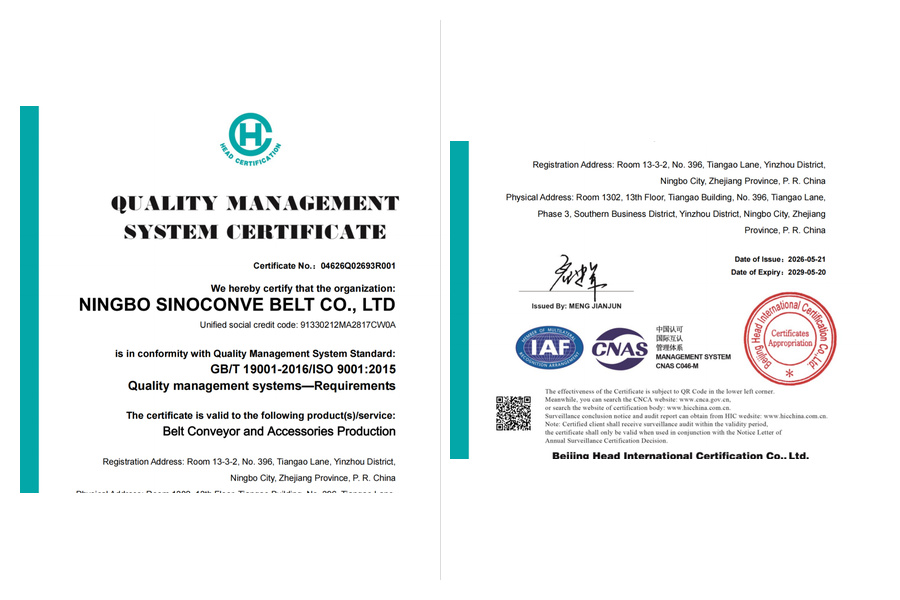
- Check the standard. Identify exactly what the supplier is certified against.
- Check the certified organization. Compare the legal company name on the certificate with the contracting and manufacturing entities.
- Check the site. Confirm whether the manufacturing location relevant to your order is within the certificate's coverage.
- Read the scope. The stated activity should be relevant to what you are sourcing.
- Check status and dates. Do not rely on an old certificate image without checking whether the certification remains valid.
- Identify the certification body. ISO itself does not issue ISO 9001 certificates.
- Evaluate accreditation where required. For tenders or corporate vendor qualification, establish whether your procurement rules require certification from an accredited certification body.
The same principle applies to every document in a supplier audit: verify what the document actually proves instead of giving it a broader meaning than it has.
7. Build the RFQ Around the Product, Not Around the Certificate
A strong RFQ makes suppliers easier to compare because every factory is responding to the same requirement.
For a rubber conveyor belt, the information required depends on the application, but procurement may need to provide the belt width and length, carcass or strength requirement, cover thickness, applicable cover properties, conveyed material, operating environment, splice requirement and applicable product standard.
For a replacement belt, the existing belt marking, datasheet, photographs and conveyor information can help identify ambiguities before quotation. For a project or tender, attach the approved specification rather than asking suppliers to infer requirements from a short product name.
| RFQ Area | What the Buyer Should Provide | What to Verify in the Supplier's Reply |
|---|---|---|
| Belt identification | Belt type, width, length and quantity. | Quotation matches the requested dimensions and quantity. |
| Construction | Required fabric/cord construction and strength rating from the approved specification. | Supplier confirms rather than substitutes the construction without explanation. |
| Application | Conveyed material and relevant operating conditions. | Proposed belt is compatible with the stated service conditions. |
| Standard | Applicable product/customer standard and revision where contractually required. | Supplier clearly states the basis of compliance. |
| Inspection evidence | Required inspection, report or third-party requirements. | Report scope, test method and order traceability are agreed before production. |
| Commercial data | Quantity, destination, required shipment timing and packing requirements. | MOQ, lead time, packing and quotation terms are stated rather than assumed. |
SINOCONVE's current supplied information lists a 50 m minimum order quantity for conveyor belts. General production lead time is approximately 30 days, while urgent orders may be discussed for a shorter production arrangement, depending on the actual order. These commercial points should be reconfirmed against the required construction, quantity and production schedule before a PO is released.
8. Compare Suppliers Using an Evidence Matrix
Once the RFQ is technically consistent, procurement can compare suppliers on evidence rather than sales wording.
| Qualification Area | Evidence to Request | Warning Sign |
|---|---|---|
| Management system | Current certificate with relevant organization, site and scope. | Only a logo or cropped certificate image is supplied. |
| Manufacturing capability | Equipment and capability relevant to the required construction. | Supplier says “all sizes available” without checking the specification. |
| Product specification | Technical confirmation against the RFQ. | Quotation lists only width, length and price. |
| Testing | Agreed inspection/test scope and report requirements. | Generic report with no clear connection to the requested product. |
| Repeat orders | Controlled specification, drawing or approved reference. | Specifications must be reconstructed from emails for every order. |
| Shipment | Confirmed packing method and delivery commitment. | Lead time is promised before the supplier reviews quantity and construction. |
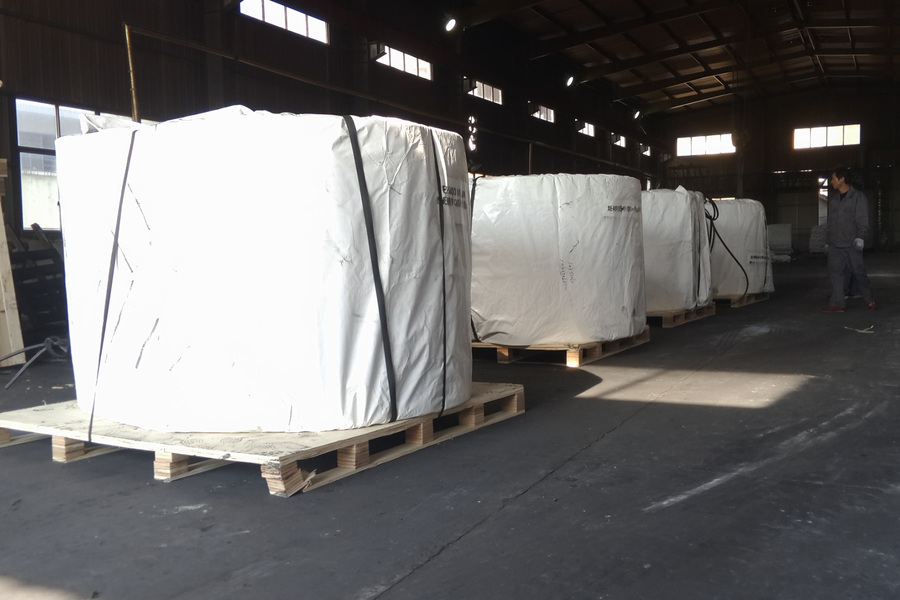
This approach is especially useful for importers and distributors. A supplier must not only make one acceptable belt; it may need to reproduce the same approved requirement for later customer orders.
For a broader framework covering repeat-order and supply risk, see SINOCONVE's industrial belt supplier risk guide.
9. Where SINOCONVE Fits Into the Qualification Process
SINOCONVE's factory was established in 1988 and has more than 35 years of manufacturing experience. The company's confirmed conveyor belt manufacturing information includes fabric and steel-cord production capability, an internal laboratory, engineering personnel and dedicated quality-control staff.
Its stated inspection process covers raw-material checks before production, in-process inspection, and finished-product testing and final inspection before shipment. Product test reports can be supplied, while third-party testing can be discussed when a customer has special standard requirements.
Those capabilities should still be evaluated against the individual purchase requirement. Buyers sourcing an industrial conveyor belt should send the actual application and specification rather than select a supplier from certification status alone.
For importers conducting a wider factory comparison, the rubber conveyor belt manufacturer evaluation guide explains how to review manufacturing capability, specification control and quality evidence for long-term sourcing.
10. FAQ for Conveyor Belt Importers and Procurement Teams
Does ISO 9001 certification mean a conveyor belt is ISO certified?
No. ISO 9001 concerns the organization's quality management system. Product conformity must be evaluated against the applicable conveyor belt specification, test requirements and purchase order. Do not use a management-system certificate as a substitute for product evidence.
Does ISO itself issue ISO 9001 certificates to conveyor belt factories?
No. ISO develops international standards but does not perform certification or issue ISO 9001 certificates. Certification is carried out by external certification bodies.
What should I check on a supplier's ISO certificate?
Check the applicable standard, certified organization, covered location, certification scope, certificate status and dates, and the certification body. Where accreditation is required by your company or tender, verify that requirement as part of supplier approval.
What is the difference between ISO 9001 and ISO 14890?
They serve different purposes. ISO 9001 specifies requirements for a quality management system. ISO 14890:2026 is a product specification covering rubber- or plastics-covered textile-construction conveyor belting for general surface use within its defined scope.
Should I request a conveyor belt test report even if the supplier has ISO 9001?
If product verification is required by your specification or purchasing process, yes. Define which properties need to be reported, the applicable test requirements and how the report will relate to the ordered belt. ISO 9001 certification does not replace this step.
What information should I send a China conveyor belt factory for an RFQ?
Start with the required belt type, width, length, quantity and approved construction or strength requirement. Add the relevant conveyed material and operating conditions, cover requirements, applicable standard, inspection/document requirements, packing, destination and required shipment timing. Existing belt markings, drawings and photographs are useful for replacement projects.
Can SINOCONVE provide product test reports?
According to SINOCONVE's confirmed company information, product test reports can be provided. Third-party testing can also be arranged when customers have special standard requirements. The exact test items, applicable requirements and documentation should be agreed for the specific order.

11. Final Supplier Qualification Check
An ISO certificate is valuable when it is used for the question it actually answers. It can support evaluation of a supplier's management system. It cannot replace verification of manufacturing capability, the purchase specification, product inspection, test evidence or commercial execution.
Before comparing quotations, give each supplier the same technical requirement and ask them to identify any assumptions or deviations. Then compare the certificate, factory capability, technical confirmation, QC process, required test documentation, packing and delivery terms together.
Send the required belt type, width and length, construction or approved strength specification, conveyed material, relevant operating conditions, applicable standard, quantity, test/document requirements and destination. For replacement projects, attach the current belt specification, markings, drawings or photographs where available.
Review the SINOCONVE conveyor belt catalog, submit requirements through the RFQ and contact page, or email sales@sinoconve.com.
Related SINOCONVE Products
- Conveyor Belt Products & Industrial Belts — Browse SINOCONVE's available rubber conveyor belt, steel cord belt and other industrial belt categories.
- Conveyor Belt Product Catalog — Review product categories and prepare information for technical discussion and quotation.
Related Conveyor Belt Sourcing Guides
- Conveyor Belt Sourcing Guide: Reduce Downtime — Learn how to connect supplier qualification, specification control and inspection evidence to sourcing risk.
- How to Evaluate a Rubber Conveyor Belt Manufacturer in China — A factory-evaluation framework for importers building a long-term supply source.
- How Importers Can Reduce Supply Risk When Choosing an Industrial Belt Supplier — Compare manufacturing capability, documentation, commercial reliability and repeat-order controls.
- China Conveyor Belt Manufacturer Sourcing Guide — Practical checks for factory capability, QC, standards and purchase documentation.