
Introduction: the factory matters after the first order
A first conveyor belt shipment can look acceptable and still create problems on the second or third order. The real test of a rubber conveyor belt manufacturer is whether the factory can reproduce the agreed belt construction, dimensions, performance documents and packing method over time.
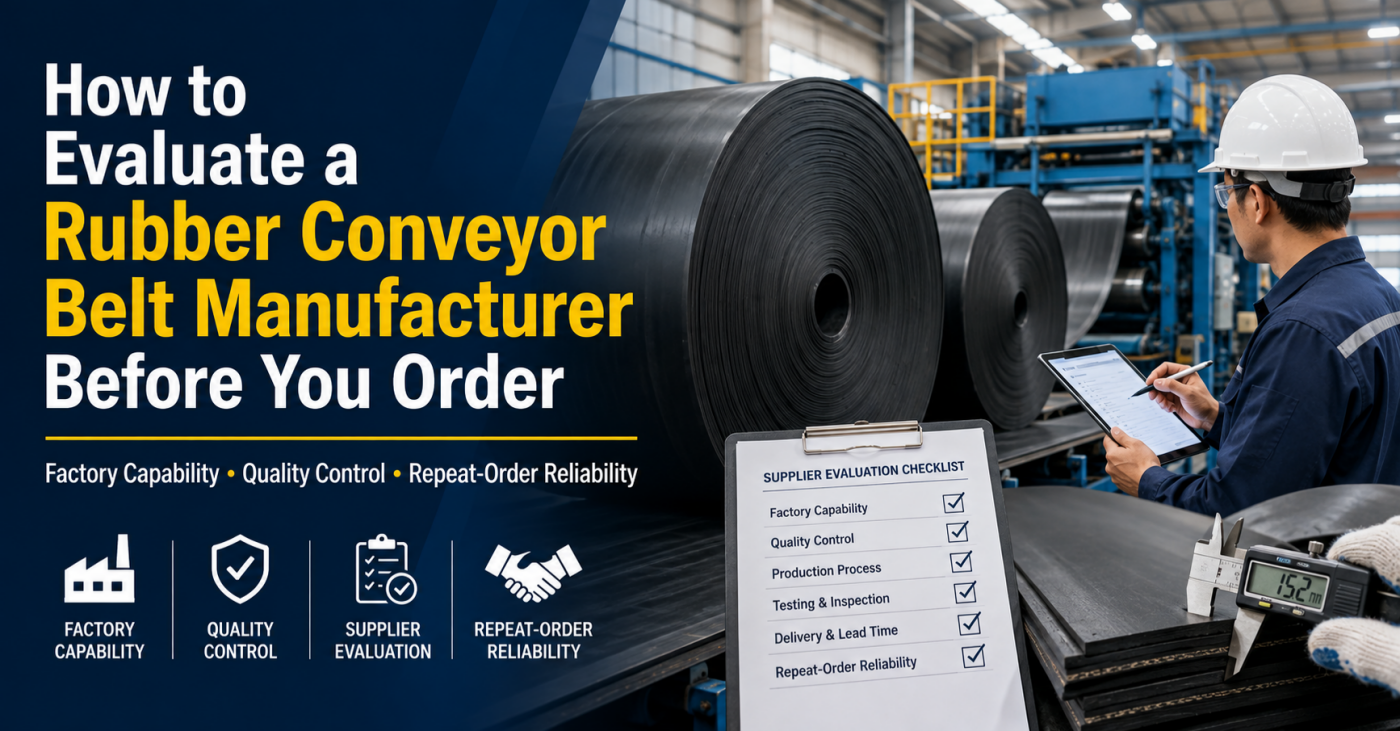
For importers, distributors and procurement teams, supplier evaluation should therefore cover five questions:
- Can the factory produce the required belt family and strength range?
- Does its quality process verify raw materials, construction and finished performance?
- Can the supplier convert application data into a controlled specification?
- Are documents, packaging and export communication consistent?
- Is the supplier suitable for repeat orders, not only a one-off sample?
This guide turns those questions into a practical audit sequence. For a broader sourcing framework, see the conveyor belt sourcing guide.

1. Check whether the factory matches your belt application
Start with the working condition, not the supplier's product list. A belt for quarry aggregate may need a different cover and impact strategy from a belt for cement packing or a port stockyard. Confirm the material, lump size, loading impact, operating temperature, moisture, oil exposure, belt speed, conveyor length, troughing arrangement and expected duty cycle.
A capable supplier should ask for enough operating information to recommend a belt construction. If the conversation stays at width and price only, the quotation is not yet technically comparable.
Use the relevant application pages as a checklist: mining and quarrying conveyor solutions, cement plant conveyor solutions, and port and bulk material handling solutions.
Application information to include in an RFQ
| Data point | Why it affects the belt decision |
|---|---|
| Conveyed material | Influences abrasion, cutting, impact and oil resistance |
| Lump size and drop height | Helps assess impact at loading and transfer points |
| Material temperature | Determines whether a heat-resistant compound is needed |
| Belt width and length | Defines compatibility, splice planning and packing |
| Required tensile strength | Supports selection of EP or steel-cord construction |
| Conveyor layout | Affects troughing, incline, tracking and pulley conditions |
| Operating environment | Covers dust, moisture, chemicals, outdoor exposure and cold |
2. Verify construction capability, not only catalogue breadth
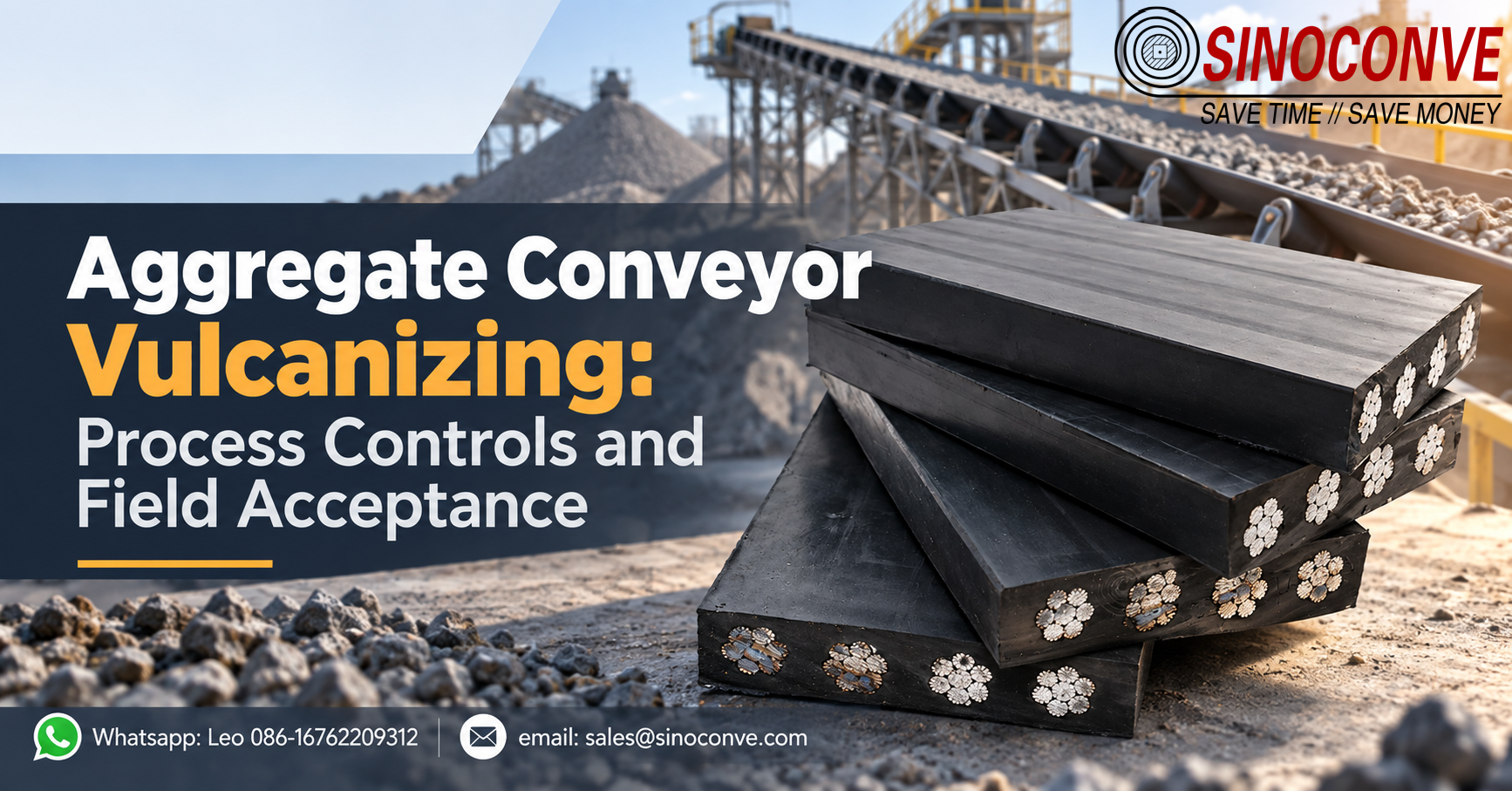
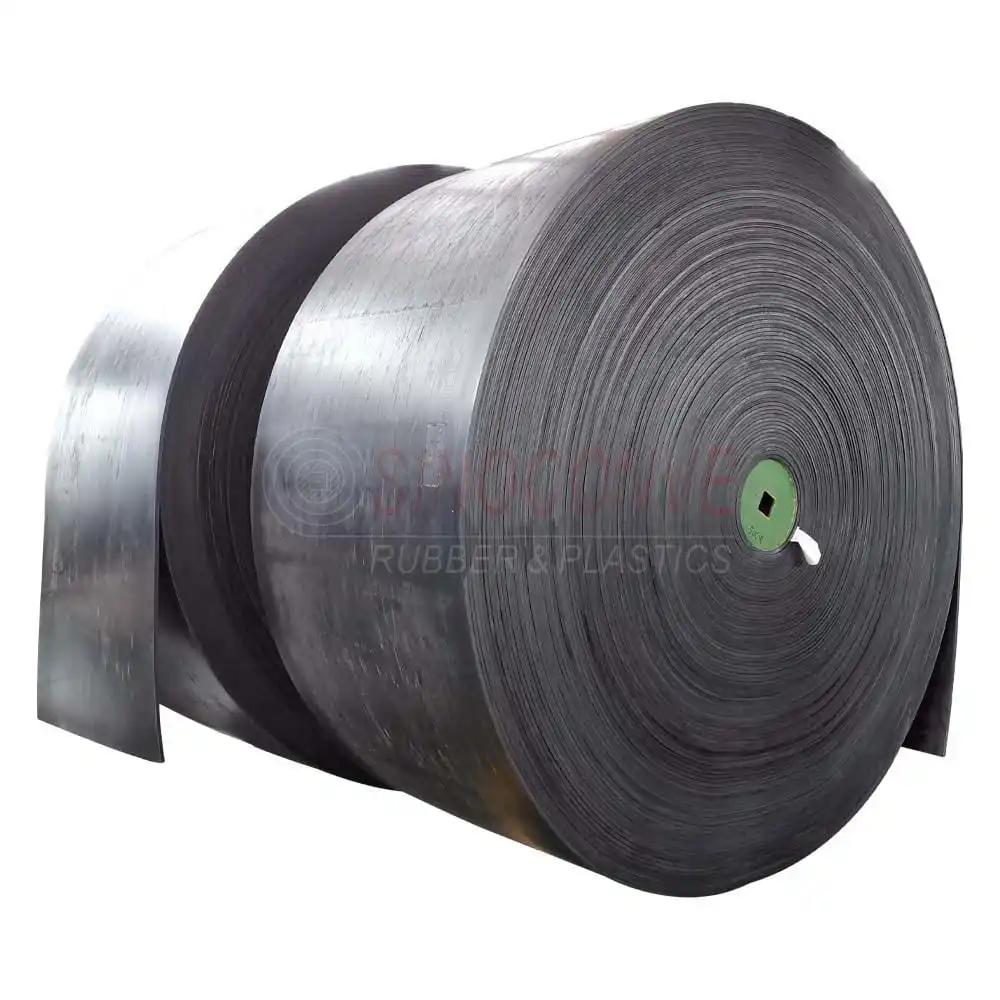
A long catalogue is not proof of production depth. Ask which belt constructions are manufactured routinely and which are outsourced. For textile belts, request the fabric type, ply arrangement, cover thickness, edge construction and nominal tensile rating. For long-distance or high-tension systems, ask whether the factory has relevant steel-cord production and inspection capability.
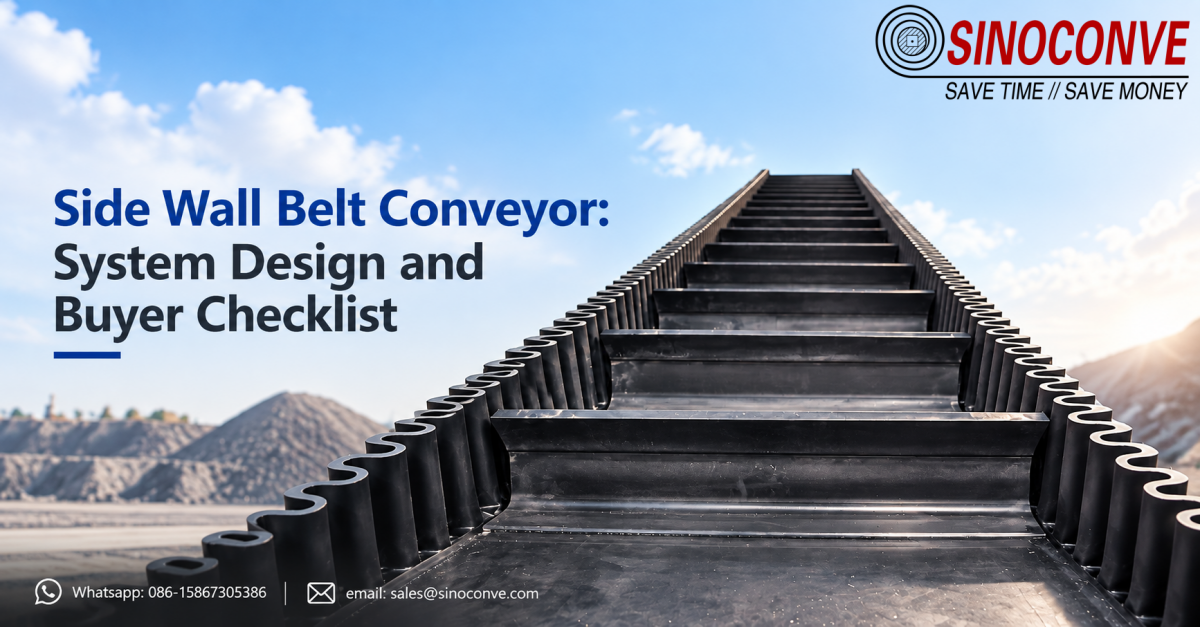
The EP rubber conveyor belt product page is a useful reference point for discussing textile-reinforced belt options. If your project uses a special profile or elevated transfer, separately review sidewall conveyor belts or rough-top conveyor belts rather than treating every belt as a flat EP belt.
A good technical comparison should show the same fields for every supplier: belt type, fabric or cord construction, strength rating, cover grade, top and bottom cover thickness, overall thickness, width tolerance, length tolerance, joint method and test documents.
3. Audit the quality process from compound to finished roll
Long-term supply reliability depends on process control. On the SINOCONVE quality assurance page, the stated control sequence covers rubber compound testing, EP fabric inspection, calendering, forming, vulcanization, dimensional measurement and final inspection.
For a supplier audit, ask for evidence at each stage:
- Raw materials: rubber compound records and reinforcement material checks.
- Calendering: confirmation that rubber is applied evenly around the fabric.
- Forming: control of ply alignment, tension and core thickness.
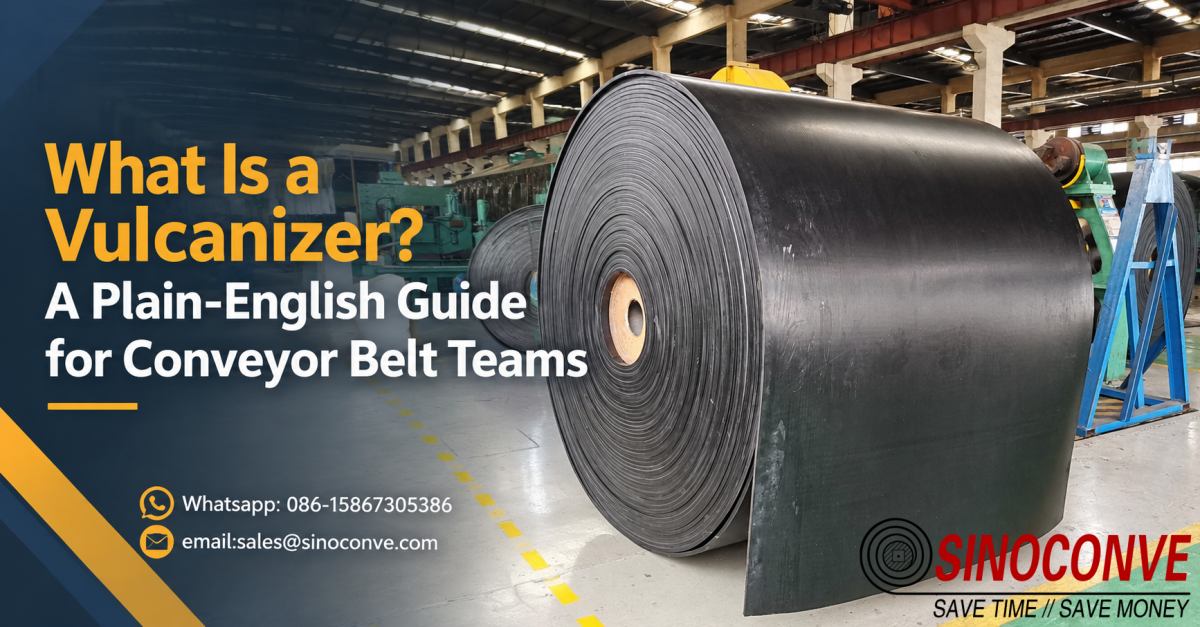
- Vulcanization: production records linked to the order or batch.
- Finished belt: width, thickness, length, surface condition and appearance.
- Performance tests: abrasion, adhesion and tensile results where required.
- Release review: final specification, labels, packaging and shipping documents.
The purpose is not to collect paperwork for its own sake. It is to establish a traceable path from the agreed quotation to the roll that reaches your warehouse.
4. Use standards as a specification language
Standards help buyers and factories discuss requirements with fewer ambiguities, but a standard reference does not replace an application review. ISO 14890 specifies requirements for rubber and/or plastics-covered conveyor belting of textile construction for general surface use on flat or troughed idlers. The official ISO 14890 abstract also explains that enquiry details and purchaser-manufacturer agreements are important.
When requesting a quotation, state the applicable standard or customer specification, then list the exact performance fields that must be confirmed. Do not assume that a supplier's use of the word "ISO" automatically covers every property, test method or certificate you need.
For a distributor, the final document pack should normally be agreed before production: technical data sheet, inspection or test report, packing list, commercial invoice information, marking requirements and any destination-market documents.
5. Compare total supply risk, not only unit price
A low unit price can be outweighed by inconsistent dimensions, unclear lead time, weak packing, delayed documents or repeated clarification. Compare suppliers using a weighted scorecard:
| Evaluation area | Questions to ask |
|---|---|
| Technical fit | Does the proposed construction match the actual material and conveyor? |
| Repeatability | Can the factory hold the same specification on repeat orders? |
| Quality evidence | Are inspection stages and test records clearly defined? |
| Customization | Can width, length, cover, marking and packing be controlled? |
| Communication | Is there one approved technical document and revision process? |
| Delivery | Are production and shipment dates tied to confirmed inputs? |
| After-sales | Is there a process for investigating verified quality issues? |
SINOCONVE describes more than 35 years of industrial belt manufacturing experience, 10+ vulcanization production lines and a quality team of 15+ specialists on its official site. Those statements should still be matched to your own specification, sample approval and document requirements before an order is released.
6. Build a repeat-order control plan
Before the first bulk order, agree how the approved sample will be controlled. Record the belt construction, measured dimensions, cover appearance, marking, roll length, core or reel requirements, packing, labels and test documents. For repeat orders, use the same revision-controlled specification rather than relying on an old chat message.
Also define the information that triggers a re-approval. A change in compound, fabric supplier, belt construction, cover formulation, joint method or packing design may require technical review even if the product name remains unchanged.
For a manufacturer profile and contact route, review SINOCONVE About Us and send the complete application data through Contact SINOCONVE.
Practical pre-order checklist
Before approving a rubber conveyor belt manufacturer, confirm that you have:
- A written application description and conveyor data sheet.
- A comparable construction proposal from each shortlisted supplier.
- Agreed dimensions, tolerances, cover requirements and marking.
- Defined inspection items and test-document expectations.
- Approved sample or drawing where the order is customized.
- Confirmed packing, shipping marks, lead time and document flow.
- A named contact for technical changes and quality claims.

FAQ
How do I compare two rubber conveyor belt manufacturers fairly?
Give both suppliers the same application data and RFQ fields. Compare construction, testing, dimensions, documentation, lead time and total risk rather than comparing price per meter alone.
Should I request a sample before a bulk order?
For a new supplier or non-standard construction, sample or drawing approval is a practical way to confirm visible construction, dimensions, marking and packing expectations before mass production.
Does an ISO reference guarantee the whole belt specification?
No. ISO 14890 defines requirements within its scope, but the purchaser and manufacturer still need to agree application data, dimensions, performance fields, test documents and any additional requirements.
What should be in a repeat-order control plan?
Include the approved technical specification, revision number, dimensions, cover and reinforcement details, inspection items, marking, packing and the conditions that require re-approval.
How can I request a comparable quotation from SINOCONVE?
Send belt width, length, strength, cover thickness or grade, conveyed material, temperature, conveyor layout, quantity, destination and document requirements through the SINOCONVE contact page.