

Engineered belt solutions for demanding industries worldwide

Recent Posts
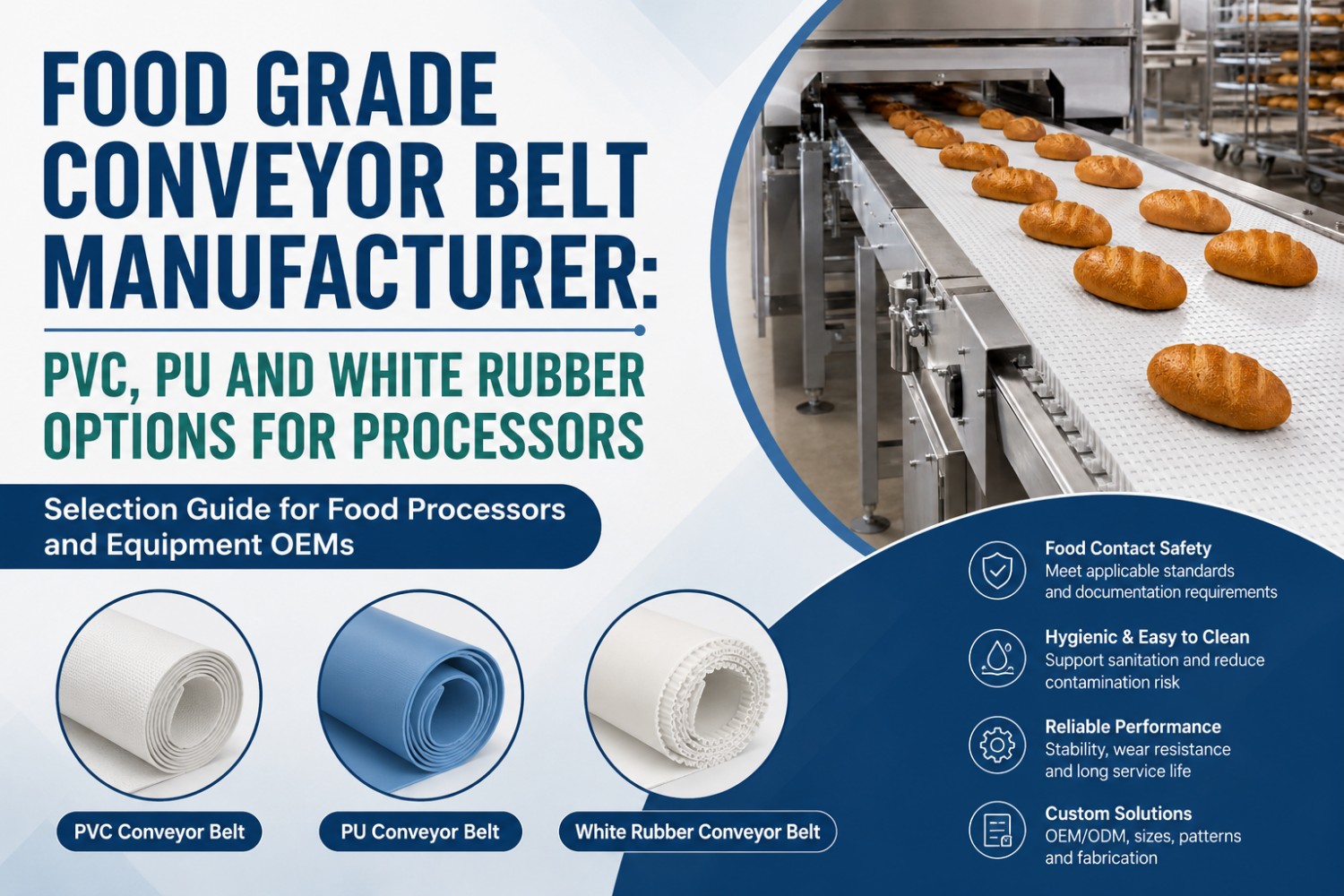
Food Grade Conveyor Belt Manufacturer: PVC, PU and White Rubber Options for Processors

Food Grade Conveyor Belt Manufacturer: PVC, PU and White Rubber Options for Processors

Food processors and equipment OEMs need more than a white belt or a generic “food grade” claim. This guide explains how to qualify a food grade conveyor belt manufacturer, compare PVC, PU and white rubber options, verify food-contact documentation, evaluate customization and quality controls, and prepare a technically complete RFQ. It also shows buyers how to compare supplier quotations on the same specification so material, fabrication, documentation and commercial differences are visible before an order is placed.

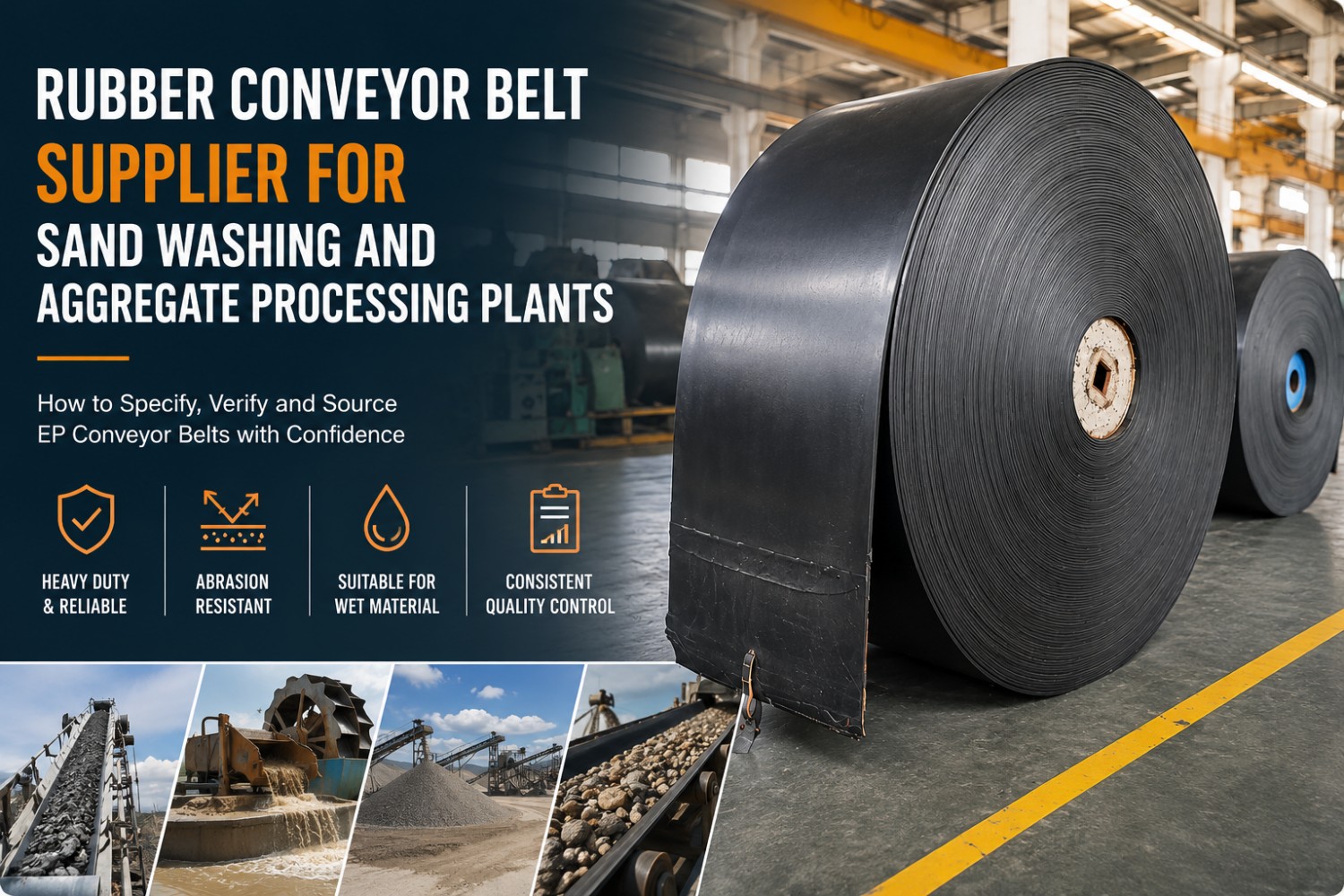
Rubber Conveyor Belt Supplier for Sand Washing and Aggregate Processing Plants

Rubber Conveyor Belt Supplier for Sand Washing and Aggregate Processing Plants

Buying conveyor belts for a sand washing or aggregate processing plant requires more than comparing EP ratings and price per meter. Wet sand, crushed stone, loading impact, abrasion, conveyor geometry, cover requirements, and quality documentation can all affect the correct specification. This guide shows aggregate plant buyers how to prepare a stronger RFQ, compare technically equivalent quotations, verify factory and QC capabilities, investigate existing belt failures, and reduce purchasing risk before placing a bulk rubber conveyor belt order.

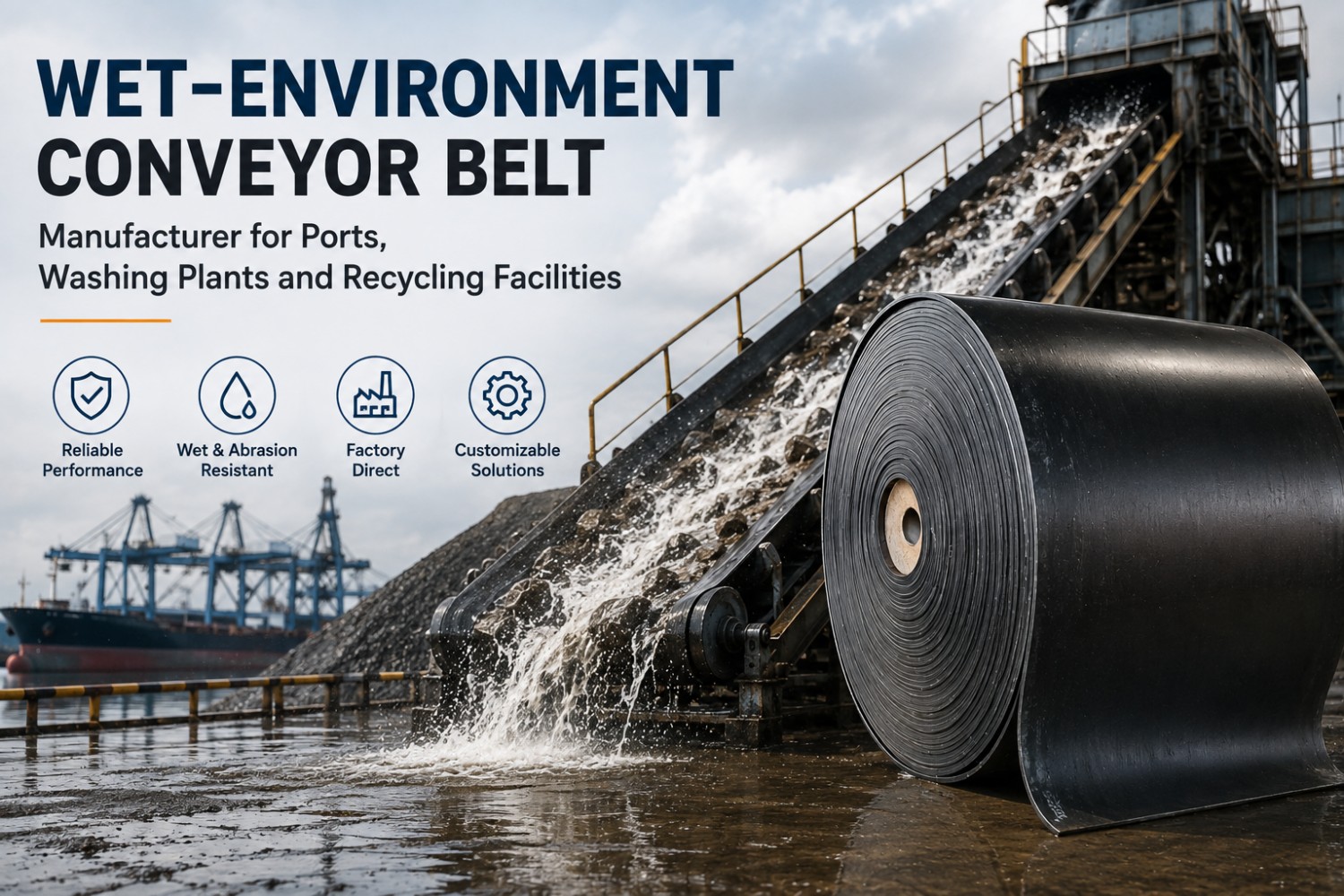
Wet-Environment Conveyor Belt Manufacturer for Ports, Washing Plants and Recycling Facilities

Wet-Environment Conveyor Belt Manufacturer for Ports, Washing Plants and Recycling Facilities

Wet conveyor projects in ports, washing plants and recycling facilities require more than a generic water-resistant belt. This buyer-focused guide explains how moisture, abrasive fines, carryback, contamination and conveyor conditions affect specification decisions. It also shows procurement teams what to include in an RFQ and BOM, how to verify factory capability and quality evidence, how to plan batch deliveries and spare belts, and how to compare conveyor belt suppliers before approving a project order.

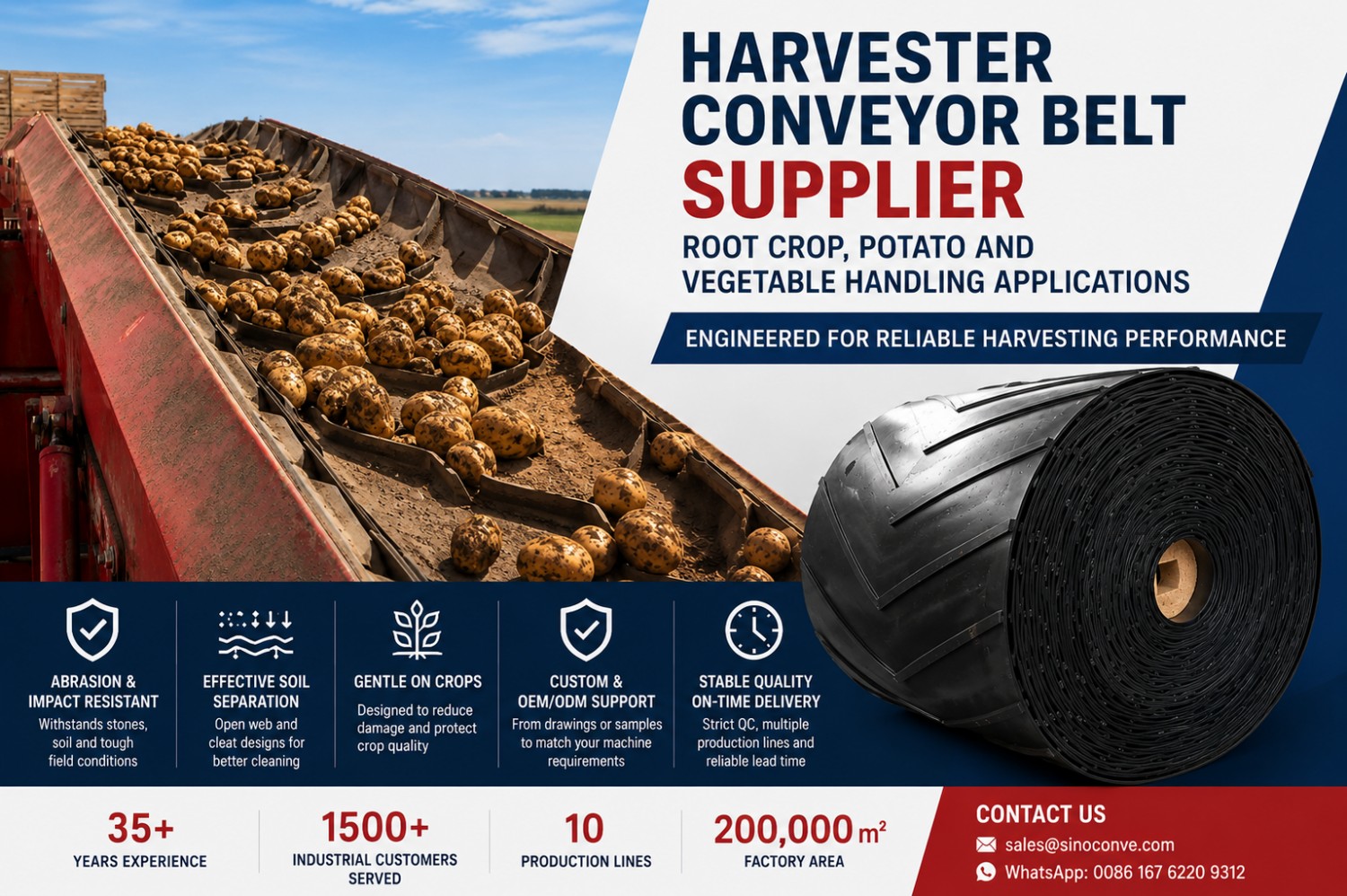
Harvester Conveyor Belt Supplier: Root Crop, Potato and Vegetable Handling Applications

Harvester Conveyor Belt Supplier: Root Crop, Potato and Vegetable Handling Applications

Agricultural OEMs sourcing harvester conveyor belts need to evaluate more than belt width, length and unit price. Root crop, potato and vegetable handling can involve soil separation, crop damage, stones, mud, machine interfaces and application-specific belt or web geometry. This guide explains what to include in an RFQ, how to control sample approval, what proof of manufacturing capability to request, and how to compare suppliers before moving from prototype development to repeat production orders.

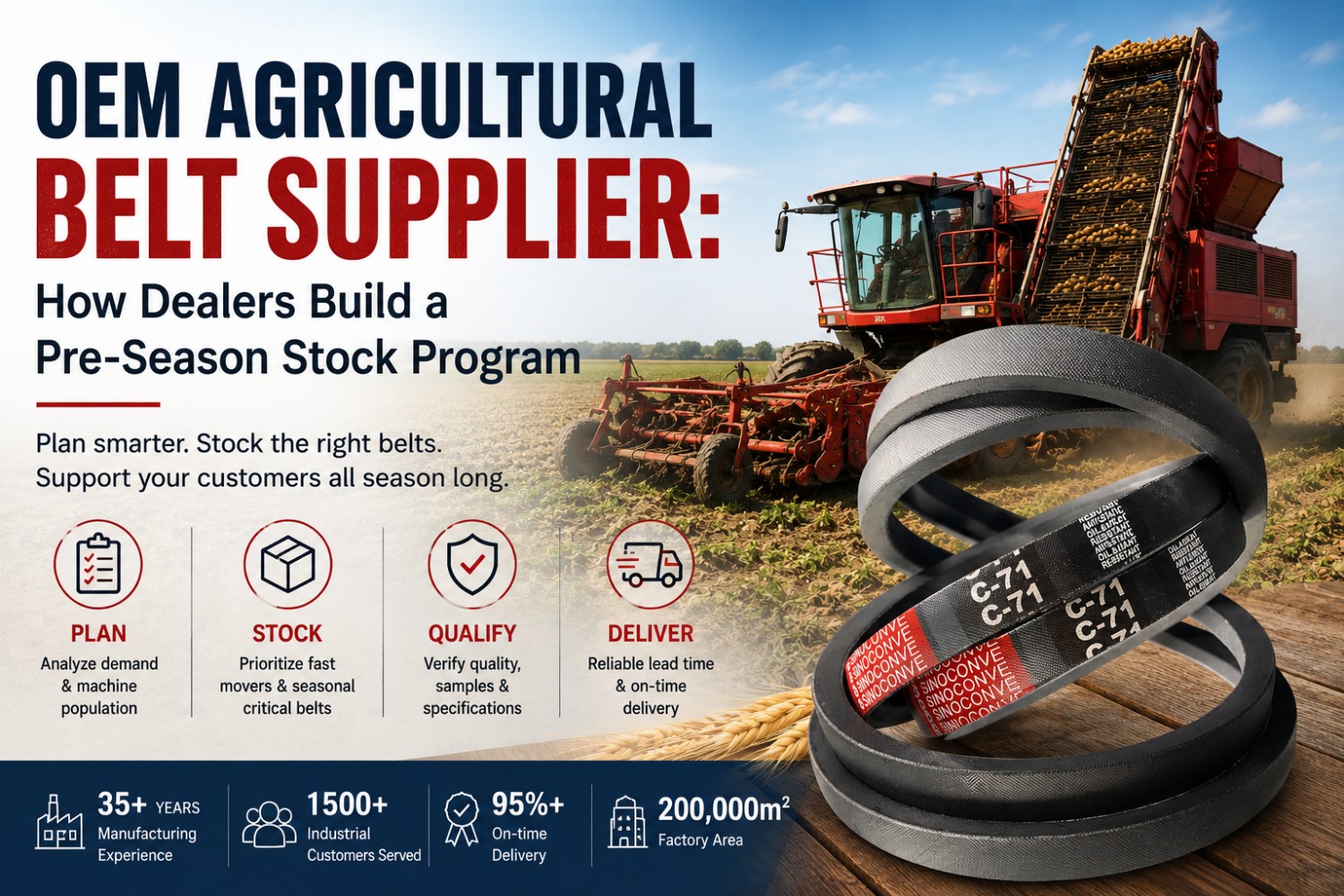
OEM Agricultural Belt Supplier: How Dealers Build a Pre-Season Stock Program

OEM Agricultural Belt Supplier: How Dealers Build a Pre-Season Stock Program

Agricultural belt demand can rise quickly around planting, harvesting, and other seasonal work, making inventory planning critical for equipment dealers and distributors. This guide explains how to build a pre-season agricultural belt stock program using sales history, machine population, SKU classification, sample validation, MOQ, supplier qualification, private-label requirements, and realistic lead-time planning. It also shows buyers what to include in an RFQ when comparing OEM agricultural belt suppliers for repeatable wholesale supply.

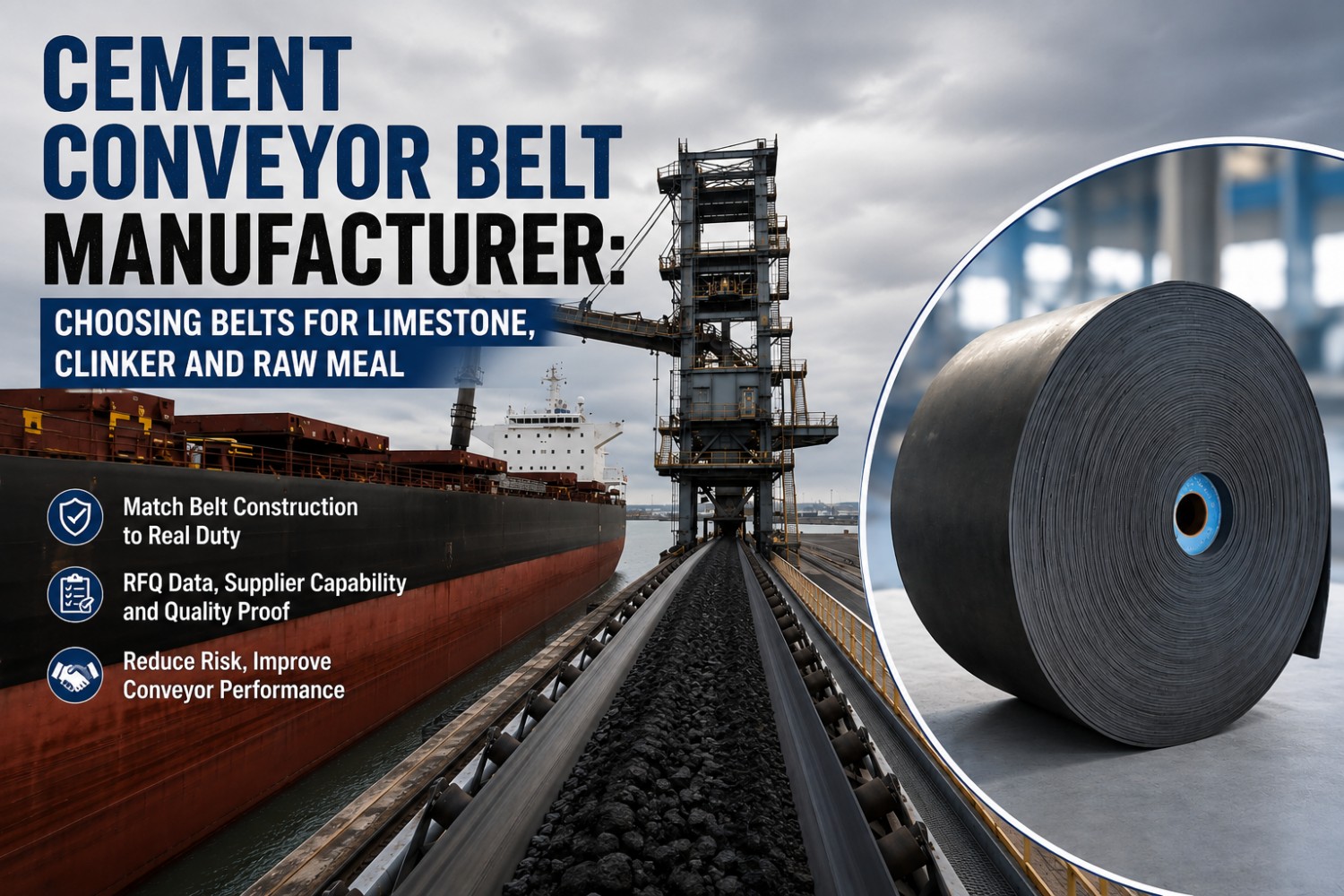
Cement Conveyor Belt Manufacturer: Choosing Belts for Limestone, Clinker and Raw Meal

Cement Conveyor Belt Manufacturer: Choosing Belts for Limestone, Clinker and Raw Meal

Cement plants expose conveyor belts to very different duties, from abrasive limestone and raw materials to hot clinker and long, high-tension transfer lines. This guide helps procurement teams match belt construction to operating conditions, compare EP fabric and steel cord options, evaluate manufacturer capability, verify quality documentation, and prepare a technically complete RFQ. It also explains what buyers should check beyond unit price when qualifying a cement conveyor belt manufacturer for factory-direct supply.

Food Grade Conveyor Belt Manufacturer: PVC, PU and White Rubber Options for Processors

Food Grade Conveyor Belt Manufacturer: PVC, PU and White Rubber Options for Processors

Food processors and equipment OEMs need more than a white belt or a generic “food grade” claim. This guide explains how to qualify a food grade conveyor belt manufacturer, compare PVC, PU and white rubber options, verify food-contact documentation, evaluate customization and quality controls, and prepare a technically complete RFQ. It also shows buyers how to compare supplier quotations on the same specification so material, fabrication, documentation and commercial differences are visible before an order is placed.

Rubber Conveyor Belt Supplier for Sand Washing and Aggregate Processing Plants

Rubber Conveyor Belt Supplier for Sand Washing and Aggregate Processing Plants

Buying conveyor belts for a sand washing or aggregate processing plant requires more than comparing EP ratings and price per meter. Wet sand, crushed stone, loading impact, abrasion, conveyor geometry, cover requirements, and quality documentation can all affect the correct specification. This guide shows aggregate plant buyers how to prepare a stronger RFQ, compare technically equivalent quotations, verify factory and QC capabilities, investigate existing belt failures, and reduce purchasing risk before placing a bulk rubber conveyor belt order.

Wet-Environment Conveyor Belt Manufacturer for Ports, Washing Plants and Recycling Facilities

Wet-Environment Conveyor Belt Manufacturer for Ports, Washing Plants and Recycling Facilities

Wet conveyor projects in ports, washing plants and recycling facilities require more than a generic water-resistant belt. This buyer-focused guide explains how moisture, abrasive fines, carryback, contamination and conveyor conditions affect specification decisions. It also shows procurement teams what to include in an RFQ and BOM, how to verify factory capability and quality evidence, how to plan batch deliveries and spare belts, and how to compare conveyor belt suppliers before approving a project order.

Harvester Conveyor Belt Supplier: Root Crop, Potato and Vegetable Handling Applications

Harvester Conveyor Belt Supplier: Root Crop, Potato and Vegetable Handling Applications

Agricultural OEMs sourcing harvester conveyor belts need to evaluate more than belt width, length and unit price. Root crop, potato and vegetable handling can involve soil separation, crop damage, stones, mud, machine interfaces and application-specific belt or web geometry. This guide explains what to include in an RFQ, how to control sample approval, what proof of manufacturing capability to request, and how to compare suppliers before moving from prototype development to repeat production orders.

OEM Agricultural Belt Supplier: How Dealers Build a Pre-Season Stock Program

OEM Agricultural Belt Supplier: How Dealers Build a Pre-Season Stock Program

Agricultural belt demand can rise quickly around planting, harvesting, and other seasonal work, making inventory planning critical for equipment dealers and distributors. This guide explains how to build a pre-season agricultural belt stock program using sales history, machine population, SKU classification, sample validation, MOQ, supplier qualification, private-label requirements, and realistic lead-time planning. It also shows buyers what to include in an RFQ when comparing OEM agricultural belt suppliers for repeatable wholesale supply.

Cement Conveyor Belt Manufacturer: Choosing Belts for Limestone, Clinker and Raw Meal

Cement Conveyor Belt Manufacturer: Choosing Belts for Limestone, Clinker and Raw Meal

Cement plants expose conveyor belts to very different duties, from abrasive limestone and raw materials to hot clinker and long, high-tension transfer lines. This guide helps procurement teams match belt construction to operating conditions, compare EP fabric and steel cord options, evaluate manufacturer capability, verify quality documentation, and prepare a technically complete RFQ. It also explains what buyers should check beyond unit price when qualifying a cement conveyor belt manufacturer for factory-direct supply.

Explore more

We are committed to providing you with better products and services. Welcome to browse more content for details