
Cement Conveyor Belt Manufacturer: Choosing Belts for Limestone, Clinker and Raw Meal
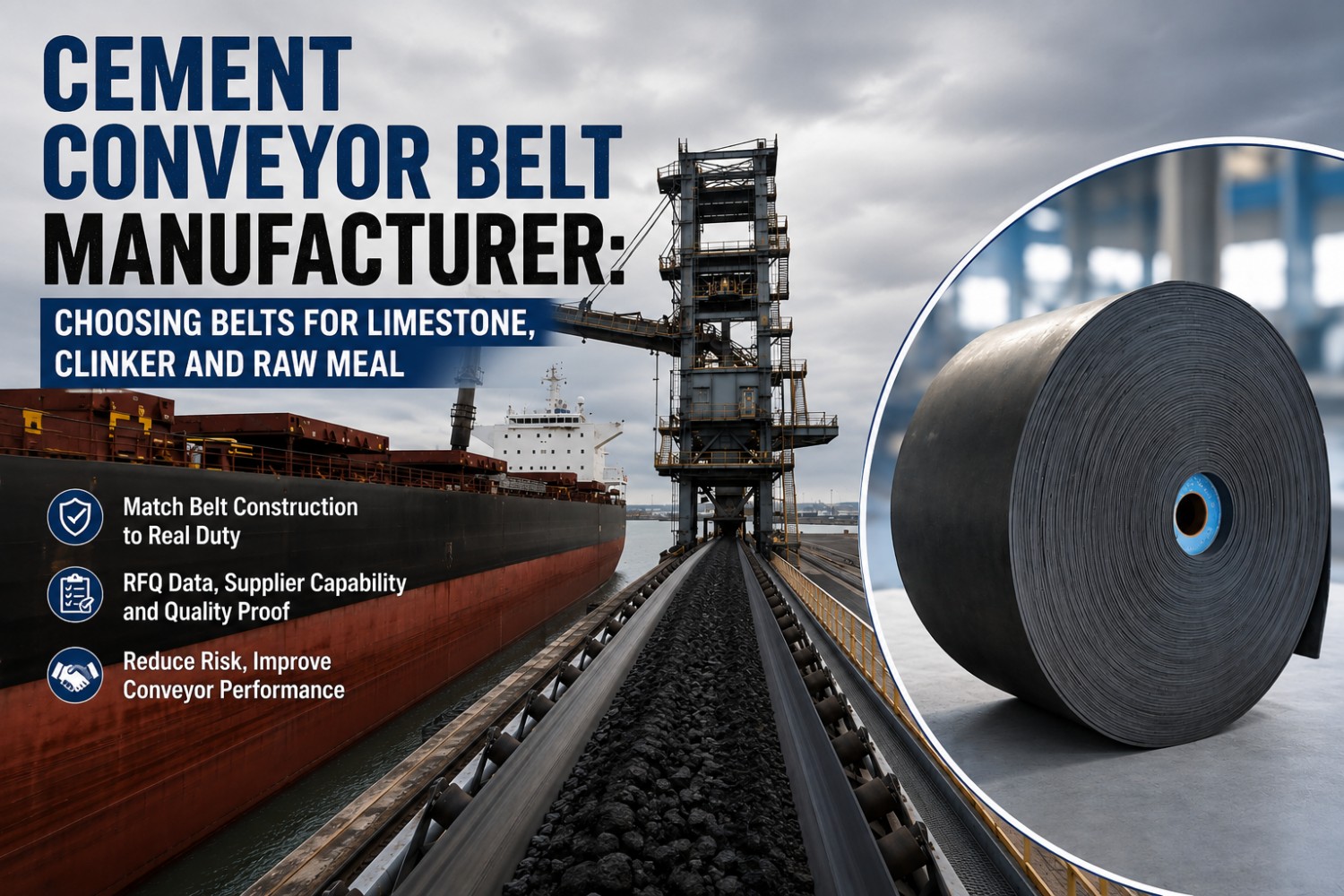
A cement plant rarely needs one conveyor belt specification for every conveying point. Limestone arriving at the crushing section, blended raw materials moving toward grinding, and hot clinker leaving the cooler expose the belt to different combinations of abrasion, impact, temperature, tension, and contamination. Treating them as the same application can result in an RFQ that looks complete commercially but is incomplete technically.
For procurement teams, the more useful question is therefore not simply, “Who is the cement conveyor belt manufacturer?” It is: “Can this supplier match the belt construction to each duty, document what it will manufacture
, and reproduce the agreed specification?” This guide explains how to build that decision around operating conditions, belt construction, supplier capability, quality documentation, and RFQ data.
Quick Answer: Do not issue a cement plant conveyor belt RFQ based only on width, length, and ply count. Separate the plant into conveying duties. For limestone and other abrasive raw materials, evaluate wear, impact, lump size, and loading conditions. For clinker, add actual material temperature at the belt loading point and thermal exposure. For long or high-tension conveyors, verify whether textile or steel cord reinforcement is appropriate. Then require the manufacturer to confirm construction, applicable standard, test documentation, production capability, and delivery scope in writing.
1. Why Cement Plants Need More Than One Belt Specification
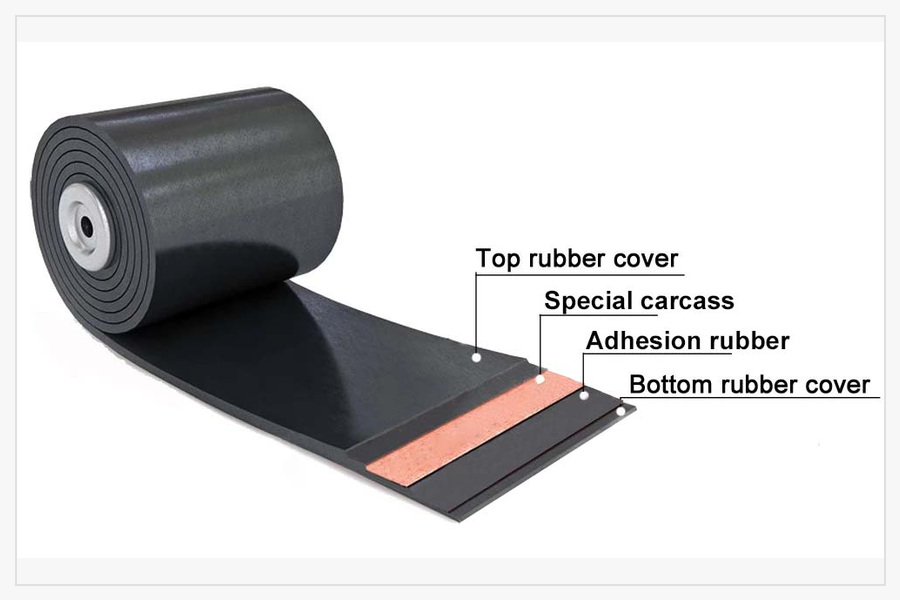
A cement production line handles materials that may look similar from a purchasing spreadsheet but behave very differently on a conveyor. The belt cover is exposed directly to the material, while the carcass carries tensile load and repeatedly flexes around pulleys. Selection therefore has to address both the material and the conveyor.
Limestone handling is mainly an abrasion-and-impact problem when coarse or angular material enters the belt at a transfer point. Raw material duties can vary substantially depending on particle size, moisture, blending and process position. Clinker adds a thermal problem: elevated material temperature can change the behavior of rubber while abrasive particles continue to wear the cover.
This is why a generic request for a “rubber belt for cement plant” gives a supplier too much room to interpret the duty. A buyer should instead define the operating condition first and allow the belt specification to follow from it.
| Cement Plant Duty | Main Conditions to Check | Specification Implication | Procurement Risk |
|---|---|---|---|
| Limestone | Lump size, sharp edges, abrasion, loading impact, moisture | Review cover properties and thickness together with carcass strength and loading-zone conditions | Ordering by belt dimensions alone can leave the cover or carcass under-specified |
| Raw material / raw meal duty | Material condition, moisture, fines, conveyor length, capacity and incline | Match construction to the actual conveying stage rather than copying another plant position | One plant-wide specification may ignore different conveyor duties |
| Clinker | Material temperature at loading, abrasion, impact, particle size and temperature variation | Heat resistance and mechanical wear protection must be evaluated together | A belt selected for abrasion alone may not tolerate the thermal duty |
| Long/high-tension transfer | Center distance, tension, capacity, lift, pulley diameter and take-up | Engineering review may point toward higher-strength textile construction or steel cord reinforcement | Selecting carcass type only by habit can create unnecessary cost or insufficient tensile capacity |
2. Limestone Conveyor Belts: Start With Abrasion and Loading Impact
Limestone service should not automatically be described as a simple ambient-temperature application. The severity depends on what reaches the belt. Crushed fines fed smoothly from a controlled chute impose a different load from coarse, angular rock falling onto the loading zone.
For procurement, the first useful information is the maximum lump size, material condition, loading arrangement and observed wear pattern on the existing belt. If the top cover is being gouged or worn rapidly near the feed point, simply increasing carcass tensile rating does not address the root problem. The cover and loading conditions need attention. If damage reaches the carcass, the risk changes again because reinforcement can become exposed.
The conveyor geometry also matters. Capacity, belt speed, conveyor length, lift and tension determine what the carcass must do mechanically. This is why the number of fabric plies should not be copied from an old purchase order without checking whether the operating duty has changed.
For conventional industrial duties, buyers can review rubber conveyor belt construction together with the actual conveyor data rather than treating “cement belt” as a single product category.
Buyer Tip: If an existing limestone belt has failed early, send the supplier photographs of the top cover, belt edge, splice and loading zone. “Premature wear” is not enough information. The location and appearance of damage help separate material abrasion from impact, mistracking, chute problems or other system-related causes.

3. Clinker Changes the Selection Logic
Clinker creates a different procurement problem because temperature and abrasion can act on the belt at the same time. A belt cover that is suitable for abrasive material at ordinary temperature should not automatically be assumed suitable for hot clinker.
The critical RFQ value is the material temperature where the clinker actually contacts the belt. Kiln or process temperatures elsewhere in the plant do not describe the belt's thermal exposure. Buyers should also report normal operating temperature, credible peak temperature, duration or frequency of peaks, particle size and the loading arrangement.
Temperature should not be evaluated in isolation. Hot, angular material can still create impact and cover wear. Cover thickness cannot compensate for an unsuitable rubber compound, while a heat-resistant compound cannot correct severe mechanical damage caused by poor loading geometry. Both sides of the duty need to be reviewed.
SINOCONVE has a dedicated technical discussion of heat-resistant conveyor belts for cement plant clinker handling for buyers evaluating this part of the process.
4. Raw Meal and Raw Materials: Avoid Copy-and-Paste Specifications
Raw material conveying covers several different positions in a cement plant. A belt transporting crushed material toward storage, a blending section and a downstream conveying point do not necessarily see the same particle size, moisture, capacity, loading impact or conveyor geometry.
This matters commercially because copying the strongest belt specification across every position can increase purchase cost without proving that the additional construction solves a real problem. The opposite approach—using a light specification everywhere—creates an obvious under-specification risk.
A better procurement method is to group conveyors by comparable duty. Record the conveyed material, capacity, belt speed, width, center distance, incline or lift, loading characteristics, existing belt construction and known failure history for each group. The manufacturer can then identify which positions can reasonably share a specification and which need separate engineering review.
5. EP Fabric or Steel Cord? Let Conveyor Duty Decide
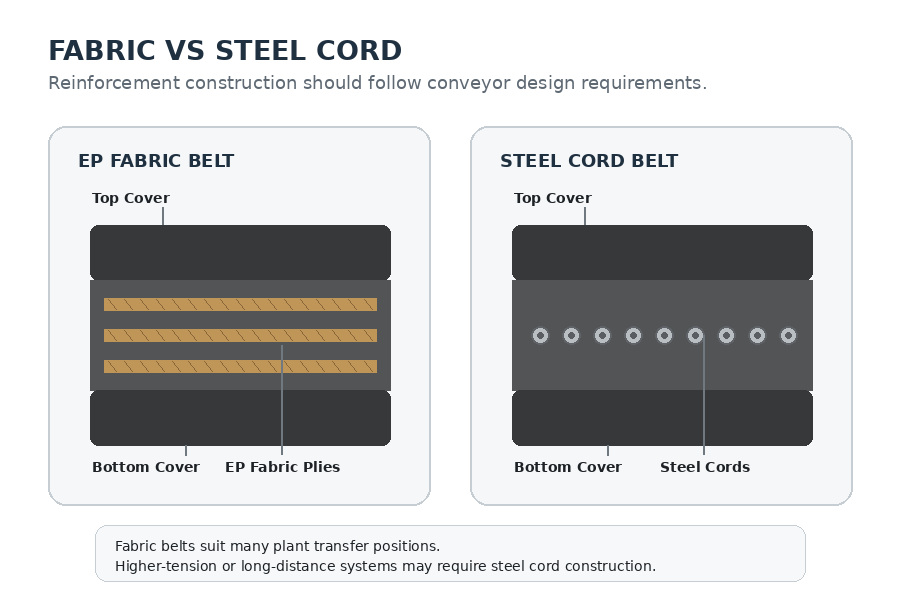
Textile-reinforced belts are widely applicable to industrial conveying because they combine flexibility with practical strength ranges. Steel cord reinforcement becomes relevant when conveyor length, working tension, load or elongation requirements move beyond what the selected fabric construction can appropriately handle.
That does not make steel cord automatically “better.” It changes the system requirements and the commercial decision. Pulley compatibility, splicing, installation, inspection and replacement planning become important parts of the evaluation.
| Decision Point | Fabric / EP Construction | Steel Cord Construction |
|---|---|---|
| Typical decision driver | Moderate system tension where a textile carcass satisfies the conveyor design | Higher tension or long-distance duty where low elongation and higher tensile capacity are required |
| Splicing | Must match belt construction and supplier procedure | Splice design and execution require particularly careful control |
| System check | Strength, ply construction, pulley compatibility and take-up | ST rating, pulley diameter, take-up, splice design and conveyor tension |
| Main purchasing mistake | Selecting only by ply count without confirming required tensile rating | Buying a higher ST rating without checking whether the conveyor and pulleys suit the belt |
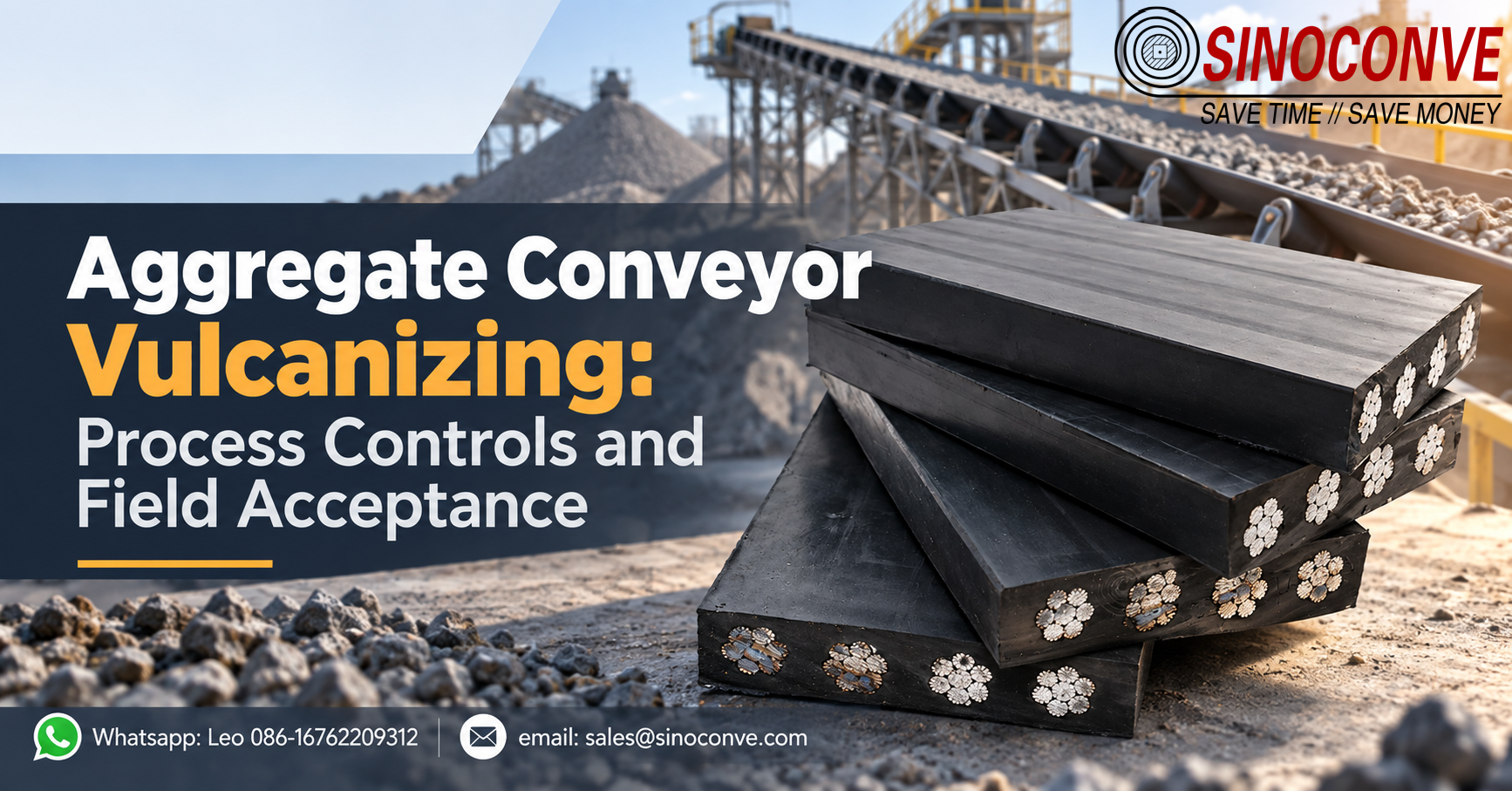
For demanding long-distance or high-tension positions, buyers can review SINOCONVE's steel cord conveyor belt category and then provide the conveyor design data required for an application-specific recommendation.
6. What a Cement Conveyor Belt Manufacturer Should Prove
A supplier quotation tells you what the supplier is willing to sell. Supplier qualification should establish whether the manufacturer can consistently produce and verify what the plant intends to buy.
For a cement plant tender or factory-direct purchase, the evaluation should cover manufacturing range, quality control, documentation, customization, delivery capability and technical communication—not price per meter alone.
6.1 Manufacturing capability relevant to the RFQ
SINOCONVE's conveyor belt factory was established in 1988. The company reports eight fabric conveyor belt production lines and two steel cord conveyor belt production lines, with annual production capacity of 10 million meters of fabric conveyor belt and 3 million meters of steel cord conveyor belt.
Its confirmed manufacturing range includes belt widths from 100 mm to 3,000 mm, thicknesses from 3 mm to 100 mm, fabric ratings from EP100 to EP600, and steel cord ratings from ST500 to ST7500. These figures describe manufacturing range, not a recommendation for a particular cement conveyor. Final construction still has to be selected from the conveyor duty.
Buyers comparing a cement conveyor belt manufacturer should ask other bidders for the same type of evidence. A broad catalog is less useful than knowing whether the actual width, reinforcement, construction and compound required by the project can be produced and controlled on the supplier's equipment.
6.2 Quality control and documentation
SINOCONVE states that incoming raw materials are inspected before production, production processes are checked during manufacturing, and finished products receive testing and final inspection before shipment. The factory has 15 quality-control personnel and one laboratory.
For a procurement team, the important step is to translate “strict quality control” into documents attached to the purchase requirement. SINOCONVE can provide ISO certificates and product test reports, and third-party testing can be arranged when customers have special standard requirements.
ISO 14890:2026 covers requirements for rubber- or plastics-covered conveyor belting of textile construction for general surface use, while steel cord conveyor belts have their own applicable specification framework. A buyer should therefore state the required standard and test scope in the RFQ rather than requesting an undefined “ISO conveyor belt.”
RFQ Warning: A certificate, a product test report and compliance with a belt specification are not interchangeable. Ask what document applies to the manufacturer, what test results apply to the supplied belt, which standard and edition are required by the project, and which properties will appear on the final inspection report.
7. Build the RFQ Around Data the Manufacturer Can Use
An accurate quotation requires enough information to remove assumptions. Sending only “EP conveyor belt, 1,000 mm wide, for cement plant” leaves unanswered questions about the material, duty, covers, tensile requirement, total quantity and operating conditions.
| RFQ Information | What the Buyer Should Provide | Why It Matters |
|---|---|---|
| Conveyed material | Limestone, clinker, raw material or other actual product | Defines the exposure that the cover must withstand |
| Material condition | Maximum lump size, moisture, sharpness/abrasiveness and bulk material information available from the plant | Helps evaluate abrasion, impact and loading behavior |
| Temperature | For hot duty, normal and maximum material temperature at belt contact | Required to evaluate heat-resistant cover performance |
| Conveyor data | Width, length/center distance, capacity, belt speed, incline/lift, pulley data and take-up information where available | Supports carcass and system compatibility review |
| Existing specification | Current belt datasheet, carcass/rating, covers, splice and required standard | Provides a reference point without assuming the old specification is optimal |
| Failure evidence | Photos, wear location, cracking, delamination, edge damage, splice condition and service history | Helps prevent repetition of an existing failure mechanism |
| Commercial scope | Quantity, roll lengths, packaging requirements, destination and required delivery schedule | Allows production and logistics requirements to be quoted consistently |
8. Factory-Direct Procurement: What to Compare Beyond Unit Price
Two quotations with the same belt width and nominal strength are not necessarily quotations for equivalent products. Cover construction, testing scope, packaging, manufacturing tolerance, documentation and commercial terms can differ.
SINOCONVE's confirmed minimum order quantity for conveyor belts is 50 meters. Standard production lead time is normally around 30 days; urgent requirements may be handled in approximately 15–20 days when production scheduling permits. The company produces customized conveyor belts rather than relying on finished stock, and supports customization based on customer requirements as well as OEM/ODM arrangements.
That custom-production model has an important procurement implication: technical approval should happen before production. Buyers should freeze the agreed belt specification, quantity, roll arrangement, marking, packaging, test requirements and documentation rather than resolving technical differences after manufacturing has started.
For shipping protection, SINOCONVE can use PVC board plus iron-sheet protection and palletized packaging for conveyor belts. Packaging requirements should still be written into the order when belts face long ocean transit, multiple handling stages or extended storage before installation.
9. A Practical Supplier Qualification Checklist
Before placing a cement plant conveyor belt order, procurement teams can use the following checks to make supplier comparisons more consistent:
- Application review: Has the supplier asked what material the belt carries and where the conveyor sits in the cement process?
- Temperature confirmation: For clinker duty, has the supplier requested actual material temperature at belt contact rather than assuming it?
- Construction: Are carcass type, strength rating, covers and overall dimensions clearly identified?
- Conveyor compatibility: For higher-strength belts, have pulley, tension, take-up and splice requirements been considered?
- Standards: Does the quotation state the applicable specification rather than using a vague statement such as “international standard”?
- Quality evidence: Can the supplier provide the certificates and product test documentation required by the purchase contract?
- Manufacturing capability: Is the required belt within the factory's actual production range?
- Customization: Can special construction, marking, logo or packaging requirements be agreed before production?
- Delivery: Is lead time based on the actual quantity and construction rather than a generic catalog promise?
- After-sales response: If a belt problem occurs, is there a defined process for submitting operating data, photographs and quality evidence for investigation?
More general belt-selection factors are covered in SINOCONVE's rubber conveyor belt selection guide, which can be useful before preparing a multi-position cement plant tender.
10. Common Procurement Mistakes in Cement Belt Projects
Using one specification for the whole plant. Limestone, clinker and different raw-material positions do not automatically impose the same duty. Standardization is useful only after comparable operating conditions have been established.
Specifying clinker belts by temperature alone. Thermal resistance does not eliminate abrasion, impact or loading-zone problems. The actual duty combines these factors.
Buying by ply count or ST rating alone. Reinforcement strength is only one part of the belt. Cover properties, pulley compatibility, splice design and system tension still matter.
Comparing price per meter before normalizing specifications. A lower price is not a meaningful saving if the quotations cover different constructions, testing scopes or packaging requirements.
Sending the old specification without failure information. Replacement procurement is an opportunity to check why the existing belt was removed. If the previous construction was mismatched to the application, repeating it simply reproduces the risk.
11. FAQ for Cement Plant Conveyor Belt Buyers
11.1 What conveyor belt is suitable for limestone in a cement plant?
The answer depends on lump size, abrasion, impact at the loading point, capacity and conveyor design. Limestone service generally puts strong emphasis on mechanical wear and loading conditions, but the final carcass strength and cover specification should be selected from actual conveyor data rather than material name alone.
11.2 Does clinker always require a heat-resistant conveyor belt?
The decision should be based on the clinker temperature where it contacts the belt and the specified limits of the proposed cover compound. Do not use kiln temperature or a generic cement-plant temperature as a substitute for loading-point data.
11.3 Is a steel cord belt better than an EP fabric belt for cement plants?
Not universally. Steel cord construction is relevant where conveyor tension, length, load and elongation requirements justify it. Fabric construction can be the more practical choice where its tensile capacity and elongation characteristics satisfy the conveyor design. The conveyor should decide the reinforcement, not the assumption that a higher rating is always better.
11.4 What should be included in a cement conveyor belt RFQ?
At minimum, identify the conveyed material, belt dimensions, required construction or existing specification, quantity and applicable standard. For a technical review, also provide material temperature where relevant, lump size, capacity, speed, conveyor length, incline/lift, pulley information, loading conditions and any existing failure evidence.
11.5 Can SINOCONVE provide customized conveyor belts?
Yes. SINOCONVE confirms that conveyor belts can be manufactured according to customer requirements, with support for drawing/sample-based customization, logo, color and packaging customization, and OEM/ODM cooperation. Because the belts are customized rather than supplied from finished-product stock, the technical specification should be confirmed before production.
11.6 What quality documents can buyers request?
SINOCONVE can provide ISO certificates and product test reports. Where a customer has special standard requirements, third-party testing can also be arranged. The RFQ should state the exact documents and test requirements needed for technical approval rather than waiting until shipment.
11.7 What is SINOCONVE's MOQ and normal lead time for conveyor belts?
The confirmed conveyor belt MOQ is 50 meters. Normal lead time is approximately 30 days. For urgent requirements, a 15–20 day production schedule may be possible subject to production arrangement. Buyers should confirm the final schedule against the actual belt specification and order quantity.

12. Prepare the Application Data Before Requesting a Quote
A useful cement conveyor belt quotation starts with a useful technical brief. For limestone or raw-material duty, prepare the belt dimensions, conveyed material, lump size, capacity, speed, conveyor length, loading conditions and existing specification. For clinker, add normal and maximum material temperature at the belt loading point. For long or high-tension conveyors, include pulley, take-up and available design/tension data.
If an existing belt is being replaced because of premature wear, cracking, splice problems or other damage, include photographs and the previous belt specification. That gives the manufacturer something more useful to evaluate than a product name.
Ningbo Sinoconve Belt Co., Ltd. has manufactured industrial belts since its factory was established in 1988, with dedicated production lines for both fabric and steel cord conveyor belts. Buyers preparing a cement plant tender or factory-direct RFQ can review the SINOCONVE conveyor belt range or submit the application information through the SINOCONVE contact and quotation page. Technical and commercial RFQs can also be sent to sales@sinoconve.com.