
Conveyor Belt Quick Reference: Roll Length, Splice & V-Belt Formulas
Formulas for conveyor belt roll length, belt speed, splice allowance and V-belt drive length, with worked examples for maintenance and procurement teams.
Engineered belt solutions for demanding industries worldwide

Formulas for conveyor belt roll length, belt speed, splice allowance and V-belt drive length, with worked examples for maintenance and procurement teams.
ISO certification can support conveyor belt supplier qualification, but it does not prove that a specific belt meets an importer’s technical requirements. This guide explains what ISO 9001 can demonstrate, what buyers must verify separately, and how to audit certificates, factory capability, quality control, test reports and RFQ data. It gives importers, distributors and procurement teams a practical framework for comparing conveyor belt suppliers using relevant evidence rather than relying on certification or marketing claims alone.
Conveyor belt quality cannot be verified by appearance, supplier claims, or a certificate alone. This guide gives industrial procurement teams 10 practical quality-control checks to use when evaluating a conveyor belt manufacturer, from incoming materials and reinforcement testing to adhesion, abrasion, traceability, and final inspection. It also explains how to audit factory controls, distinguish certificates from product test evidence, define an RFQ inspection scope, and compare suppliers against the same technical and commercial requirements.
Conveyor belt test reports are useful only when buyers can compare them on the same technical basis. This guide shows Quality and Procurement teams how to evaluate test methods, standard editions, sample and batch traceability, tensile and elongation data, adhesion, abrasion results, acceptance criteria and third-party reports. It also explains how to connect test evidence with factory audits, supplier qualification and RFQ requirements so that purchasing decisions are based on verifiable production capability rather than isolated laboratory numbers.
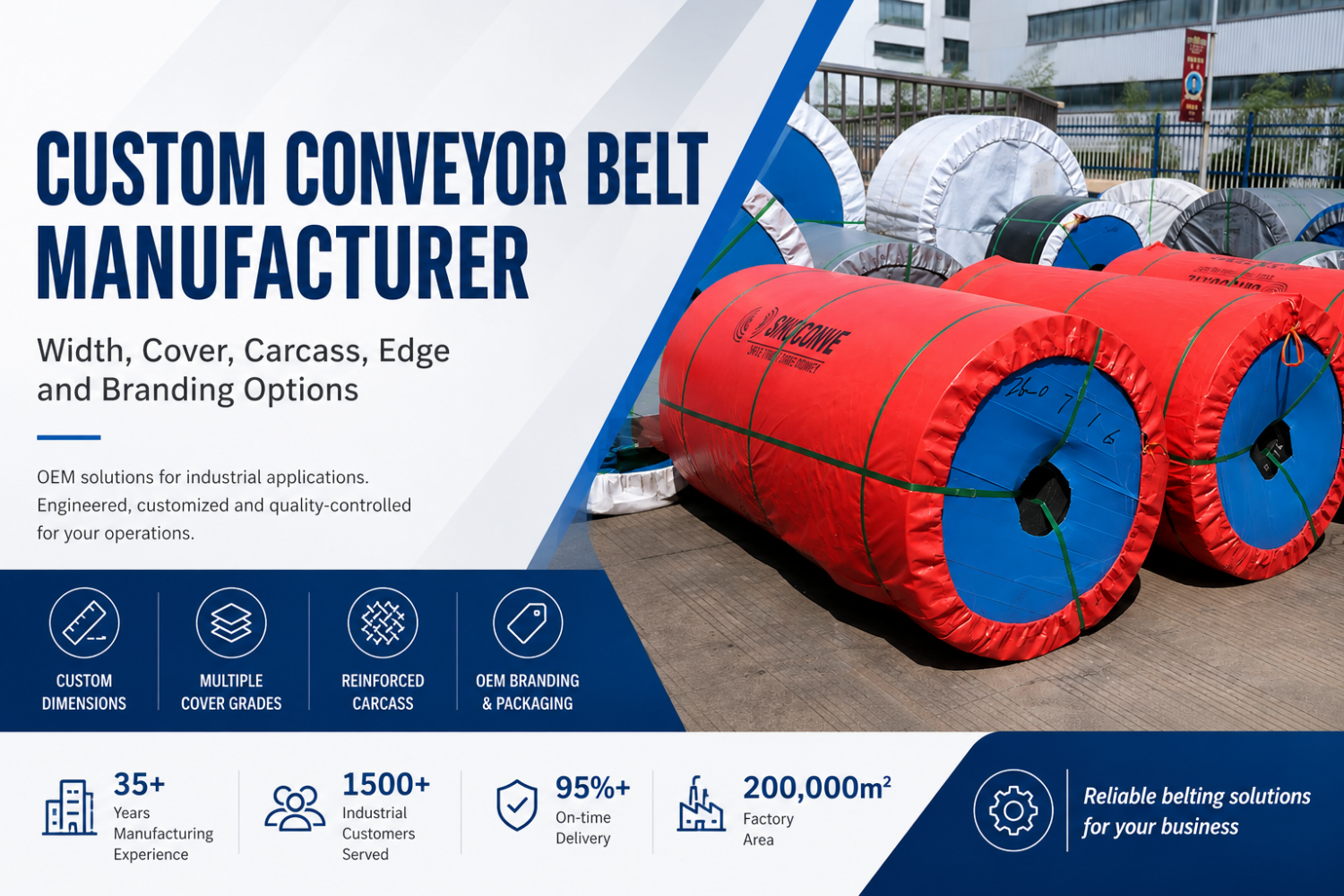
Custom conveyor belt sourcing involves more than choosing width or adding a private-label logo. This guide shows OEM buyers, distributors and industrial importers how to evaluate width, cover, carcass, edge and branding options while controlling drawings, samples, inspection and repeat production. It also explains what evidence to request from a custom conveyor belt manufacturer, how to reduce specification ambiguity before mass production, and what technical and commercial information to include in a comparable RFQ.
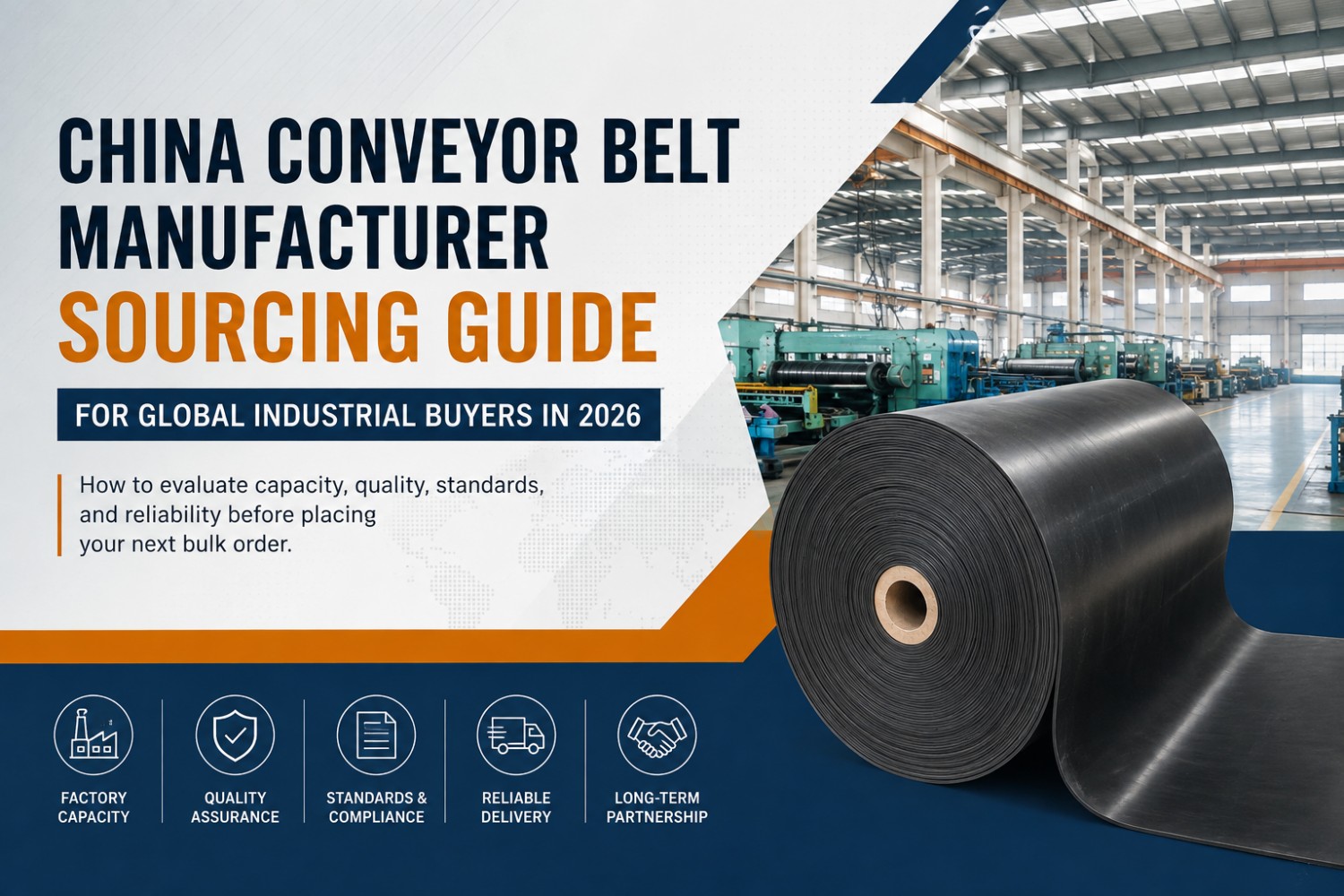
Sourcing conveyor belts from China requires more than comparing factory prices. This guide helps global importers, distributors, EPC contractors and procurement teams qualify a China conveyor belt manufacturer through technical RFQs, factory capability, quality control, test documentation, customization, packaging and delivery planning. It also explains how to compare EP and steel cord belt suppliers, identify sourcing red flags, audit manufacturing evidence and prepare a technically consistent RFQ before negotiating a bulk order.
Formulas for conveyor belt roll length, belt speed, splice allowance and V-belt drive length, with worked examples for maintenance and procurement teams.
ISO certification can support conveyor belt supplier qualification, but it does not prove that a specific belt meets an importer’s technical requirements. This guide explains what ISO 9001 can demonstrate, what buyers must verify separately, and how to audit certificates, factory capability, quality control, test reports and RFQ data. It gives importers, distributors and procurement teams a practical framework for comparing conveyor belt suppliers using relevant evidence rather than relying on certification or marketing claims alone.
Conveyor belt quality cannot be verified by appearance, supplier claims, or a certificate alone. This guide gives industrial procurement teams 10 practical quality-control checks to use when evaluating a conveyor belt manufacturer, from incoming materials and reinforcement testing to adhesion, abrasion, traceability, and final inspection. It also explains how to audit factory controls, distinguish certificates from product test evidence, define an RFQ inspection scope, and compare suppliers against the same technical and commercial requirements.
Conveyor belt test reports are useful only when buyers can compare them on the same technical basis. This guide shows Quality and Procurement teams how to evaluate test methods, standard editions, sample and batch traceability, tensile and elongation data, adhesion, abrasion results, acceptance criteria and third-party reports. It also explains how to connect test evidence with factory audits, supplier qualification and RFQ requirements so that purchasing decisions are based on verifiable production capability rather than isolated laboratory numbers.
Custom conveyor belt sourcing involves more than choosing width or adding a private-label logo. This guide shows OEM buyers, distributors and industrial importers how to evaluate width, cover, carcass, edge and branding options while controlling drawings, samples, inspection and repeat production. It also explains what evidence to request from a custom conveyor belt manufacturer, how to reduce specification ambiguity before mass production, and what technical and commercial information to include in a comparable RFQ.
Sourcing conveyor belts from China requires more than comparing factory prices. This guide helps global importers, distributors, EPC contractors and procurement teams qualify a China conveyor belt manufacturer through technical RFQs, factory capability, quality control, test documentation, customization, packaging and delivery planning. It also explains how to compare EP and steel cord belt suppliers, identify sourcing red flags, audit manufacturing evidence and prepare a technically consistent RFQ before negotiating a bulk order.
We are committed to providing you with better products and services. Welcome to browse more content for details