
OEM is a control process, not a logo on a belt
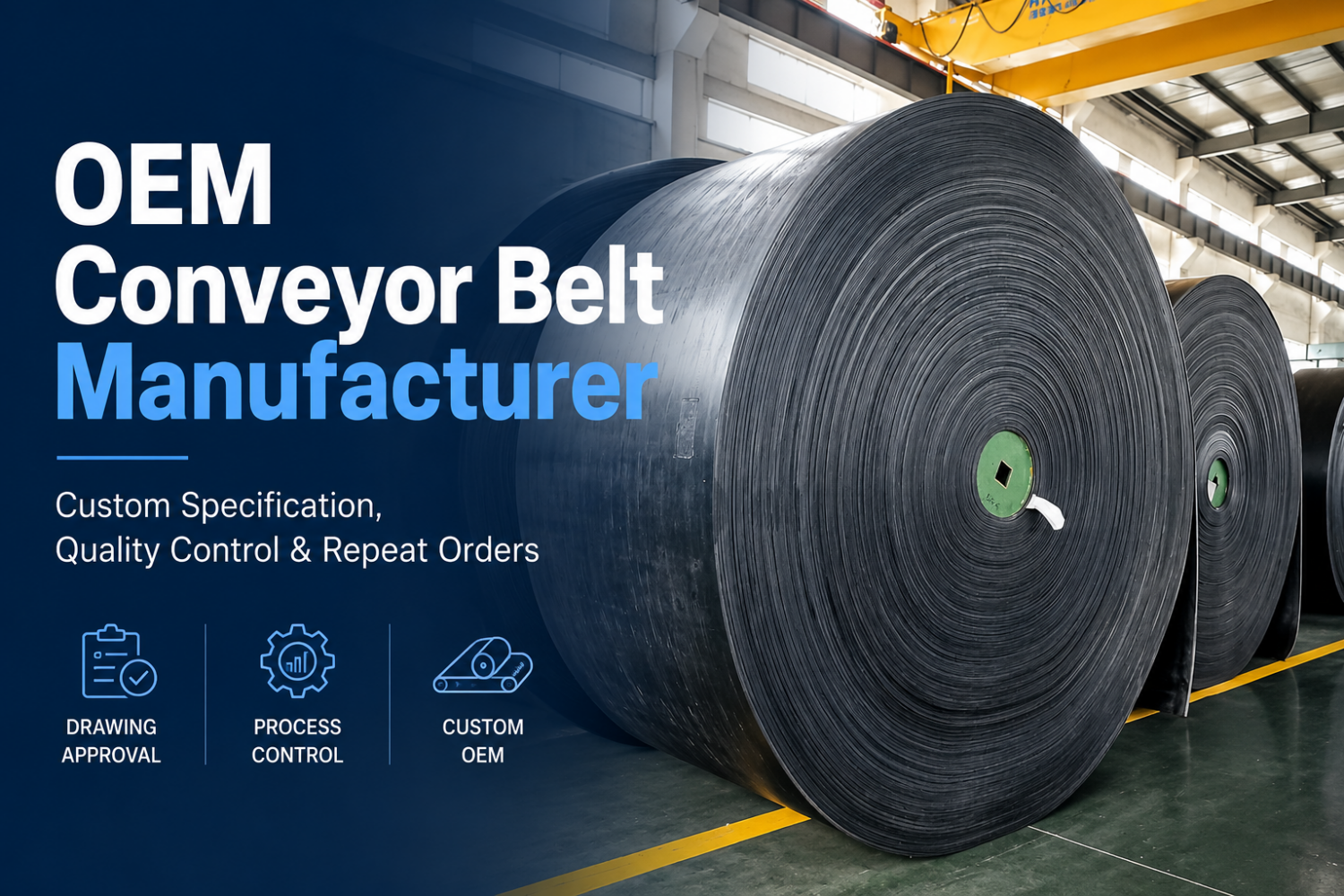
When buyers search for an OEM conveyor belt manufacturer, they often mean more than private labelling. A reliable OEM process should convert a drawing, application requirement or approved sample into a controlled product that can be reproduced, inspected and packed for the target market.
That process matters for equipment manufacturers, distributors, EPC contractors and industrial importers. A belt can carry the correct brand mark and still be wrong if its reinforcement, cover thickness, length, splice preparation, profile or packing differs from the approved requirement.
This guide explains what to confirm before ordering a custom rubber conveyor belt. For general sourcing controls, see the conveyor belt sourcing guide. For a manufacturer comparison framework, review how to evaluate rubber conveyor belt manufacturers.
1. Drawing and data intake
A capable OEM supplier should begin with a structured technical intake. Send the information that defines the belt's fit and operating duty:
- Belt type and intended application.
- Width, length, overall thickness and tolerances.
- Tensile strength or reinforcement requirement.
- Fabric or steel-cord construction where relevant.
- Top and bottom cover thickness and compound requirement.
- Surface pattern, cleat, sidewall or edge details if applicable.
- Conveyor layout, pulley data, troughing and splice conditions.
- Material, temperature, speed, capacity and operating environment.
- Quantity, target market, marking, packing and documentation.
If the design is still under development, mark which fields are fixed and which are open for engineering recommendation. That separation prevents an early quotation assumption from becoming an unapproved production requirement.
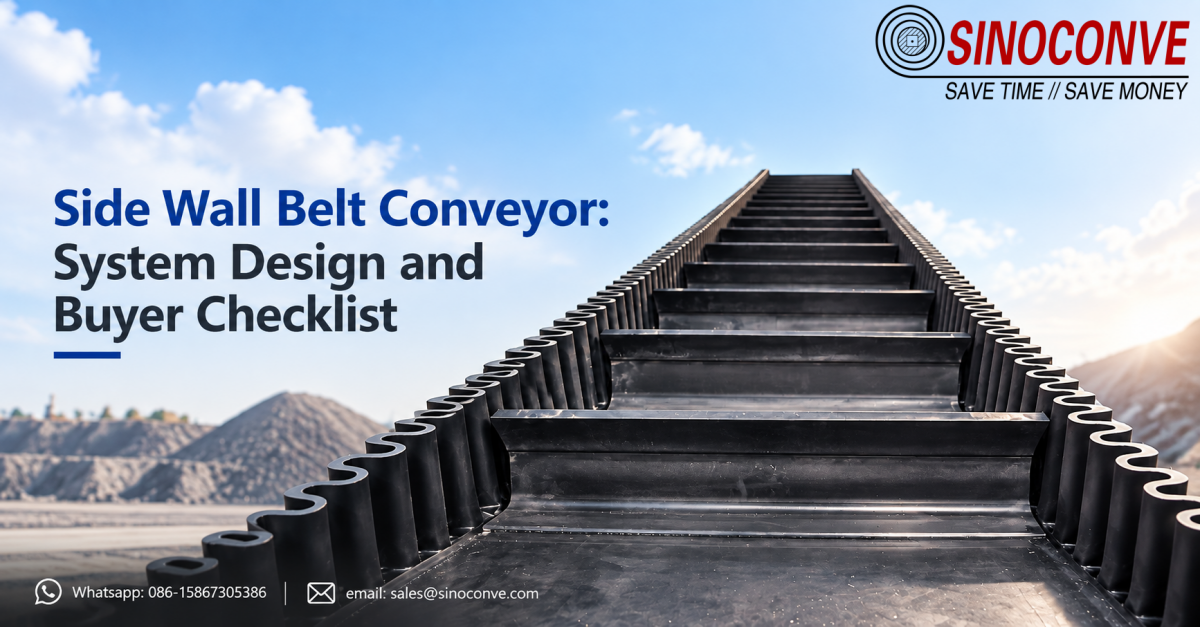
For belt families that need special geometry, discuss sidewall conveyor belts or rough-top conveyor belts as distinct constructions. Do not describe a profile or accessory only in a product nickname.
2. Construction and compound selection
Customization should be tied to the actual failure mode and operating condition. A supplier should be able to explain how reinforcement, cover rubber and surface design relate to the application.
For a textile-reinforced belt, request confirmation of fabric type, ply arrangement, strength rating and cover construction. For abrasive or impact-heavy material, discuss the cover requirement and loading-zone conditions. For hot material, confirm the temperature range and heat-resistance requirement rather than selecting a grade by name alone. For oil or chemical exposure, state the contact material and operating conditions so the compound recommendation is traceable.
The EP rubber conveyor belt product page can be used as a starting point for the construction discussion. The final OEM document should identify the approved construction in fields that production and inspection teams can use.
OEM specification fields
| Specification | What must be controlled |
|---|---|
| Reinforcement | Fabric or cord construction, arrangement and strength requirement |
| Covers | Top/bottom thickness, compound or grade requirement and surface condition |
| Dimensions | Width, overall thickness, length and agreed tolerances |
| Profile | Surface pattern, cleats, sidewalls or special edges where applicable |
| Joint | Splice preparation, endless construction or installation requirement |
| Marking | Brand, product code, batch or roll identification and language |
| Packing | Roll, reel, pallet, moisture protection and shipping marks |
3. Sample and drawing approval
Before bulk production, decide whether the approval unit is a drawing, a physical sample, a short trial roll or a combination. The approval method should match the customization risk.
A drawing is useful for dimensions, construction and marking. A physical sample helps confirm appearance, surface pattern, edge finish and packaging. A trial roll may be necessary when the belt's behaviour depends on a longer production process or a non-standard construction.
Record the approval status and revision number. If a buyer approves "the sample" without identifying the sample date, dimensions or technical revision, the reference can become unclear when repeat production starts.
A practical approval record includes:
- Buyer and supplier part number.
- Drawing or specification revision.
- Key dimensions and tolerances.
- Construction and cover information.
- Marking and packaging reference.
- Inspection points and acceptance criteria.
- Approval date and authorized decision-maker.
4. Production capability and process control
OEM buyers should ask how the approved requirement is transferred to production. On the SINOCONVE quality assurance page, the published control process includes rubber compound testing, EP fabric inspection, calendering, forming, vulcanization, dimensional measurement and final inspection.
This sequence gives buyers a useful audit structure:
- Material preparation: check that rubber and reinforcement inputs match the approved requirement.
- Calendering: control even rubber application around the reinforcement.
- Forming: maintain ply alignment, tension and belt-core consistency.
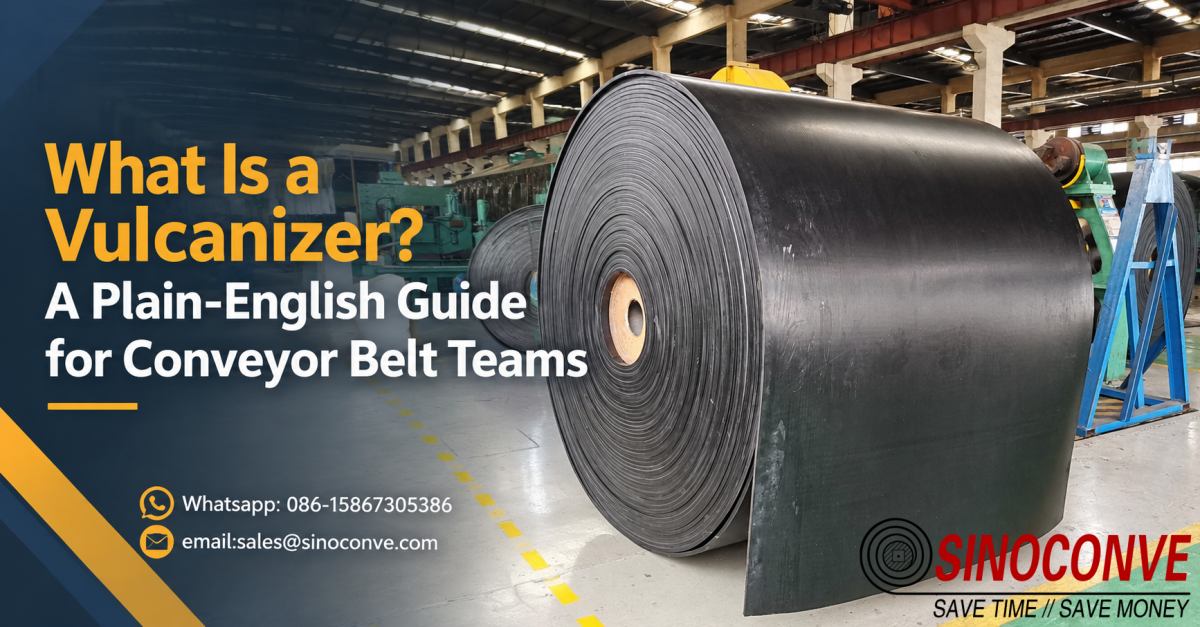
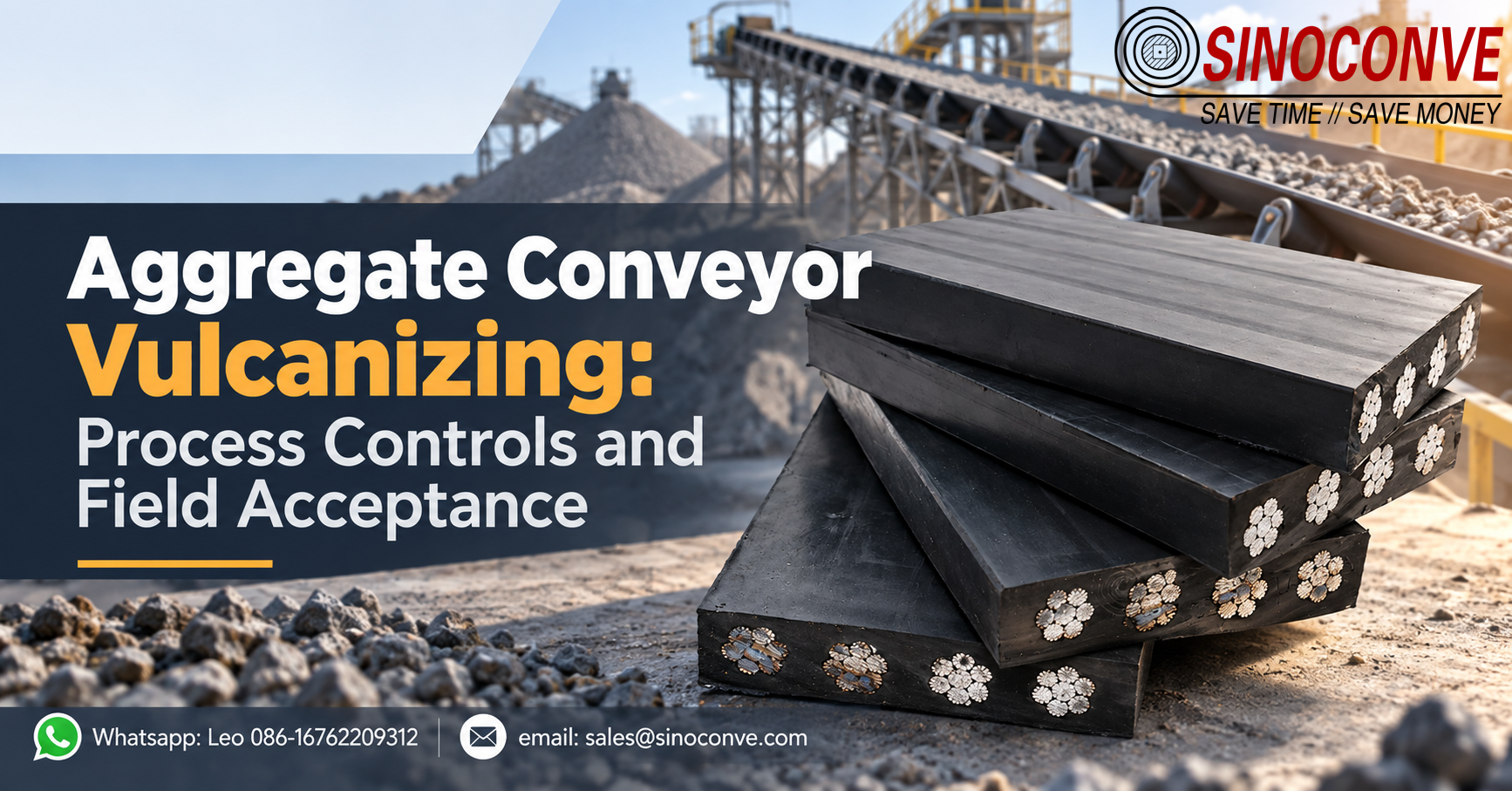
- Vulcanization: link production conditions to the order and belt construction.
- Finishing: inspect surface, width, thickness, length and visible defects.
- Performance testing: agree abrasion, adhesion, tensile or other tests required by the specification.
- Release: verify labels, packing, quantity and final documents before shipment.
An OEM program should also define the change-control rule. Changes to compound, reinforcement, process, marking, packing or approved subcontracting should be reviewed before they are introduced into a repeat order.
5. Testing and documentation
Testing requirements should be written before production, not requested after a problem appears. The buyer and manufacturer should agree the test item, method, sample, acceptance requirement, report format and product identification.
For general textile construction belts, the official ISO 14890 page describes requirements for rubber and/or plastics-covered conveyor belting of textile construction for general surface use. The same page notes that enquiry details and purchaser-manufacturer agreements are part of the specification process.
Ask the OEM supplier to confirm the document pack. Depending on the order, it may include:
- Technical data sheet and approved drawing.
- Material or compound information where agreed.
- Dimensional inspection record.
- Abrasion, adhesion or tensile test results where required.
- Final inspection and release record.
- Packing list, labels and roll identification.
- Commercial and shipping documents for the destination market.
Do not use a general certificate as a substitute for order-specific evidence. Traceability is stronger when the report identifies the product, batch or roll and the approved technical revision.
6. Marking, branding and packaging
Private label and OEM marking should be treated as controlled production details. Confirm the exact logo file, product code, label language, location, colour, minimum readable size and whether the marking is applied to the belt, core, packing or documents.
Packaging also affects receiving, storage and installation. Agree roll direction, core or reel requirement, protection against moisture and handling marks. For export orders, confirm shipping marks, quantity labels, gross and net weight fields, and any customer pallet or container requirements.
Use SINOCONVE About Us to understand the manufacturer's industrial product scope, then send the marking and packing specification through Contact SINOCONVE for quotation review.

7. Repeatability and re-order control
The value of OEM production is repeatability. Before the first shipment, identify the fields that must remain unchanged on a repeat order and the fields that require re-approval if modified.
A repeat-order control sheet should include the approved part number, revision, belt construction, dimensions, tolerances, cover requirements, marking, packing, inspection plan and documents. Add a clear rule for exceptions: a change to reinforcement, compound, profile, vulcanization process, label or packing must be communicated and approved before production.
For distributors, retain the approved sample or drawing with the purchasing record. For equipment manufacturers, link the belt specification to the machine model or project revision. This creates a more reliable bridge between engineering, purchasing, factory production and after-sales service.
OEM supplier capability scorecard
| Capability | Evidence to request |
|---|---|
| Technical intake | Completed RFQ or engineering data sheet |
| Design conversion | Drawing, revision process and approval record |
| Sample process | Sample, trial roll or controlled reference |
| Production | Process flow and inspection checkpoints |
| Testing | Agreed test plan and traceable reports |
| Branding | Approved marking artwork and location |
| Packing | Packing drawing or documented packing method |
| Repeat orders | Change-control and revision management |
| Support | Technical contact for application and quality questions |
The best OEM conveyor belt manufacturer is not necessarily the one that accepts every request without questions. It is the supplier that identifies missing data early, records approved decisions and keeps production aligned with the same technical reference.

Before you place the OEM order
- Send a complete technical data sheet or drawing.
- Mark fixed requirements and open engineering decisions.
- Confirm construction, dimensions, tolerances and cover requirements.
- Approve a sample, trial roll or drawing with a revision number.
- Agree inspection items, test methods and document format.
- Approve brand marking, labels and packing.
- Define change-control and repeat-order rules.
- Confirm quantity, destination, lead time and communication contacts.
FAQ
What makes an OEM conveyor belt manufacturer reliable?
A reliable OEM supplier can convert application data or drawings into an approved construction, control production and inspection, reproduce the same specification, and provide traceable documents and packing.
Do I need a physical sample for every OEM conveyor belt?
Not always. A drawing may be sufficient for a clearly defined standard construction, while a physical sample or trial roll is useful for non-standard profiles, appearance, marking, edge details or higher customization risk.
Which OEM changes require re-approval?
Changes to reinforcement, compound, dimensions, profile, vulcanization process, marking, packing or another field that affects fit or performance should be reviewed before repeat production.
What should I provide when asking for a custom belt quotation?
Provide the application, conveyor data, belt dimensions, construction, strength, cover requirements, profile, marking, quantity, destination, packing and required documents.
Can SINOCONVE support custom conveyor belt specifications?
SINOCONVE states on its official site that conveyor belts can be customized by width, length, thickness, fabric grade, cover rubber, surface pattern, colour, logo, packaging and working conditions. Confirm your project details through the SINOCONVE contact page.