

Mining and quarrying conveyor services are the work that keeps a bulk handling line moving after the belt has been bought: surveying the route, writing the specification, installing and commissioning the structure, hot-splicing the belt, swapping rollers and pulleys, correcting tension and tracking, and getting a crew to site when a splice lets go at two in the morning. Buyers in this market rarely lose their money on the belt itself. They lose it on the nine or ten hours a stopped primary crushing line costs them, and on the second splice that fails because nobody recorded how the first repair was cured.
We are a conveyor belt manufacturer in Ningbo, and we also send service crews to mine sites and quarries, so we sit on both sides of the invoice. This page is written for the people who buy those services and for the maintenance engineers who have to live with the result for the next five years.

01Where Mining and Quarrying Conveyor Services Begin and End
A service contract in this industry covers labour, equipment, documentation and logistics around a conveyor that already exists. It starts when someone needs the line surveyed, specified, installed, spliced, adjusted, inspected or repaired, and it ends where engineering design begins. That boundary matters more than most buyers expect, because a service crew can only install and maintain what the drawings and the operating data allow.
What this page covers in full detail
Everything on this page sits on the service side of the fence. You will find the service menu a mine or quarry actually buys, the evidence you should demand before awarding that work, the field conditions that change the scope on remote sites, contract terms with usable acceptance criteria, and a total cost of ownership calculation that puts service spend next to downtime loss. Specification writing, survey and measurement, installation, vulcanised splicing, roller and pulley change-outs, tension and tracking correction, inspection, training, spare parts and emergency response are all treated as service deliverables with names, durations and sign-off points.
What a companion page covers instead
System boundaries, capacity calculations, drive sizing, motor and gearbox selection, starting torque curves and the wider component combination across a whole plant belong to a separate article in this cluster on conveying solutions for mining, which covers system design. If you are still deciding how many tonnes per hour a new line has to move, or whether one long flight should be replaced by two shorter ones with a transfer tower, that decision comes before a service scope is written. Replacing an idler or curing a splice is a service task. Deciding the belt width, speed and installed power from scratch is a design task, and mixing the two conversations in a single tender is how projects end up with a technically correct belt on a structure that cannot be reached by a crane.
Field note from our engineers: On a granite quarry in the eastern provinces we were asked to quote "belt supply and splice". The survey showed 2.4 m of take-up travel already used up of 3.0 m available, so the belt we would have supplied at the length stated in the enquiry would have been 1.8 m short of ever reaching correct tension. The service quote was cheap. The re-quote, after the survey, was 30 percent higher and saved the customer a second shutdown.
Three groups of pages already published on this site cover adjacent ground, and we do not repeat them here: the general design of quarry conveyor systems, belt selection for crusher and aggregate plants, and abrasion-resistant belt choices for quarry and steep-angle work. This article assumes the belt and the route exist, and concentrates on the service layer around them.
02The Service Menu a Mine or Quarry Actually Buys
Most enquiries reach us as one line, "supply and install belt", and most of them need to be unpicked into eight separate scopes before anyone can price them honestly. The eight below are the services we are asked for repeatedly at hard-rock quarries, iron ore operations, coal stockyards and cement limestone pits. Durations are what we typically see on a site with a functioning access road and a mobile crane available; add between 30 and 50 percent where access is restricted to a narrow haul road.
| Service | What the crew does on your site | Typical duration per job | Who signs the handover |
|---|---|---|---|
| Specification and belt selection support | Sits down with your planner and fixes cover grade, ply, tensile class and splice type against the operating data you supply. | Two to six weeks of engineering time, almost all of it off site | Your maintenance manager and the purchasing lead together |
| Route survey and measurement | Walks the full conveyor run with a laser distance meter and records pulley centres, inclines and idler spacing. | One to three days per flight, longer after heavy rain | Your site surveyor countersigns the drawing set we issue |
| Installation supervision and commissioning | Guides your mechanical contractor through structure alignment, belt pulling and take-up setting before first load. | Three to ten days, depending on how much structure is new | Our commissioning engineer and your shift supervisor |
| Hot splice vulcanising and repair | Cuts, strips, lays and cures the splice on site with a platen press, logging temperature and pressure throughout. | Six to fourteen hours per splice, weather and material permitting | We hand the cure chart over against the belt tag number |
| Roller, pulley and idler change-outs | Replaces worn rollers, lagging and bearings inside a planned window with the belt held or mechanically blocked. | Four hours to two days inside a shutdown window you control | Your maintenance planner signs the parts list back to us |
| Tension and tracking adjustment | Sets the counterweight, checks remaining take-up travel and trains the belt to run true empty and loaded. | Two to eight hours, usually repeated once after a week of running | Shift supervisor accepts both the empty and the loaded run |
| Inspection, training and handover | Runs a joint inspection tour, then coaches your fitters on splice inspection, scraper setting and idler spotting. | Two days of inspection plus three to five days of coaching | Both parties sign the attendance and competency record |
| Spare parts and emergency response | Holds agreed stock, moves splice kits forward and sends a crew on the first available connection to your mine. | Response is measured in hours; the repair itself takes a shift | Site superintendent signs the call-out sheet and time log |
What gets priced per job and what gets priced per year
Vulcanised splices, change-outs and repairs are job work, quoted against a measured scope with a fixed labour day rate and a materials list. Surveys and specification writing are usually one-off engineering fees. Inspection and emergency readiness are annual, and this is the line item that purchasing departments cut first and regret longest.
Our advice to a quarry running 12 belts over 6 km of total length is to keep the first two categories competitive, tender them openly to a conveyor belt supplier with its own crews, and treat the annual inspection retainer as a fixed cost you do not shop around on price alone. A crew that knows which belt has been drifting since March is worth more than the cheapest hourly rate in the region.
Which service tasks you should keep in-house
Daily walk-downs, greasing, scraper clearance checks and blocked chute clearing belong to your own fitters, because they depend on local observation. What should not stay in-house without a certified press and a trained operator is hot vulcanising on a steel cord carcass.
03Specification Support Before a Single Belt Is Made
A specification document is a service deliverable, and it is the cheapest thing a quarry can buy from a belt maker. It costs engineering hours and no steel, and it removes most of the argument that follows a premature failure, because it fixes what was agreed in writing before manufacture. We issue it as a numbered document with a revision table, and we expect the buyer to mark it up and send it back.
The specification package we hand over
Typical contents are the belt designation with carcass type and ply count, the cover grade in millimetres, the tensile class expressed in N/mm, the required full-thickness tensile and elongation values, the cover abrasion figure as a maximum in mm³, the splice method and geometry, the belt length with a stated take-up allowance, and the edge configuration. For an industrial conveyor belt running at a stone crusher feed, the document also names the impact rating at the loading point and the idler spacing assumed under the chute.
What a specification is not is a product code pasted onto a quotation. We have reviewed tender documents of four pages with a single line, "EP belt as per standard", and no stated cover thickness at all, and there is no way to price that fairly. When standards are cited we work to what they normally require, including DIN 22102 for cover grades, ISO 340 for flame resistance where underground work applies, ISO 284 for surface resistivity, RMA Grade I or II for abrasion classification and AS 1332.
Operating data a service team needs from your site
Give us the lump size distribution with the top size, because a 900 mm lump behaves nothing like a graded 40 mm product. Add the bulk density wet and dry, the moisture range between the dry season and the monsoon, the throughput in tonnes per hour at average and peak, the incline, the pulley centres, the belt speed in metres per second and the ambient temperature swing. Do not leave out the duty cycle in hours per day and the number of loaded starts per shift.
04Route Survey, Measurement and Drawing Handover
Surveys are the service most often skipped and the one that pays back fastest. On a greenfield quarry line it is straightforward, but on a 15-year-old plant with three modifications and a relocated transfer point, the drawing in your cabinet is usually wrong by a metre or more somewhere that matters.
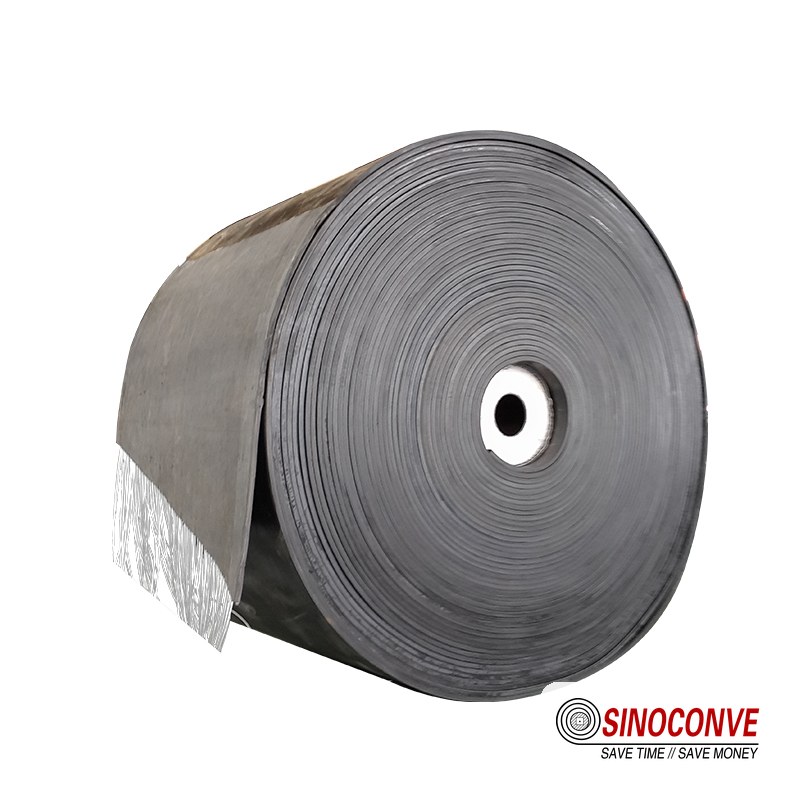
Survey crews record pulley centres, incline angles and take-up travel before any belt length is confirmed.
What the survey crew actually measures
We take pulley centre distances flight by flight, the vertical rise at each incline, the actual wrap angles at head and tail, the position of the counterweight and the remaining travel in the take-up frame, the belt width as installed against the width specified, and the condition of the skirt boards and chute lips. On a steel cord installation we also record the belt direction arrow and any existing splice positions, because a replacement splice has to respect the cord lay direction and the spacing rule between adjacent joints.
Drawings come back as a plan and elevation with the measured dimensions marked and a list of deviations from the original design. Where a route has been extended without a new take-up, that deviation is flagged separately, since it changes the belt length and not just the paperwork.
For anyone who wants to compare our survey output against their own records, the drawings we issue follow the same convention as the documentation described on our conveyor belt factory page, with drawing numbers, revision codes and sign-off boxes.
05Installation Supervision and Commissioning
Installation is where a service provider either earns its fee or quietly transfers its mistakes to your maintenance budget. Our crews supervise or execute belt pulling, splicing, alignment of structure, chute work and take-up setting, and we accept that the line must run at design throughput for a full shift before we call commissioning finished. The single most useful habit we have adopted is refusing to run a loaded belt before the empty run is documented.
The commissioning sequence we record, stage by stage
| Stage | What the crew checks with the line running | Pass criterion entered on the sheet |
|---|---|---|
| Structure and pulley alignment | Checks head, tail and snub pulley squareness to the belt centreline with a string line and level. | Pulley faces square within 1 mm per metre of the frame width |
| Belt tracking, empty run | Runs the belt at full speed for thirty minutes without material and watches the edges. | Edge stays inside the pulley face, no contact with the structure |
| Take-up position | Measures counterweight travel used after the belt has taken its initial stretch. | At least 60 percent of total travel still available to the operator |
| Loading point behaviour | Feeds at design tonnes per hour and observes chute discharge against belt centre. | Material lands centrally, spill visible only inside the skirt boards |
| Scrapers and skirt rubber | Sets primary and secondary cleaner pressure and confirms skirt contact along the whole chute. | No measurable carryback on the return strand after two shifts |
| Drive and take-up temperature | Reads bearing and gearbox temperatures at one hour and again at four hours of loaded duty. | Temperatures stable, no upward trend between the two readings |
| Splice inspection after load | Re-inspects every joint after the first loaded shift and photographs each one. | No edge lifting, no cord exposure, cure record attached to tag |
06Hot Splicing, Vulcanising and Field Repairs
Every hour of splice work is worth more than an hour of belt manufacture, because a splice failure takes the whole line down. The physics is unforgiving: a vulcanised joint on a fabric carcass typically retains 60 to 80 percent of the belt's full-thickness tensile strength, and on a steel cord belt the splice is a designed step pattern where the cords are laid back in sequence and every step position matters. Splice method comparison and geometry detail belong to the dedicated conveyor belt splicing guide, so here we stay on the service side: what a crew must bring, what it must record, and when to walk away from the job.
The cure record is the deliverable, not the splice
A splice that looks perfect and has no record is an unverified splice. Our crews log the press platen temperature at the belt surface and at the platen itself, the dwell time at cure temperature, the pressure held, the cooling method used, and the ambient conditions including whether the work was done under a tent or in open air. Typical cure windows for a fabric splice sit between 30 and 45 minutes at a platen temperature around 145 °C, held within a few degrees, followed by controlled cooling under pressure; the exact figures depend on the compound and the belt construction, and they are printed on the rubber we supply.
Repairs that should be postponed rather than attempted
Rain, standing water and a belt surface below 5 °C are reasons to tent the work and wait, not reasons to hurry. Moisture in the carcass during cure is the most common cause of a joint that passes inspection and fails in three weeks. The same logic applies to a belt with a wet, muddy surface that cannot be dried along the full step area, and to any job where the available window is shorter than the cure plus cooling time.
A mechanical fastener plate can hold a line until a planned shutdown, and it is a legitimate tool when used deliberately. Leaving one in place for six months on a high-tension steel cord belt is not, because the next failure usually starts at the last fastener hole.
07Roller, Pulley and Idler Change-Outs
A worn idler costs more than its own price. A seized roller in a loaded strand grinds a flat spot into the cover, and that flat spot then hammers 400 rollers, two pulleys and every bearing in the frame. Change-out services exist to break that chain, which is why the sensible trigger for replacing a roller is measurable and early rather than dramatic.
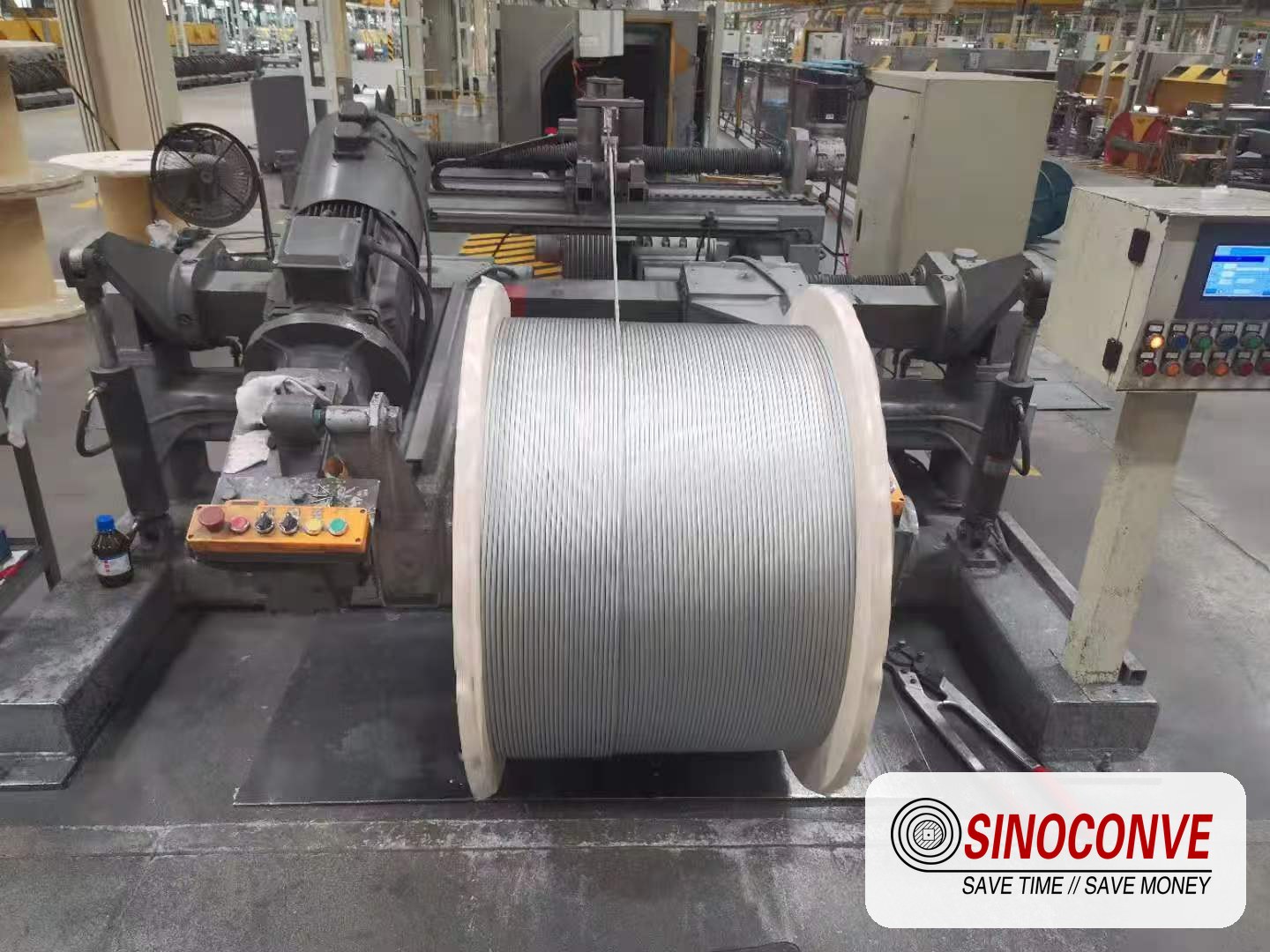
Change-out crews work to a parts list drawn from the walk-down report, not from what is found on the day.
When a change-out becomes a shutdown, and when it does not
Individual rollers in a carrying strand can usually be swapped live with a suitable tool and a disciplined pair of fitters, and we recommend that quarries keep that capability in-house. Anything that requires the belt to be lifted, held or cut is a planned job: pulley replacement, lagging renewal, take-up frame repair, and any roller inside a confined transfer tower. Below the belt on the return strand, a roller with visible grease loss or an axial float above 1.5 mm is a candidate. On the carrying side under a chute, we replace at the first sign of a flattened shell regardless of bearing condition, because impact damage propagates from the shell into the belt cover.
On the heavy end of the range, a conveyor roller selection guide is the right reference for load ratings and bearing classes, and it also covers how shell thickness and seal design change the replacement interval.
Pulley work needs planning that roller work does not. Head pulley replacement means the drive stays disconnected, the belt is usually pulled back and the head frame is blocked and rigged, so it belongs inside a shutdown with a defined lifting plan and a certified sling set. Where the customer already runs a heavy-duty rubber conveyor belt on a crusher discharge, we check pulley diameter against the belt's minimum pulley requirement during the same visit, because an undersized tail pulley shortens belt life in a way no change-out schedule can compensate for.
08Tension, Tracking and Take-Up Adjustment
Tracking calls are the largest single category of service requests we receive from quarries, and a good third of them turn out to be tension or structure problems rather than belt problems. Correcting tracking is mostly measurement: squared pulleys, level idlers, a straight structure line and the right counterweight for the load. Guessing at it with the adjuster bolts on the tail pulley usually moves the problem 40 m down the line.
Faults that are service problems rather than belt problems
If a belt runs true empty and drifts loaded, the cause is usually the loading point or the counterweight, not the belt. If it drifts in one direction regardless of load, suspect pulley squareness, a leaning idler frame or a structure that has settled on its foundations. If it drifts only in the rain, suspect material build-up on the return rollers and wet carryback on the pulley face, and read the field practice described in the EP conveyor belt tracking guide before touching the take-up.
We set the counterweight for the heaviest expected load and accept a little sag at start-up, because a belt tensioned for the average load slips its cover at the drive and pulls splices apart. On a 1,200 mm belt carrying 900 t/h over 180 m of centres, 15 kN of tension change moves the drift pattern by half a pulley width.
09Inspection Programs, Training and Handover
An inspection retainer is the cheapest insurance a quarry can buy, and it only works if the inspector is looking at the same things every visit and writing them down in a format the planner can act on. We run inspections as a structured tour with a fixed checklist per belt, and we deliberately keep the checklist short enough that a fitter can complete it between two loads.
How we split inspection frequency by criticality
Any belt feeding the primary crusher or carrying the plant's only product stream gets a weekly visual and a monthly detailed inspection, because its failure stops everything downstream. Secondary and stockyard belts can run on a monthly visual and a quarterly detailed round without measurable risk. The detailed round covers splice edges, cover wear depth at three fixed points, idler rotation and temperature, pulley lagging, scraper blade height, skirt clearance and take-up position. Wear depth is measured with a depth gauge at the same three stations every time, so the trend line survives a change of inspector.
Training is the part buyers undervalue. A two-day coaching session that teaches your fitters how to read a splice edge, how to set a secondary cleaner without over-pressing the belt, and how to spot a failing idler by sound gives the site a permanent capability that no service contract can replace. We hand over a laminated one-page guide per belt and a short written quiz, and we ask the trainer to be present at the next failure so the lesson lands on a real repair. If you buy belts at wholesale conveyor belts volumes across several sites, training is normally bundled into the annual service agreement rather than quoted separately.
10Spare Parts Planning and Emergency Response
The difference between a two-hour stop and a two-day stop is almost never technical. It is whether the right splice kit, the right length of belt and the right roller are reachable within the first four hours. We build spare parts plans around that reality and we write them into the service agreement, because a warehouse list agreed on paper and honoured in practice are two different products.
What a quarry should hold on site, and what should be held for it
On site, hold one complete vulcanising kit per belt width in use, including platens, covers and the correct compound for that belt's cover grade, plus a stocked set of the twenty most frequently replaced roller sizes and two spare scraper blades per cleaner. Allow one splice length of belt, meaning a piece long enough for a single vulcanised joint with overlap, per critical belt. Do not try to stock complete spare belts for every flight; that capital sits idle for years.
Off site, the supplier or a regional conveyor belt distributor should hold agreed stock against a call-off arrangement, with a stated list, a stated location and a review date. Where site stores record every issue against a belt tag number, the consumption data tells you which two sizes are driving 80 percent of your roller spend, and the plan gets sharper every year.
Emergency response is a logistics promise, so we phrase it in hours from the confirmed call rather than in days from the enquiry. What we will not promise is a fixed arrival time before the fault is described, because a full splice replacement and a two-hole patch repair need very different resources.
11Service Capability Verification Before You Award the Work
A service provider's technical claims are easy to make and hard to check, so we recommend buyers work from an evidence table rather than from a capability brochure. The three columns below are the ones we expect a serious buyer to fill in during evaluation, and we are comfortable being held to them. Anything that cannot be evidenced should be removed from the scope or priced as a risk.
| What you are verifying | Evidence to request from the bidder | Judgement rule you can apply on the day |
|---|---|---|
| Vulcanising equipment and control | Platen press list with model numbers, widths and rated pressure, plus a sample cure chart from a completed job. | Press width must cover the belt width with even pressure across the whole joint |
| Splice records from a similar installation | Two or three redacted cure sheets from comparable belts, showing temperatures, dwell time and pressure. | Compare the carcass type and tensile class against your own belt, not against a brochure |
| Crew qualifications | Copies of training certificates, working-at-height and confined-space tickets, and the welder or rigger credentials. | Certificates must be current for the crew named in the offer, not for the parent company |
| Response time commitment | A written statement of hours from call to arrival for each service tier, with the base location named. | A tier that starts counting after a site visit is not a response promise at all |
| Spare parts availability | Stock list with quantities held in the region and the stated lead time for non-stock items. | Ask for the physical stock location and confirm it is not a single central warehouse abroad |
| Reference sites in the same duty | Names of two operating mines or quarries with belt width, throughput and years of service. | A site running 650 mm belts tells you nothing about a 1,400 mm steel cord line |
| Documentation and warranty terms | A sample handover pack and the written warranty position on workmanship against material. | Workmanship cover should be at least twelve months from the acceptance date |
| Safety performance and method | A written method statement, risk assessment and lift plan for the specific task being priced. | A generic document with another mine's name in the header is a warning sign |
Where drive belts fit into a conveyor service scope
Most quarries discover, usually during a crusher stop, that the drive belts were never part of anyone's service contract. Crusher drives, screen drives and especially the fan and pump drives around a plant run on wrapped or cogged V-belts and on timing belts, and those are consumables with a predictable replacement interval that nobody schedules. As a transmission belt manufacturer as well as a belt maker, we include drive belt inspection in our annual scope and keep matched sets of the common sections in the same regional stock. A V-belt manufacturer view of a crusher drive is worth having on site, because a matched set that is replaced one belt at a time will fail in the order it was installed and take the sheave with it.
12Field Use: Shifts, Dust, Wet Season and Remote Logistics
A service scope that looks adequate in a conference room can fall apart in a pit at 05:30 in February. The four conditions below are the ones that most often change the real cost of service on a mine or quarry, and all four should be visible in the contract rather than discovered during the first breakdown.
| Site condition | How it changes the service scope in practice | What to write into the contract before mobilisation |
|---|---|---|
| Two- or three-shift operation | Repairs must be handed over between crews, and the second shift rarely knows what the first one found. | A written handover sheet per shift, signed by both fitters, for every intervention |
| Heavy airborne dust at transfer points | Fine material penetrates roller seals, dusts up pulley faces and hides splice damage from a walk-down. | Wash-down before each splice, sealed idlers at transfer zones, quarterly seal review |
| Wet season and moisture swings | Rising moisture turns fines into sticky carryback that builds on return rollers and pulls the belt sideways. | Seasonal cleaning schedule, scraper blade stock, extra tracking visits during the wet months |
| Remote location with limited haul road | Crew, crane and consumables all arrive on the same single access road, so one delay stops everything. | Named regional stock location, agreed mobilisation hours, and a stated air freight option |
The handover gap between shifts is where service quality leaks
On a three-shift site, the belt that started drifting at 02:00 is reported to a fitter who has never seen the belt run clean, and the drift is corrected by an adjuster turn that leaves the frame wrong for the day shift. We ask customers to fix a simple rule: any tension or tracking change is written on the handover sheet with the number of turns and the direction, and the next shift checks the belt within an hour of taking over. That single practice removes most repeat tracking calls.
Dust deserves its own line in the budget. At a limestone transfer tower with a 1.5 m drop and no dust suppression, we have measured roller seal failure at roughly twice the rate of the same rollers two bays away in a covered section. Sealed rollers at the loading zone, a water spray or dry fog system upstream, and a monthly check of the skirt rubber clearance are cheaper than the belt and roller consumption they prevent. For the cleaning side of this problem, the field methods in our note on conveyor belt cleaning methods explain when a scraper will not solve the problem at all and a belt change is the honest answer.
Moisture is seasonal arithmetic. A quarry in a monsoon belt can see product moisture move from 3 percent in March to 11 percent in August, and at that point the material stops behaving like a dry bulk solid. Carryback volume roughly triples, weight per metre on the belt rises, and the drive has to work harder at a time when the pulley face is at its most slippery. Planning two extra tracking visits, one extra cleaning crew and a scraper blade change into those months is not pessimism, it is scheduling.
Remote sites deserve a straight conversation about logistics. If the nearest crane is 300 km away, the quotation must include crane supply, or an agreed alternative using the site's own lifting equipment with a certified operator. We also ask for the gate procedure and an after-hours contact in writing before committing to an arrival time.
13Service Contracts, Response Windows and Acceptance Criteria
A service contract earns its keep through the clauses that describe what happens when something goes wrong, so those clauses deserve more negotiation time than the day rate. We have seen agreements with a beautifully detailed scope of work and a single line covering breakdown response, and the disputes all came from that line.
| Clause | Range widely used in the industry | Acceptance evidence that settles the argument |
|---|---|---|
| Breakdown response time | Four to eight hours to a remote site is realistic only from a named regional base. | Timestamped call log and gate entry record from the mine, compared monthly |
| Crew arrival versus fault clearance | Clearance on a splice normally runs one full shift after arrival with kit on site. | Cure chart and belt tag number issued as part of the clearance report |
| Downtime window held for maintenance | Two planned windows per year of 8 to 16 hours are typical on a single-line plant. | Signed window agreement with a task list, released back on time or credited |
| Splice quality acceptance | A fabric splice should hold 60 to 80 percent of belt tensile strength in test. | Cure record plus a visual inspection at 30 days, both countersigned |
| Tracking and carryback targets | Belt should run within the pulley face with no measurable carryback after two shifts. | Photographs from the same three camera positions before and after the work |
| Warranty and claim route | Twelve months on workmanship is common, with the supplier's belt terms separate. | Written claim within 30 days of detection, with the cure chart attached as proof |
Definitions that make a response clause enforceable
Make the clock start when the site calls the named number, not when the supplier acknowledges the fault, and make the clock stop when the crew arrives at the gate rather than when it finishes the repair. Both definitions sound pedantic and both are decisive in practice. A clause that measures "completion of the repair" hands the supplier an open-ended timeline, because a splice cannot be cured faster than the rubber allows.
Acceptance indicators should be measurable on the belt, not on a form. We accept four on every job: the belt runs true within the pulley face under load, carryback is not measurable on the return strand two shifts after the work, the take-up has at least 60 percent of its travel remaining, and the cure record is in the customer's hands before we leave site. If any of the four fails, the fix is on us.
Warranty claims turn on two questions: was the splice cured inside the recorded window, and did the failure start inside the joint or at its edge. That is why the cure chart and the pre-press photograph settle more arguments than any discussion held 18 months later.
14Total Cost of Ownership: Service Spend Against Downtime Loss
Purchasing departments compare service quotations against each other, which is the wrong comparison. The useful one is service spend against the cost of a stopped line, and on a single-line crushing plant that comparison usually ends the discussion quickly.The arithmetic below uses a real plant profile: one primary jaw and cone circuit, 600 t/h, running 16 hours a day for 300 days a year, with a contribution margin of 5 dollars per tonne, which puts an hour of lost production at 3,000 dollars.
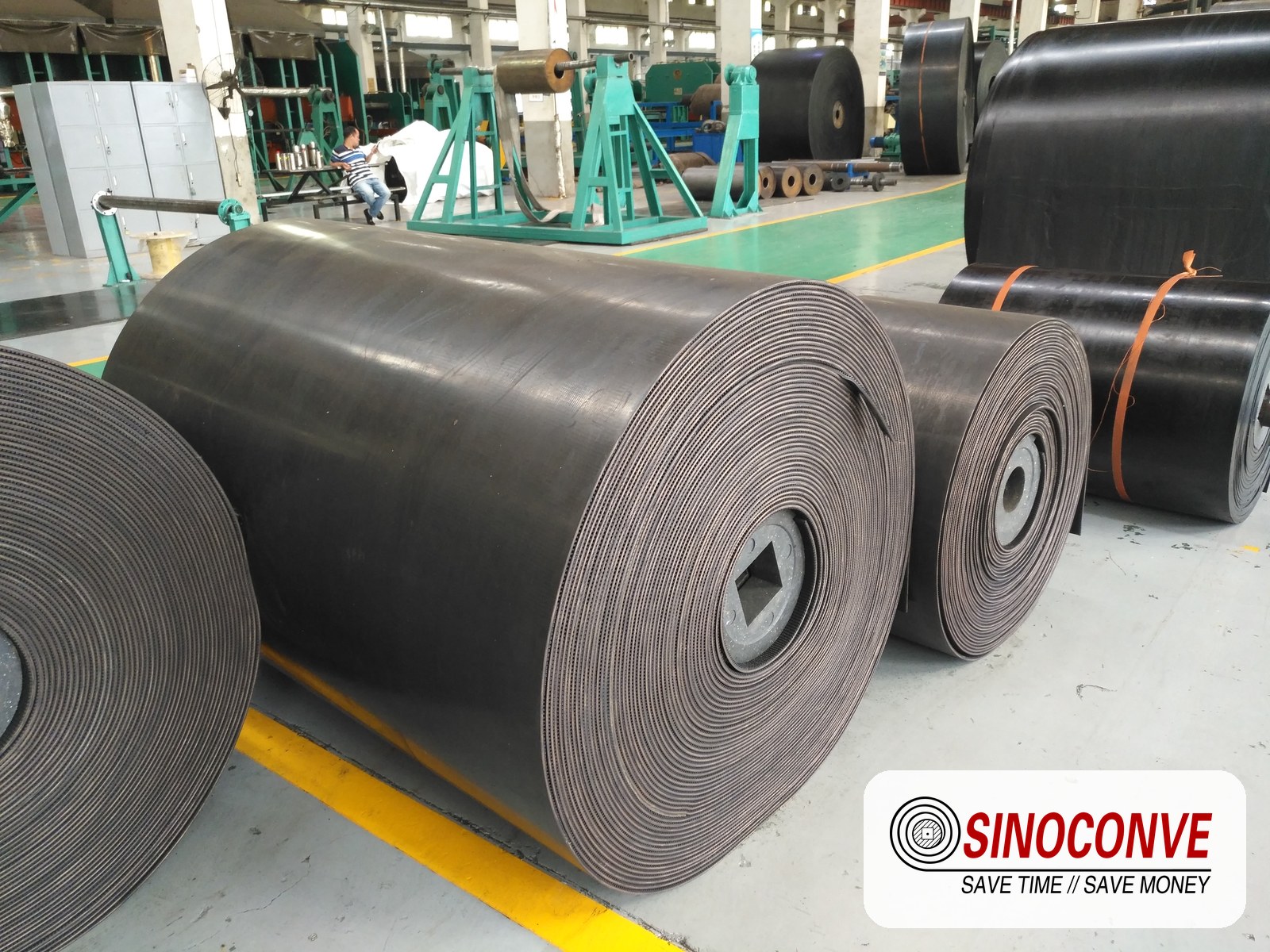
Emergency splicing on a remote site: crew, press, consumables and crane all arrive by the same road.
| Twelve-month line item | Reactive model, no service agreement | Planned model with an annual service agreement |
|---|---|---|
| Labour and call-out spend | Fourteen ad hoc visits at an average of 2,100 dollars each, totalling 29,400 dollars. | Annual retainer of 31,000 dollars covering four inspections and twelve call-outs. |
| Unplanned downtime on the line | Twenty-six hours, caused by two premature splice failures and one seized roller event. | Eleven hours, from one splice failure and one roller change already inside a window. |
| Value of that lost production | Twenty-six hours multiplied by 3,000 dollars an hour, which is 78,000 dollars. | Eleven hours multiplied by 3,000 dollars an hour, which is 33,000 dollars. |
| Emergency freight and crane hire | 9,500 dollars in air freight and short-notice crane hire across the three events. | 2,800 dollars, because regional stock covered two of the three events by road. |
| Twelve-month total | 29,400 plus 78,000 plus 9,500 gives 116,900 dollars for the year. | 31,000 plus 33,000 plus 2,800 gives 66,800 dollars for the year. |
| Difference between the two models | Baseline against which the agreement is judged on this line. | A saving of 50,100 dollars, about 43 percent of the reactive total. |
Reading the arithmetic honestly
The retainer only has to prevent about ten hours of unplanned stoppage on this line to pay for itself, since 31,000 divided by 3,000 is a little over ten hours. Everything beyond that ten hours is profit avoided loss, and the freight saving arrives on top. The mechanism is not mysterious: documented splices fail less often, sealed rollers at the loading zone stop the cascade that turns one failure into three, and a planned window costs a fraction of an unplanned stop because the crane, the crew and the kit are all booked in advance rather than assembled at short notice.
15Running a Service Tender Without Overpaying
Tender documents for conveyor services are usually written by a purchasing team with a maintenance annex attached, and the annex is where the value sits. Put the eight services from section two into the pricing schedule as separate lines with separate quantities, because a single lump sum cannot be compared between bidders and always favours the provider who omitted the hardest work.
Score evidence before you score price
Give the evidence table from section eleven a heavy weighting in the technical evaluation, then price the top three technically acceptable bidders. A bidder who can show cure records from a comparable steel cord installation, current tickets for the named crew and regional stock in a real warehouse is worth a premium of 10 to 15 percent over the cheapest compliant offer. Below that, you are buying availability rather than capability, and availability is what fails on the night the splice goes.

Field note from our engineers: The best service agreement we ever signed with a customer had four pages. It named the belts, listed the stock held 90 km away, fixed two shutdown windows per year, required a cure chart with every splice and gave a four-hour arrival commitment. Nothing about it was clever, and that line ran for three years without an unplanned stop longer than six hours.
16Frequently Asked Questions
What do mining and quarrying conveyor services normally include?
Eight things, in our experience: specification and belt selection support, route survey and measurement, installation supervision and commissioning, vulcanised splicing, roller and pulley change-outs, tension and tracking correction, inspection with operator training, and spare parts with emergency response. Which of those you buy depends on your own maintenance capability. A mine with a strong mechanical crew usually buys surveys, large splices and emergency response, and keeps the rest in-house.
How fast can a service crew reach a remote mine site?
From a named regional base, four to eight hours by road is realistic for the first crew with light kit. A full splice mobile with press, generator and consumables usually needs 12 to 24 hours by road, or less where the site has an airstrip and the kit can be moved by air freight. Behave with suspicion toward any provider who quotes a fixed hour without asking where the site is and how the gate works after dark.
Can our own fitters do the vulcanised splicing?
Yes, if two conditions hold, and neither is negotiable. You need a press that covers the full belt width with even pressure, and you need an operator who has been trained on that specific carcass type and has a written procedure to follow. Fabric belts of moderate tensile class are a reasonable in-house job. Steel cord belts usually are not, because the cord step pattern and lay direction decide whether the joint reaches its rated strength at all.
How often should belts be inspected on a quarry site?
Any belt feeding the primary crusher deserves a weekly visual and a monthly detailed round. Secondary and stockyard belts can run monthly and quarterly. The detailed round has to include measured cover wear at fixed points, because an estimate from memory hides the trend and the trend is what tells you when to order the next belt instead of reacting to a failure.
What spare parts should a quarry hold in its own store?
One complete vulcanising kit per belt width in use with the correct cover compound, a stocked set of the twenty most-used roller sizes, two scraper blades per cleaner, and one splice length of belt per critical flight. That last item is the one buyers resist. It is also the one that turns a two-day stop into a four-hour stop.
Why does a service provider refuse to splice in the rain?
Because moisture trapped in a carcass during cure is the most common cause of a joint that passes inspection and fails within a month. Wet steps, standing water and a belt surface close to freezing all compromise adhesion, and no amount of extra pressure compensates. A tent, a dry belt and a patient shift are cheaper than a second splice on the same joint.
Which numbers should appear in a service contract?
Hours from call to arrival at the gate, the number of planned shutdown windows per year with their duration, splice strength expectations for the carcass type, a carryback target measured two shifts after the work, remaining take-up travel after tensioning, and the warranty period on workmanship with the claim route. Everything else in the document is commentary.
Is an annual service agreement worth it on a single-line plant?
On our worked example it is, and comfortably. The retainer needs to prevent roughly ten hours of unplanned stoppage on a 600 t/h line to cover its own cost, and the freight and stock savings come on top of that. Plants that hold silo or stockpile buffer are less exposed and can justify a lighter arrangement, perhaps inspections only.
How do we tell a real service capability from a sales claim?
Ask for three documents and read them properly: a cure chart from a comparable belt, the tickets of the crew named in the offer, and the address of the regional stock. A provider who supplies all three is in the field regularly. One who supplies a certificate of company registration and a promise has told you something useful as well.
Should belt supply and belt service come from the same company?
Not always, but there are advantages we would be dishonest to ignore. A maker who also sends crews gets direct feedback from the pit, which shows up in cover grade and splice geometry choices for the next order. That said, a local service house with strong crews and fast access often delivers better response than a distant manufacturer, and the two can be combined if the responsibilities are written clearly.
Related Products You May Need
- Steel cord conveyor belt for high-tension main lines, long centres and the heavy duty splices that come with them.
- Conveyor rollers and idlers in sealed and impact versions for loading zones, transfer towers and dusty quarry duty.
- Rubber conveyor belt grades from wear-resistant to heat and oil resistant for crusher and screening circuits.
- EP fabric conveyor belt in standard tensile classes for aggregate, sand and gravel applications.
- Chevron and cleated belt for inclined haulage where material has to be held on the incline.
- V-belts for crusher and screen drives in wrapped, cogged and banded construction.
- Heat-resistant conveyor belt for clinker, sinter and other hot material streams.
- Full product catalog covering belts, rollers and transmission products for mining and quarrying.
Related Blog Posts
- Heavy-duty rubber conveyor belts in mining — what the working conditions do to cover and carcass over a service life.
- Splicing buyer's checklist — twelve points to verify before you place a service order.
- Conveyor belt splicing guide — methods, cost structure and field practice in one place.
- Roller types, materials and load ratings — how to match shell, seal and bearing to the duty.
- Dust-resistant belt supply — how fine material changes belt and roller selection on quarry sites.
- Belt tracking field guide — the checks that come before anyone touches a take-up frame.
- Impact rollers at loading zones — protecting the belt where the material actually lands.
- Cleaning methods and schedules — carryback control when a scraper alone is not enough.
- Crusher and aggregate belt selection — a selection view for stone and gravel plants.
- Mining and quarrying industry page — how we support hard-rock and mineral operations.