Engineered belt solutions for demanding industries worldwide

Recent Posts
Aramid Fiber PU Timing Belt vs Steel Cord PU Belt

Aramid Fiber PU Timing Belt vs Steel Cord PU Belt

This article compares Aramid fiber PU timing belt and Steel Cord PU Timing Belt options from a practical drive-design view. It explains how reinforcement material affects belt weight, flexibility, stretch control, pulley bending, positioning accuracy, and long-term stability. The guide also includes comparison tables, application guidance, buyer confirmation points, failure signs, and FAQ to help users choose the right PU timing belt for automation, packaging, linear drive, and custom machinery applications.

PU Timing Belt Surface: Enhancing Industrial Precision

PU Timing Belt Surface: Enhancing Industrial Precision

PU Timing Belt Surface design affects more than appearance. It changes how the belt contacts pulleys, guides, products, rollers, and coatings inside a machine. This article explains standard PU surfaces, fabric facing, back-side coatings, high-friction coatings, and low-friction treatments. It also covers PU Timing Belt Surface application by machine type, wear signs, buyer confirmation points, coating risks, and FAQ for industrial sourcing teams.

Aramid Fiber PU Timing Belt: Strength & Efficiency

Aramid Fiber PU Timing Belt: Strength & Efficiency

An Aramid fiber PU timing belt is used where timing accuracy, low stretch, flexibility, and reduced belt weight matter in industrial drive or conveying systems. This article explains how aramid fiber reinforcement changes belt behavior, how the PU body affects tooth surface performance, and when coatings, perforations, or custom backing may be needed. It also includes application guidance, selection checks, failure signs, and FAQ for buyers.

Rubber Timing Belt Surface Innovations Guide

Rubber Timing Belt Surface Innovations Guide

Rubber Timing Belt Surface design affects more than appearance. It influences wear, noise, grip, friction, product contact, and long-term timing stability in machinery. This article explains how standard rubber surfaces, fabric facings, back-side coatings, high-friction coatings, and low-friction treatments work in different applications. It also covers coated Rubber Timing Belt selection, typical failure signs, buyer confirmation points, quality checks, and FAQ for industrial sourcing teams.

Rubber Timing Belt Application: Enhance Industrial Performance

Rubber Timing Belt Application: Enhance Industrial Performance

1.Exploring Key Applications in Industry 2.The Advantages of Durability and Efficiency 3.Why Invest in Advanced Rubber Timing Belt Solutions

Comparing PU Timing Belts with Rubber Alternatives

Comparing PU Timing Belts with Rubber Alternatives

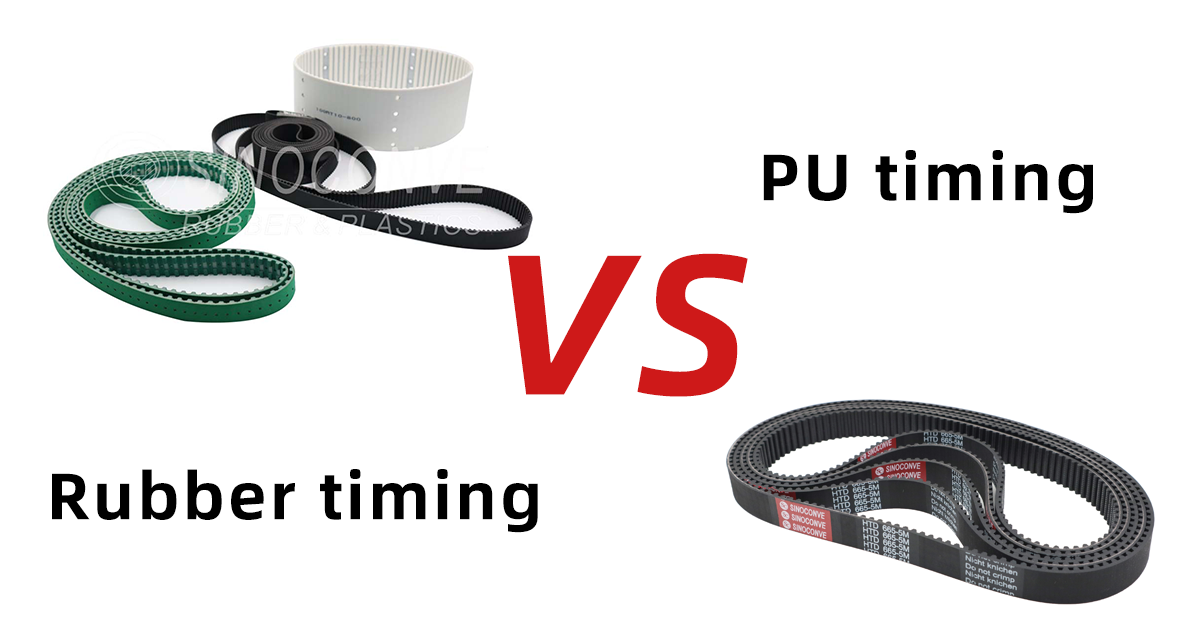
This article compares PU timing belts with rubber timing belts from a practical application view. It explains how polyurethane and rubber behave differently in automation, automotive drives, packaging equipment, positioning systems, and general machinery. The guide covers wear resistance, flexibility, noise, pulley matching, cord reinforcement, and buyer selection points to help users choose the right timing belt based on real working conditions rather than material name alone.


Aramid Fiber PU Timing Belt vs Steel Cord PU Belt
SINOCONVE
Oct 22, 2025

Aramid Fiber PU Timing Belt vs Steel Cord PU Belt

This article compares Aramid fiber PU timing belt and Steel Cord PU Timing Belt options from a practical drive-design view. It explains how reinforcement material affects belt weight, flexibility, stretch control, pulley bending, positioning accuracy, and long-term stability. The guide also includes comparison tables, application guidance, buyer confirmation points, failure signs, and FAQ to help users choose the right PU timing belt for automation, packaging, linear drive, and custom machinery applications.

PU Timing Belt Surface: Enhancing Industrial Precision
SINOCONVE
Oct 16, 2025

PU Timing Belt Surface: Enhancing Industrial Precision

PU Timing Belt Surface design affects more than appearance. It changes how the belt contacts pulleys, guides, products, rollers, and coatings inside a machine. This article explains standard PU surfaces, fabric facing, back-side coatings, high-friction coatings, and low-friction treatments. It also covers PU Timing Belt Surface application by machine type, wear signs, buyer confirmation points, coating risks, and FAQ for industrial sourcing teams.

Aramid Fiber PU Timing Belt: Strength & Efficiency
SINOCONVE
Oct 16, 2025

Aramid Fiber PU Timing Belt: Strength & Efficiency

An Aramid fiber PU timing belt is used where timing accuracy, low stretch, flexibility, and reduced belt weight matter in industrial drive or conveying systems. This article explains how aramid fiber reinforcement changes belt behavior, how the PU body affects tooth surface performance, and when coatings, perforations, or custom backing may be needed. It also includes application guidance, selection checks, failure signs, and FAQ for buyers.

Rubber Timing Belt Surface Innovations Guide
SINOCONVE
Sep 30, 2025

Rubber Timing Belt Surface Innovations Guide

Rubber Timing Belt Surface design affects more than appearance. It influences wear, noise, grip, friction, product contact, and long-term timing stability in machinery. This article explains how standard rubber surfaces, fabric facings, back-side coatings, high-friction coatings, and low-friction treatments work in different applications. It also covers coated Rubber Timing Belt selection, typical failure signs, buyer confirmation points, quality checks, and FAQ for industrial sourcing teams.

Comparing PU Timing Belts with Rubber Alternatives
SINOCONVE
Sep 17, 2025

Comparing PU Timing Belts with Rubber Alternatives

This article compares PU timing belts with rubber timing belts from a practical application view. It explains how polyurethane and rubber behave differently in automation, automotive drives, packaging equipment, positioning systems, and general machinery. The guide covers wear resistance, flexibility, noise, pulley matching, cord reinforcement, and buyer selection points to help users choose the right timing belt based on real working conditions rather than material name alone.
Explore more

We are committed to providing you with better products and services. Welcome to browse more content for details