
A belt marked as Grade M can still fail early if the rest of the specification is wrong. That is usually the part buyers learn the hard way. The cover may look strong on paper, but if the loading point is rough, the pulley diameter is tight, or the fabric carcass is not matched to the conveyor tension, the belt starts giving signs long before it breaks: edge wear, small ply separation near the splice, repeated tracking correction, or top cover loss near the chute.
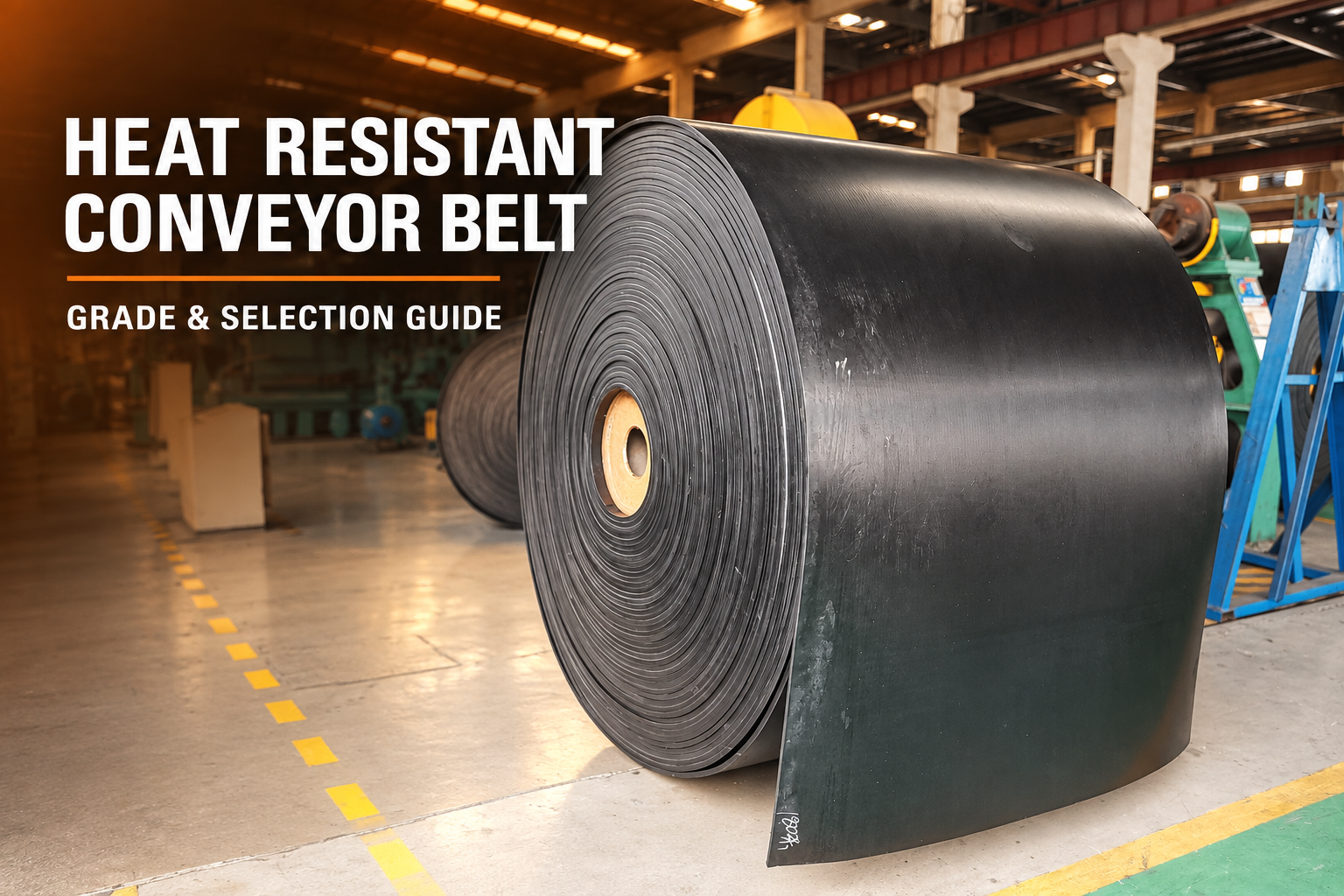
For a maintenance engineer or project buyer, a GRADE M TEXTILE CORD CONVEYOR BELT should not be treated as a simple label. It is a combination of rubber cover grade, textile reinforcement, adhesion quality, splice method, and working conditions. The right RUBBER CONVEYOR BELT is selected from the conveyor outward, not from a catalog title alone.
Grade M Is About Cover Performance, Not the Whole Belt
Grade M normally points to the rubber cover requirement. It says something about the surface that takes abrasion, impact, and everyday material contact. It does not automatically tell you the number of plies, the tensile rating, pulley suitability, splice quality, or whether the belt can survive a poor transfer point.
That distinction matters. In aggregate handling, for example, cover wear may start at the loading zone because stone drops from height and lands in the same belt area shift after shift. A stronger carcass will not fix that by itself. The chute angle, impact bed, cover thickness, and rubber compound need to be checked together.
In a cement plant, the problem may look different. Fine dust builds around return rollers, the belt edge begins to abrade, and a technician keeps adjusting tracking. If the frame or idlers are not corrected, even a good CONVEYOR BELT will keep losing edge rubber. The grade is only one part of the answer.
What the Textile Cord Carcass Actually Does
The textile cord carcass is the working structure inside the belt. It carries tension, helps the belt hold shape, and gives the rubber cover something stable to bond to. Polyester and nylon constructions are common in fabric-reinforced belts because they balance strength, flexibility, and troughability better than many lighter constructions.
A textile carcass is usually chosen when the conveyor needs flexibility around pulleys and stable running on idler sets, but does not justify steel cord construction. On short to medium conveyor runs, quarry transfers, cement handling lines, and general bulk movement, that balance is often practical.
The weak point is rarely visible on a new belt. It appears later at the splice, at the belt edge, or inside the cover-to-carcass bond. If moisture enters a damaged edge or splice, adhesion can weaken. If the belt is over-tensioned to solve slipping, the carcass may be forced to work outside the intended range. One adjustment can create another problem.
How Structure Affects Field Performance
|
Belt part |
What it does |
What buyers should check |
|
Top rubber cover |
Takes abrasion, impact, and material contact |
Material size, loading height, chute condition, cover grade |
|
Textile cord carcass |
Carries working tension and supports belt shape |
Ply construction, tension need, pulley diameter, troughing behavior |
|
Skim rubber / bonding layer |
Bonds fabric layers and helps prevent internal separation |
Supplier process control, splice preparation, edge damage risk |
|
Bottom cover |
Runs over pulleys and return rollers |
Roller condition, contamination, return-side wear |
|
Splice area |
Joins the belt and often becomes the most sensitive point |
Mechanical or vulcanized joint, installation quality, tension setting |
Where a GRADE M TEXTILE CORD CONVEYOR BELT Makes Sense
A GRADE M TEXTILE CORD CONVEYOR BELT fits applications where surface wear and fabric strength both matter, but the conveyor does not require a steel cord belt. It is commonly considered for aggregates, cement raw material transfer, recycling lines, construction material handling, and some inclined bulk conveyors.
|
Working condition |
Why this belt type may fit |
Risk if selected poorly |
|
Aggregate or crushed stone transfer |
Grade M cover can handle regular abrasion when the loading point is controlled |
Oversized sharp stone can cut the top cover if impact is not managed |
|
Cement or clinker-related material handling |
Fabric belt can support stable conveying on medium-duty lines |
Heat or fine dust may require a different cover compound or better sealing around rollers |
|
Recycling or mixed material lines |
Textile carcass offers flexibility and practical repair options |
Sharp tramp material can damage cover and edges quickly |
|
Inclined bulk conveying |
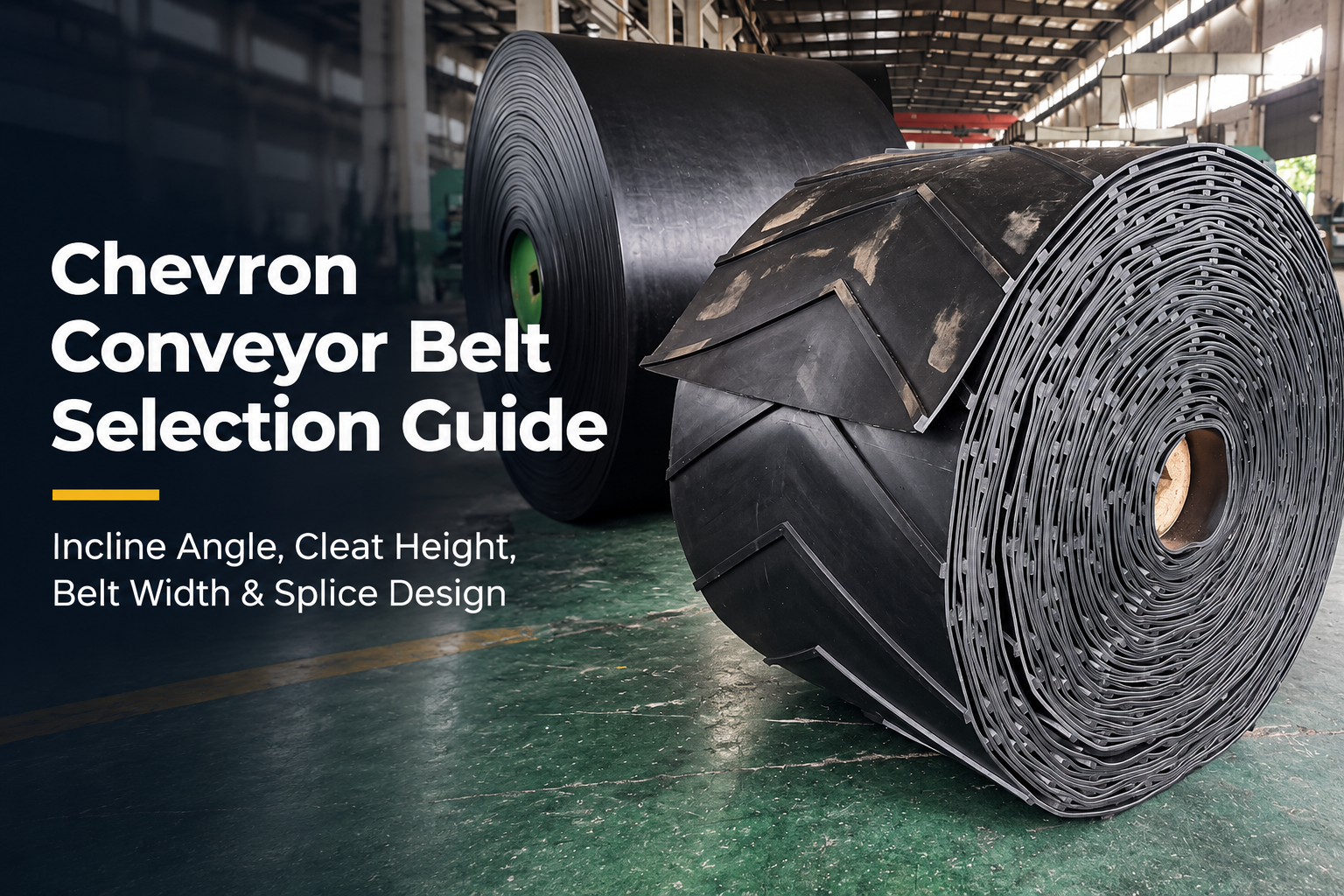
Cover pattern or cleat option may improve material holding |
Wrong incline angle or smooth cover can cause rollback and spillage |
|
General industrial transfer |
Balanced cost, flexibility, and availability |
Over-specifying adds cost; under-specifying leads to early replacement |
Common Failure Chains Buyers Should Understand
1. Loading impact -> cover wear -> carcass exposure -> shutdown risk. When material drops too far or lands against belt travel, the top cover loses rubber first. Once the carcass is exposed, water, dust, and impact begin working into the fabric. The practical fix is not only a thicker cover; the chute, impact bed, and material direction should be reviewed.
2. Mistracking -> edge contact -> ply damage -> repeated adjustment. A belt that touches the structure at the edge is not just wearing cosmetically. Edge fabric can fray, moisture can enter, and ply separation may follow. Correcting idlers and pulley alignment usually matters more than simply tightening the belt.
3. Wrong splice method -> weak joint -> early opening. A RUBBER CONVEYOR BELT may perform well across most of its length and still fail at the joint. If the splice preparation is rushed or the belt is not square, tension concentrates at one side. For higher-tension service, the splice method should be decided before ordering, not after the belt arrives.
4. Cheap specification -> frequent replacement -> higher real cost. A low purchase price can look good in procurement. But if the belt needs replacement during peak production, the cost moves from the invoice to downtime. That is where SINOCONVE’s “Save Time, Save Money” idea makes sense: fewer wrong specifications, fewer repeat samples, fewer avoidable stoppages.
Selection Checks Before Ordering
|
Information to confirm |
Why it matters |
|
Material being conveyed |
Sharp, wet, hot, oily, or fine material changes cover selection |
|
Belt width and conveyor length |
Affects tension, splice plan, and packing arrangement |
|
Pulley diameter and idler layout |
Controls belt flexing, tracking, and carcass stress |
|
Conveyor angle |
May require patterned cover, cleats, or a different belt design |
|
Working hours per day |
Continuous duty needs stricter attention to splice and cover wear |
|
Old belt marking or failure photos |
Shows what has already worked or failed in the system |
|
Preferred joint method |
Mechanical joint and hot vulcanized splice have different limits |
|
Packaging and shipping needs |
Important for export orders and avoiding damage before installation |
What to Avoid When Specifying Grade M Belts
Do not assume Grade M alone means “best.” A high-grade cover on the wrong carcass can still stretch, mistrack, or fail at the splice. Do not copy another site’s belt specification unless the conveyor length, pulley size, material, and loading condition are close enough to compare. And do not remove the old belt before checking its wear pattern. The failed belt often tells the buyer more than the quotation sheet.
Also be cautious with claims that sound too neat: fixed service hours, exact energy savings, or universal temperature limits. Those numbers depend on the compound, belt construction, conveyor design, and maintenance condition. A responsible supplier should ask questions before promising performance.
How SINOCONVE Supports Rubber Conveyor Belt Selection
SINOCONVE supplies RUBBER CONVEYOR BELT products for mining, cement, construction material handling, ports, recycling, and general industrial conveying. For a GRADE M TEXTILE CORD CONVEYOR BELT inquiry, the useful work often starts before production: checking the old belt marking, confirming fabric strength, cover grade, width, thickness, packaging, and whether OEM/ODM details are needed.
For distributors and project buyers, this reduces back-and-forth communication. For maintenance teams, it reduces the chance of installing a belt that looks correct but behaves poorly once the line starts. That is a practical meaning of Save Time, Save Money.
FAQ
Is Grade M the same as the whole belt specification?
No. Grade M usually refers to the rubber cover grade. The complete belt specification also needs carcass type, fabric strength, cover thickness, belt width, length, and splice method.
Is a GRADE M TEXTILE CORD CONVEYOR BELT suitable for mining?
It can be, depending on the material size, abrasion level, conveyor length, and loading impact. Heavy-duty mining may still require a different construction or steel cord belt.
How is textile cord different from steel cord?
Textile cord belts are generally more flexible and easier to use on many medium-duty conveyors. Steel cord belts are usually selected for very high tension or long-distance conveying.
What should I send when asking for a quotation?
Send belt width, length, material handled, conveyor angle, pulley diameter, old belt photos, failure marks, quantity, and any packaging or branding needs.
Can SINOCONVE customize this type of conveyor belt?
Yes. SINOCONVE can discuss rubber cover grade, fabric strength, belt width, thickness, packaging, OEM/ODM requirements, and application-based recommendations.
Final Note
A GRADE M TEXTILE CORD CONVEYOR BELT should be chosen by the work it has to survive. Start with the material, loading point, conveyor layout, pulley system, and old failure marks. Then decide the cover grade and fabric construction. That sequence is slower than asking for the cheapest belt, but it usually saves more time once the conveyor is running.