
Fruit Conveyor Belt: SINOCONVE PVC Sidewall Solutions for Produce Handling
A fruit conveyor line has a different job from a normal carton conveyor. The belt is not only moving product from one end of the machine to the other. It may also decide whether fruit rolls, bruises, piles up at the transfer point, carries wash water into the return path, or arrives at the packing station in a usable flow.
That is why a Fruit conveyor belt should be selected from the product and process first. Apples, citrus, berries, dates, small packaged fruit trays, and washed vegetables do not behave the same on a belt. Some need grip. Some need release. Some need side containment. Some need a surface that can be cleaned quickly without holding pulp, dust, or fine residue around the joint.
A standard pvc conveyor belt may work well on flat light-duty lines, but fruit handling often needs more than a standard flat surface. In a packing house, the practical question is usually this: does the belt need to carry loose fruit, separate batches, climb an incline, drain water, or keep product inside the belt width? Those details decide whether a flat PVC belt, a textured belt, or a corrugated sidewall construction is more suitable.
Where Fruit Conveyor Belt Problems Usually Start
Many fruit line problems start as small handling issues. Fruit rolls backward on a short incline. Soft items gather at the sidewall. A splice clicks over a small pulley. The belt tracks slightly toward one edge after cleaning. At first these look like machine adjustments, not belt selection problems.
But the belt surface, sidewall design, pulley layout, and cleaning routine are often part of the same issue. Tightening the belt may hide slipping for a short time, but it can also make the joint or bearing condition worse. Changing to a higher grip surface may help one fruit type but create release problems on another.
|
Observed issue on fruit line |
Likely belt-related cause |
What to check first |
|
Fruit rolls back on incline |
Surface grip or sidewall containment is not enough |
Incline angle, fruit shape, belt speed, sidewall height, transfer volume |
|
Fruit bruises or marks |
Surface is too hard, too rough, or transfer drop is poorly controlled |
Transfer height, belt surface, product impact point, chute or guide design |
|
Residue builds near edges |
Sidewall, joint, or edge design is trapping pulp, dust, or water |
Cleaning access, sidewall base, joint type, product moisture |
|
Belt runs to one side |
Pulley buildup, guide contact, uneven tension, or return-side contamination |
Pulley face, tracking guide, edge marks, return rollers |
|
Splice opens early |
Small pulley, repeated wet cleaning, or unsuitable splice method |
Pulley diameter, splice style, belt thickness, cleaning chemicals |
PVC Conveyor Belt Choices in Fruit Processing Are Not Just About Hygiene
PVC is widely used in light and medium conveying because it is easy to fabricate, available in many surfaces, and practical for packaging, sorting, and clean product transfer. For fruit and vegetable processing, belt suppliers often offer specific PVC coatings, fabric belts, cleats, guides, and sidewalls for agro-food applications. The useful point for buyers is not the material name alone, but how each added structure changes the behavior of the line.
A smooth blue pvc conveyor belt may suit inspection, sorting, or flat tray transfer. A textured surface may stabilize cartons or packed fruit bags. A Fruit pvc conveyor belt with corrugated sidewalls may be better when loose fruit or small produce needs containment on an incline or where space does not allow a wide horizontal conveyor.
Still, sidewalls are not automatically better. They add bonding areas, cleaning corners, and return-path clearance questions. If the line handles sticky fruit residue or requires frequent washdown, those areas need to be checked before the belt is specified.
|
Belt design option |
Where it may work well |
Risk if selected without checking |
|
Smooth PVC surface |
Flat inspection lines, sorting tables, packed fruit trays |
Loose round fruit may roll or drift on incline |
|
Light textured PVC surface |
Cartons, fruit boxes, soft packages, short transfer sections |
May mark some delicate packaging or hold fine dust |
|
Fruit pvc conveyor belt with sidewalls |
Inclined loose fruit transfer, compact packing lines, limited belt width |
Sidewall cleaning, pulley clearance, bonding quality |
|
Cleated PVC belt |
Batch spacing, uphill feeding, controlled product pockets |
Cleat spacing may damage or trap delicate fruit |
|
Tracking guide on running side |
Longer lines or layouts with side drift |
Guide must match pulley groove and return rollers |
When a Corrugated Sidewall Belt Makes Sense
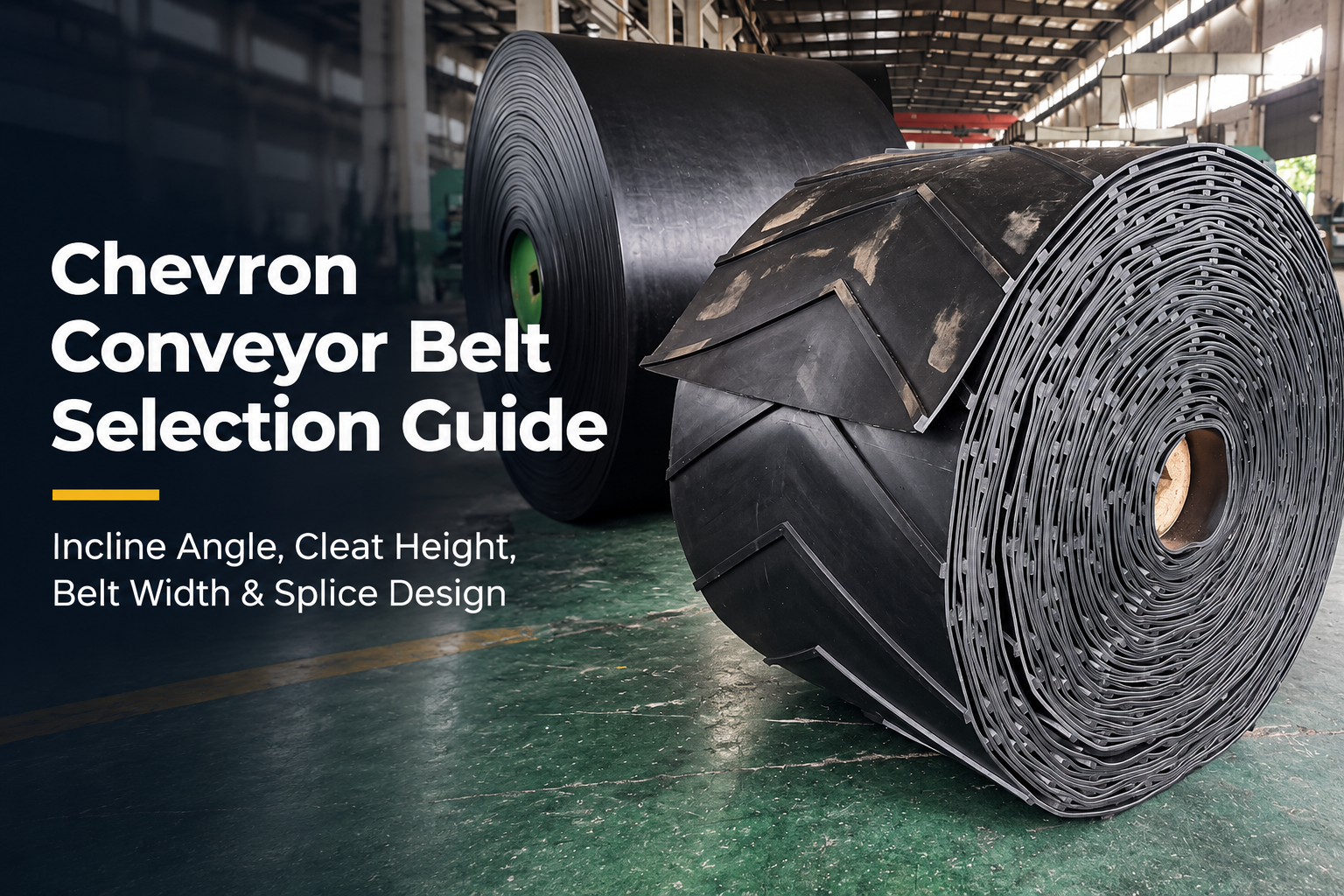
The SINOCONVE Corrugated Sidewall Conveyor Belt fits a specific kind of problem: product containment. On a fruit line, this may appear when loose fruit needs to travel upward from a lower receiving section to a sorting or packing level. A flat belt may carry some fruit well at first, then lose control when the feeding volume changes. Fruit rolls to the edge, workers slow the line, or the transfer section becomes a manual correction point.
A corrugated sidewall helps create a moving channel. It keeps loose items inside the belt width and allows a more compact conveyor layout. This can save floor space in packing houses, especially where the line moves from washing, sorting, grading, or boxing into another machine. The belt still needs a suitable base material, sidewall height, pulley layout, and joint method. A sidewall belt forced around unsuitable pulleys will not solve the handling problem for long.
Three Fruit Handling Situations That Need Different Belt Decisions
1. Washed fruit after cleaning or rinsing
Water changes everything. A belt that works in a dry sorting area may let fruit slide after washing. Moisture also carries fine residue toward the return path. If the belt surface holds water or pulp around the sidewall base, cleaning time increases and tracking may become unstable.
The better question is not simply whether the belt is PVC. Buyers should ask whether the surface releases water and residue well, whether the splice is suitable for cleaning, and whether the sidewall area can be reached during sanitation.
2. Round or rolling fruit on short inclines
Apples, citrus, onions, and similar products can roll even when the incline looks moderate. If the line only needs more friction, a textured surface may be enough. If product also moves sideways, a sidewall or guide rail may be needed. If the product is delicate, high cleats can become a bruising risk.
This is where the Fruit conveyor belt should be chosen by real product behavior. A photo or short video of the current line often tells more than a written size list.
3. Packed fruit trays and cartons
Packed goods behave differently from loose fruit. Trays need stable movement for labeling, weighing, or scanning. Cartons may need light surface grip but also clean release at the end of the conveyor. In these lines, a standard pvc conveyor belt or light textured surface may be more practical than a sidewall construction.
How to Specify a Customized Fruit PVC Conveyor Belt
Customization should solve a real handling issue. A buyer who only asks for a blue belt with sidewalls may still receive the wrong belt if the supplier does not know the fruit type, conveyor angle, pulley diameter, cleaning method, and current failure pattern.
For SINOCONVE, the useful starting point is usually the machine position and the product condition. Is the belt receiving fruit from a washer? Feeding a grading table? Moving packed trays into a carton line? Lifting loose produce into a hopper? These positions ask for different belt behavior.
|
Customization item |
What it changes on the line |
Buyer should confirm |
|
Surface finish |
Grip, release, residue behavior, cleaning effort |
Fruit type, moisture, product contact, marking risk |
|
Corrugated sidewall |
Containment for loose fruit or inclined transfer |
Sidewall height, return clearance, cleaning access |
|
Cleat or flight |
Product spacing or batch control |
Cleat height, spacing, fruit size, bruising risk |
|
Tracking guide |
Helps control side drift in some layouts |
Guide groove, pulley design, return roller layout |
|
Splice type |
Smooth running, cleaning behavior, joint life |
Pulley diameter, belt thickness, shutdown window |
|
Color and marking |
Line identification and visual checking |
Food-contact requirement, brand marking, packaging need |
Buyer Inquiry Checklist
A clear inquiry saves time before production. It also reduces the chance of a sample that looks correct but fails in the machine. For a Fruit pvc conveyor belt or sidewall belt, send more than width and length.
· Belt width, length, thickness, and old belt code if available.
· Photos of the old belt, sidewall, splice, pulley area, and return path.
· Fruit or product handled: loose fruit, washed fruit, packed trays, cartons, bags, or mixed produce.
· Conveyor position: receiving, washing discharge, sorting, grading, packing, or inclined feeding.
· Incline angle, pulley diameter, line speed, and whether the belt passes around small rollers.
· Cleaning method, water exposure, chemical exposure, and sanitation frequency.
· Failure symptoms: rolling back, bruising, side leakage, residue buildup, tracking drift, joint opening.
· Quantity, packing requirement, label requirement, and sample approval process.
Common Mistakes When Buying Fruit Conveyor Belts
One mistake is choosing by color. Blue PVC is common in food and produce handling because it is easy to see, but color does not define the belt function. Another mistake is assuming that a sidewall belt is always safer for fruit. It can help containment, but it also changes cleaning, bending, and return-path conditions.
A third mistake is copying a belt from another fruit line. Even similar products may differ in moisture, size, skin sensitivity, and required transfer speed. Berries, apples, citrus, and packaged fruit trays do not ask the belt to behave the same way.
The safest approach is to match the belt to the product first, then the conveyor layout, then the cleaning routine. Price comparison only makes sense after these points are clear.
FAQ
What is a Fruit conveyor belt used for?
It is used to move fruit or fruit-related products through washing, sorting, grading, packing, and transfer sections. The belt may handle loose fruit, packed trays, cartons, or light bulk produce.
When should I choose a Fruit pvc conveyor belt?
Choose it when the line needs clean handling, stable surface behavior, easy fabrication, and a belt suitable for light-to-medium fruit processing or packing work. The final choice should still depend on product contact and cleaning conditions.
Is a corrugated sidewall belt always better for fruit?
No. It is useful when containment or inclined transport is the problem. For flat inspection or packaging lines, a smooth or lightly textured pvc conveyor belt may be simpler and easier to clean.
Why does fruit roll or shift on a conveyor belt?
Common reasons include low surface grip, high incline angle, uneven feeding, belt speed mismatch, side guide problems, or fruit shape. Tightening the belt is not always the right fix.
What should I send for a quotation?
Send belt dimensions, old belt photos, fruit type, machine position, conveyor angle, pulley diameter, cleaning method, failure symptoms, and whether sidewalls, cleats, or tracking guides are required.
Final Note for Fruit Processing Buyers
A Fruit conveyor belt should not be selected from the product photo alone. The real work happens at the contact surface, sidewall base, splice, pulley, and cleaning point. A sidewall belt from SINOCONVE can be a useful solution when fruit needs containment or inclined movement, but it should be matched to the fruit condition and machine layout.
This is also where Save Time, Save Money becomes practical. A clear drawing, real line photos, and accurate product information reduce back-and-forth confirmation. More importantly, they reduce the risk of ordering a belt that looks right but creates cleaning, tracking, or bruising problems after installation.