
Concrete Conveyor Belts for Industrial Site Handling
On concrete-related sites, the first useful detail is rarely the belt color or even the belt thickness. It is usually the material condition: wet mix, dry aggregate, sand, gravel, cement bags, or a changing blend of several materials. Each behaves differently on a moving surface. Wet concrete may cling and return under the frame. Dry aggregate may roll back on an incline. Sharp stone may cut into the top cover near the loading point.
That is why Concrete Conveyor Belts should be selected from the working condition outward. A belt used in warehouse logistics may move cartons well, but that does not mean it will survive concrete paste, aggregate impact, outdoor dust, washdown, or repeated site relocation. For contractors, batching plants, precast workshops, and equipment builders, the practical question is not only whether conveyor belt systems can move material. The harder question is whether the belt surface, cover grade, joint method, and conveyor layout can keep the line stable after several weeks of real work.
Where Concrete Conveyor Belts Fit on a Site
Concrete transportation solutions vary widely. Some jobs use pumps. Some use buckets, trucks, screw conveyors, or short mobile conveyors. Belt conveyors make sense when the material follows a predictable path and needs steady movement rather than batch-by-batch manual handling.
In a batching plant, the belt may feed aggregate toward the mixer. In a precast workshop, it may help move material between storage, mixing, and mold areas. On a compact construction site, an industrial concrete conveyor may be used where truck access is limited or where a controlled incline transfer is easier than repeated loader movement.
The belt type changes with the job. A horizontal aggregate transfer line asks for abrasion control. An inclined site conveyor asks for grip and rollback control. A line handling wetter material needs better release and cleaning access. Treating all of these as the same conveyor belt application is where many early failures start.
|
Concrete handling area |
What usually matters |
Belt-related risk |
|
Batching plant feed line |
Stable aggregate or mix supply |
Cover abrasion near the loading point |
|
Precast workshop |
Controlled movement to molds or stations |
Residue buildup and tracking drift |
|
Inclined site conveyor |
Grip and rollback control |
Spillage, carryback, edge wear |
|
Mobile concrete conveyor |
Quick setup and layout flexibility |
Poor tension or unsuitable joint choice |
|
Aggregate transfer before mixing |
Impact and abrasion resistance |
Fast top cover wear and splice stress |
Why Concrete Is Hard on a Conveyor Belt
Concrete and concrete-related materials do not damage a belt in one neat pattern. Aggregate scratches the top cover. Cement paste can dry on the return side and behave like grinding residue. Wet material changes release behavior. If the loading chute drops material from too high, impact repeats in the same zone until the cover starts to break down.
A common purchasing reaction is to ask for a thicker rubber conveyor belt. Sometimes that helps. But thickness alone does not solve poor loading geometry, weak cleaning, small pulley diameter, or the wrong surface pattern. A heavy belt on the wrong layout can still track badly, crack around the splice, or carry material back into the return rollers.
One typical failure chain is simple. Wet paste sticks to the belt. The return side carries residue back under the conveyor. Rollers build up material unevenly. The belt begins to wander. Once the edge rubs the frame, the damage is no longer just surface wear. It has started to affect the carcass and the splice area.
|
Observed problem |
Likely cause |
What to check before changing belt grade |
|
Wet material rolls back |
Incline angle or surface grip mismatch |
Chevron height, belt speed, loading volume |
|
Fast top cover wear |
Aggregate abrasion or high impact loading |
Cover grade, chute height, impact bed condition |
|
Belt runs to one side |
Carryback, pulley buildup, frame alignment |
Return rollers, scraper position, pulley face |
|
Joint area opens early |
Wrong splice method or repeated bending stress |
Pulley diameter, belt thickness, shutdown window |
|
Concrete paste sticks to return side |
Surface release and cleaning issue |
Cleaner type, water exposure, residue pattern |
Surface Pattern: Smooth, Chevron, Cleated, or Textured
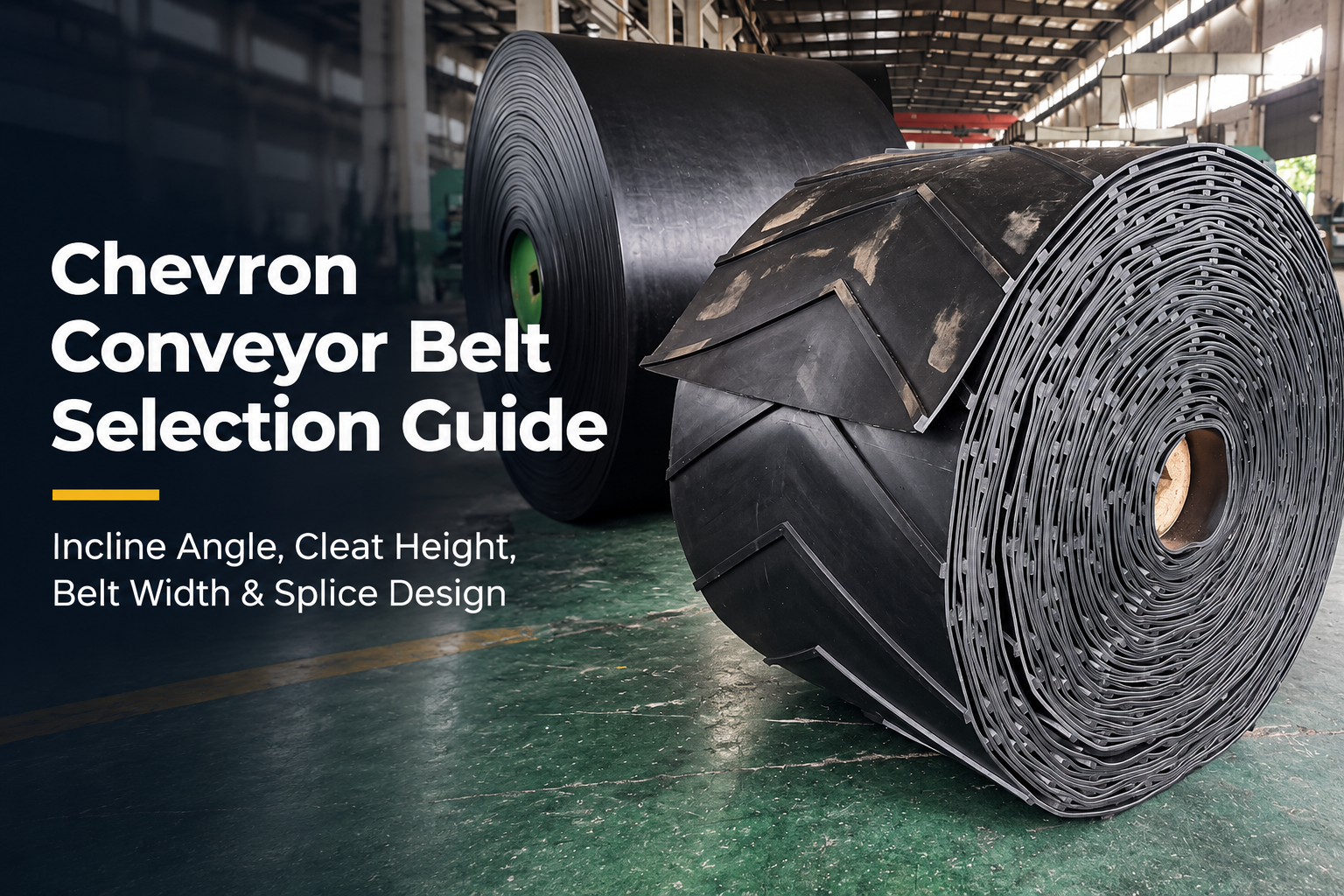
Chevron belts are often discussed in concrete transportation solutions because the raised pattern can help loose material stay in place on an incline. That does not make chevron the automatic answer. If the material is wet and sticky, a high pattern may hold residue and make cleaning harder. If the conveyor is mostly horizontal, the added pattern may not bring enough benefit to justify the extra cleaning concern.
A smooth rubber belt may work well on horizontal aggregate transfer. A cleated belt may be needed when the angle is steeper or when batches must stay separated. A rough top or textured surface may help with lighter packaged cement-related goods, but it should not be treated as a substitute for chevron when heavy bulk material is climbing.
The surface decision should follow the material, the incline, the cleaning method, and the pulley layout. Product photos are useful, but they are not enough for selection.
|
Belt surface |
Where it may fit |
Watch for |
|
Smooth rubber belt |
Horizontal aggregate or general transfer |
Rollback on incline, insufficient grip |
|
Chevron belt |
Inclined aggregate or concrete-related bulk handling |
Cleaning access, pulley diameter, pattern wear |
|
Cleated belt |
Steeper transfer or controlled batch movement |
Cleat bonding, return path clearance |
|
Rough top / textured surface |
Light grip needs or packaged cement-related goods |
Not a substitute for chevron on heavier incline work |
Specifying an Industrial Concrete Conveyor Belt
A useful quotation for an industrial concrete conveyor belt cannot be built from width and length alone. The supplier needs to understand what the belt touches, where the material lands, how the conveyor is arranged, and how the old belt failed. A site moving dry aggregate to a mixer has a different risk profile from a mobile unit carrying wetter material to a pour area.
Cover grade matters, but so does carcass selection. Fabric-reinforced rubber conveyor belt options are common because they balance strength and flexibility for many site conveyors. For longer systems or higher-tension layouts, the buyer may need to discuss EP rating, ply structure, belt thickness, pulley diameter, and splice method in more detail.
The old belt is often the best starting point. Photos of the loading point, pulley area, return side, worn cover, and failed joint usually tell a supplier more than a general product name.
|
Information to send |
Why it matters |
|
Belt width, length, and thickness |
Basic matching and quotation |
|
Material handled: wet concrete, dry aggregate, sand, gravel, cement bags |
Determines cover, surface, and cleaning needs |
|
Conveyor angle and length |
Affects surface pattern, tension, and support design |
|
Pulley diameter and layout photos |
Checks whether belt thickness and pattern can bend correctly |
|
Loading point photo |
Shows impact risk and chute problems |
|
Old belt failure marks |
Helps avoid repeating the same selection mistake |
|
Splice preference or shutdown window |
Influences mechanical joint vs vulcanized joint decision |
|
Quantity, packaging, and delivery requirement |
Supports export packing and project planning |
Concrete Transportation Solutions Are Also Layout Decisions
A belt cannot correct every layout problem. A poorly placed loading chute concentrates impact. A weak cleaner lets paste and aggregate fines return under the belt. A pulley that is too small can stress the carcass or the joint. In these cases, changing the belt may delay the next problem rather than solve it.
Before selecting Concrete Conveyor Belts, look at the system around the belt. Where does material first hit the carrying surface? Does it leave the belt cleanly? Does the return side stay reasonably clean? Does the material need grip, release, or containment? These questions make the selection more accurate than choosing by product name alone.
This is also where SINOCONVE's Save Time, Save Money idea fits naturally. A clearer inquiry saves time before production. A belt matched to the real material saves money after installation. The best choice is not always the heaviest belt; it is the belt that fits the layout and the material behavior.
Purchasing Mistakes That Create Repeat Problems
One mistake is choosing only by belt thickness. Another is assuming that all chevron belts behave the same. Buyers sometimes copy a specification from a different site even when the new conveyor angle, material size, or cleaning routine is not the same.
The joint is another common blind spot. In concrete handling, the splice area may face bending, impact, scraper contact, and material residue. If the joint method is not matched to the belt and pulley layout, it can become the first failure point even when the belt body still looks usable.
A better purchasing sequence is simple: match the belt to the material, then to the conveyor layout, then to the maintenance conditions. Price comparison only makes sense after those points are clear.
FAQ
What are Concrete Conveyor Belts used for?
They are used to move wet concrete, dry aggregate, sand, gravel, cement-related materials, or mixed bulk materials in construction sites, batching plants, precast workshops, and related industrial lines.
Is a chevron belt always best for concrete handling?
No. Chevron helps on inclined bulk conveying, but it may not be ideal where cleaning, residue release, or small pulley bending is the main issue.
Can a standard rubber conveyor belt be used for concrete?
Sometimes, especially on horizontal transfer lines. For abrasive aggregate, wet mix, or inclined conveying, the rubber cover, carcass, surface pattern, and splice method should be checked carefully.
What causes early belt failure in concrete conveyor systems?
Common causes include high loading impact, sharp aggregate, concrete paste buildup, poor tracking, small pulley diameter, wrong cleaner setup, and a splice method that does not match the application.
What should I send before requesting a quotation?
Send belt dimensions, material handled, conveyor angle, pulley photos, loading point photos, old belt marks, failure symptoms, quantity, and packaging or delivery needs.
Final Note for Buyers
Concrete Conveyor Belts should be selected from the job site outward. Start with the material, then the conveyor angle, then the loading and discharge points, then the belt surface and joint method. A good belt cannot fix every layout problem, but a wrong belt can make a workable system expensive to run.
For buyers comparing conveyor belt systems or looking for industrial concrete conveyor options, the most useful inquiry includes real working conditions. That gives the supplier enough information to recommend concrete transportation solutions that fit the site instead of simply quoting the nearest standard roll.