
A rubber conveyor belt is easy to describe and easy to underestimate. In a plant, it is the moving surface under the ore, sacks, cartons, clinker, grain, fertilizer, or scrap. When it runs well, no one talks about it. When it fails, the whole line suddenly feels slower than it should.
The Application of Rubber Conveyor Belt is not one single story. A belt used under packed cartons in a warehouse does not face the same problem as a belt carrying crushed stone in a quarry. A cement plant worries about heat and abrasion. A port terminal thinks about long running hours, moisture, and replacement planning. The product name may be the same, but the working condition is not.
That is why a proper Rubber Conveyor Belt Application starts with the material being moved, not with a catalog photo. Width, cover grade, carcass strength, surface pattern, edge construction, and splice method all matter once the belt is installed on the frame.
Where Rubber Conveyor Belts Are Actually Used
Most industries use conveyors because hand moving, bucket lifting, or truck transfer becomes expensive once material volume increases. The rubber belt gives a continuous route. It does not make the system complicated; it makes the movement repeatable.
|
Industry / site |
Typical material |
Main belt concern |
Common belt direction |
|
Mining and quarry |
Ore, stone, coal |
Abrasion, impact, long hours |
Abrasion-resistant cover, stronger carcass |
|
Cement plant |
Limestone, clinker, powder |
Heat, dust, edge wear |
Heat-resistant or abrasion-resistant belt |
|
Port terminal |
Coal, grain, fertilizer, minerals |
Moisture, high volume, uptime |
Durable cover, good splice planning |
|
Agriculture |
Grain, seed, feed |
Clean movement, moderate load |
General-purpose or patterned belt |
|
Warehouse / logistics |
Cartons, parcels, packed goods |
Tracking, speed, gentle handling |
Flat or rough-top belt |
|
Recycling |
Mixed waste, scrap, fragments |
Cuts, impact, contamination |
Tough cover, easy inspection |
General Handling Is Not the Same as Heavy-Duty Conveying
A standard Rubber Conveyor Belt can work for years in a clean, moderate-duty line. Packaged goods, light components, bags, and grain do not attack the cover in the same way as rock or hot clinker. In those lighter systems, stable tracking and correct pulley setup often matter more than extreme cover thickness.
Heavy-duty systems are less forgiving. Sharp stone cuts the top cover. Large lumps hit the loading zone in the same place shift after shift. Dust enters rollers and settles around the return side. If the belt was chosen only by price, early cover wear usually shows up before anyone expected it.
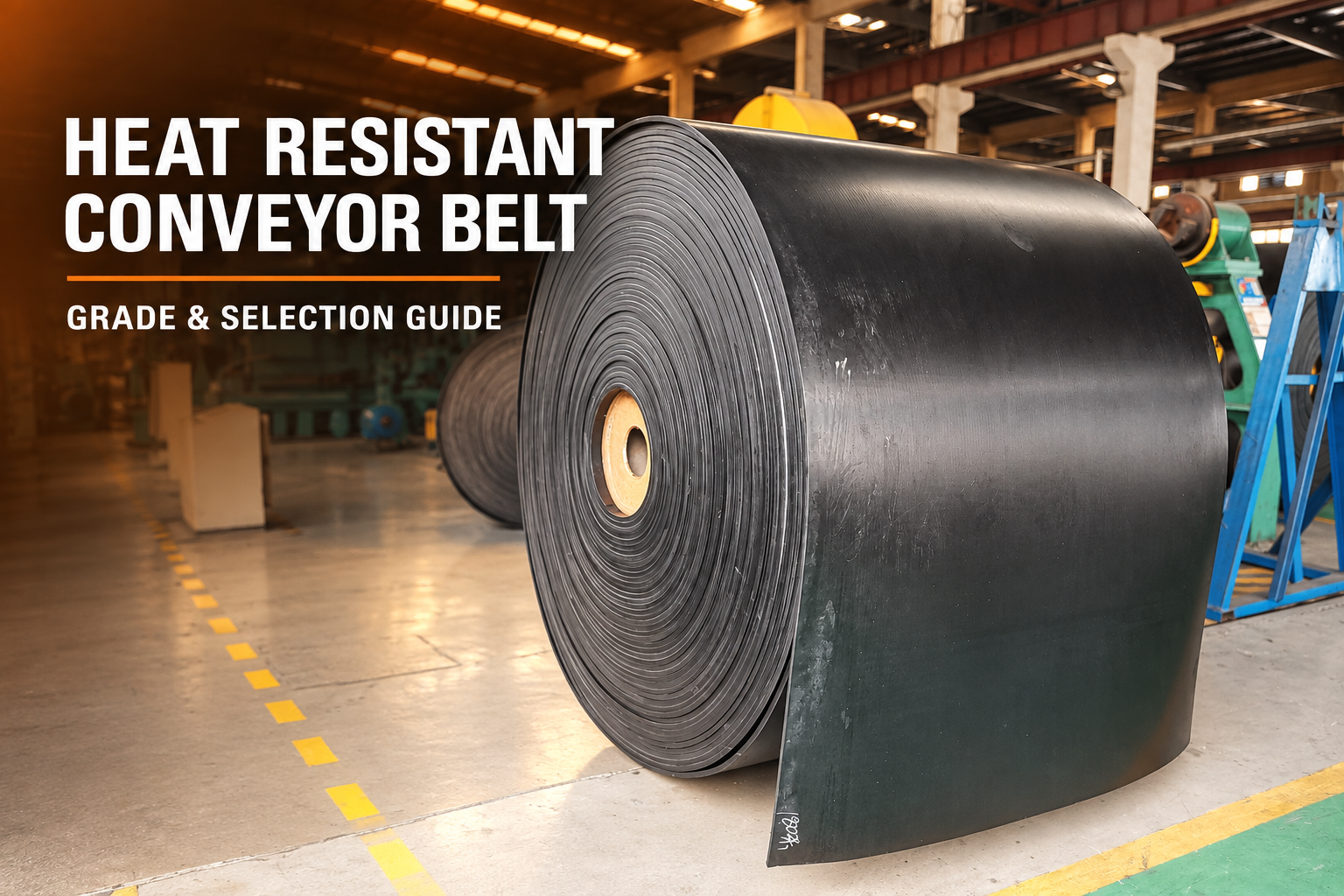
For this reason, Application of Rubber Conveyor Belt in mining, cement, steel, and aggregate plants often depends on cover compound first. Abrasion-resistant rubber, heat-resistant rubber, or flame-resistant construction should be selected only when the working condition calls for it. Using a special belt where it is not needed wastes money; using a light belt where a special belt is needed costs more later.
Inclined Conveying Changes the Belt Requirement
A flat belt is fine until the incline becomes too steep for the material. Then the problem is not strength; it is control. Grain rolls back. Gravel slides. Packed bags shift toward the side. Operators may slow the line to keep material in place, but that only hides the mismatch.
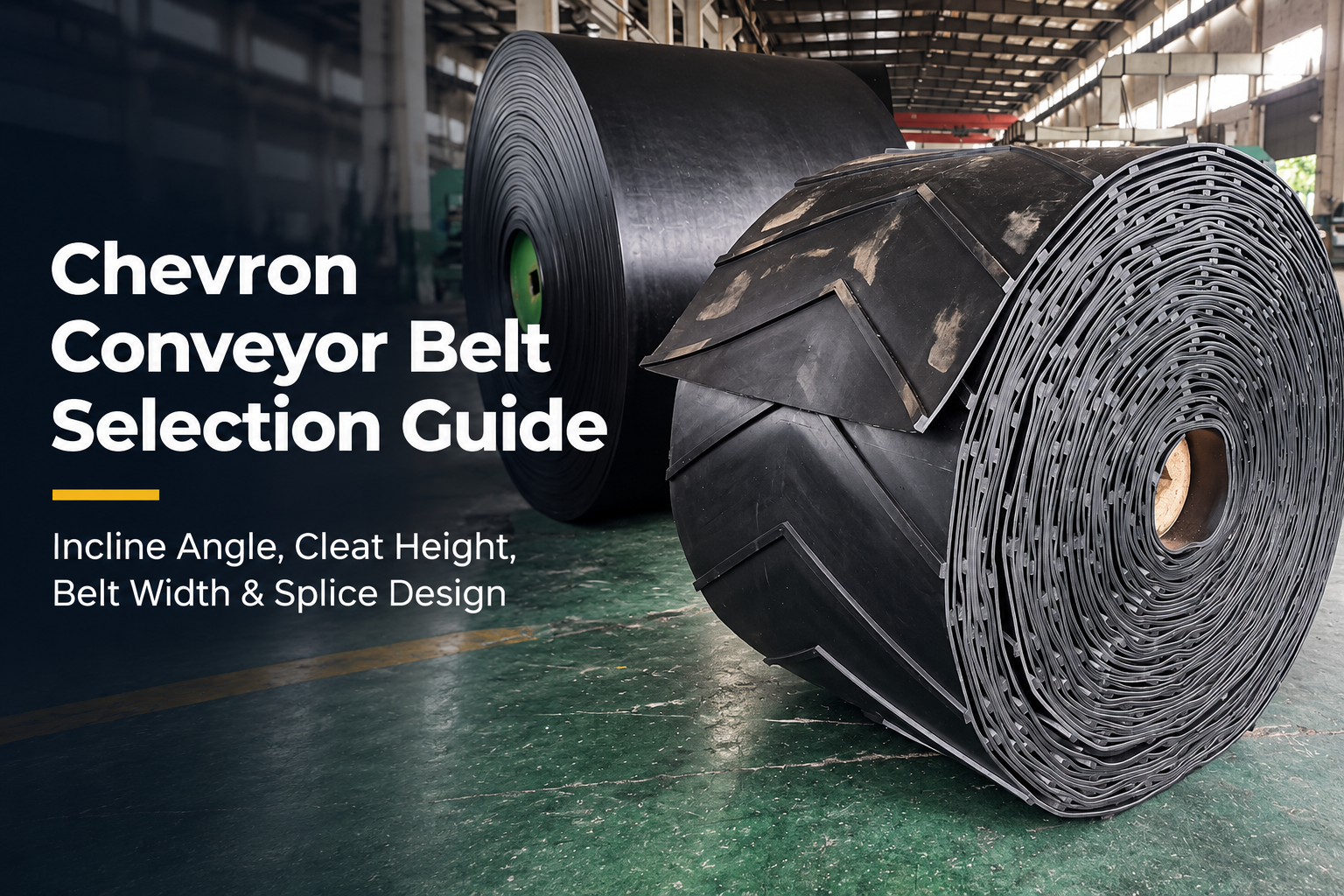
Chevron belts, rough-top belts, and sidewall belts are used when the surface has to help hold the material. A chevron pattern gives loose bulk material something to sit against. Rough-top surfaces are more common for parcels or packaged goods. Sidewall belts are used when the conveyor angle becomes severe enough that ordinary surface grip is no longer enough.
This is one Rubber Conveyor Belt Application where the belt surface is as important as the belt strength. The right pattern keeps material moving; the wrong pattern can create cleaning problems, transfer issues, or unnecessary belt wear.
Heat, Abrasion, Moisture, and Oil: Small Details That Decide Service Life
Rubber does not fail in the same way in every plant. Heat can harden or crack a cover. Abrasive material slowly removes the surface. Oil can swell certain compounds. Moisture can make a damaged splice worse, especially if water gets into reinforcement layers.
A buyer may ask for a Rubber Conveyor Belt by width and length, but the supplier still needs more than that. What is the material temperature? Is the belt outdoors? Is there oil, fertilizer dust, sharp lump material, or frequent loading impact? These details decide whether the belt is a normal consumable or a repeated maintenance problem.
|
Working condition |
What usually goes wrong |
What to confirm before ordering |
|
Hot material |
Cover hardening, cracking, early splice trouble |
Material temperature and contact time |
|
Sharp abrasive material |
Fast top cover loss, exposed carcass |
Cover grade and loading point design |
|
Outdoor or wet area |
Edge aging, splice moisture risk |
Cover compound and storage method |
|
Inclined transport |
Rollback, spillage, slow operation |
Chevron, rough-top, or sidewall design |
|
High-volume line |
Downtime during replacement |
Splice plan, spare belt stock, installation window |
Maintenance Usually Starts Before the Belt Breaks
Many belt failures give warnings first. Edges fray. The belt starts walking to one side. A splice sounds different as it passes over a pulley. Material builds up around the return rollers. None of these signs look dramatic at the start.
The useful habit is simple: inspect the belt while it is still running normally. Look at the loading zone, belt edges, return side, pulley contact area, and splice. A belt that is slightly mistracking today may become an edge tear next month. A small cover cut in a quarry line can spread quickly if it catches on a scraper or chute edge.
A good Application of Rubber Conveyor Belt is not only about buying the correct belt. It also includes training maintenance staff to notice what the belt is telling them before the line stops.
Choosing a Rubber Conveyor Belt for a New or Existing Line
For a new conveyor, engineering drawings help. For an old conveyor, the failed belt tells part of the story, but not all of it. A printed belt code is useful if it is still readable. Photos of the conveyor, loading point, material, pulley layout, and damaged area often explain more than a short inquiry message.
|
Information to provide |
Why it matters |
|
Belt width and length |
Basic production size |
|
Material being conveyed |
Cover compound and impact level |
|
Lump size and temperature |
Abrasion, heat, and loading zone risk |
|
Conveyor angle |
Flat, chevron, rough-top, or sidewall choice |
|
Working hours per day |
Service life expectation and spare planning |
|
Existing belt photos or drawings |
Faster matching and fewer wrong assumptions |
|
Splicing method |
Installation time and joint reliability |
How SINOCONVE Fits into Rubber Conveyor Belt Supply
Ningbo Sinoconve Belt Co., Ltd. supplies Rubber Conveyor Belt products for mining, cement, ports, logistics, agriculture, and general industrial handling. The range can cover fabric conveyor belts, steel cord conveyor belts, chevron belts, heat-resistant belts, flame-resistant belts, and customized belt structures depending on the site requirement.
For distributors and plant buyers, the useful discussion is usually not whether the belt is good in a general sense. It is whether the selected belt matches the load, angle, temperature, abrasion level, pulley layout, and maintenance habits at the site. That is where application information saves time.
FAQ
What is the main Application of Rubber Conveyor Belt in industry?
It is mainly used to move bulk materials or packaged goods continuously between processing, storage, loading, and production points.
What is the difference between a general Rubber Conveyor Belt and a chevron belt?
A general flat belt is used for level or mild conveying. A chevron belt has raised patterns to help loose material stay on the belt during inclined transport.
When should a heat-resistant belt be considered?
When the conveyed material stays hot enough to harden, crack, or shorten the life of a normal rubber cover.
What information helps a supplier recommend the correct belt?
Material type, belt size, conveyor angle, material temperature, working hours, pulley layout, splice method, and photos of the system.
Why do rubber conveyor belts fail early?
Common causes include wrong cover grade, poor loading point design, mistracking, unsuitable splice, excessive heat, sharp material, or delayed maintenance.
Final Note
The best Rubber Conveyor Belt Application is usually the one that looks ordinary after installation: material moves, tracking stays stable, and maintenance teams do not have to adjust the line every week. Getting there depends on matching the belt to the job, not simply choosing the belt that looks strongest or costs the least.