A farm conveyor does not usually fail in a dramatic way on the first day. The first signs are smaller. Grain starts rolling back on an incline. Wet crop residue builds up near the return path. A belt that ran straight in the workshop begins to creep toward one side after a few hours in the field. Someone tightens it. It runs better for a while, then the edge starts to fray.
That is why an agricultural conveyor belt should not be selected only by width, length, and price. In farming equipment, the belt has to work with irregular material, dust, moisture, outdoor temperature changes, and sometimes very limited maintenance time during harvest. A farm conveyor belt used for dry grain will not face the same problem as one moving potatoes, hay, soil-covered vegetables, fertilizer, or feed.
The right belt is often the one that disappears into the machine. Material flows, the operator does not keep adjusting tension, and the line does not stop during the busiest days of the season. That is the practical value buyers should look for.
Where an Agricultural Conveyor Belt Actually Works
On many farms, a conveyor belt is not one long system like in a mine or port. It may be a short transfer belt on a harvester, a loading belt for grain handling, a packing belt after sorting, or a small inclined belt feeding produce into bins. The working duty changes from one position to another.
|
Machine or line position |
Typical material handled |
Common belt issue to check |
|
Harvester discharge or crop transfer |
Grain, beans, corn, chopped crop, light bulk material |
Crop residue under the belt, tracking drift, dust buildup |
|
Packing or sorting line |
Vegetables, fruit, bags, trays, cartons |
Surface marking, product slip, cleaning access |
|
Inclined farm conveyor |
Grain, feed, fertilizer, small produce |
Rollback on smooth belts, wrong surface texture, weak cleat bonding |
|
Feed or fertilizer handling |
Pellets, powder, granular fertilizer |
Abrasion, chemical exposure, moisture effect |
|
Field replacement belt |
Mixed use, emergency repair, seasonal equipment |
Old belt code missing, pulley wear, incorrect tension setting |
This is also where many purchasing mistakes happen. A buyer sends only belt length and width, then receives a belt that physically fits but does not behave well on the machine. Fit is not the same as performance.
Surface Grip Matters, But Too Much Grip Can Also Cause Trouble
A smooth farm conveyor belt may be enough for flat transfer of dry grain or packaged goods. Once the conveyor angle increases, or the crop has a rounded surface, the belt surface becomes more important. Material rollback is not just annoying. It can overload the lower end of the conveyor, create uneven feeding, and force workers to slow the machine down.
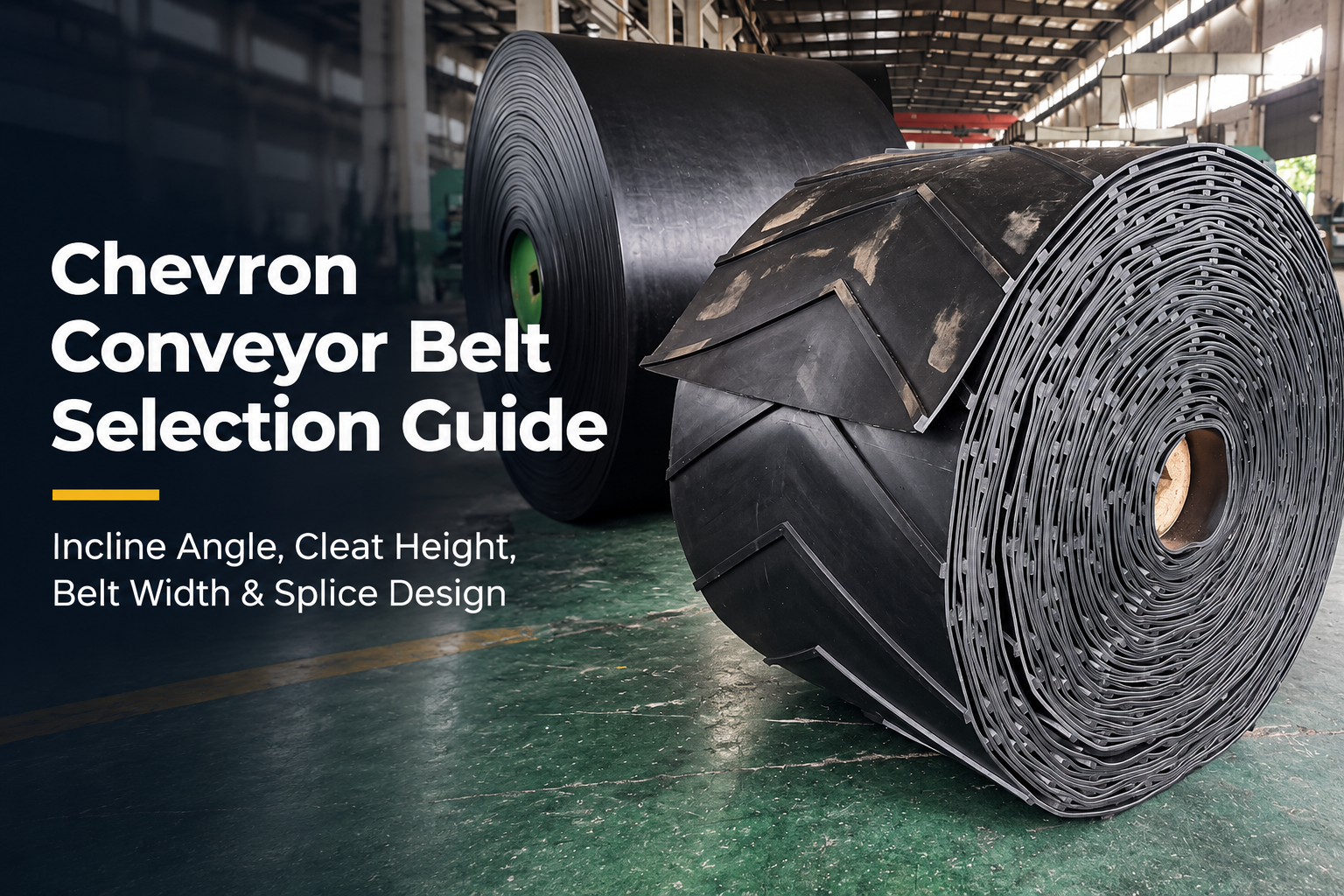
A textured agricultural conveyor belt can help by increasing contact between the belt and material. For steeper conveying, a chevron or cleated design may be needed. But the surface should still match the crop. A surface that is too aggressive may mark soft produce or hold too much mud. A surface that is too smooth may look clean but fail once the belt is working outdoors.
|
Belt surface choice |
Where it may fit |
Practical warning |
|
Smooth surface |
Flat transfer, packaged goods, dry grain at low incline |
May slip on inclines or with rounded crop |
|
Light textured surface |
Sorting lines, gentle produce transfer, mixed farm use |
Check whether residue becomes trapped in the texture |
|
Rough top surface |
Inclined bags, boxes, light bulk material |
Can be harder to clean after sticky crop contact |
|
Chevron pattern |
Inclined grain, feed, fertilizer, loose material |
Pattern height must suit pulley size and cleaning needs |
|
Cleated belt |
Short steep sections or controlled feeding |
Cleat spacing and bonding matter more than appearance |
What Usually Shortens Belt Life in Farming Equipment
Farm belts often fail for reasons that look like material quality problems at first. The real cause may sit somewhere else on the machine.
Dust and dry residue
Dry crop dust gathers around pulleys, return rollers, and frame corners. When the belt runs over that buildup, the bottom cover wears unevenly. The operator may notice tracking problems first, not surface damage. Cleaning the return path before ordering a heavier belt is sometimes the better fix.
Moisture and sticky crop material
Wet grain, soil-covered vegetables, or damp crop residue can cling to the belt surface. That changes friction and can cause material to release late. On a packing line, late release may shift product spacing. On an incline, it may create buildup near the discharge point. The belt compound and surface texture should be selected with the cleaning routine in mind.
Shock loading during peak feeding
During harvest, machines do not always feed material evenly. A sudden heavy load can stretch a weak belt, open a joint, or overload a small pulley. If this happens repeatedly, buying the same belt again only repeats the problem. The buyer should review carcass strength, pulley diameter, and splice method together.
Poor pulley condition
A new belt cannot fix a worn pulley groove or an idler that is out of square. If the old belt failed with edge wear, cracks near the joint, or repeated tracking correction, photos of the machine are as useful as the belt code. Sometimes more useful.
Agricultural Belt vs General Conveyor Belt
Not every conveyor belt used on a farm has to be a special agricultural belt. Some flat handling lines can use a general belt if the load is light and the environment is clean enough. But field equipment, harvest machinery, and outdoor transfer systems usually create more mixed conditions.
|
Belt type |
Better suited for |
Risk if used in the wrong place |
|
General conveyor belt |
Clean indoor transfer, simple flat conveying |
May wear early under dirt, moisture, or uneven feeding |
|
Agricultural conveyor belt |
Farm machinery, crop transfer, grain and feed handling |
Still needs correct surface and carcass for the machine |
|
Farm conveyor belt with texture |
Inclined transfer, mixed product contact, moderate grip needs |
Can trap residue if cleaning is ignored |
|
Cleated or chevron agriculture conveyor belt |
Loose material on incline or short steep conveyors |
May not suit small pulleys or delicate produce |
|
Rubber belt for heavier duty |
Abrasive or outdoor farm material handling |
May be heavier than needed for light packing lines |
What Buyers Should Confirm Before Ordering
For distributors, repair shops, and farm equipment buyers, the fastest quotation is usually not the best quotation. A correct quotation needs enough information to avoid guessing. This is where SINOCONVE’s idea of Save Time, Save Money becomes practical: fewer wrong samples, fewer repeated drawings, less downtime during the season.
|
Information to send |
Why it matters |
|
Old belt code or printed marking |
Helps confirm size, profile, and replacement direction |
|
Belt width and total length |
Basic size, but not enough by itself |
|
Machine model or conveyor position |
Shows whether the belt is for transfer, packing, discharge, or incline |
|
Crop or material handled |
Grain, feed, fertilizer, vegetables, fruit, bags, or cartons behave differently |
|
Pulley diameter and layout photo |
Helps avoid belts that are too stiff for small pulleys |
|
Surface requirement |
Grip, easy release, gentle contact, cleaning, or abrasion resistance |
|
Failure photos of old belt |
Edge wear, cracks, joint opening, or surface polish show the real problem |
|
Quantity and packaging need |
Useful for seasonal stocking, distributor orders, and export packing |
Common Failure Signs and What They Usually Mean
|
Observed sign |
Likely area to inspect first |
Buyer note |
|
Material slides back on incline |
Surface texture, conveyor angle, belt speed |
A stronger carcass alone may not solve grip problems |
|
Belt runs to one side |
Pulley alignment, frame condition, uneven loading |
Do not blame the belt before checking the machine |
|
Edge frays quickly |
Guide contact, tracking, pulley edge, belt width |
Old belt photos help supplier judge the cause |
|
Joint opens during season |
Splice method, bending cycle, tension setting |
Endless or better joint method may be needed |
|
Surface cracks or hardens |
Outdoor exposure, chemical contact, cleaning method |
Compound selection should match the environment |
|
Crop residue sticks to belt |
Surface texture, cleaning routine, moisture level |
Smooth or easier-clean surface may be better than high grip |
When Not to Over-Specify the Belt
It is tempting to choose the thickest or heaviest belt just to be safe. That is not always the best decision. A heavier belt may need larger pulleys, more tension, or a stronger drive. On a small packing machine, over-specification can create new problems: poor flexibility, higher bearing load, and harder installation.
A better approach is to match the belt to the actual duty. For dry grain on a moderate incline, surface pattern may matter more than extra thickness. For fertilizer or soil-heavy crops, cover resistance and cleaning may be more important. For delicate produce, the belt must move product without bruising or excessive marking.
How SINOCONVE Supports Farm Belt Selection
SINOCONVE supplies conveyor belts, transmission belts, timing belts, rubber V-belts, and related industrial belt products. For agricultural conveyor belt orders, the useful work often happens before production: checking the old belt, confirming the machine position, reviewing the crop contact condition, and deciding whether the belt needs a smooth, textured, chevron, cleated, or heavier rubber construction.
For OEM, distributor, and maintenance buyers, customization can be discussed based on drawings, samples, belt photos, packaging requirements, and working conditions. That does not mean every farm needs a complicated belt. It means the belt should fit the machine before it reaches the field.
FAQ
What is an agricultural conveyor belt used for?
It is used to move grain, feed, fertilizer, harvested crops, bags, cartons, or produce through farm equipment, packing lines, and short transfer conveyors.
Is a farm conveyor belt different from a standard conveyor belt?
Sometimes yes. The difference is usually in surface grip, cover compound, flexibility, cleaning needs, and resistance to outdoor field conditions.
When should I choose a chevron or cleated agriculture conveyor belt?
Use chevron or cleated designs when loose material rolls back on an incline or when the conveyor needs controlled feeding. Check pulley size and cleaning access before choosing the pattern.
Why does a farm belt fail early?
Common causes include wrong surface selection, poor tracking, crop residue buildup, moisture, sharp material, over-tensioning, and a splice method that does not suit the machine.
What should I send for a quotation?
Send the old belt code, size, machine model, belt position, crop or material handled, pulley photos, failure photos, required quantity, and packaging requirements.
Final Note
An agricultural conveyor belt is not chosen well by catalog size alone. Start with the crop, the machine position, the incline angle, the old belt failure mark, and the cleaning routine. Once those points are clear, a supplier can recommend a farm conveyor belt that fits the real working conditions instead of simply copying the last belt. That is usually the safer way to save time and save money during the season.