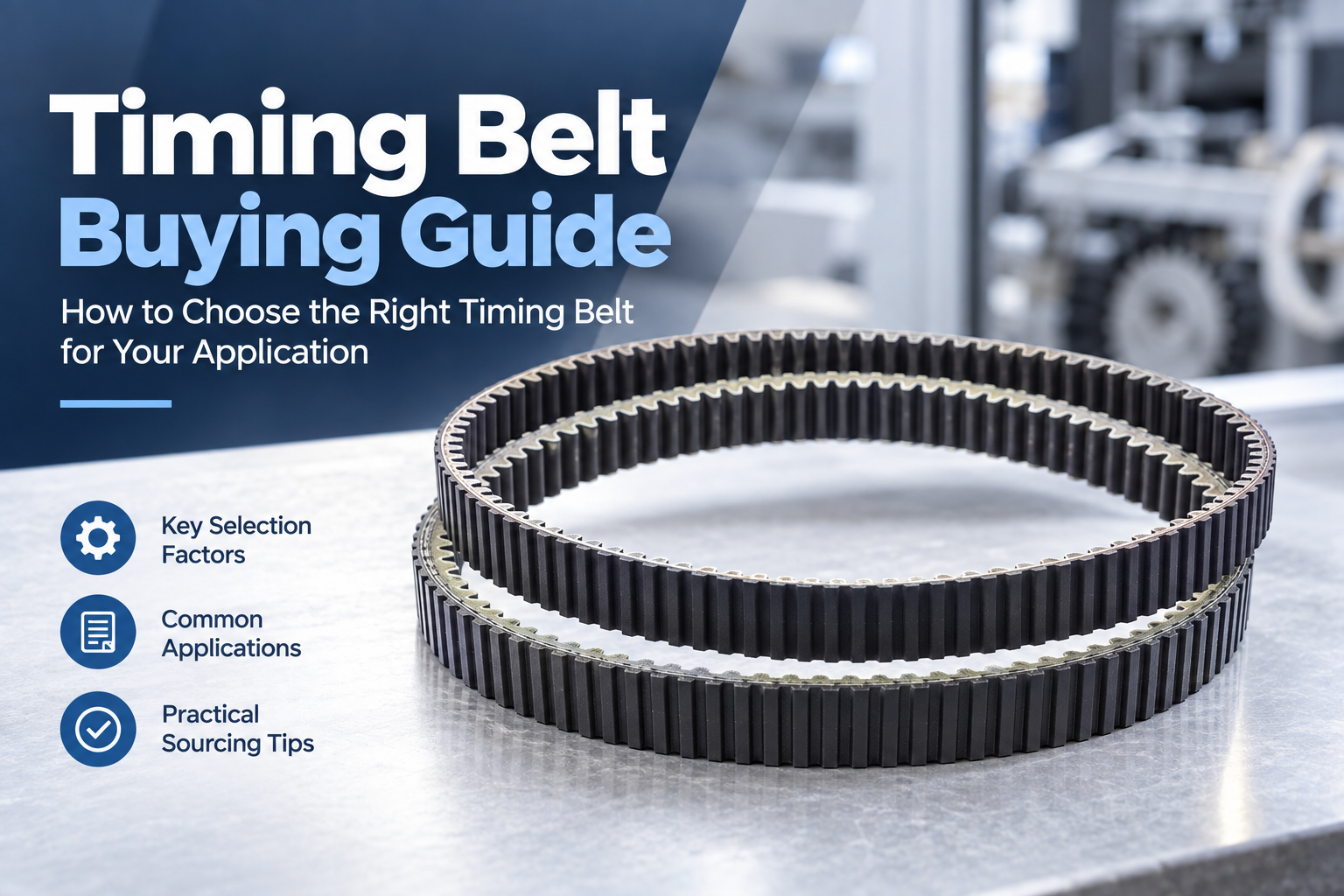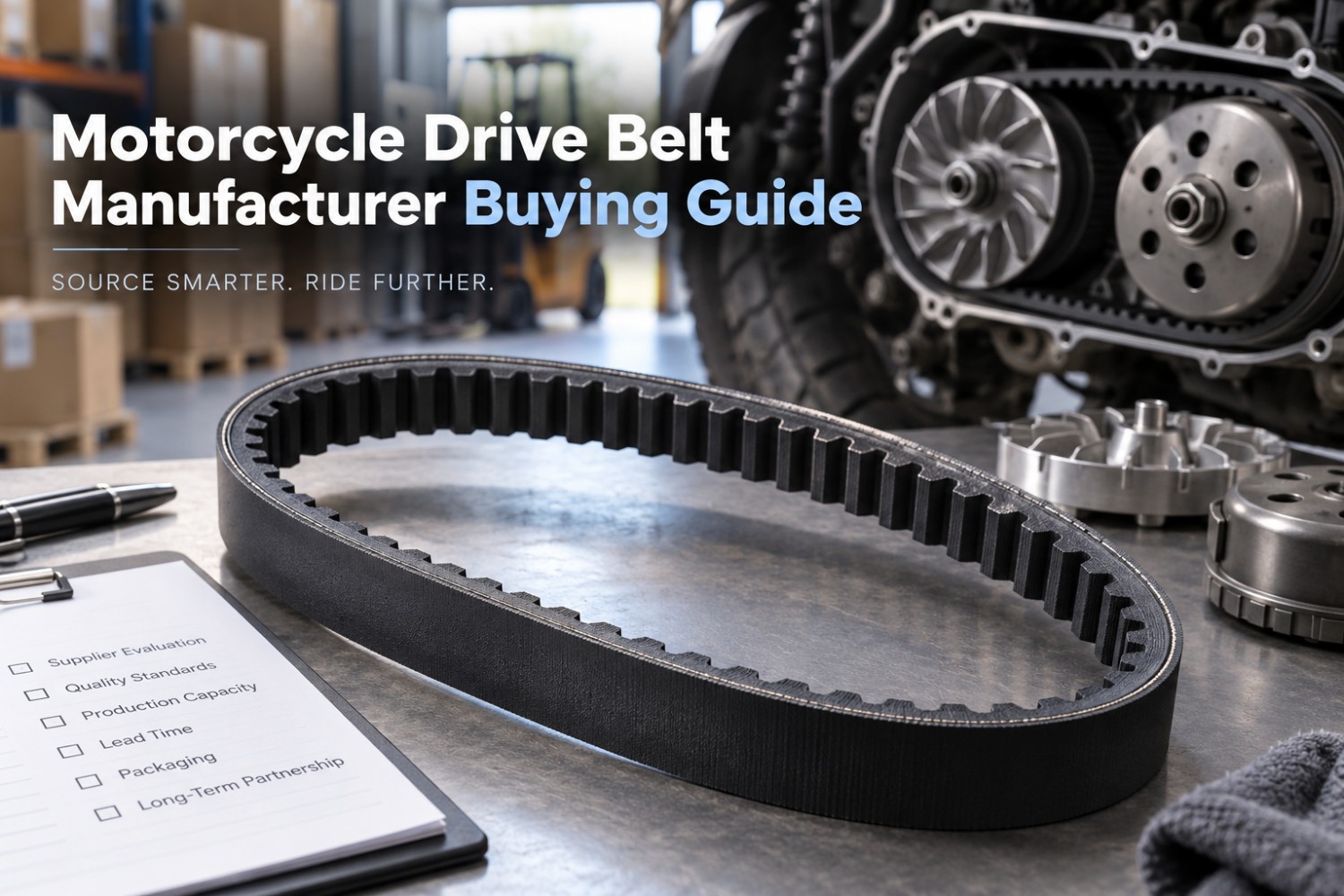

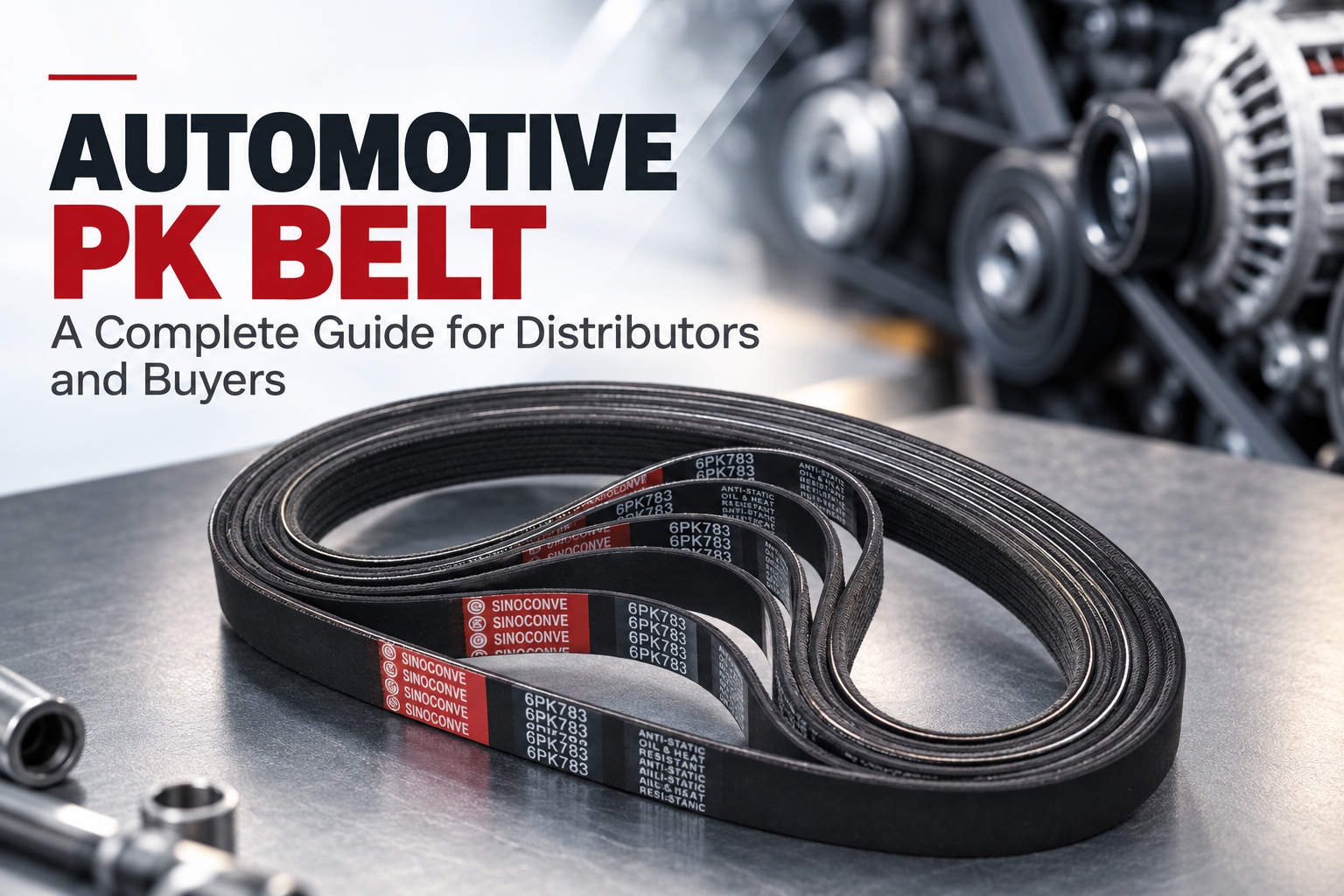
Open the hood of almost any modern car and you will find one belt doing more work than any other. The PK belt, a thin multi-rib poly V belt with a row of small longitudinal ribs, wraps a serpentine path around the crankshaft and drives the alternator, the air-conditioning compressor, the power steering pump, and the water pump from a single pulley, sometimes reaching a cooling fan or an oil pump as well. For an auto parts distributor or an industrial distributor, that makes the PK belt one of the fastest-moving lines in the catalog. It is also one of the easiest lines to lose money on when the supplier behind it is picked on price alone.
We are Ningbo Sinoconve Belt Co., Ltd., a belt factory in Ningbo, China, built in 1988 and managed under an ISO 9001 quality system. Power transmission is one of our core product families: V-belts, timing belts, and PK multi-rib belts are compounded in-house and tested in the same laboratory as the conveyor belting we are known for overseas. We wrote this guide the way we would talk to a distributor opening a PK belt program, and it follows a simple logic: what to put on the RFQ, what evidence to demand from any candidate PK belt supplier, how to read the construction details that decide service life, and where the commercial traps hide.
The tables in sections 02 and 03 double as ready-made request and audit checklists, so your team qualifies suppliers the same way every time instead of relying on whoever answered the phone that week.

01What a Badly Sourced PK Belt Really Costs You
A distributor friend once told us that a belt is the part customers never thank you for, until one fails, and then they never forget it. A PK belt runs inches from a hot engine, turns at crankshaft speed, and flexes around small pulleys thousands of times a minute. When it lets go on a modern car, the vehicle does not lose one function; it loses charging, cooling, and steering assist at the same moment. The warranty claim is only the visible part of the bill. The quieter part is the account that quietly moves to the workshop down the road.
None of that means you should avoid the line; it means you should source it with the same care you would give a brake pad or a wheel bearing. The problems that reach us from distributors are consistent enough to list, and the list doubles as your first internal checklist:
- Wrong rib count or wrong effective length.The belt fits nothing on the shelf, the return costs more than the belt, and the customer who needed it yesterday buys it from a competitor.
- Compound that does not match the duty.A belt built with the wrong rubber hardens, cracks, or squeals early in a hot engine bay, and the failure reads as "cheap belt" no matter who compounded it.
- Inconsistent batches. The same part number arrives with a different cord, a different hardness, or a slightly different length from one shipment to the next, and your technicians learn to distrust the whole line.
- Poor labeling and packaging. A belt that arrives with smudged markings or crushed ribs starts arguments at the counter and creates returns you cannot resell.
- An invisible supply chain. When the seller is actually a reseller buying from two or three different factories, nobody can trace a failed batch, and the quality problem is permanently somebody else's.
Every failure above is preventable at the sourcing stage, which is why this guide leans on qualification rather than price haggling. Do the homework in section 02 and demand the evidence in section 03, and most of the risk disappears before the first container ships. The hours you spend vetting a transmission belt manufacturer now are multiplied across every repeat order you will place over the next several years, because a PK program usually starts with a handful of sizes and then grows around them.
02The RFQ Data That Separates Real Quotes from Guesses
The quality of a PK belt quotation is fixed before the supplier opens your email. Vague inquiries produce vague answers: a price, a delivery week, and very little proof that the belt will fit, last, and carry your brand. Factories price what they think you asked for, and when the rib count or the length basis is missing, they guess. The guess shows up later as a dispute, and disputes arrive with the shipment, not with the quote.
A structured RFQ changes that. Below is the data set our engineers ask for when a distributor opens a PK belt program. Fill in what you know; where a field is unknown, say so and ask the factory to recommend against the application.
| RFQ field | What to give | Why it matters |
|---|---|---|
| Rib profile and rib count | e.g., 4PK, 5PK, 6PK, 7PK | Rib count must equal the pulley grooves; one rib too few and the belt slips under load. |
| Effective length | Length in mm as printed on the old belt | Length is measured on a defined basis; a few millimeters off can defeat an automatic tensioner. |
The fields below complete the picture, and they are the ones most often left off a first inquiry:
- Application: vehicle make and model with engine code, or the machine type and drive layout.An OE-style cross reference is useful, but the application is what lets a factory confirm compound and cord rating.
- Compound expectation: EPDM or CR. State it even if you only suspect it, and ask the factory to confirm or challenge it against the duty.
- Backing requirement: plain fabric back for smooth idler contact, and whether printing is allowed on the back surface.
- Private label and marking text: your logo, part number, and any country-of-origin wording, with artwork.
- Packaging and volumes: box quantities, label language, barcodes, and the annual quantity behind the inquiry.
Notice what is missing from that list: there is no row for "cheapest belt." Price belongs at the bottom of the decision, after construction and paperwork match. Two belts with the same printed size can differ in price by a factor of two, and the difference usually lives in the compound, the cord, and the factory's tolerance discipline, not in the logo. When your team quotes against OE part numbers, send the application rather than the number alone, because cross-reference tables are only as good as the data behind them.
03Supplier Qualification: the Evidence a Real Factory Can Produce
Price lists travel easily; production proof does not. A genuine PK belt factory can open its quality system and show how the belt is built and checked.A trading house cannot, because the belt is made somewhere else, by somebody else, to standards the trader has never inspected. The checklist below is what we would ask for if we sat on your side of the desk, and each item maps to a specific risk you are buying against.

| Evidence to request | What it should show | Red flag |
|---|---|---|
| Company and plant profile | Factory registration, years in business, production scope | Registered as a trading company with no plant address |
| Quality system certificate | e.g., ISO 9001 certificate in the company's own name | A scanned certificate from another company or none at all |
| Compound specification | Polymer type (EPDM or CR), hardness range, key properties | "Rubber" only, with no polymer or grade declared |
The second half of the evidence list is about what happens after the belt is built:
| Evidence to request | What it should show | Red flag |
|---|---|---|
| Test report with the shipment | Batch-level results: dimensions, hardness, adhesion,tensile | "Tests available on request" but nothing arrives |
| Batch traceability records | Belt lot number on labels, linked to production and material records | No lot marking; boxes and belts carry no batch identity |
| Dimensional inspection practice | How rib count, width, and effective length are checked and recorded | Length verified by tape measure on a bench, no defined tension |
Read the paperwork the way an engineer would. A certificate dated three years ago proves nothing about the batch sitting in your warehouse; ask for the report that travels with the shipment. An ISO 9001 certificate is a management-system claim, valuable but not a product guarantee; pair it with batch records and dimensional checks. If a candidate cannot produce these documents within a few days, the odds are strong that the belt is being bought in from somewhere the seller has never visited.
04How to Read a PK Belt: Marking Rules and Measuring
Every PK belt in your catalog should be readable at a glance by anyone at the counter. The marking convention is simple once you know it: the number of ribs, the letter profile, and the effective length. A belt marked 10PK698 means ten ribs on a PK (2.34 mm rib pitch) profile with an effective length of 698 mm. Take that same convention across the family — 3PK, 4PK, 5PK, 6PK, 7PK, 8PK, 10PK and beyond — and you can tell from the printing alone whether a part belongs in your 6PK shelf bin or your 10PK bin. Rib count tells you how many grooves the belt must engage; the profile letter tells you the rib spacing and angle family; the number tells you the length basis.

Effective length is where distributors and technicians most often trip.A ribbed belt is measured on a defined tension and over a defined pair of pulleys — the effective length is not the outside tape-measure length of the belt lying flat, and it is not the length around the outside of the ribs. Different measuring systems exist, which is why the number printed on the old belt is the safest starting point, and why you should never trust a supplier that quotes length without stating the measuring basis. When in doubt, ask for the measurement method and the gauge the factory uses, and check the first samples against that method on your own bench.
A few practical rules keep your stock accurate and your returns low. Store belts so they cannot kink — hanging or flat in original cartons, never folded or hung on small hooks that put a permanent bend into the rubber. Keep the printing visible when you rebox, because the moment a belt loses its identity in your warehouse it becomes a mystery part that costs you a return either way. And when a customer brings back a belt for fit confirmation, measure rib count first, then length: the rib count eliminates half the catalog before the tape even comes out.
Why rib count and length both have to be exact
A belt with one rib too few will slip under load because it engages fewer grooves than the pulley set provides; a belt with one rib too many may not seat into the grooves and will run hot.Length is equally unforgiving on modern engines with automatic tensioners: the tensioner arm has a defined travel range, and a belt a few millimeters off can sit at the wrong end of that range, causing slip, noise, or bearing load the design never intended. Precision here is not a luxury; it is the difference between a belt that sells itself and a belt that generates phone calls. This is why our factory measures every PK belt run against a defined effective-length basis and records the result per batch, and why we ask distributors to check length against the printed basis before they build a stock program around a new supplier.
05EPDM vs CR, and the Construction Details That Decide Service Life
The single most useful question you can ask a supplier about a PK belt is which polymer family the compound is based on, because it tells you which generation of vehicle the belt was designed for. Older accessory drives were built around chloroprene (CR) belts; the current generation of engine bays, with their higher operating temperatures and long service intervals, moved to EPDM, which resists heat, ozone and many engine fluids better over a longer life. If your catalog is weighted toward modern cars with interval-based replacement schedules, EPDM is the polymer you should expect; if you also serve older machinery and vehicles, CR-based belts may still appear in legacy applications. A competent supplier states the polymer per SKU family instead of hiding behind the word "rubber."

Construction is where the price differences hide, and it breaks into four layers worth understanding before you compare quotations:
The tensile member. PK belts carry their load in a layer of cords running the length of the belt. Polyester cord is common in this class of belt, and the cord lay — how straight and evenly spaced the cords run — decides how smoothly the belt tracks and how consistently it stretches in service. A factory that controls cord tension during building produces belts that stay within length tolerance from one end of a batch to the other. One that does not produces the batch-to-batch surprises your technicians blame on "cheap belts."
The ribs and the compound fill. The ribs are formed into the compound and must be crisp and uniform, with no ragged edges or porosity where the rib meets the backing. Compound hardness and heat resistance decide how the belt behaves in a hot engine bay: too hard and it squeals at startup; too soft and it wears and sheds. You cannot verify compound quality from a photo, but you can verify that the factory has a compound specification per polymer family, with hardness and key property targets it can print for you.
The backing. The back of a PK belt runs against flat idler pulleys on serpentine drives, so the backing material has a real job: it controls friction against the idler and protects the cord layer. Fabric-backed belts are common in automotive use; the fabric choice affects noise and wear. If a supplier cannot tell you what the backing is and why, the belt was probably copied from a sample rather than engineered for the duty.
The cure and the cut. A PK belt is cured as a wide slab and then slit into individual belts, which is why edge quality and width tolerance are the fingerprints of a disciplined line. Clean, square, burr-free edges come from sharp tooling and controlled slitting speed; ragged edges signal a line running past its tooling life. Width tolerance matters because the belt must sit correctly in the pulley grooves across its whole length.
Add these four layers to the marking rules from section 04, and you can evaluate any sample with the same rigor you would bring to a brake component. When we build a PK belt we control the same variables — cord spacing, compound batch records, rib geometry, edge finish — and the test report that travels with the shipment reflects the checks we actually ran, not the checks we wish we had.
06Accessory Drives, Applications, and the Stock Program That Sells Them
A PK belt program sells itself only if the stock matches the real drive population in your market.Before you commit quantities, map the drives you actually serve. In automotive aftermarket terms that means the front-end accessory drives of the vehicle models your workshops see most: alternator, air-conditioning compressor, power steering pump, and often the water pump driven off one serpentine path, sometimes with an idler or a tensioner in the loop. In industrial terms the same belt family appears on small machinery, compressors, pumps and auxiliary units where a compact, high-speed, multi-groove drive replaces several V-belts. Knowing which of these populations you serve decides which PK sizes deserve deep stock and which belong in special-order territory.
Depth beats breadth at the start
New distributors almost always make the same mistake: they buy a little of everything and run out of the sizes that actually move. A better opening move is depth on the top twenty or thirty part numbers for your best-selling vehicle families, backed by a fast lane for the rest. This is where a supplier relationship earns its keep. A factory with real production can hold your profile on file, build mixed-SKU containers around your depth SKUs, and top up the tail with reasonable lead times. A stock program with call-off flexibility — you commit an annual volume and release monthly or quarterly — protects you from both empty shelves and dead inventory, and it is the model most serious distributors settle into by year two.
The same factory logic that makes or breaks a belt range
Here is a question worth asking every candidate during qualification: what else does the factory make, and how does it treat rubber? Belt manufacturing is ruthless about process discipline — compound consistency, cord tension, curing accuracy, dimensional inspection — and a factory that applies that discipline across a wider rubber range usually applies it more honestly to each line. SINOCONVE operates ten production lines and more than 200 people across conveyor and transmission products: we are a conveyor belt manufacturer and conveyor belt supplier for mining, cement and port customers, we build industrial conveyor belt lines for stone-crushing duty, and our rubber conveyor belt and V-belt ranges share the same compounding and laboratory. As a V-belt manufacturer and conveyor belt distributor partners for chevron and sidewall profiles, we also ship wholesale conveyor belts to stocking distributors worldwide — all out of one conveyor belt factory with real cure capacity behind it. When a candidate cannot show you that kind of production backbone, the price difference you are being offered is usually the difference between a factory and a forwarding agent.
One more operational note before you place the first order: tensioner and idler interaction is part of the belt's environment. When a drive has an automatic tensioner, the belt length basis must match the tensioner's travel window — again, exact effective length. If your market sells belt-and-tensioner kits, decide whether your PK line is sold as a standalone belt or as part of kits, because the packaging and the SKU logic differ. Whatever you choose, keep the tensioner spec in the data pack you send suppliers; it is exactly the kind of detail that turns a generic quote into a quote you can trust.
07Test Evidence, Samples and the Batch Checks That Matter
Documentation tells you a supplier has a quality system; batches tell you whether it runs one.Before production, run a sample approval on the SKUs that will carry your stock program. Here is the sequence we recommend, and it applies whether you are buying from us or from any candidate on your list.
Step one: measure the samples against the marking. Take three samples of the same SKU and verify rib count, width, and effective length against the printed number and the measuring basis from section 04. Record the numbers. Repeatability across samples within a small tolerance is the cheapest quality signal in the industry, and it separates factories from assemblers in minutes.
Step two: examine the construction. Cut one belt and look at the cord layer: straight, evenly spaced cords under the ribs, clean compound fill, and a backing that is uniform in thickness. Compare two belts from different batches if you can get them. The cut face tells you more about process control than any brochure photograph.
Step three: ask for the batch-level test report. A real factory tests finished belts for dimensions, hardness, and adhesion at a minimum, and runs compound-level checks on heat and ozone resistance for the polymers it certifies. The report should carry the batch number and dates, and it should match the batch code on the boxes you receive. If the paperwork and the goods cannot be tied together, treat them as unrelated.
Step four: torture-test the logic, not just the belt. Ask the supplier how a failed belt from your market would be investigated: what records exist, who owns the analysis, and what the remedy process looks like.The answer tells you whether you are buying from an organization that can learn from a complaint or from a reseller that will simply send you another box and hope.
Keep a reference sample and the measurement record for every SKU you approve. When the next shipment arrives, spot-check against the reference before it goes into stock; the ten minutes per SKU saves weeks of returns later. Distributors who follow this discipline can hold a supplier accountable with data rather than with opinions, which is the only kind of accountability that survives a price negotiation.
08Commercial Terms: MOQ, Lead Time, Payment and the Fine Print
PK belts are a numbers game: thin margins per belt, many SKUs, repeat orders. The commercial structure either compounds those numbers in your favor or quietly erodes them. Work through the terms below before the first order, and put the answers in writing.
| Term | What a workable deal looks like | Question to ask |
|---|---|---|
| Minimum order | Mixed-SKU minimum rather than a deep minimum per size | Can an opening order mix 25 sizes at realistic quantities? |
| Lead time | Standard production plus a faster lane for high-volume or stocked sizes | What is the lead time difference between a first order and a reorder? |
| Payment | T/T with a deposit before production,or L/C on larger orders | Is payment tied to inspection or shipping documents? |
| Stock program | Annual forecast with monthly or quarterly call-off | How much flexibility does the forecast commitment allow? |
| Private label & packaging | Belt marking, retail box, barcode approved at the sample stage | Is the full branding spec attached to the PO? |
| Claims & inspection | Pre-shipment inspection right and a defined claim path | Who inspects before loading, and what evidence opens a claim? |
Two traps deserve a special warning. The first is the "open catalog" order: a supplier that sells you a broad range at a low blended price but back-orders the sizes you actually need, because those are the sizes it does not stock. Agree which SKUs are firm and which are optional before signing.The second is freight responsibility for a high-SKU, low-value order: when a container mixes hundreds of sizes, packing and documentation errors multiply, so confirm the packing standard and the documentation set in the same sentence as the price. Samples should be fast and nearly free from any serious supplier — we ship samples within days and treat the sample round as the start of the technical conversation, because a distributor that tests properly is a distributor that reorders.
09Red Flags That Point to a Reseller, Not a Factory
By now you have a working picture of what a real PK belt manufacturer looks like: it has a floor, a compound specification, batch records, defined length measurement, and the confidence to show you all of it. Here are the signals that the seller in front of you has none of those things.
The price is always the lowest — and the construction is always "standard." Every genuine factory can name its polymer family, cord type and backing per SKU. A seller that answers every construction question with "standard" does not know what is inside the belt, which means it does not control what is inside. The lowest price in the market usually buys you the privilege of explaining the difference to your customers later.
Length is quoted without a measuring basis. Section 04 explained why effective length only means something against a defined measurement method.A seller that quotes length casually, or that refuses to share its gauge method, is hiding the tolerance that matters most. Ask the question once; the quality of the answer is the quality of the supplier.
Batch records do not exist or cannot be tied to goods. When you ask for the test report that travels with a specific shipment and the answer is a generic brochure PDF, the batch-level discipline is absent. Real factories mark batches and can trace them; the rest are hoping you never ask.
The factory tour never happens. Any real producer can arrange a live video walk of its line within a day or two. Reluctance, rescheduling, or an offer to show "our partner factory" is the polite version of admitting there is no factory. You do not need a week-long audit for a first order — you need ten minutes of honest video.
Everything is "no problem," especially the part numbers. Engineers push back on cross-references they cannot confirm. A seller that confirms every OE number instantly is not verifying anything; it is selling you its willingness to sort out the mismatch after payment. Prefer the supplier who occasionally says "that reference needs checking" — that is the supplier who checks.
10Your Ten-Point PK Belt Supplier Gate
Condense everything above into a gate your team runs on every candidate, new or existing, at least once a year. Pass/fail each item; agree a minimum before any price talk.This is the list we wish every distributor kept on the wall.
- Factory floor confirmed by live video or visit — production, not assembly of bought-in belts.
- Compound family declared per SKU family (EPDM/CR) with a hardness range.
- Rib profile, rib count, and effective length defined with a measuring basis.
- Batch-level test reports tied to the batch codes on the goods.
- Dimensional inspection practice demonstrated, not just claimed.
- Sample measurement repeatable within a tight tolerance across batches.
- Private label, marking, and packaging spec locked at the sample stage.
- Commercial terms in writing: mixed-SKU MOQ, lead time, payment, claims.
- Stock program logic agreed — which SKUs are firm, which are flexible.
- Reference samples and measurement records kept for every approved SKU.
Run the gate, then compare prices. A supplier that clears nine of ten and quotes slightly higher is the supplier to negotiate with; one that clears four and quotes far lower is the supplier your competitors hope you choose. When you are ready to put the process into practice, send us the section 02 RFQ fields — we will confirm what we can verify, flag what needs checking, and show you exactly what factory-direct looks like from the inside.
One habit separates distributors who grow a PK program from those who merely survive it: they keep a supplier scorecard.For each supplier record the gate results, the sample measurements, the on-time delivery rate, and the return rate per 10,000 belts sold — not per order, because small orders hide bad trends. Review the scorecard before every reorder and every annual negotiation. When a supplier's return rate drifts upward by a fraction of a percent, the data tells you two seasons before the complaints do. And when a new supplier asks why you are asking hard questions, show them the scorecard; the suppliers worth keeping will respect the process, and the ones who dislike it are telling you exactly why they dislike it.

FAQFrequently Asked Questions
What does the number on a PK belt actually mean?
The marking combines rib count, profile and effective length: for example, 6PK1735 means a six-rib PK profile belt with an effective length of 1735 mm. The length is measured on a defined basis under tension between two pulleys — it is not the flat tape-measure length — so always compare like for like and confirm the supplier's measuring method.
Is EPDM always better than CR for PK belts?
Not always — it depends on the application. EPDM resists heat, ozone and engine fluids better over longer service intervals, which is why modern automotive accessory drives use it. CR-based belts remain legitimate in legacy applications and in some industrial environments. Ask the supplier to state the polymer per SKU and to confirm the choice against the actual duty rather than selling you one answer for everything.
How many PK sizes should a distributor stock to start?
Map the top twenty to thirty part numbers behind your best-selling vehicle families and stock those in depth, with a fast lane from the factory for the rest. Depth on the movers beats breadth on the whole range, especially in year one. Ask your supplier to support a mixed-SKU opening order around those depth SKUs.
Why do some PK belts squeal or fail early?
Squeal usually points to tension or compound issues — a belt run too loose, a tensioner at the end of its travel, or a compound harder or softer than the drive expects. Early failure more often traces to construction: cord quality, rib geometry, or heat resistance below the duty. A batch-level test report and a defined measuring basis are how you prove which one it was.
Can we get our own brand printed on PK belts?
Yes.Private label is standard practice on factory-direct programs: your logo and part number are printed on the belt, and your retail packaging and barcode are produced to your spec. Lock the branding artwork and packaging details at the sample stage so the first production run matches the approved article exactly.
What lead time should we expect from a PK belt factory?
For Chinese factory-direct programs, standard production typically runs around one month with faster lanes for repeat or stocked sizes, and samples ship within days. Confirm the schedule for your SKU mix in writing — tooling status and SKU count change both price and lead time. Payment is commonly T/T with a deposit before production, or L/C on larger orders.
Related Products You May Need
| V-Belt Wrapped, cogged and banded V-belts for classic and heavy-duty drives. |
Timing Belt Synchronous belts where positive engagement replaces friction drive. |
| Rubber Conveyor Belt Fabric conveyor belting from the same in-house mixing and calendering lines. |
EP Rubber Conveyor Belt EP carcass belts for abrasive bulk handling duties. |
| Full Product Catalog Browse the complete SINOCONVE belt and roller range. |
Contact Us Ask about MOQ, stock programs and distributor pricing. |
Related Blog Posts
- Automotive PK Belt: What Buyers Should Know Before Choosing One
- PK Belt vs PJ Belt: How to Choose the Right Ribbed Transmission Belt
- PH and PK Ribbed Belts: Technical Guide for Compact and High-Speed Drive Systems
- Auto EPDM Rubber PK Belt for Vehicle Durability
- Poly V Belt: A Comprehensive Guide to Ribbed Belts
- Car Transmission Belt Evolution: SINOCONVE 6PK1735