

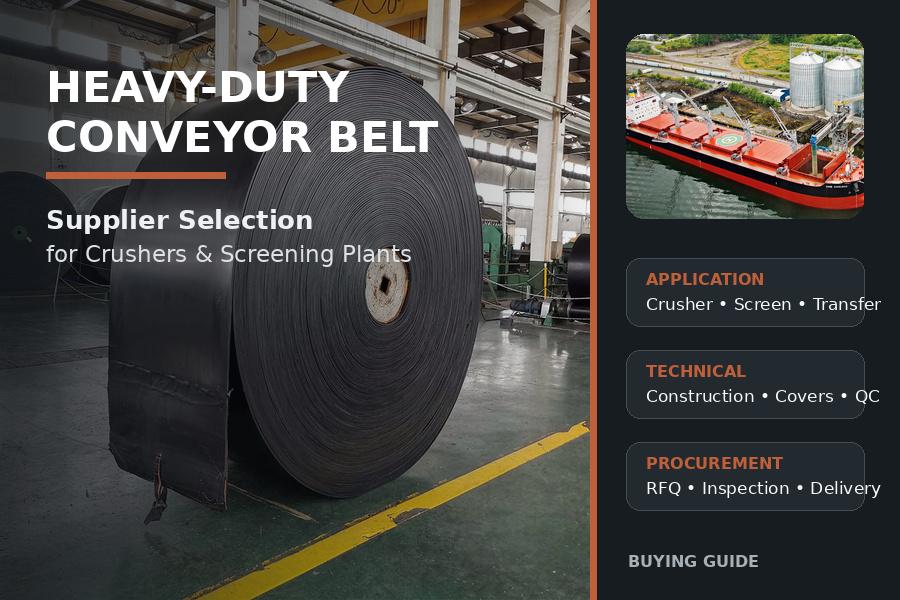
Heavy-Duty Rubber Conveyor Belt Supplier Selection for Crushers and Screening Plants
Selecting a heavy-duty conveyor belt supplier for a quarry or crushing plant requires more than comparing belt prices. This guide explains how EPC contractors and procurement teams can evaluate operating conditions, belt construction, technical submittals, applicable standards, manufacturing capability, QC evidence, commercial terms, and RFQ completeness. It also shows why crusher impact, abrasive material, conveyor geometry, cover performance, carcass selection, inspection documentation, and supplier deviations should be resolved before the final commercial comparison.
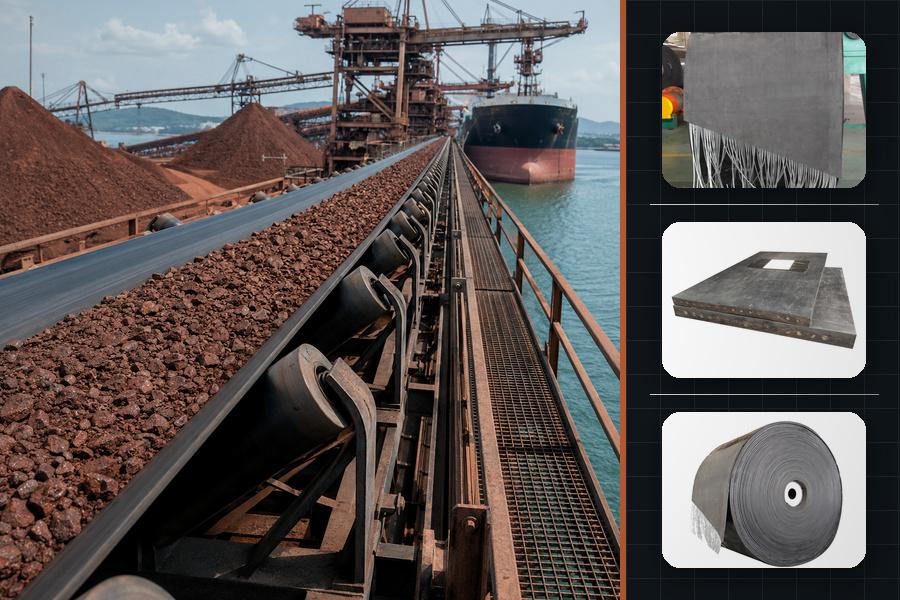
Steel Cord Conveyor Belt Manufacturer for Long-Distance Mining Projects: Buying Guide
Selecting a steel cord conveyor belt manufacturer for a long-distance mining project requires more than comparing ST ratings and prices. This buying guide explains how procurement teams can evaluate manufacturing capability, belt specifications, quality control, test documentation, splice planning, delivery capacity, and tender deviations. It also shows what technical data buyers should include in an RFQ so competing proposals can be compared on the same basis and purchasing risks can be identified before production and shipment.
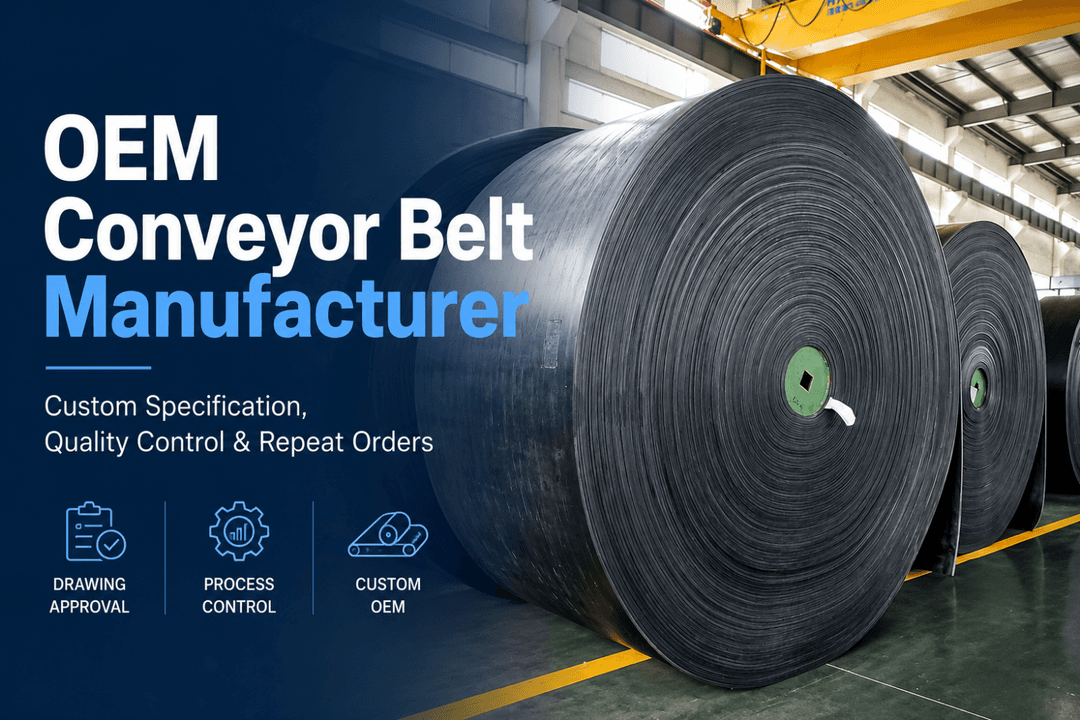
OEM Conveyor Belt Manufacturer: What Customization Capabilities Matter Before You Order
OEM conveyor belt quality begins before production. Confirm drawings, application data, belt construction, cover compound, samples, inspection, marking and packing so a customized belt can be reproduced across production batches.
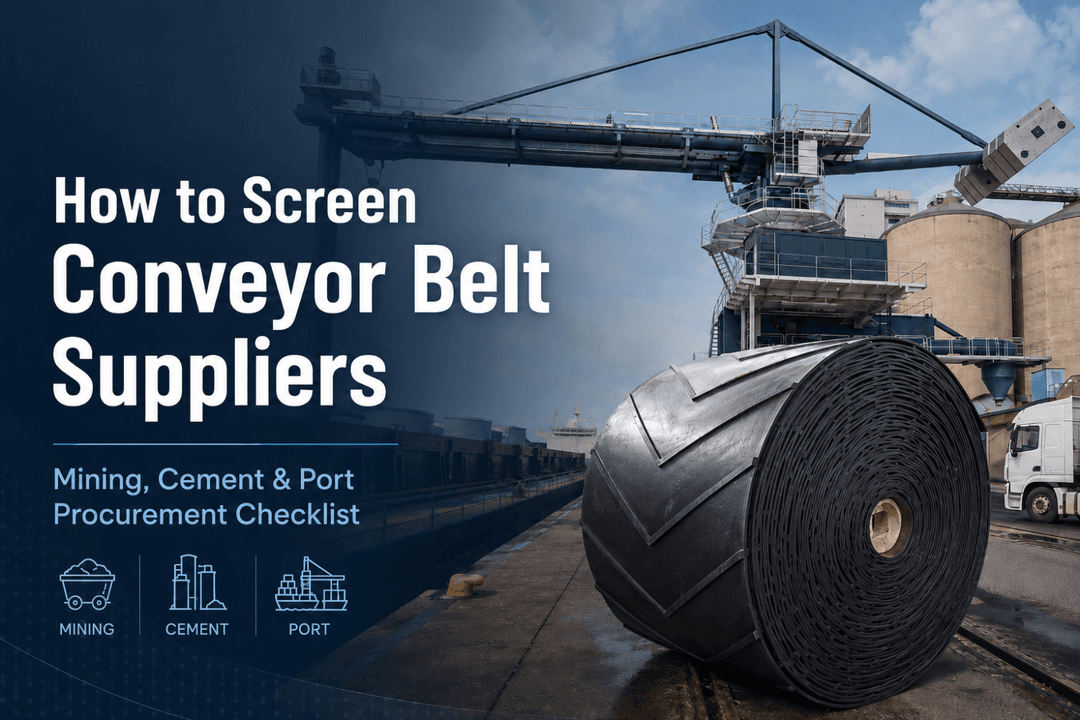
Industrial Conveyor Belt Supplier Checklist for Mining, Cement and Port Buyers
Mining, cement and port conveyors expose belts to different combinations of impact, abrasion, heat, dust, moisture and long operating hours. Use this supplier checklist to obtain comparable quotations and reduce procurement risk.
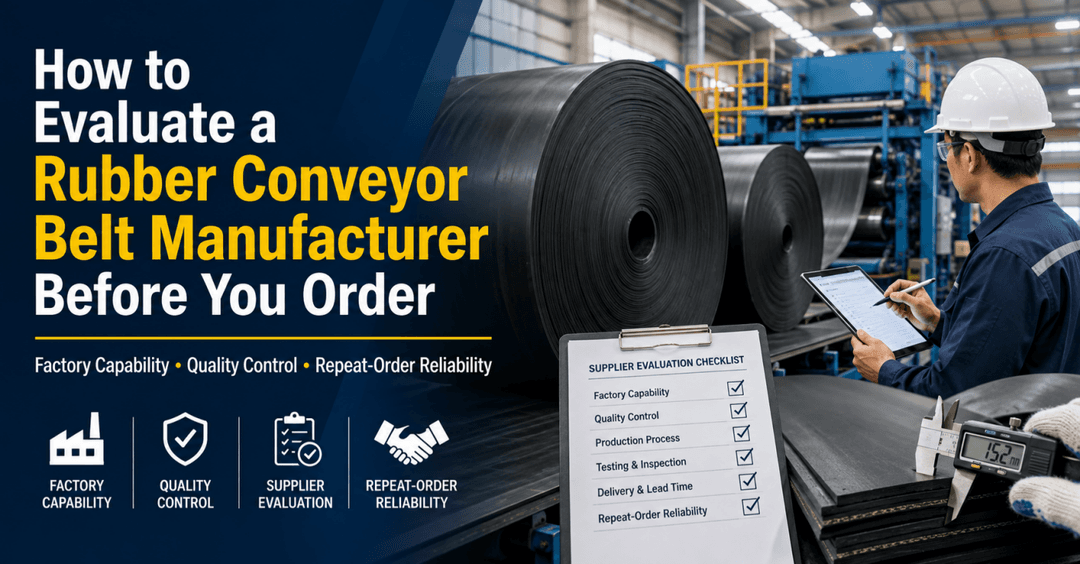
How to Evaluate a Rubber Conveyor Belt Manufacturer in China for Long-Term Supply
Choosing a rubber conveyor belt manufacturer for repeated imports requires more than a low quotation. This buyer guide explains how to check factory capability, belt construction, testing, documentation and delivery reliability before placing a long-term order.
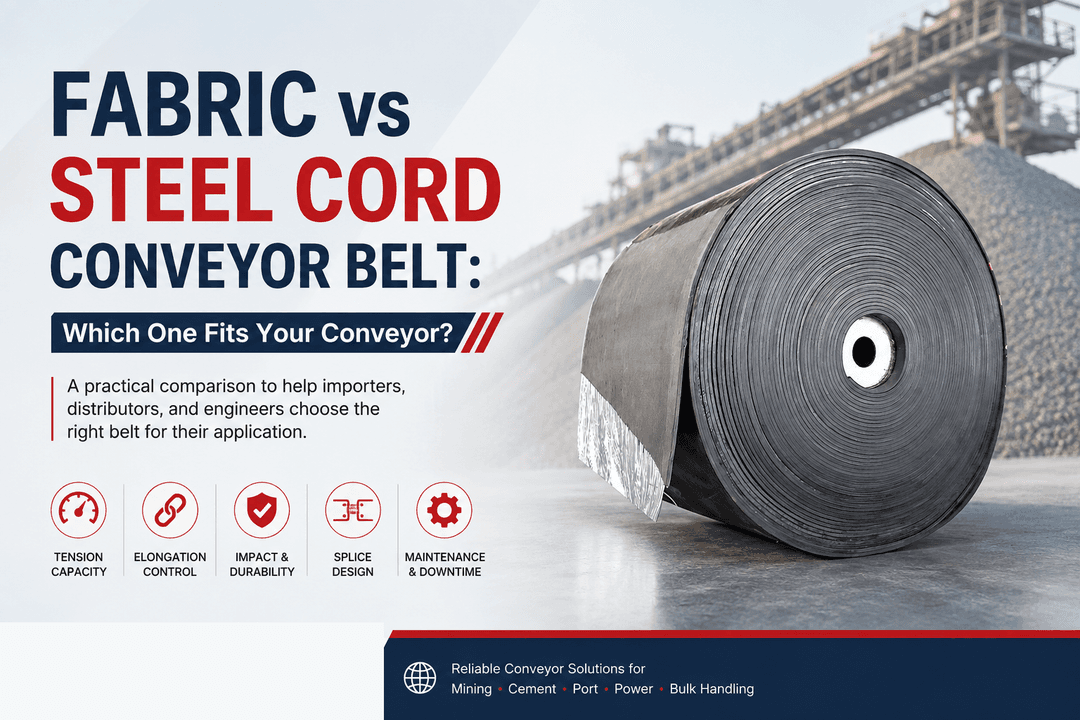
Fabric vs Steel Cord Conveyor Belt: Which One Fits Your Conveyor?
Fabric and steel cord conveyor belts solve different engineering problems. This buyer guide explains how to compare carcass construction, conveyor duty, splice requirements, pulley geometry, maintenance, and total procurement risk.
Explore more
We are committed to providing you with better products and services. Welcome to browse more content for details