Engineered belt solutions for demanding industries worldwide

Recent Posts
How to Choose Steel Conveyor Rollers for Heavy-Duty Systems

How to Choose Steel Conveyor Rollers for Heavy-Duty Systems

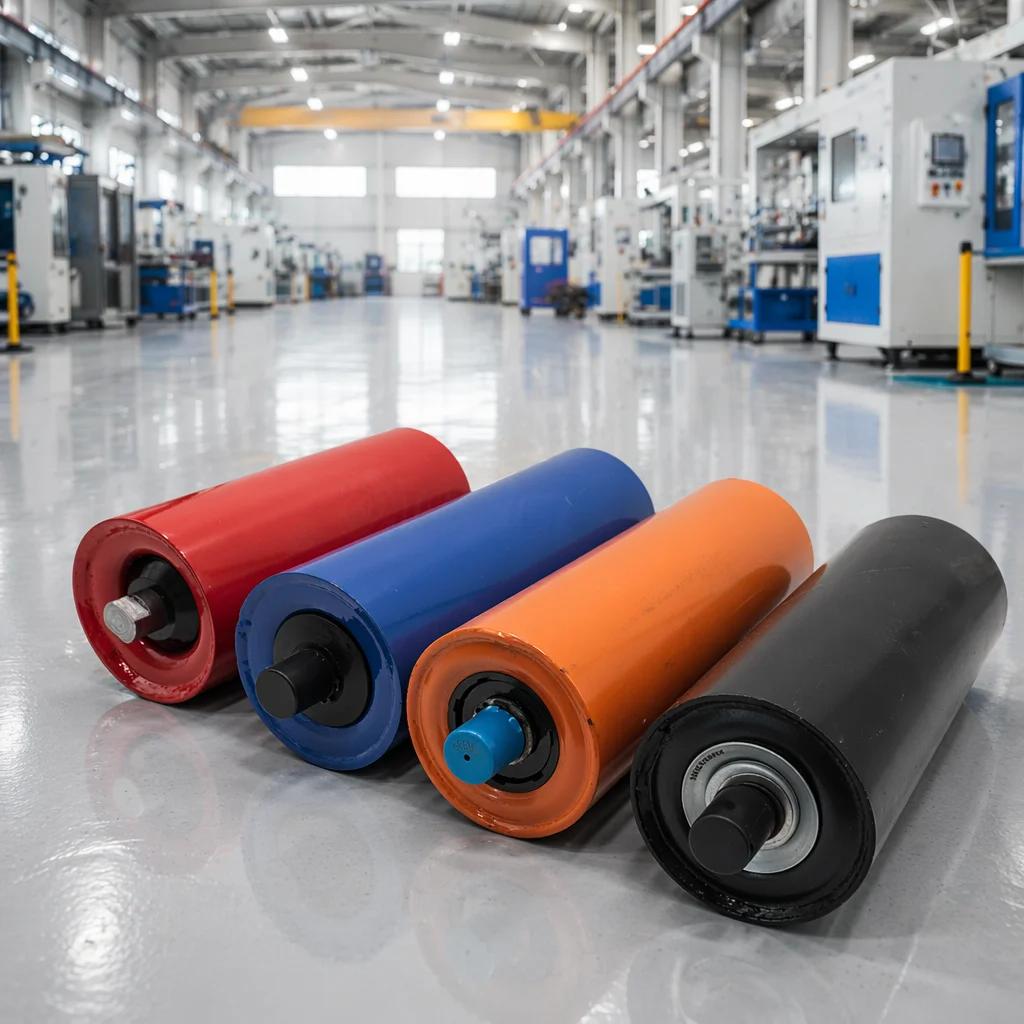
Steel conveyor rollers are easy to compare by diameter and length, but those two numbers do not define performance. In mining, quarrying, cement, port, and logistics systems, the correct roller must match the loaded belt, conveyor position, speed, contamination, frame geometry, and maintenance plan. This guide gives importers, distributors, engineers, and maintenance teams a practical method for specifying steel conveyor rollers without copying an incomplete old part number or selecting only by unit price. It explains what a conveyor roller must do, how to start with roller position and idler type, which construction details change performance, how to match the roller to the operating environment, and how to inspect the idler frame before ordering replacements. It also covers reading failure marks as selection evidence, preparing a technically comparable RFQ, confirming standards and documentation, planning spares and replacement work, and coordinating belt and roller selection. The article closes with a frequently asked questions section and a final selection checklist, plus related product and article links. Use the complete duty information with your RFQ so suppliers can quote on the same technical basis and you can compare quotations fairly.

How to Choose Steel Conveyor Rollers for Heavy-Duty Systems

How to Choose Steel Conveyor Rollers for Heavy-Duty Systems

Steel conveyor rollers are easy to compare by diameter and length, but those two numbers do not define performance. In mining, quarrying, cement, port, and logistics systems, the correct roller must match the loaded belt, conveyor position, speed, contamination, frame geometry, and maintenance plan. This guide gives importers, distributors, engineers, and maintenance teams a practical method for specifying steel conveyor rollers without copying an incomplete old part number or selecting only by unit price. It explains what a conveyor roller must do, how to start with roller position and idler type, which construction details change performance, how to match the roller to the operating environment, and how to inspect the idler frame before ordering replacements. It also covers reading failure marks as selection evidence, preparing a technically comparable RFQ, confirming standards and documentation, planning spares and replacement work, and coordinating belt and roller selection. The article closes with a frequently asked questions section and a final selection checklist, plus related product and article links. Use the complete duty information with your RFQ so suppliers can quote on the same technical basis and you can compare quotations fairly.

Read More

Explore more

We are committed to providing you with better products and services. Welcome to browse more content for details