

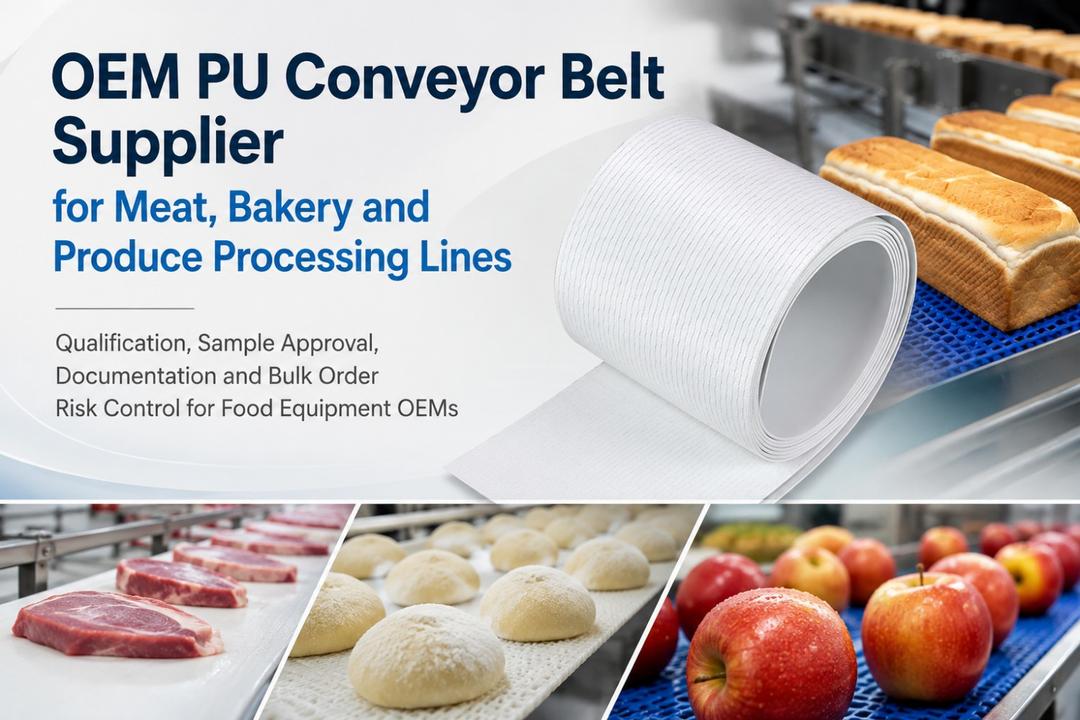
OEM PU Conveyor Belt Supplier for Meat, Bakery and Produce Processing Lines
Food equipment OEMs need more than a standard PU conveyor belt quotation. This guide explains how to qualify a PU conveyor belt supplier for meat, bakery, and produce processing lines by defining application data, food-contact requirements, hygienic design considerations, sample approval, OEM customization, production inspection, and change control. It also provides a practical RFQ framework to help engineering and purchasing teams reduce specification errors, batch inconsistency, documentation gaps, and repeat-order risk.
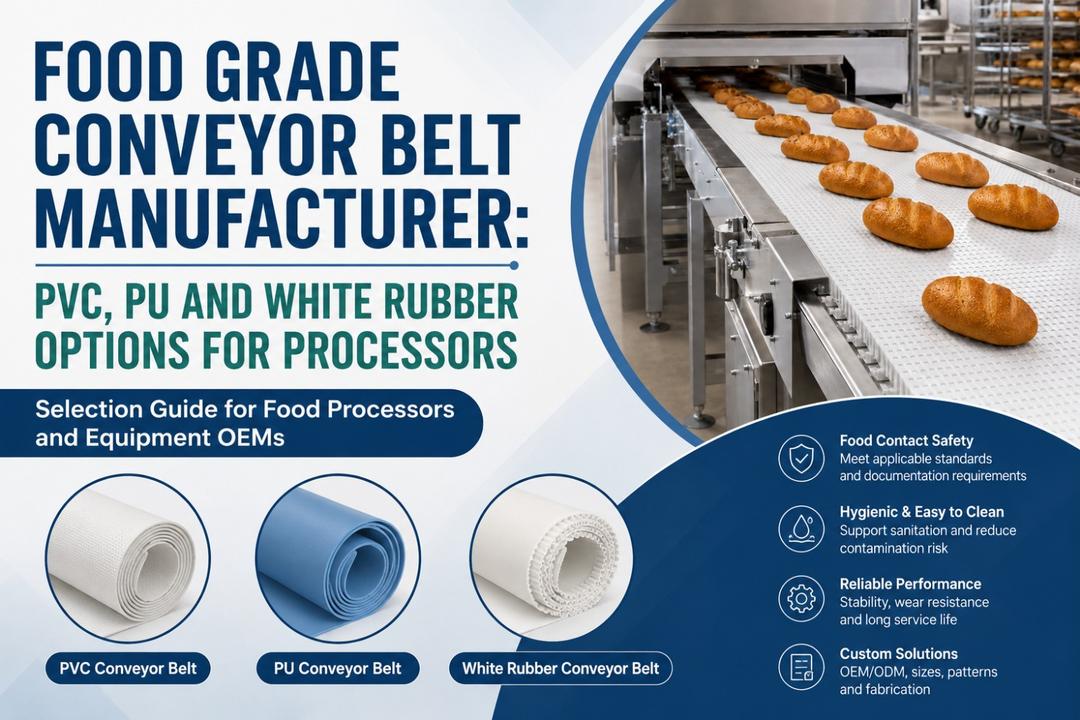
Food Grade Conveyor Belt Manufacturer: PVC, PU and White Rubber Options for Processors
Food processors and equipment OEMs need more than a white belt or a generic “food grade” claim. This guide explains how to qualify a food grade conveyor belt manufacturer, compare PVC, PU and white rubber options, verify food-contact documentation, evaluate customization and quality controls, and prepare a technically complete RFQ. It also shows buyers how to compare supplier quotations on the same specification so material, fabrication, documentation and commercial differences are visible before an order is placed.
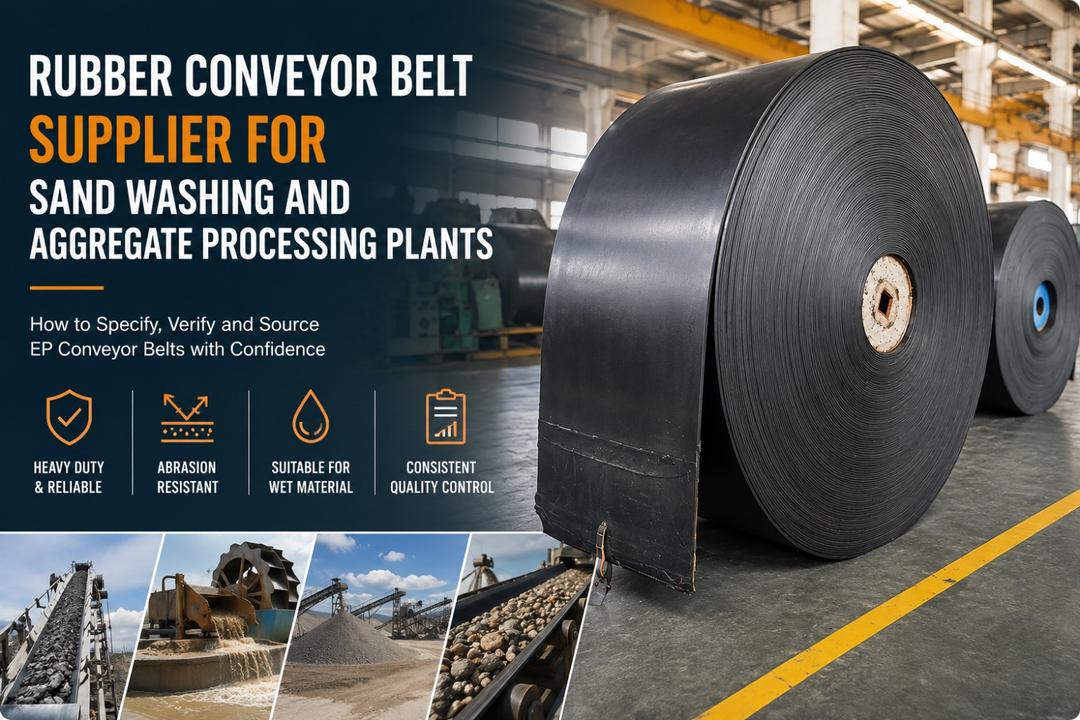
Rubber Conveyor Belt Supplier for Sand Washing and Aggregate Processing Plants
Buying conveyor belts for a sand washing or aggregate processing plant requires more than comparing EP ratings and price per meter. Wet sand, crushed stone, loading impact, abrasion, conveyor geometry, cover requirements, and quality documentation can all affect the correct specification. This guide shows aggregate plant buyers how to prepare a stronger RFQ, compare technically equivalent quotations, verify factory and QC capabilities, investigate existing belt failures, and reduce purchasing risk before placing a bulk rubber conveyor belt order.
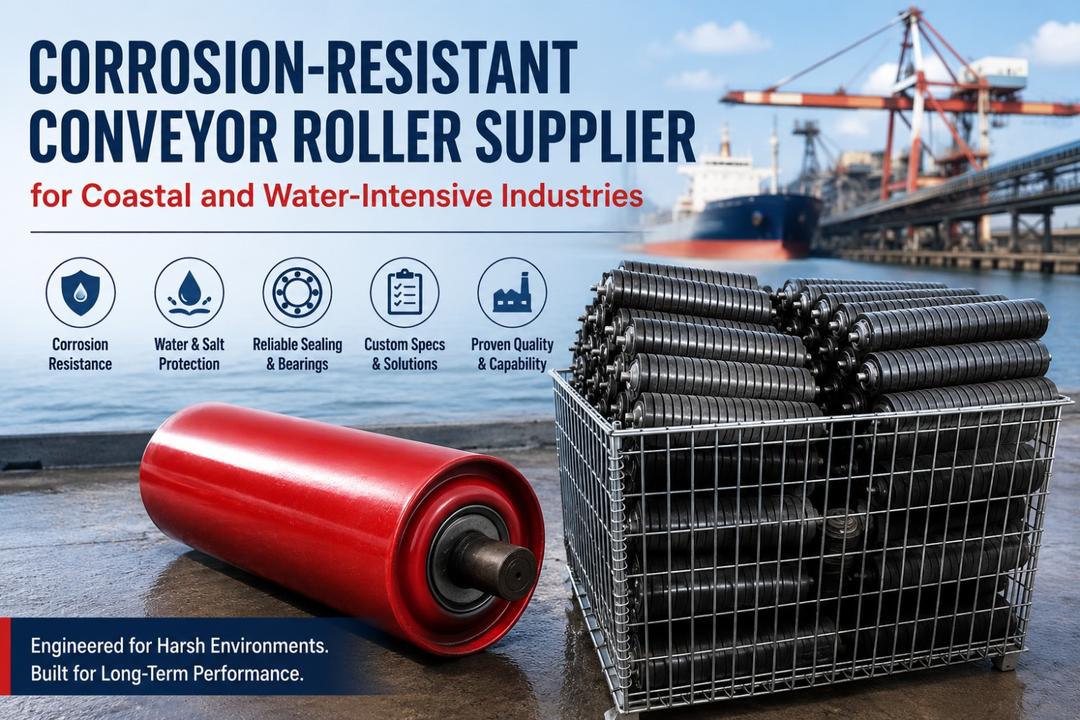
Corrosion-Resistant Conveyor Roller Supplier for Coastal and Water-Intensive Industries
Coastal ports, terminals, washdown plants, and water-intensive facilities expose conveyor rollers to moisture, salt, contamination, and corrosion risks that a standard dimensional specification may not address. This guide explains how port and plant buyers can evaluate roller materials, corrosion protection, bearing sealing, mechanical compatibility, supplier documentation, and proof of capability. It also provides practical RFQ requirements and supplier-qualification questions to help procurement teams compare technically equivalent quotations and reduce purchasing and replacement risk.
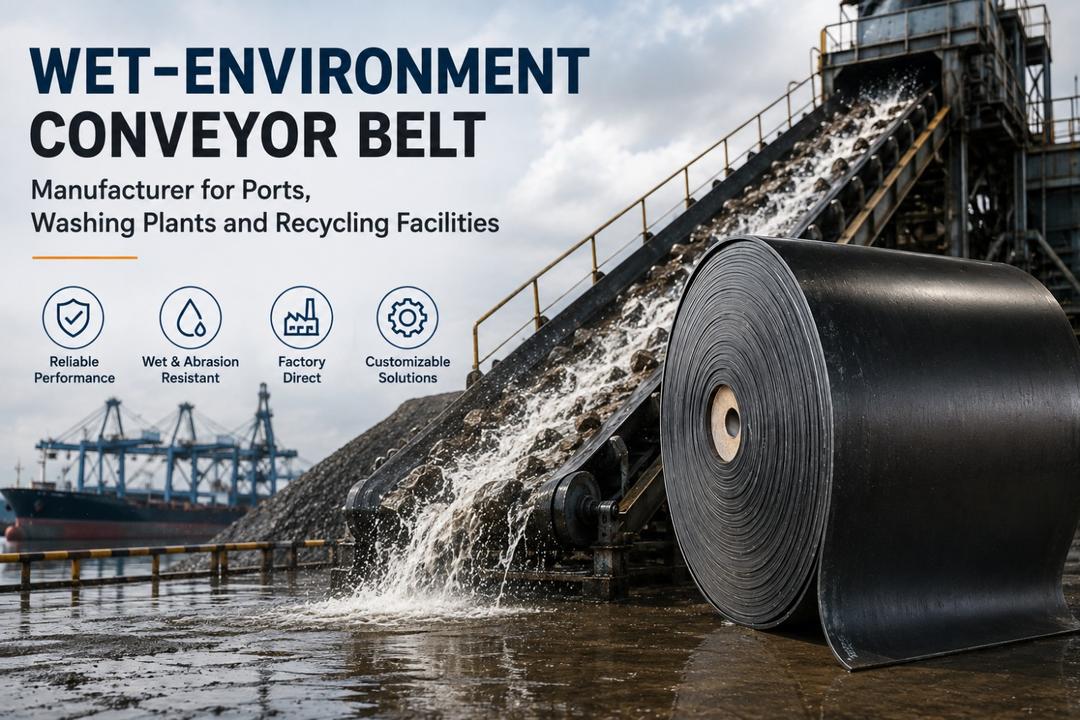
Wet-Environment Conveyor Belt Manufacturer for Ports, Washing Plants and Recycling Facilities
Wet conveyor projects in ports, washing plants and recycling facilities require more than a generic water-resistant belt. This buyer-focused guide explains how moisture, abrasive fines, carryback, contamination and conveyor conditions affect specification decisions. It also shows procurement teams what to include in an RFQ and BOM, how to verify factory capability and quality evidence, how to plan batch deliveries and spare belts, and how to compare conveyor belt suppliers before approving a project order.
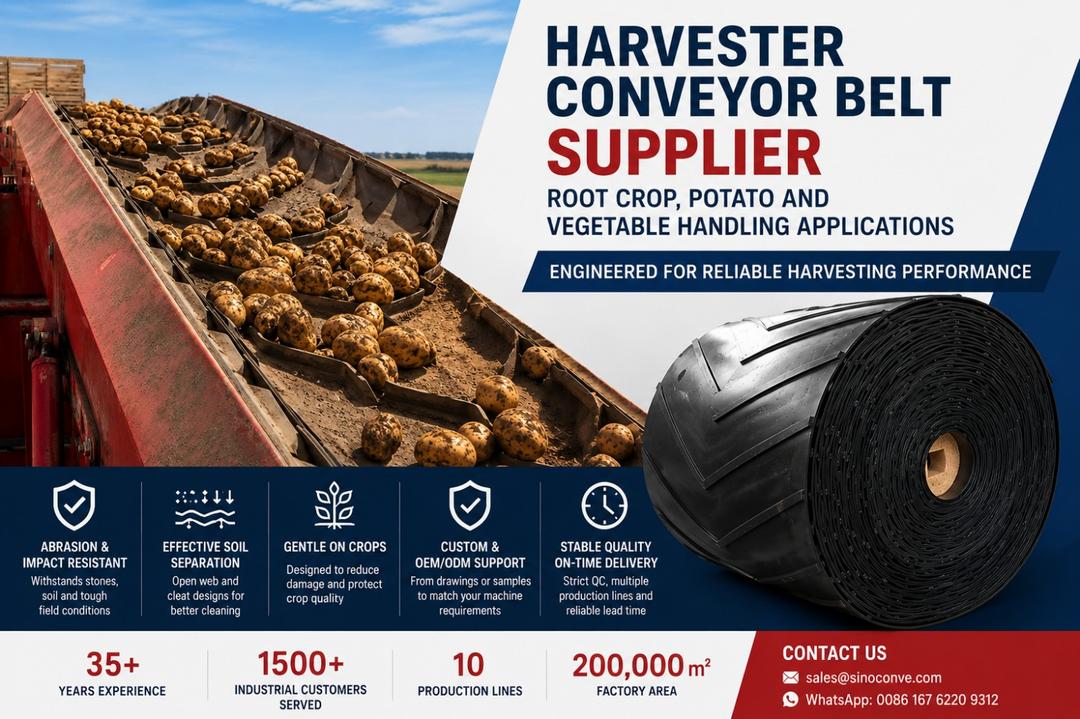
Harvester Conveyor Belt Supplier: Root Crop, Potato and Vegetable Handling Applications
Agricultural OEMs sourcing harvester conveyor belts need to evaluate more than belt width, length and unit price. Root crop, potato and vegetable handling can involve soil separation, crop damage, stones, mud, machine interfaces and application-specific belt or web geometry. This guide explains what to include in an RFQ, how to control sample approval, what proof of manufacturing capability to request, and how to compare suppliers before moving from prototype development to repeat production orders.
Explore more
We are committed to providing you with better products and services. Welcome to browse more content for details