

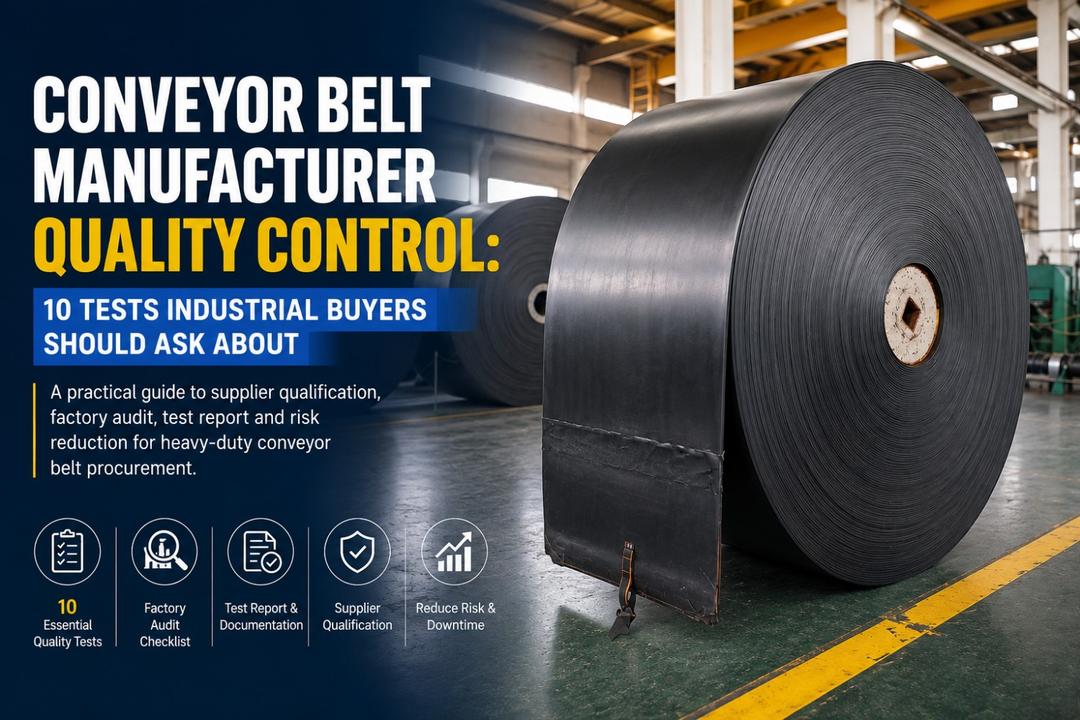
Conveyor Belt Manufacturer Quality Control: 10 Tests Industrial Buyers Should Ask About
Conveyor belt quality cannot be verified by appearance, supplier claims, or a certificate alone. This guide gives industrial procurement teams 10 practical quality-control checks to use when evaluating a conveyor belt manufacturer, from incoming materials and reinforcement testing to adhesion, abrasion, traceability, and final inspection. It also explains how to audit factory controls, distinguish certificates from product test evidence, define an RFQ inspection scope, and compare suppliers against the same technical and commercial requirements.
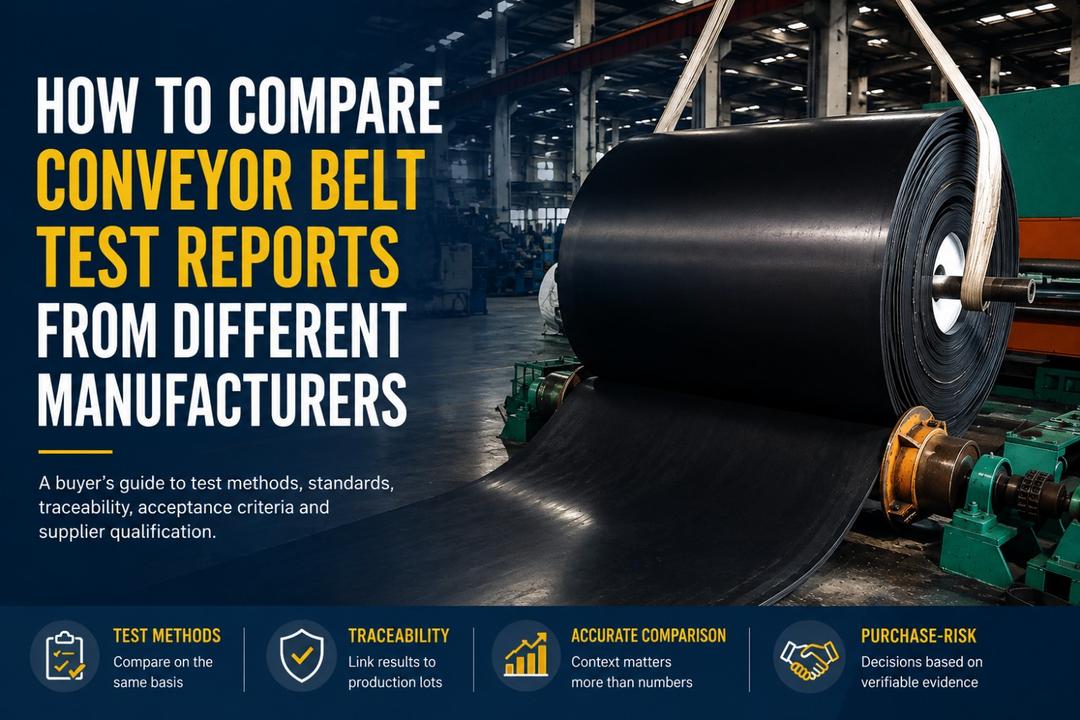
How to Compare Conveyor Belt Test Reports from Different Manufacturers
Conveyor belt test reports are useful only when buyers can compare them on the same technical basis. This guide shows Quality and Procurement teams how to evaluate test methods, standard editions, sample and batch traceability, tensile and elongation data, adhesion, abrasion results, acceptance criteria and third-party reports. It also explains how to connect test evidence with factory audits, supplier qualification and RFQ requirements so that purchasing decisions are based on verifiable production capability rather than isolated laboratory numbers.
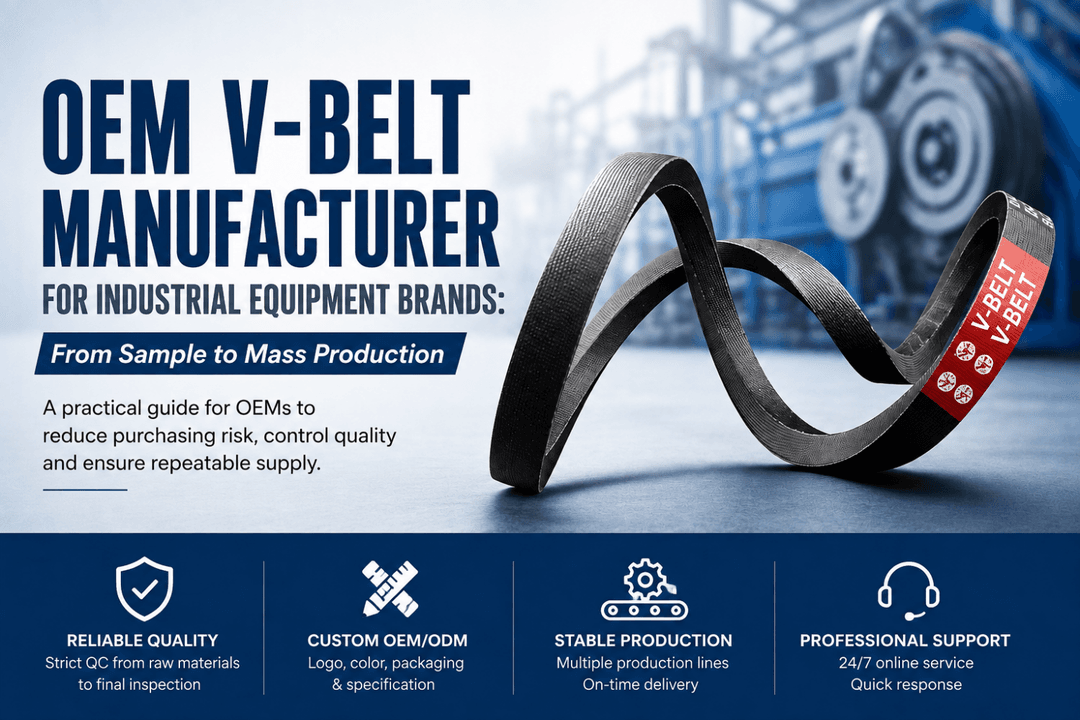
OEM V-Belt Manufacturer for Industrial Equipment Brands: From Sample to Mass Production
Industrial equipment OEMs need more than a V-belt that passes an initial sample test. This guide explains how to qualify an OEM V-belt manufacturer from specification review and sample approval through mass-production control, quality documentation, private labeling and repeat orders. It also shows purchasing teams what to include in an RFQ, how to separate product verification from machine validation, and which supplier controls help reduce specification, batch-consistency and commercial risks.
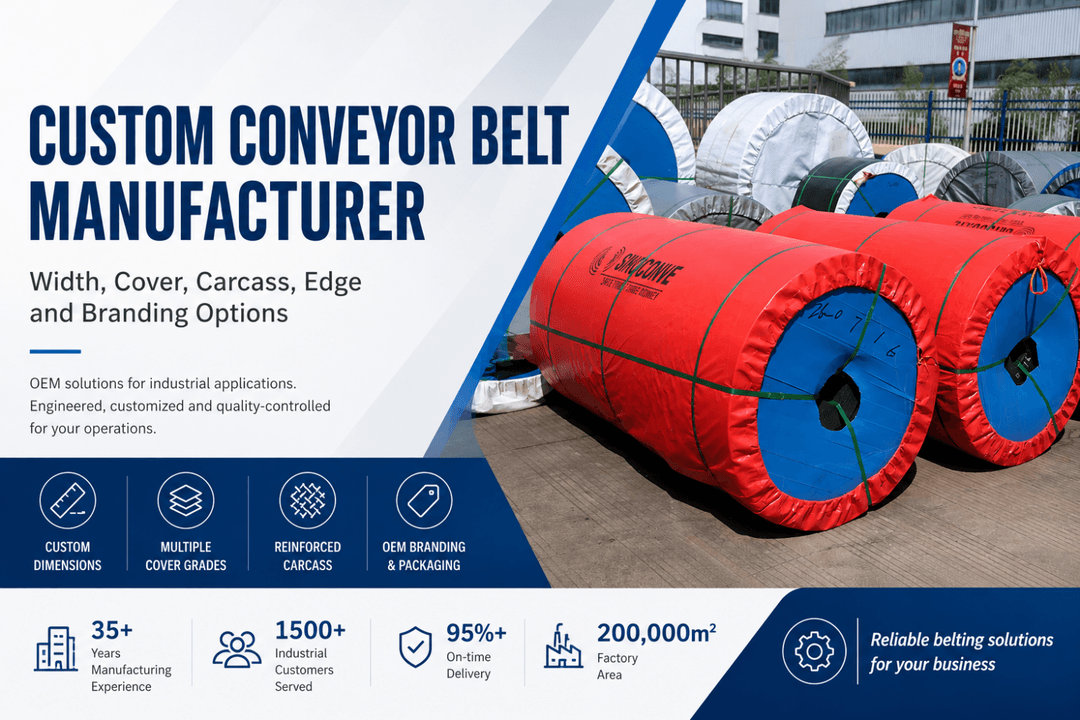
Custom Conveyor Belt Manufacturer: Width, Cover, Carcass, Edge and Branding Options
Custom conveyor belt sourcing involves more than choosing width or adding a private-label logo. This guide shows OEM buyers, distributors and industrial importers how to evaluate width, cover, carcass, edge and branding options while controlling drawings, samples, inspection and repeat production. It also explains what evidence to request from a custom conveyor belt manufacturer, how to reduce specification ambiguity before mass production, and what technical and commercial information to include in a comparable RFQ.
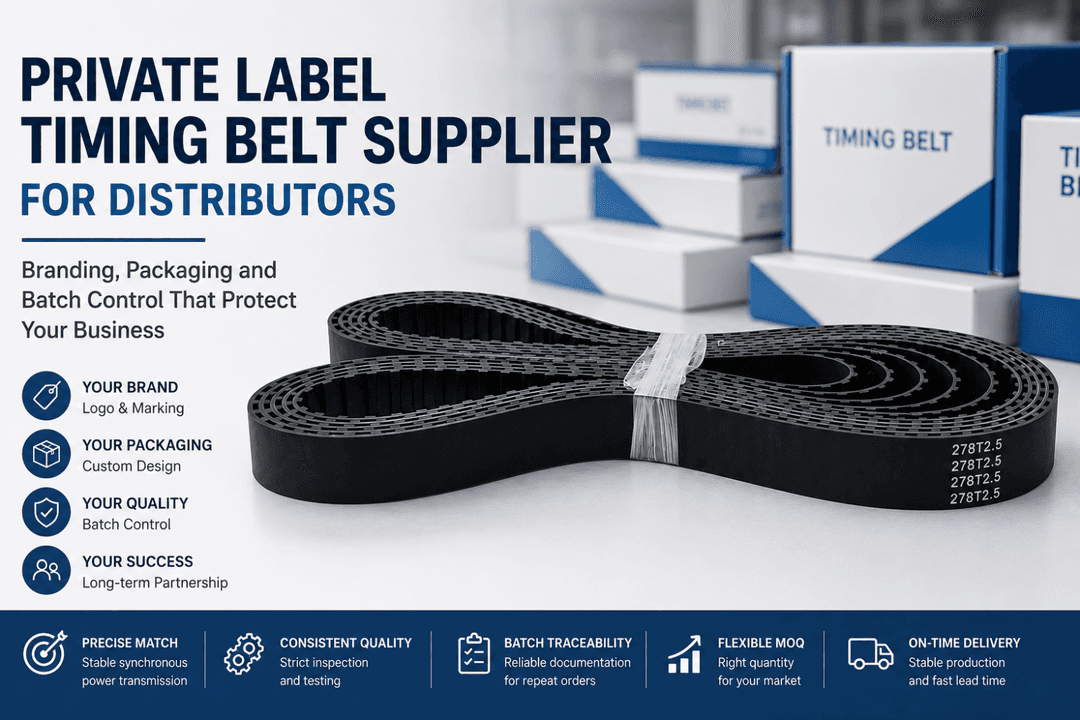
Private Label Timing Belt Supplier for Distributors: Branding, Packaging and Batch Control
Private-label timing belt sourcing requires more than adding a distributor logo to a standard product. This guide explains how distributors and wholesalers can qualify a timing belt supplier by reviewing technical compatibility, SKU and batch control, branding approval, packaging, quality documentation, MOQ structure and stock planning. It also provides a practical RFQ framework for controlling repeat orders, reducing identification errors and building a private-label timing belt range around real market demand rather than excessive inventory.
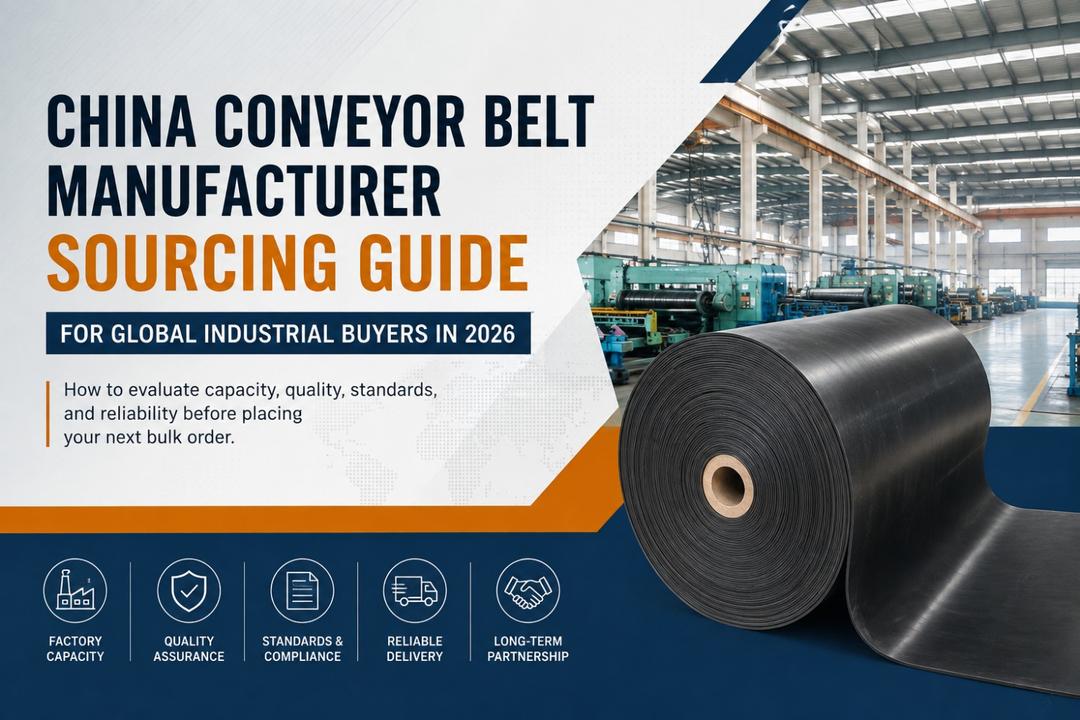
China Conveyor Belt Manufacturer Sourcing Guide for Global Industrial Buyers in 2026
Sourcing conveyor belts from China requires more than comparing factory prices. This guide helps global importers, distributors, EPC contractors and procurement teams qualify a China conveyor belt manufacturer through technical RFQs, factory capability, quality control, test documentation, customization, packaging and delivery planning. It also explains how to compare EP and steel cord belt suppliers, identify sourcing red flags, audit manufacturing evidence and prepare a technically consistent RFQ before negotiating a bulk order.
Explore more
We are committed to providing you with better products and services. Welcome to browse more content for details