
Steel Conveyor Belt Roller: What Buyers Should Verify Before Choosing One
A steel conveyor belt roller can run for months without attracting attention. That changes quickly when rotation becomes rough, a bearing begins to seize, or one section of the belt starts tracking differently. What looks like a small component problem can then become a belt wear, power, maintenance, or downtime problem.
For this reason, specifying an industrial conveyor belt roller should go beyond tube diameter and purchase price. Bearing protection, rotational resistance, shaft support, shell construction, installation position, load conditions, and the surrounding environment all affect how the roller performs in service.
The useful purchasing question is not simply, “Is this a heavy duty conveyor roller?” It is: Does its construction match the load, contamination, speed, impact, and maintenance conditions of the actual conveyor?
For a steel conveyor belt roller, start by verifying the roller position and dimensions, then check load requirements, bearing and sealing design, rotational resistance, shaft configuration, shell construction, operating environment, and installation compatibility. A roller that fits the frame dimensionally can still be a poor choice if its bearing protection or duty rating does not match the application.

01Bearing and Seal Design Deserve Attention First
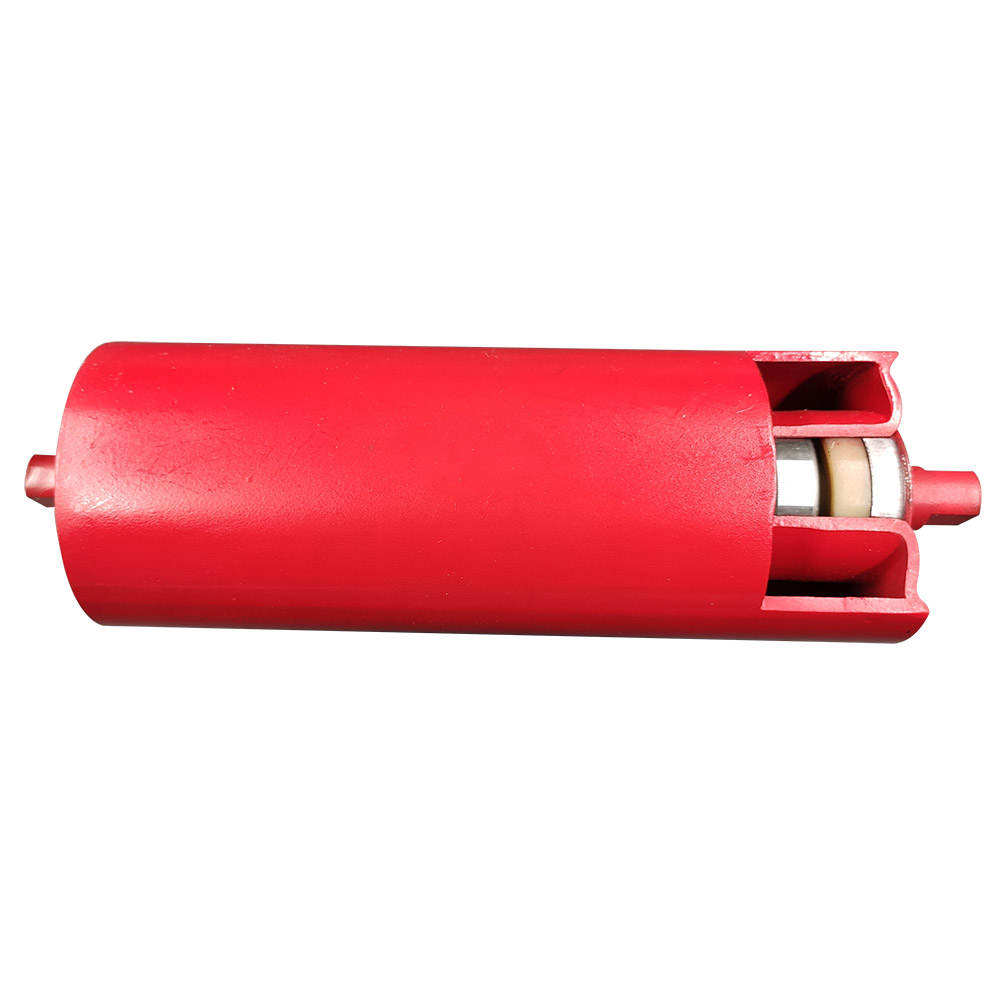
The bearing is one of the most important working elements inside a conveyor roller. It has to support radial loading while allowing the shell to rotate with controlled resistance. In a clean indoor conveyor, this may be relatively straightforward. In a quarry, cement plant, mine, port, or other dusty bulk-handling environment, contamination changes the problem.
Fine particles, moisture, and other contaminants can reach the bearing area if the sealing arrangement is unsuitable for the operating environment. Once contamination affects the lubricant or bearing surfaces, rolling resistance can increase and bearing damage can progress long before the roller looks obviously defective from the outside.
This is why buyers should not evaluate a roller by the steel shell alone. Ask how the bearing area is protected and what sealing arrangement is used. For dusty or wet applications, contamination exclusion is part of the specification, not an optional detail.
If a supplier quotation only lists roller diameter, length, and price, ask for more information. Bearing type, sealing structure, shaft dimensions, mounting arrangement, intended load, and working environment can be just as important to compatibility and service performance.
02Load Capacity Is More Than a Number on a Specification Sheet
Conveyor loading is rarely perfectly uniform. Bulk material may enter the belt unevenly, larger lumps can create localized forces, and loading zones may expose the belt and supporting rollers to repeated impact. The roller therefore has to be considered as part of the complete supporting system rather than as an isolated cylindrical component.
Shaft diameter and support, roller shell construction, bearing capacity, roller spacing, belt width, material load, and installation position all influence the actual duty imposed on an idler or roller.
Deflection and poor support can also affect how the belt contacts the rollers. That matters because roller problems are often noticed indirectly: abnormal noise, vibration, uneven rotation, tracking changes, or localized belt wear may appear before a complete mechanical failure.
2.1 Do Not Confuse Carrying, Return, and Impact Duties
A common sourcing mistake is treating every belt conveyor roller as interchangeable.
Carrying rollers support the loaded belt. Return rollers support the empty return strand. Impact rollers are normally used around loading or transfer zones where the conveyor has to manage repeated material impact. These positions do not impose identical requirements.
If the conveyor handles heavy lumps or has a significant drop height at the loading point, simply specifying a thicker steel roller may not address the real problem. The buyer should first determine whether the location requires an impact-specific arrangement.
For a broader comparison of roller positions and selection factors, SINOCONVE's conveyor idler roller guide explains why installed position should be confirmed before comparing individual roller designs.
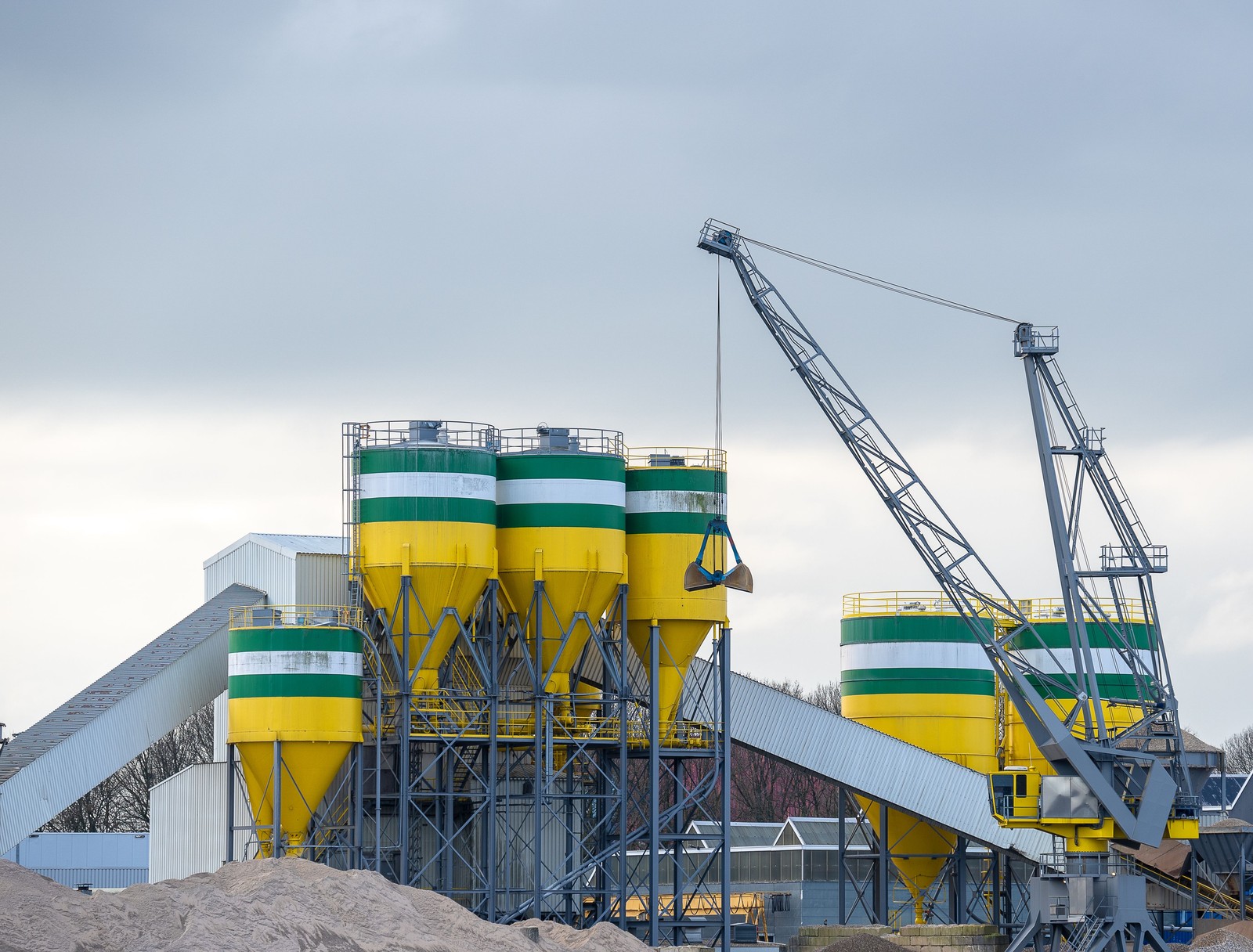
Long conveyor lines in aggregate, cement and port duty put every roller position under a different combination of load, dust and impact.
03Shell and Shaft Construction Must Match the Actual Duty
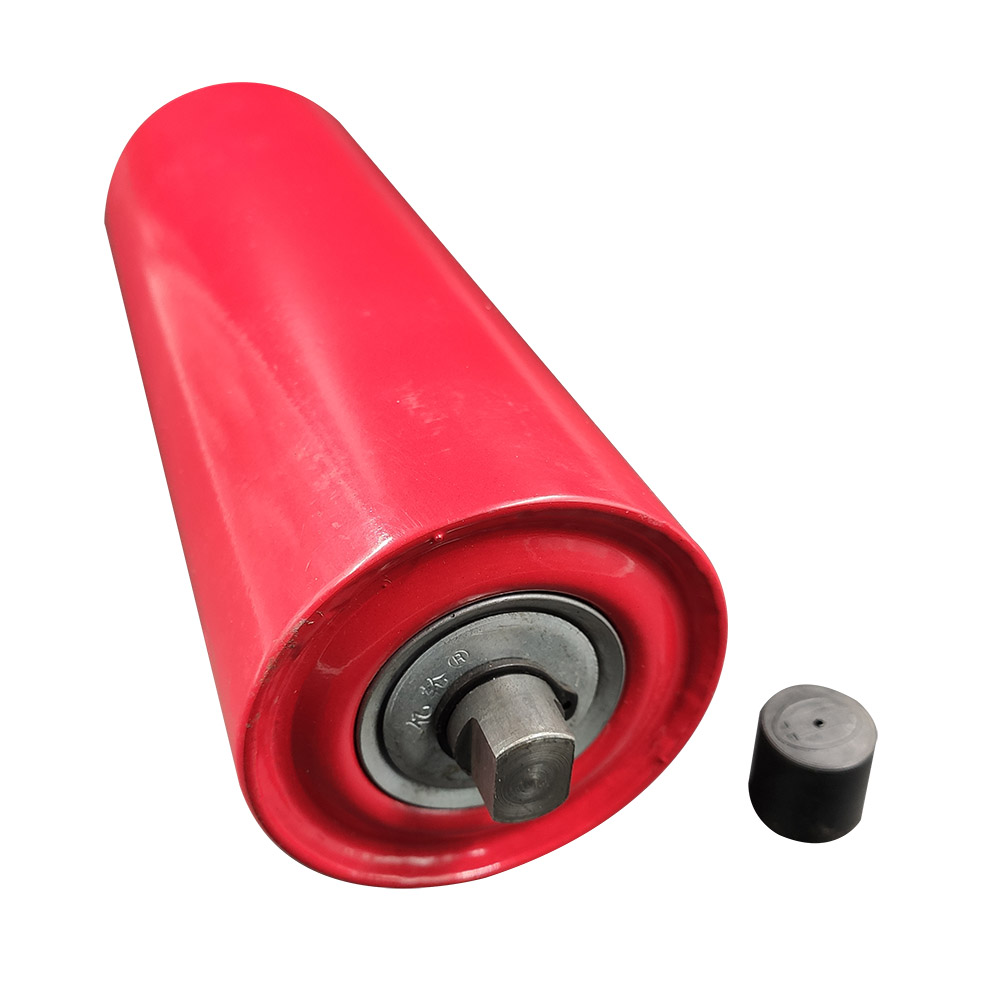
Steel is widely used for industrial conveyor rollers because it can provide the stiffness and mechanical strength required in demanding material-handling systems. But “steel roller” by itself is not a complete specification.
Shell diameter and wall construction, shaft diameter, bearing arrangement, overall roller length, face length, and shaft-end configuration all need to match the conveyor design. Increasing wall thickness or shaft size without reference to the conveyor load and geometry is not automatically better; unnecessary mass can add cost and rotational inertia without solving the actual failure mechanism.
For replacement procurement, dimensional compatibility is especially important. A roller that is close to the original size is not necessarily interchangeable. Buyers should confirm mounting dimensions and shaft-end details against the existing frame or approved drawing before ordering.
| What to Verify | Why It Matters | What the Buyer Should Provide |
|---|---|---|
| Roller dimensions | Determines frame and belt-support compatibility | Drawing or existing roller dimensions |
| Shaft configuration | Affects mounting, support, and replacement fit | Shaft diameter, end dimensions, and mounting method |
| Bearing and sealing | Influences rotation and protection against contamination | Dust, water, washdown, temperature, and duty conditions |
| Roller position | Carrying, return, and impact locations have different duties | Installation position and conveyor layout |
| Load conditions | Influences bearing, shaft, and shell requirements | Material, capacity, belt width, speed, and impact conditions |
04Low Rotational Resistance Is a System Issue, Not Just an Efficiency Claim
Every support roller contributes some resistance to belt movement. Bearing behavior, seals, lubrication, roller condition, alignment, speed, temperature, and loading can all influence that resistance.
On a short conveyor, the effect of one poor roller may appear minor. Across a long conveyor with many idler sets, however, unnecessary resistance accumulates. A damaged or partially seized roller can also create localized belt friction and wear rather than simply increasing drive demand.
This is why “energy-efficient roller” should not be accepted as a marketing label without supporting information. Buyers evaluating long or continuously operated conveyors should ask how rotational resistance is controlled and whether the proposed roller design is appropriate for the intended speed, load, and environment.
During maintenance, rollers that become unusually noisy, difficult to rotate, hot, or visibly damaged deserve investigation. Replacing the roller may solve the immediate symptom, but repeated failures in the same conveyor section can indicate a broader issue involving contamination, alignment, loading, mounting, or roller selection.
05Environment Changes the Roller Specification
The same steel conveyor belt roller should not automatically be specified for every plant. The surrounding environment changes both the failure risks and the questions a buyer should ask.
5.1 Mining, Quarrying, and Aggregate Handling
Mining and aggregate conveyors can combine heavy bulk material, abrasive dust, shock loading, long operating periods, and difficult maintenance access. In these conditions, bearing protection and mechanical construction become especially important.
At transfer points, buyers should also distinguish normal carrying rollers from impact-duty components. If premature roller failure is concentrated around a loading zone, investigate the impact condition rather than repeatedly replacing the same general-purpose component.
5.2 Cement and Other Dust-Intensive Plants
Fine airborne material creates a different challenge. Dust can accumulate around roller ends and bearing housings, making seal performance and inspection particularly relevant. Maintenance teams should pay attention to changes in rotation, noise, and localized belt contact rather than waiting for a roller to seize completely.
5.3 Ports and Outdoor Bulk Handling
Outdoor and coastal installations add moisture and corrosion exposure. Buyers should therefore discuss the actual environment with the supplier and verify appropriate material and surface-protection requirements rather than assuming a generic painted steel finish will suit every location.
5.4 Manufacturing and Logistics
For indoor manufacturing and logistics systems, the priorities may shift toward consistent rotation, dimensional accuracy, noise, maintenance access, and compatibility with densely installed conveyor sections. These applications can still demand high reliability, but their contamination and impact conditions may be very different from a mine or quarry.
06How to Diagnose a Roller Problem Before Reordering
Replacing a failed roller with an identical unit makes sense only when the previous roller was correctly specified and the failure was an isolated event. When failures repeat, procurement and maintenance teams should identify the likely mechanism first.
| Observed Problem | Possible Areas to Investigate | What to Check Before Reordering |
|---|---|---|
| Roller becomes difficult to rotate | Bearing condition, contamination, sealing, lubrication | Environment and bearing/seal specification |
| Repeated failure at a loading point | Impact, material drop, overload, wrong roller type | Loading-zone arrangement and impact requirements |
| Abnormal noise or vibration | Bearing damage, mounting, alignment, shell condition | Roller installation and dimensional compatibility |
| Localized belt wear near a roller | Seized roller, alignment, damaged shell, abnormal contact | Roller rotation plus surrounding idler alignment |
| Short life in wet or dusty service | Contaminant ingress or unsuitable environmental specification | Seal arrangement and actual site conditions |
SINOCONVE's conveyor roller selection guide provides additional checks for buyers comparing roller construction and application conditions.
07What Should Be Included in a Steel Conveyor Roller RFQ?
A useful roller quotation depends on the quality of the information supplied. Sending only “steel conveyor roller” and a required quantity forces the supplier to make assumptions — exactly what a technical RFQ should avoid.
For a replacement roller, provide the existing drawing if available. If no drawing exists, photographs and measured dimensions can help establish the starting point. For a new conveyor, the supplier should receive enough system information to evaluate the roller duty rather than simply match an outside diameter.
- Roller position: carrying, return, impact, or another specific location.
- Dimensions: roller diameter, face length, overall length, shaft diameter, and shaft-end configuration.
- Belt information: belt width and relevant conveyor layout details.
- Conveyed material: material type and relevant characteristics such as dust, moisture, abrasiveness, or lump impact.
- Operating conditions: conveyor speed, capacity or load information, operating hours, and installation environment.
- Problem history: photos and observations if the RFQ is intended to solve repeated roller failures.
- Required documentation: drawings, inspection documents, test requirements, or applicable project specifications.
- Commercial information: required quantity and delivery destination.
Buyers who need to review the available product category can start with SINOCONVE's conveyor roller page or review the conveyor roller catalog entry before preparing the RFQ.
08How to Compare Roller Suppliers Beyond Unit Price
Two steel rollers with similar external dimensions can represent very different purchasing risks. Unit price therefore needs to be compared together with technical compatibility, quality control, documentation, customization capability, and delivery requirements.
For SINOCONVE specifically, the company information provided for sourcing evaluation confirms that Ningbo Sinoconve Belt Co., Ltd. operates a conveyor-belt manufacturing facility established in 1988 and supports conveyor belts, transmission belts, and conveyor rollers for industrial markets. Its supplied company information also identifies quality inspection from incoming materials through production and final pre-shipment inspection, with product test reports available for customers.
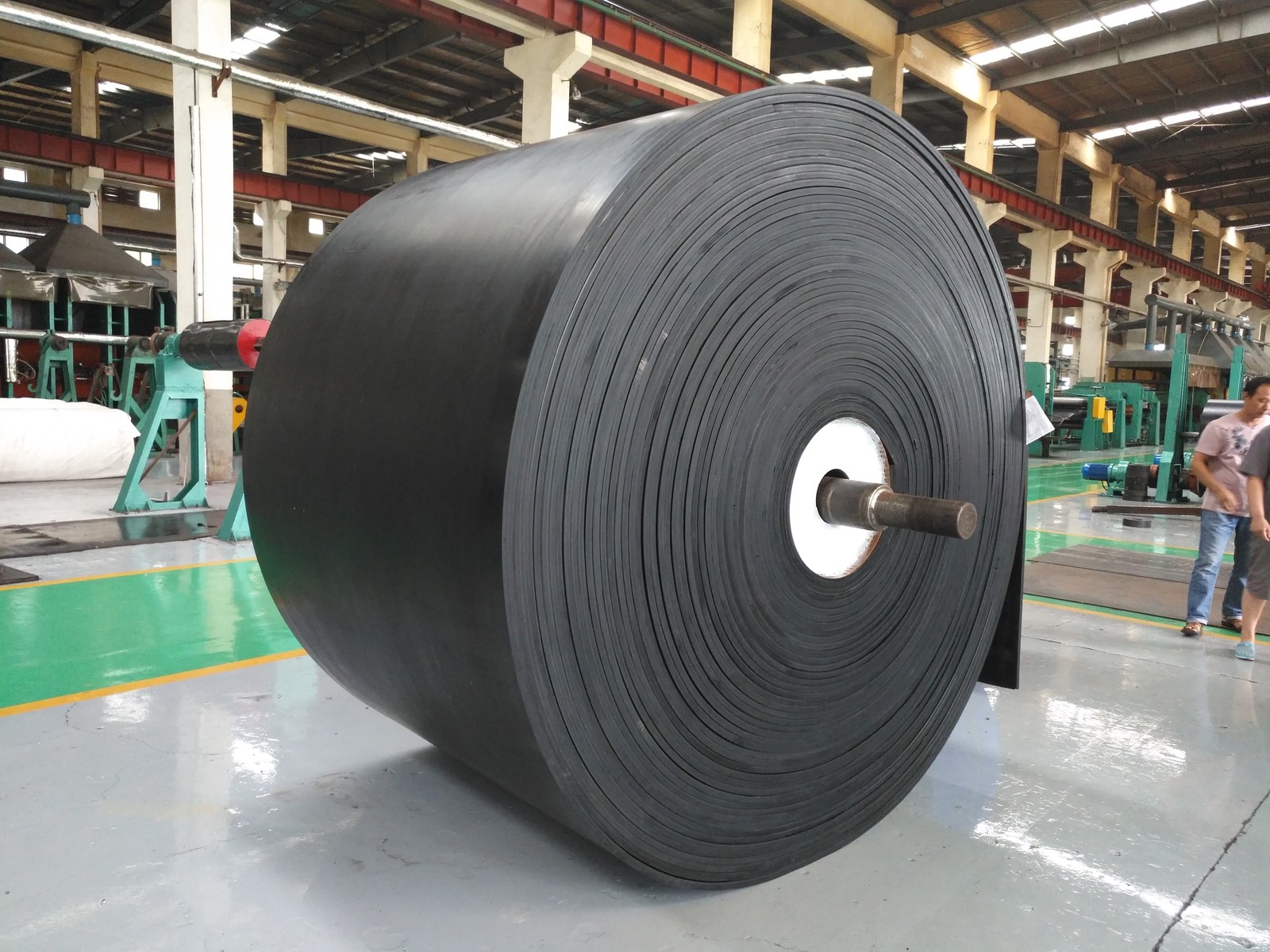
Buying rollers from a manufacturer that also produces the belting they support simplifies dimensional checks, spares and lead-time planning.
For conveyor belts, SINOCONVE states that production can be arranged according to different market requirements with reference to applicable DIN, RMA, ISO, and other requested requirements. Buyers should still identify the exact standard, test, or documentation required for their individual order rather than treating a general standards statement as proof that every product automatically meets every project specification.
Do not compare two roller quotations until you know they are quoting the same duty. Dimensions, bearing and seal construction, installation position, operating environment, documentation, and quantity should be aligned before price becomes a meaningful comparison.
09Frequently Asked Questions About Steel Conveyor Belt Rollers
What is the most important part of a conveyor roller?
There is no single component that determines performance in every application, but bearing condition and protection are critical because the roller must rotate reliably under load. The sealing arrangement, shaft support, shell construction, mounting, and operating environment also affect performance.
Is a thicker steel roller always better?
No. Shell construction should match the required load and duty. More material does not automatically solve problems caused by bearing contamination, incorrect mounting, poor alignment, or an unsuitable roller type.
Can a standard steel roller be used at an impact loading point?
Not automatically. Where bulk material drops onto the belt and creates significant impact, the loading-zone design and impact roller requirements should be evaluated separately.
Why do conveyor rollers become difficult to rotate?
Possible causes include bearing damage, contamination, lubrication problems, seal issues, misalignment, or mechanical damage. The actual cause should be investigated before assuming that all failures are due to roller quality alone.
Can roller condition affect conveyor power demand?
Yes. Conveyor idlers contribute rotational resistance to the system. Bearing, seal, lubrication, alignment, temperature, speed, load, and roller condition can all influence resistance. The significance depends on the conveyor design and operating conditions.
What information should I send when requesting replacement rollers?
Send the existing drawing if possible. Otherwise provide roller diameter and length, shaft dimensions and end configuration, installation position, belt width, conveyed material, operating conditions, quantity, destination, and photos of the existing roller or failure area.

10The Better Specification Starts With the Failure Risk
A steel conveyor belt roller should not be treated as a commodity simply because its construction looks simple. The useful specification begins with where the roller will operate and what can cause it to fail there.
In a dusty mine, contamination protection may dominate the discussion. At a loading point, impact can be the controlling condition. On a long continuously operated conveyor, rotational resistance and bearing condition deserve more attention. For an existing system, mounting dimensions and shaft configuration may decide whether a replacement can be installed at all.
The purchasing process becomes much more reliable when these conditions are defined before quotations are compared.
If you are sourcing steel conveyor rollers for a new conveyor or replacing rollers that are failing prematurely, send SINOCONVE the roller drawing or dimensions, installation position, belt width, conveyed material, operating conditions, quantity, and any available failure photos. The team can review the information before confirming the appropriate product configuration.
Visit the SINOCONVE conveyor roller product page, submit your requirements through the contact and quotation page, or email sales@sinoconve.com.
Products You May Need
| Conveyor Roller Carrying, return and impact rollers for heavy-duty belt conveyors |
Rubber Conveyor Belt EP, NN and steel-cord fabric rubber conveyor belts |
| Steel Cord Conveyor Belt High-tension long-distance conveyor belting |
V-Belt Classical and cogged V-belts for drive applications |
| Full Product Catalog Browse the complete SINOCONVE product range |
Contact SINOCONVE Send drawings or dimensions for a roller quotation |
Related Blog Posts
- Conveyor Idler Roller Guide: How to Choose the Right One
- Conveyor Roller Selection Guide for Reliable Material Handling
- Rubber Conveyor Belt: What Actually Determines Performance in the Field
- A Basic Guide to Rubber Conveyor Belts in Industrial Operations
- Steel Cord Rubber Conveyor Belt: Durability and Efficiency in Material Handling