
The call usually arrives near the end of a shift. A plant engineer tells us the new belt is walking to the right, that the edge has worn down to bare carcass in less than a hundred meters, and that his crew has already squared up every idler on the line twice. We hear some version of this story several times a month, and after 35-plus years as a conveyor belt manufacturer serving mines, quarries, and crushing plants, we can tell you where the conversation almost always ends—not at the idlers, at the belt itself.
Don't read that as us defending the hardware side. Misaligned idlers, bent pulleys, off-center loading, and a take-up that isn't square all cause genuine tracking trouble, and we'll give them their fair share below. But the stubborn cases—the ones that come back shift after shift, after every idler has been reset—trace back to three belt-side facts. The carcass isn't straight or symmetric. The vulcanized splice isn't square to the belt center line. Or the tension isn't uniform across the belt width. All three live in the product you bought and the way it was installed, which makes them fixable before they ever cost you a shift.
Not sure which belt keeps your conveyor tracking straight?
Tell us your belt width, length, take-up travel and material.Our engineers will recommend the right carcass with a quotation — usually within one working day.
We're writing this for the people who own the problem: maintenance engineers at quarries, aggregate plants, cement works, and mines, plus the EPC teams who specify and source belts for a greenfield project. What follows is the same walk-through we'd give you on site. We'll explain the mechanics of why belts wander, the eight causes we actually see in the field, and how the internal construction of an EP rubber conveyor belt decides whether a tracking complaint is a half-hour job or a six-month feud with your idler crew. Then we'll get into splicing and start-up discipline, and finish with what to put in an inquiry so you buy a belt that behaves.
One honest caveat before we dig in: no belt on earth runs true on a conveyor whose structure is out of square, and no amount of idler tweaking fixes a belt that left the factory crooked. The fix lives in both halves of the system. The good news is that the belt half is usually the cheaper, faster half to solve—once you know what to measure.
01Why Belts Run Off-Center: What the Physics Actually Says
Think of a belt as a very wide, very flexible tire, and most tracking mysteries start to make sense. A belt steers toward whichever side meets the roller or pulley first, the same way a slightly bent pencil rolls in a curve instead of a straight line. When the center line of the belt is straight and the tension is even, both edges contact the idler at the same instant, and the belt has no reason to go anywhere. Introduce the smallest wedge—a splice running 10 mm out of square, a troughing idler tilted a couple of degrees, one edge of the belt pulled harder than the other—and one edge touches first. From that moment the belt is steering, and it keeps steering until something changes.
Three variables decide whether that steering force is strong enough to fight: geometry, symmetry, and tension. Geometry means the belt is physically straight—center line flat from end to end, edges parallel. Symmetry means the left half mirrors the right half: same number of plies, same cover thickness, same fabric tension on both sides of the center line. Tension means the take-up pulls evenly across the full width rather than harder on one edge. Get those three right and the belt forgives a surprising amount of idler sloppiness. Get any one of them wrong and a conveyor with laser-aligned idlers will still chase you around the site.
That's why tracking complaints cluster around belt changes. A plant can run happily for years and then, three hours after a re-belt, the new belt walks 40 mm to one side. The hardware didn't move. What changed is the belt: a different carcass construction, a splice made by a different crew, a coil that sat in the yard for months. The belt is new, but the geometry inside it is an unknown, and it only reveals itself under tension.
So the first question on any tracking call-out is not "what are the idlers doing?" It's "what is the belt telling us?"
02What a Mistracking Belt Costs You, and Why It's Worth Measuring
Before the theory, the bill. A belt that runs 20 or 30 mm off center doesn't just look wrong; it grinds its edge down to the fabric, and once the fabric is exposed, moisture and fines get in and splice life collapses. Edge wear is also how belts fail at the worst possible moment—mid-shift, under load, with a full surge pile behind the feeder. On a busy aggregate plant every unplanned stop is measured in lost tonnage, and an hour of downtime on a 1,000 t/h line is not a small number.
Then there's the spillage. Wherever a belt wanders—at transfer points, the tail end, the loading zone—material drops where it shouldn't, and somebody has to shovel it out or stop the line to deal with it.Spillage that packs under the belt also freezes up return idlers, which then refuse to turn, and a stationary return roll wears a straight groove into the bottom cover. You can watch a minor tracking problem grow into a cover failure over a couple of months, all because nobody measured the drift on day one.
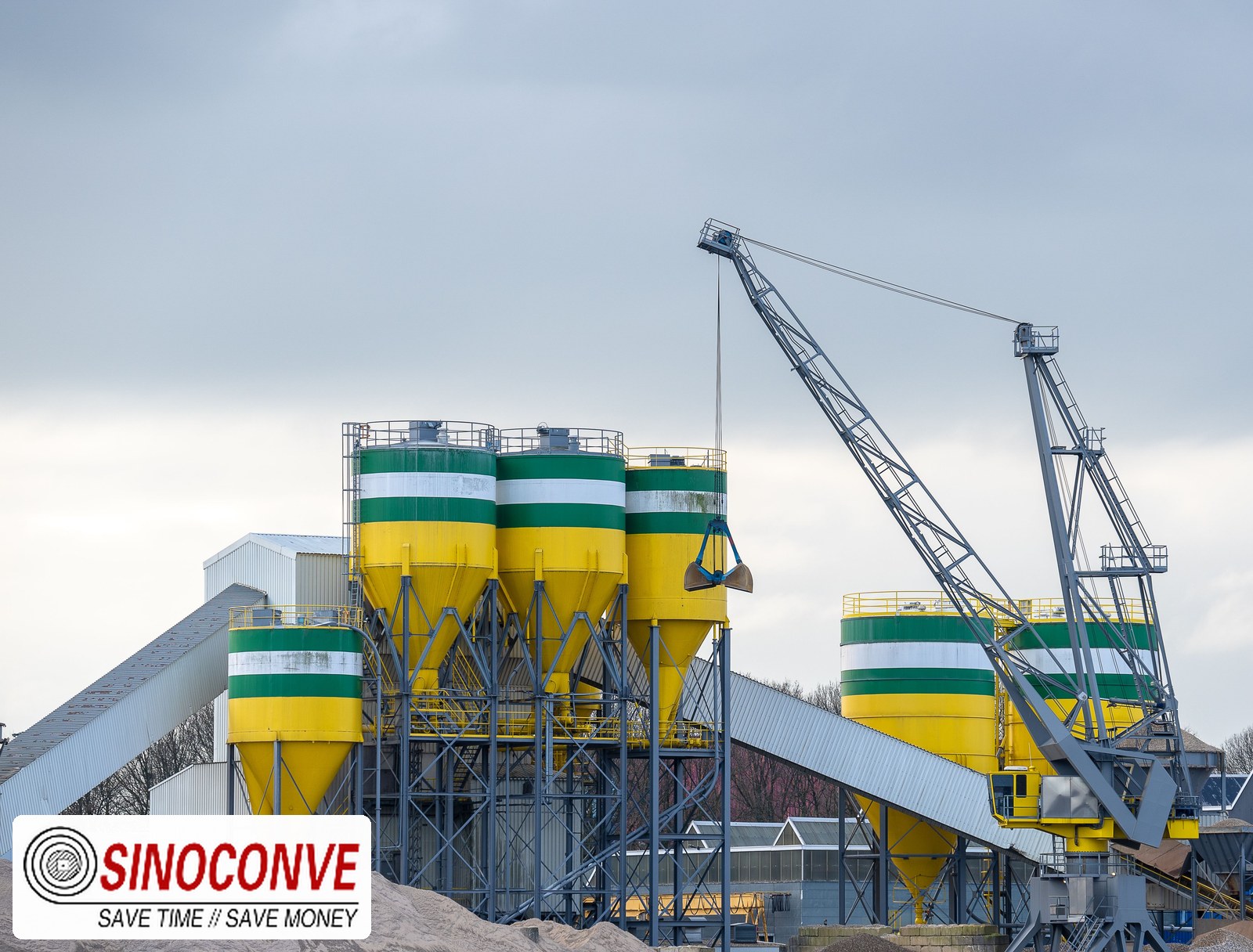
Long, fast conveyors make it worse in a different way. A belt running at 3.5 m/s that drifts hard can rub against the structure on the return run, and the friction in a dusty environment is nothing to shrug at. We don't want to be dramatic; we want to be clear that "a little wander" is never just cosmetic. Measure it, date it, and treat it like any other equipment fault—because that's exactly what it is.
03The Eight Tracking Causes We See on Real Sites
Field manuals list dozens of possible causes, and we'll cut that down to the eight that account for nearly every call we take.Four of them live in the belt itself or in how it was installed; the other four live in the conveyor hardware and in the way material lands on the belt. Keeping those two families separate is the whole trick, because the fixes are completely different.
| # | What you see on the ground | First thing to check | Practical response |
|---|---|---|---|
| 1 | Belt walks to the same side once per revolution; the drift "pulses" | Whether the splice is square to the belt center line; measure run-out across the full width | Re-make a vulcanized splice squarely; if a mechanical fastener is fitted, re-lace with the joint clamped square |
| 2 | Belt drifts gradually through one section of the loop,then recovers | Coil set or "corkscrew" from storage; carcass straightness at delivery | Check the QC report for straightness; avoid storing coils on edge, in heat, or under uneven support |
| 3 | Wander changes as the load changes | Loading position on the belt at the feed point | Center the material stream with a properly sized chute or skirt; keep the load off the edges |
| 4 | Belt drifts to one side consistently, at any speed | Take-up squareness; tension equal on both edges | Pull screw take-ups evenly (mark the threads),or check that the counterweight carriage travels freely |
| 5 | Drift appears after idler maintenance | Troughing idlers off the string line; one idler tilted too far forward | Re-string the idler frames to a line; hold troughed sets at a modest 1–2° forward tilt, not more |
| 6 | Belt oscillates side to side at speed | Drive or tail pulley crown and lagging wear; shaft straightness | Re-skim or re-lag the pulley; check pulley shafts and bearings for wear |
| 7 | Edge worn on the same side as the wander | Belt scraper pressure; belt edge catching on skirt rubber or structure | Relax the scraper, re-center the skirt,and trim anything the belt edge can snag |
| 8 | Belt wanders only in wind or after rain | Wind load on an outdoor high-speed line; spillage build-up on the return side | Keep the return side clean; on exposed lines consider wind shielding over the empty belt |
Here's the practical trick that sorts the belt family from the hardware family in ten minutes. Watch the drift against a fixed reference for a full belt revolution. If the wander repeats at the same point in every revolution—exactly one belt circumference apart—the cause is traveling with the belt: a splice, a damaged section, or a cured-in curve. If the wander is steady or random, the cause is standing still: an idler, a pulley, the take-up, or the loading.
Second, run the test on an empty belt first. Start the conveyor empty, centered, at operating speed, and watch three full revolutions. An empty belt that runs true tells you the belt and the structure agree, and whatever trouble remains is loading or wind. An empty belt that won't run true tells you the disagreement is inside the belt or the iron—and now you know where to spend the afternoon.
Most plants we visit have already tried the obvious lever: tilting the idlers harder to force the belt back.It works, briefly, and it costs you edge life, because every degree of forward tilt scrubs the belt edges against the idler rolls. Over-tilting is how you turn a geometry problem into a belt-wear problem, which is exactly why we push people to find the root cause instead of winning the argument with the idlers. In the sections that follow, we'll look at the belt-side causes first—the carcass, the splice, and the tension—because in our experience that's where the money is.
04How an EP Carcass Is Built, and Where Straightness Comes From
EP stands for a carcass of polyester warp yarns running the length of the belt and polyamide (nylon) weft yarns running across it, usually laid up in two to six plies bonded with rubber skim coats. The number tells you the strength: an EP500 belt carries a nominal breaking strength of 500 N per millimeter of belt width, so an EP500/4 belt puts that strength across four plies. The construction is the workhorse of the industry for a simple reason—the polyester warp gives low stretch, the nylon weft gives troughability and impact resistance, and together they do it at a price a quarry can live with. When you ask a conveyor belt supplier to quote an EP belt, this is the recipe you're really specifying, and the differences between one supplier's EP belt and another's come down to how carefully that recipe is laid up and cured.
What rarely gets explained is that straightness is a manufacturing property, not a sales claim. Inside the factory, the ply sheets are calendered, the plies are laid up against a controlled center line, and the whole pack is vulcanized in a press long enough that the layers cannot shift. If the weft yarns are distorted on one side during lay-up, or the calander tension is higher on one edge, the belt leaves the press with a built-in curve. You can't see it on a master roll, and it may not show on a short test bench, but the moment you hang that belt on a conveyor under tension, the curve becomes a steering force. That's the geometry variable from our opening section, and it is decided entirely before the belt ever reaches your site.
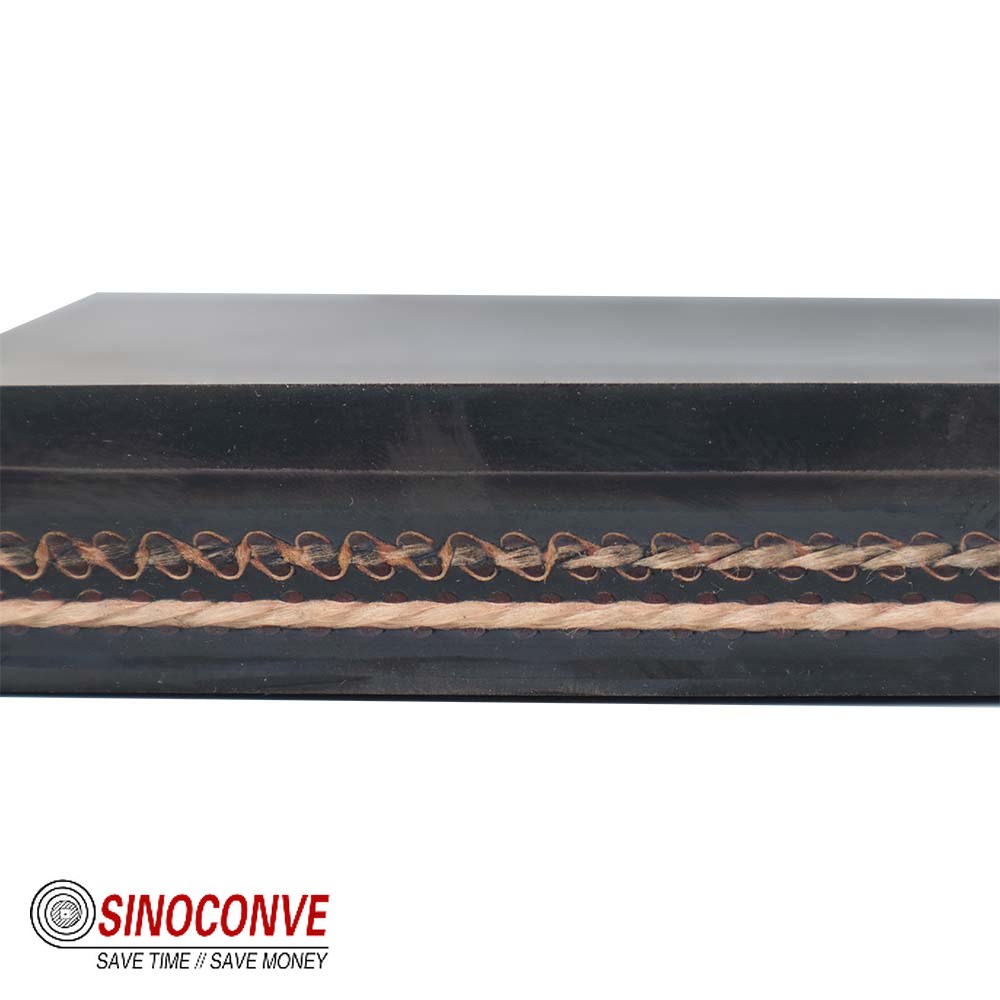
Symmetry matters at the same level as straightness.If the top and bottom covers differ in thickness—say 6 mm on the carry side and 2 mm on the pulley side, which is standard practice on crusher belts—that's fine, because it's still symmetrical left to right. What you cannot have is a thicker cover or a stiffer ply on one half of the width. Asymmetry makes the two halves of the belt respond differently to tension, and the belt develops a permanent tendency to steer. Every batch we ship is built on the principle that left and right must mirror each other; the pulleys will never know the difference, and neither will your edges.
This is also the point where it's worth saying what EP is not. When you spec an industrial conveyor belt for heavy aggregate duty, you have three mainstream carcass families to choose from—EP, all-nylon (NN), and steel cord—and the choice changes how the belt behaves on the pulleys and how much discipline the tracking demands. The next section shows the comparison we actually use when we sit down with a customer over a belt list.
05EP vs. NN vs. Steel Cord: What Each Carcass Does to Tracking
Here's the honest version of that comparison, not the brochure version.All three constructions can run true; what they differ in is how much effort it takes to keep them true, and what happens when something on site goes wrong.
| Property | EP (polyester/nylon) | NN (nylon/nylon) | Steel cord |
|---|---|---|---|
| Stretch at working tension | Low; the polyester warp stays stiff,so the take-up behaves predictably | Highest of the three; NN keeps "working" under load and needs generous take-up travel | Very low; elongation is roughly an order of magnitude below fabric belts |
| Troughability and flex | Good; plies bend cleanly into 35–45° troughs | Excellent—the most flexible of the three | Stiffer; needs larger pulleys and careful idler spacing |
| Carcass straightness over time | Stable; polyester resists permanent stretch and set | Can take a set if stored badly or overloaded for long periods | Very stable,but unforgiving—a kinked cord never recovers |
| Field splicing | Well-understood hot vulcanized bias splice; forgiving for a trained crew | Similar, slightly more tolerant of splice heat | Specialized splice teams and longer splice time on site |
| Typical home | Quarries, crushers, aggregate, cement, and general bulk handling | High-impact short conveyors and portable plants | Long overland hauls, high-tension trunk lines,underground main conveyors |
| Tracking watchpoints | Splice squareness and even tension across the width | Watch take-up travel and any set after long stops | Splice straightness and pulley alignment matter most; idler tilt corrections barely register |
For the tracking discussion specifically, EP is our default recommendation for most quarries and aggregate plants, and that isn't nostalgia. Its low, predictable stretch means the take-up doesn't have to absorb constant length changes, which keeps tension even across the width—and even tension is one of the three pillars of a belt that runs true. NN belts run fine on short centers, but their higher stretch makes the tension balance harder to hold on a long line. Steel cord is not automatically "better," either; on a short aggregate conveyor it buys you nothing except a harder splice and a bigger repair bill if a rock pierces the carcass. Steel cord earns its keep when the tension demands it—long centers, high lifts, high power—not because it tracks better.
One more selection note, because it saves people a lot of grief: choose the cover before you finalize the carcass. Sharp, abrasive rock chews covers quickly, and the cover grade selection guide we keep on our site walks through the main grades and what each one handles. A tracking problem is solved in the carcass and the splice; a wear problem is solved in the cover. Don't mix the two up when you write the spec.
06The Splice: The Tracking Detail Everyone Skips
If we had to bet on one single cause of a "brand-new belt runs off," we'd put our money on the splice. A vulcanized splice is cut on a bias, stepped through the plies, and cured on site, and every one of those steps has a chance to drift off perpendicular. If the splice line runs 10 mm out of square on a 1,200 mm belt, the belt effectively has a wedge built into it, and it steers one way on every pass. What makes it sneaky is that the splice looks flat, smooth, and innocent from the outside—so it's the last thing anybody blames.
The signature is easy to spot once you know it. The belt kicks or drifts at the same point in every revolution, roughly one belt circumference apart. Mark the splice and watch it through the loop; the wander follows the splice like a shadow. Mechanical fasteners hide the same problem. A laced joint that wasn't clamped square tracks exactly like an out-of-square vulcanized splice, and it wears the fastener line out faster on top of it.
How square is square? Industry practice is to hold the splice center line perpendicular to the belt center line within a couple of millimeters across the full width—we typically work to about 2 mm per meter of belt width as a shop target. The practical field check takes two minutes. Mark the belt center line at both ends of the splice, stretch a chalk line across the width, and compare the distance from that line to the splice edge on the left and right sides. If they differ by more than a few millimeters, the splice is steering the belt, and no amount of idler work will argue with it.
If you're running several belts and managing splices in-house, it's worth having a consistent procedure instead of relying on whoever is available that day. Our guide to conveyor belt jointing methods compares hot vulcanized, cold vulcanized, and mechanical options, including the tracking implications of each—because the joint you choose sets the tracking baseline for the whole life of the belt.
07Installation, Storage, and Start-Up: Where Good Belts Go Bad
A straight belt can be made crooked in a weekend. Three habits cause most of it: how the belt is stored and uncoiled, how it's pulled into the conveyor, and how tension is applied at start-up.None of it is exotic, and all of it is cheap to get right.
Storage and handling
Coils should sit on their ends on a level, dry floor, clear of concrete moisture and out of direct heat. Lifting a coil by running a bar through the core is fine; strapping it around the outer wrap and pinching the edges is not, because a crushed edge is a permanent tracking defect you can't see until the belt is running. When you pay the belt off, unroll it the way the factory marked it—usually off the top, in the direction of the arrow—because pulling a coil the wrong way puts a spiral twist into the carcass. A spiral twist is a tracking problem that no idler on earth can fix, and it never relaxes out.
Pulling the belt into the conveyor
Threading a new belt around a 420 m loop is a two-hour job that people rush, and rushing shows up later. Never drag the belt edges across steel or concrete; use wide slings or clamp the belt at several points and pull from the head end. Keep the belt flat as it feeds in—no folds, no twisting—and let it rest on the idlers rather than dragging it over them under load. The extra ten minutes of care here is measured in months of belt life at the other end.
First tension and run-in
Here's where tension balance is won or lost. On a screw take-up, turn both adjusting bolts the same number of turns and mark them so you can prove it later.On a gravity take-up, make sure the carriage travels freely on both rails before you start, because a carriage that hangs up on one side pulls the belt harder on that edge from the very first minute. For an EP carcass, design guides commonly size the take-up stroke for about one percent of the belt length, and the running tension should be set so the belt sags no more than a couple of percent between idlers on the carry side. Run the belt empty at operating speed for the first pass, watch the splice and both edges through a few revolutions, and only then bring the load on gradually—twenty or thirty percent first, then half, then full—checking the feed stays centered at every step.
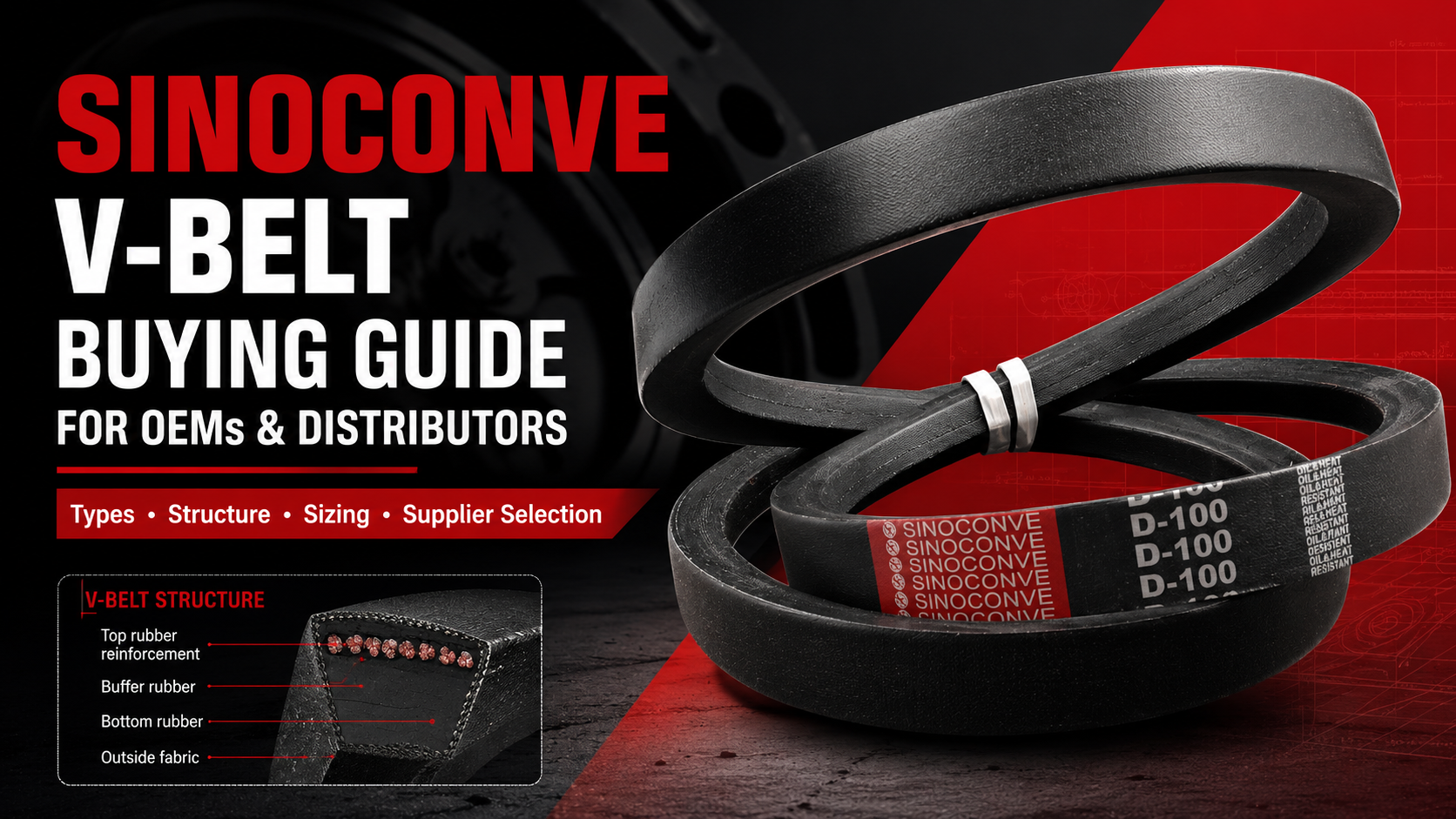
Short feeders, portable plants, and small transfer conveyors bring their own twist: the drive often passes through a set of V-belts between the motor and the gear reducer. A worn or mismatched set lets the drive pulley pulse, and a pulsing drive makes the belt vibrate laterally, which shows up as a slow wander that comes and goes. When you're chasing a ghost like that, check the drive side before you re-tilt another idler. Any transmission belt manufacturer will tell you the set has to be matched and tensioned as a unit, and we'd say exactly the same. Buy a matched set from a reputable V-belt manufacturer, fit them together, and re-tension after the first 24 hours of running. It sounds trivial, but it fixes a surprising share of "mystery" drift on short conveyors.
What about training idlers?
Used honestly, self-aligning and training idlers are useful helpers. Used as a substitute for finding the cause, they're a bill you pay in edge wear, because every time a training idler steers the belt it scrubs an edge. Our guidance is simple: sort out the splice, the tension, and the loading first, and then let a training idler handle the last few millimeters of environmental wander on a long return run. If a belt needs a training idler to stay within 20 mm, you haven't fixed the problem—you've just given it a minder.
08A Field Example, with the Numbers Left In
Let's make all of this concrete with a job from our records. A crushing plant bought a 1,200 mm wide EP500/4 belt with 6 + 2 covers for a 420 m conveyor running at 3.5 m/s—standard aggregate duty by any measure. Within the first two shifts, the belt drifted 50 to 60 mm to the right at the tail end, spilling at the transfer and wearing the right edge. The installation contractor had already re-aimed the troughing idlers twice, and the plant was losing patience.
The drift pattern was the giveaway: it pulsed once per revolution, always at the same point. When the crew chalked a line across the splice, it ran roughly 18 mm out of square over the full width—about 15 mm more than our 2 mm-per-meter shop target.With a 420 m center distance, the belt loop is close to 850 m around, so at 3.5 m/s that wedge hit the pulleys roughly every four minutes, nudging the belt a few millimeters further right on each pass. Re-doing the splice squarely took about three hours, and the belt settled to within about 10 mm of center within fifteen minutes of running. Not one idler was touched after that.
The second half of the story is the part we quote in training. Because the belt had been forced sideways at the same spot for two shifts, the carcass had taken a temporary set, and even with a perfect splice it took about a week of running for the belt to relax back to dead center. That's normal behavior, and it's a good reason not to panic-cut a belt in its first week. Give a corrected belt a few hundred hours of running before you judge it—and give your splicers a squareness check they have to sign off on.
09What We Do Inside the Factory to Keep Straightness Honest
Everything above is why straightness has to be controlled on the machine, not promised in a brochure. In our plant, that discipline starts at the calander and runs through to the wind-up. We operate ten production lines—eight for fabric belts and two for steel cord—with more than 200 people across the plant, and we're certified to ISO 9001.When your project names a standard, we build to it: DIN 22102, ISO, RMA, AS 1332, BS 490, or SANS 1173, whichever your market or your consultant specifies. When you buy directly from a conveyor belt factory, you should expect three things in the paperwork: a clear carcass and cover spec, measured width and thickness values against the standard you ordered, and a test certificate that travels with the shipment. If any of those three is vague, the straightness claim probably is too.
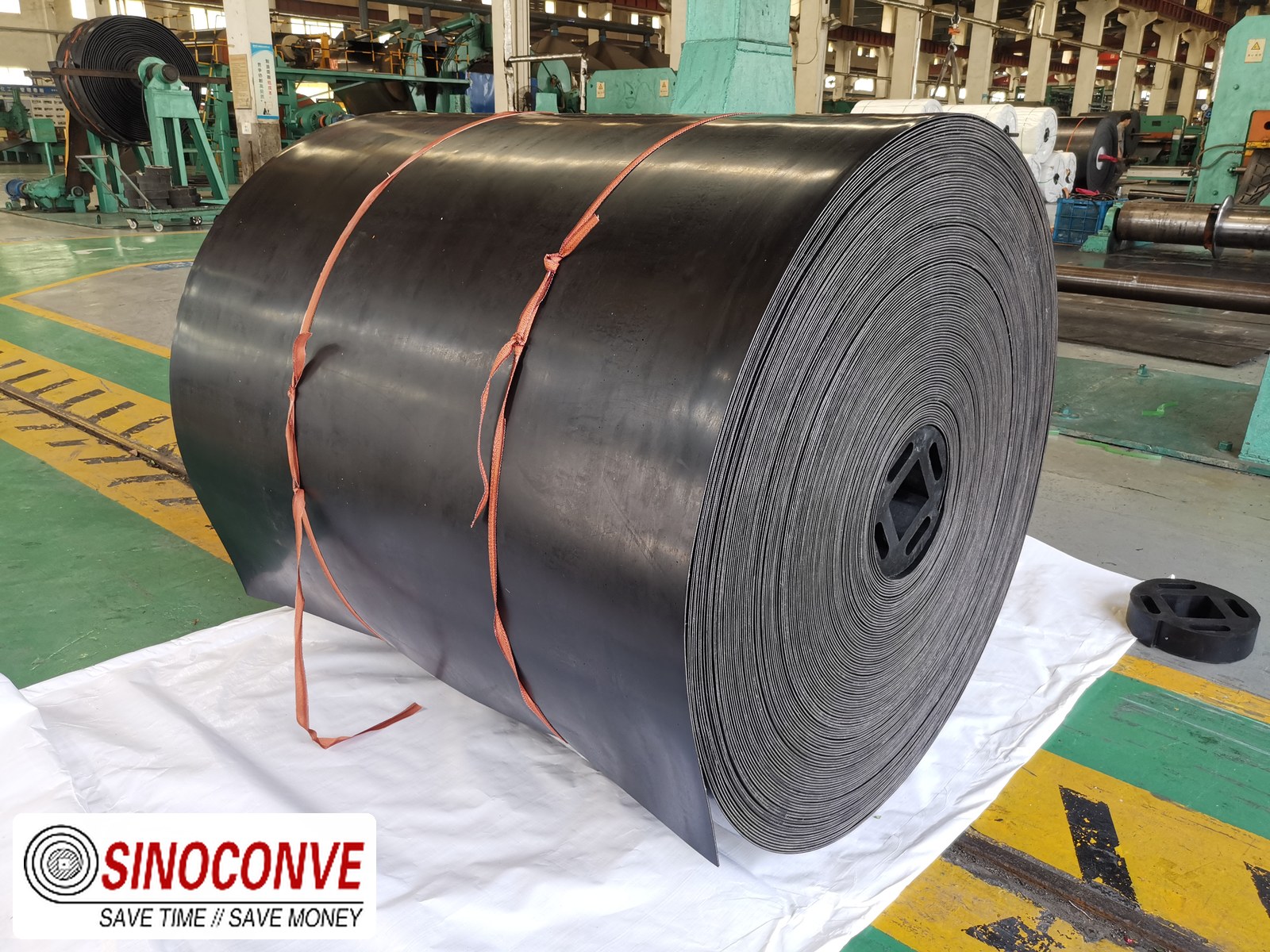
Master rolls are wound under controlled tension and cut to your ordered width, and finished belts are checked before they leave the plant—because a width tolerance argument at a quarry gate is a bad way to start a relationship. We've shipped to more than 1,500 industrial customers over the years, and the ones who come back tend to be the ones who read the QC sheet on arrival and file it, rather than the ones who open the crate and hope. On-time delivery above 95% keeps the planning side boring, which is how we like it.
10Specifying and Buying: What to Put in the Inquiry
Most tracking problems we meet were buyable before they were runnable. The belt spec that prevents them is short and specific: belt width and the tolerance you'll accept, the carcass rating and ply count (EP500/4, for example), the top and bottom cover grades with thicknesses, the total length, whether the splice is hot vulcanized on site or factory-vulcanized, and the standard you want the belt built and tested to. If you buy through a conveyor belt distributor or a trading house, ask for that same data sheet from the factory behind the quote—you're paying for the belt, but you're buying the paperwork that tells you whether it will run straight.
Keep the comparison honest, too. When you're weighing quotes, even when you're comparing wholesale conveyor belts from three factories on price per meter, put the same carcass, the same covers, and the same standard on all three lines. A cheaper EP500/4 with thinner covers isn't an EP500/4 at all; it's a different product wearing the same name, and the tracking and wear behavior will tell you so within a season.Ask each factory what width range they run, what their straightness checks look like, and whether the test certificate covers the batch you're actually receiving.
A few practical numbers so you know what to expect from us: our standard production range is EP100 to EP600, in widths from 100 to 3,000 mm and total thicknesses from 3 to 100 mm, and our minimum order for a custom width is 50 meters. Typical production lead time runs about 30 days, with a 15-to-20-day green channel for urgent re-belts. Samples leave within 2 to 5 days, every shipment carries its test report, and we support OEM/ODM orders with custom logos and packaging. If you want our engineers to look at your conveyor data before you commit, that's a normal conversation for us—send the belt list or the conveyor drawing to sales@sinoconve.com and we'll come back with a recommendation.
11The Bottom Line on Belt Tracking
Let's compress the whole article into the version we'd write on a whiteboard. A belt runs true when three things are true: the carcass is straight and symmetric, the splice is square to the center line, and the tension is even across the width. Buy the carcass from a factory that controls straightness, install the belt without twisting it, splice it square, tension it evenly, and load it centered—and you'll spend your maintenance hours on things that actually wear out, instead of arguing with a belt that walks.When drift does show up, measure it before you adjust anything: watch a full revolution, run the belt empty, and let the pattern tell you whether the problem travels with the belt or stands still in the iron.
The wider lesson is the one we opened with. Hardware problems are visible and tempting to fix, which is why idlers get re-aimed a dozen times before anyone questions the belt. But a belt carries its own geometry, its own history of storage and splicing, and its own opinion about how it was installed. Treat the belt as the first suspect, give it the same measurement discipline you'd give a bearing or a gearbox, and the "mystery" tracking cases mostly stop being mysterious.
12Frequently Asked Questions
My belt tracks fine empty but wanders under load. What changed?
Load changes two things: the sag between idlers grows, and the loading point starts feeding material that may sit off-center. Both create asymmetric forces the empty belt never felt. Check the load centering first — a skirt or chute that dumps material to one side will defeat any belt. If the load is centered and the belt still shifts only under load, look at troughing angle versus belt stiffness, and at whether the return belt is trained the same way it behaves when loaded. Measure the pattern empty and loaded, and the difference between the two usually names the culprit.
How can I tell whether the belt or the conveyor structure is causing the mistracking?
Run the belt empty and watch a full revolution from one fixed point. If the wander pattern repeats once per revolution at the same place on the belt — for example, every time the splice comes around — the problem travels with the belt and is almost certainly a splice or carcass issue. If the belt consistently drifts in one zone of the conveyor regardless of where the splice is, the structure there — an idler, a pulley, a transfer point — is the suspect. That single test splits the problem in half before you touch a single bolt.
How far out of square can a vulcanized splice be before it creates tracking problems?
As a practical rule of thumb, a splice that is out of square by more than about 1 mm per 100 mm of belt width is worth correcting rather than living with. A 1,200 mm belt with a splice 10 to 12 mm out of square will generally produce a visible wander once every revolution. The fix is preventive: mark the center line on the belt before cutting, cut and prepare the splice against that mark, and measure the finished joint before it goes into service.
Do EP, NN, and steel-cord carcasses behave differently when it comes to tracking?
Yes, mainly through stiffness and elongation behavior.EP (polyester warp, nylon weft) constructions hold their dimensions well and are the most common choice for fixed-path conveyors where stable tracking matters. NN (nylon/nylon) belts are tougher and more impact-resistant but elongate more, which changes tension balance over time if the take-up is not managed. Steel-cord belts are extremely dimensionally stable and run straight, but they are unforgiving of misalignment and impact, and they need specialized splicing. Match the carcass to the duty and to your own maintenance capability, not just to the brochure price.
Can a belt that has taken a set in storage or transit ever run straight again?
Sometimes, but rarely on a heavy belt. A roll stored flat or crushed on one edge develops a permanent distortion in the carcass that tension alone will not pull out. If the distortion is mild, running the belt empty for a few hours at low tension sometimes beds it back in; if it persists after a full empty run-in, the belt will keep fighting you for its whole life. That is why storage discipline — upright rolls, original wrapping, clean dry floors — is really a tracking problem you solve before the belt ever reaches the conveyor.
What should I send to a conveyor belt manufacturer when I need a belt for a tracking-sensitive conveyor?
The short list: belt width and length, center distance, incline angle, drive and tail pulley diameters, idler spacing and troughing angle, belt speed, material type and lump size, tonnage per hour, loading point details, and any existing tracking history on that conveyor. The more of that you include, the closer the first quotation comes to the belt you actually need. Send it to sales@sinoconve.com and our engineers will review the data and come back with a construction and cover recommendation, plus the straightness and tolerance checks we apply on the production line.
Send us your conveyor data — we build belts that run straight
Width, length, tension, take-up and splice method are all we need to quote the right belt for your tracking-sensitive conveyor.
Related Products You May Need
| Rubber Conveyor Belt Multi-ply EP/NN fabric belts up to 3,000 mm wide |
EP Conveyor Belt Dimensionally stable carcass for long, high-tension lines |
| Chevron Conveyor Belt Patterned cover for inclined conveying |
Conveyor Roller Idlers and rollers matched to your belt |
| V-Belt Classical and cogged V-belts for drive systems |
Full Product Catalog Browse the complete SINOCONVE range |
Related Blog Posts
- Conveyor Belt Jointing Methods Guide — vulcanized vs mechanical splicing step by step
- Rubber Conveyor Belt Cover Grades — how cover grade changes belt life
- Conveyor Belt Sourcing Guide to Reduce Downtime — what to check before you order
- Fabric vs Steel Cord Conveyor Belt — when to move to steel cord