
Understanding the Poly V Belt: A Technical Overview
In modern drive systems, the poly v belt stands as a pivotal component for efficient power transmission. This versatile belt, often referred to in technical contexts for its multiple longitudinal ribs, ensures optimal grip and reduced slippage, making it indispensable in various mechanical applications. As industries evolve, selecting the right poly v belt can significantly impact system performance and longevity.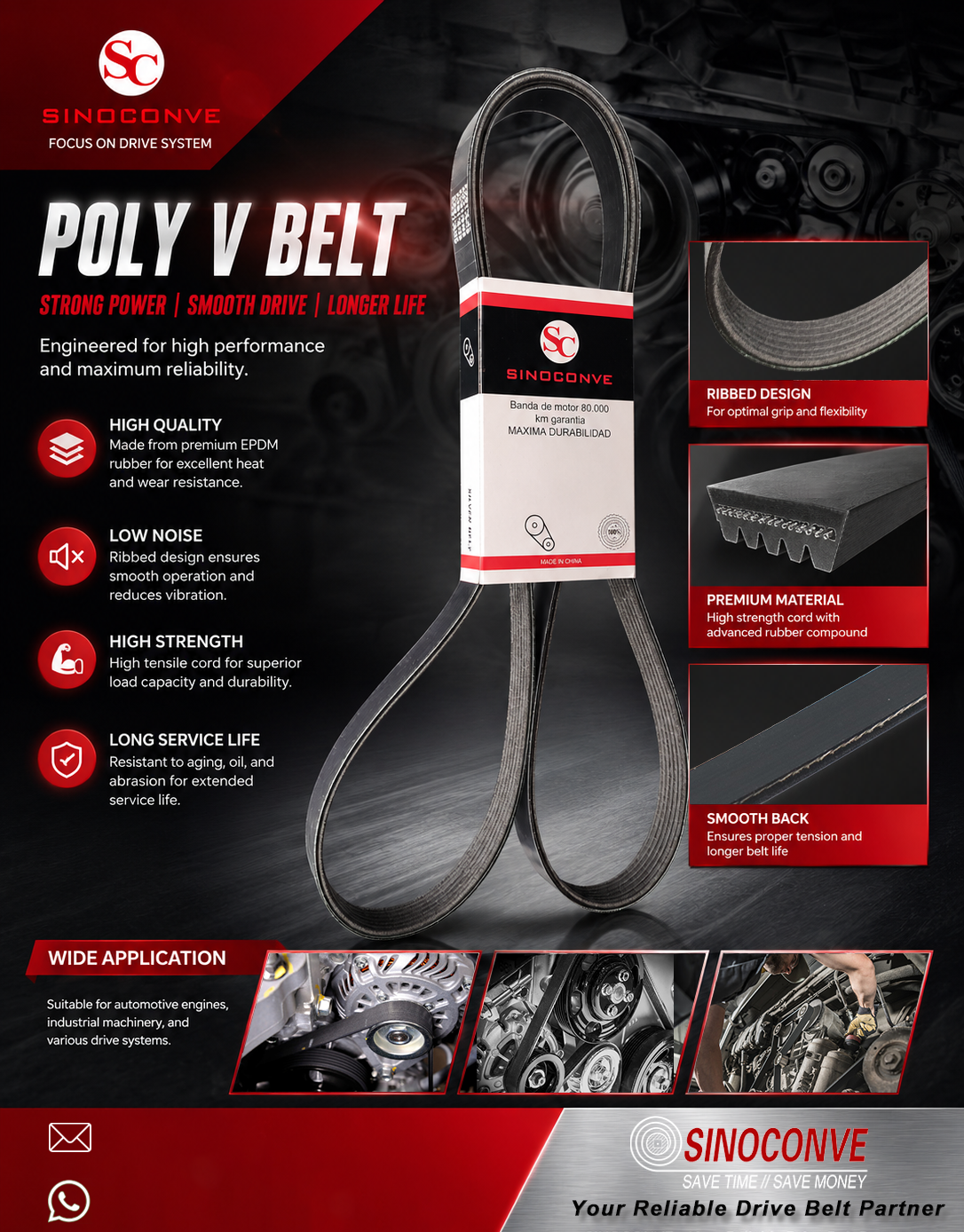
Core Technical Features of the Poly V Belt
The poly v belt is engineered with precision to handle demanding operational conditions. Crafted from high-quality EPDM rubber, it exhibits superior resistance to heat, wear, and environmental factors, allowing it to maintain integrity over extended periods. The ribbed belt configuration, a hallmark of this design, features multiple V-shaped ribs that enhance contact area with pulleys, thereby improving torque transmission and minimizing energy loss. This ribbed structure also contributes to lower operational noise levels, which is crucial in precision machinery where vibrations can lead to inefficiencies or failures.
Incorporating a high-tensile cord within its core, the poly v belt achieves exceptional strength, capable of withstanding heavy loads without deformation. Technical specifications often highlight its low stretch properties, ensuring consistent tension and alignment during operation. For instance, the smooth back surface facilitates easy installation and proper seating on pulleys, reducing the risk of misalignment that could otherwise accelerate wear. These attributes collectively position the poly v belt as a reliable choice for systems requiring sustained performance under variable speeds and loads.
Comparing the Poly V Belt with the PK Belt
The pk belt, essentially a standardized variant of the poly v belt, follows specific dimensional profiles as defined by industry standards such as ISO or DIN. While both share the ribbed belt architecture, the pk belt is particularly optimized for automotive and light industrial uses, with rib counts ranging from 3 to 8 for common applications. This makes the pk belt highly compatible with serpentine drive systems in engines, where space constraints demand compact, multi-function components.
From a technical standpoint, the poly v belt offers broader adaptability due to its customizable rib profiles, allowing engineers to tailor it for heavy-duty industrial setups. In contrast, the pk belt's fixed metrics ensure interchangeability across global manufacturers, simplifying procurement and maintenance. Both designs leverage advanced rubber compounds to resist oil and abrasion, but the poly v belt's enhanced flexibility often results in superior performance in high-speed scenarios. Understanding these nuances helps in selecting the appropriate belt for specific torque and speed requirements, ultimately optimizing system efficiency.
Applications and Performance Advantages
In automotive engines, the poly v belt excels by providing smooth power transfer to accessories like alternators and air conditioning compressors. Its ribbed design ensures efficient engagement, reducing the parasitic drag that can diminish fuel economy. For industrial machinery, such as conveyor systems or pumps, the poly v belt's high load-bearing capacity supports continuous operation, minimizing downtime and maintenance intervals.
The longevity of a well-implemented poly v belt or pk belt can extend up to 100,000 kilometers in vehicular use or thousands of hours in industrial contexts, thanks to its resistance to aging and thermal degradation. Technical analyses often reveal that these belts reduce vibration by up to 50% compared to traditional V-belts, leading to quieter and more reliable operations. When integrating a ribbed belt into a drive system, factors like pulley groove matching and proper tensioning are critical to maximize these benefits.
Maintenance and Selection Best Practices
To ensure optimal performance, regular inspection of the poly v belt is essential. Technicians should monitor for signs of cracking, glazing, or rib wear, which can indicate improper tension or misalignment. The pk belt, with its standardized sizing, benefits from automated tensioners in modern systems, further enhancing reliability.
Selecting the right poly v belt involves assessing system parameters such as horsepower, RPM, and environmental exposure. Advanced materials in contemporary designs, like those with aramid reinforcements, elevate the ribbed belt's durability, making it suitable for extreme conditions. By prioritizing these technical considerations, engineers can leverage the poly v belt's full potential, achieving enhanced efficiency and reduced operational costs across diverse applications.
In summary, the poly v belt represents a cornerstone of advanced drive technology, with its ribbed belt innovations driving progress in both automotive and industrial sectors. Its synergy with pk belt standards underscores a commitment to precision and performance in mechanical engineering.