
Why warehouse conveyor belts deserve more attention than they usually get
A warehouse conveyor belt is often treated as background equipment, something that just has to keep parcels moving. In practice, it is one of the few components that can quietly shape labor cost, sort accuracy, floor congestion, and even how quickly a distribution center recovers when volumes spike. For teams working in e-commerce logistics or parcel distribution, the belt is not just a moving surface. It is part of the routing logic.
That matters because warehouse operations rarely fail in dramatic ways. More often, they slow down in small increments: cartons misfeed, poly-bag shipments drift, a transfer point jams, or a curved section creates more friction than expected. By the time the issue becomes visible, the cost has already spread across a shift.
What the conveyor layout is doing in a modern facility
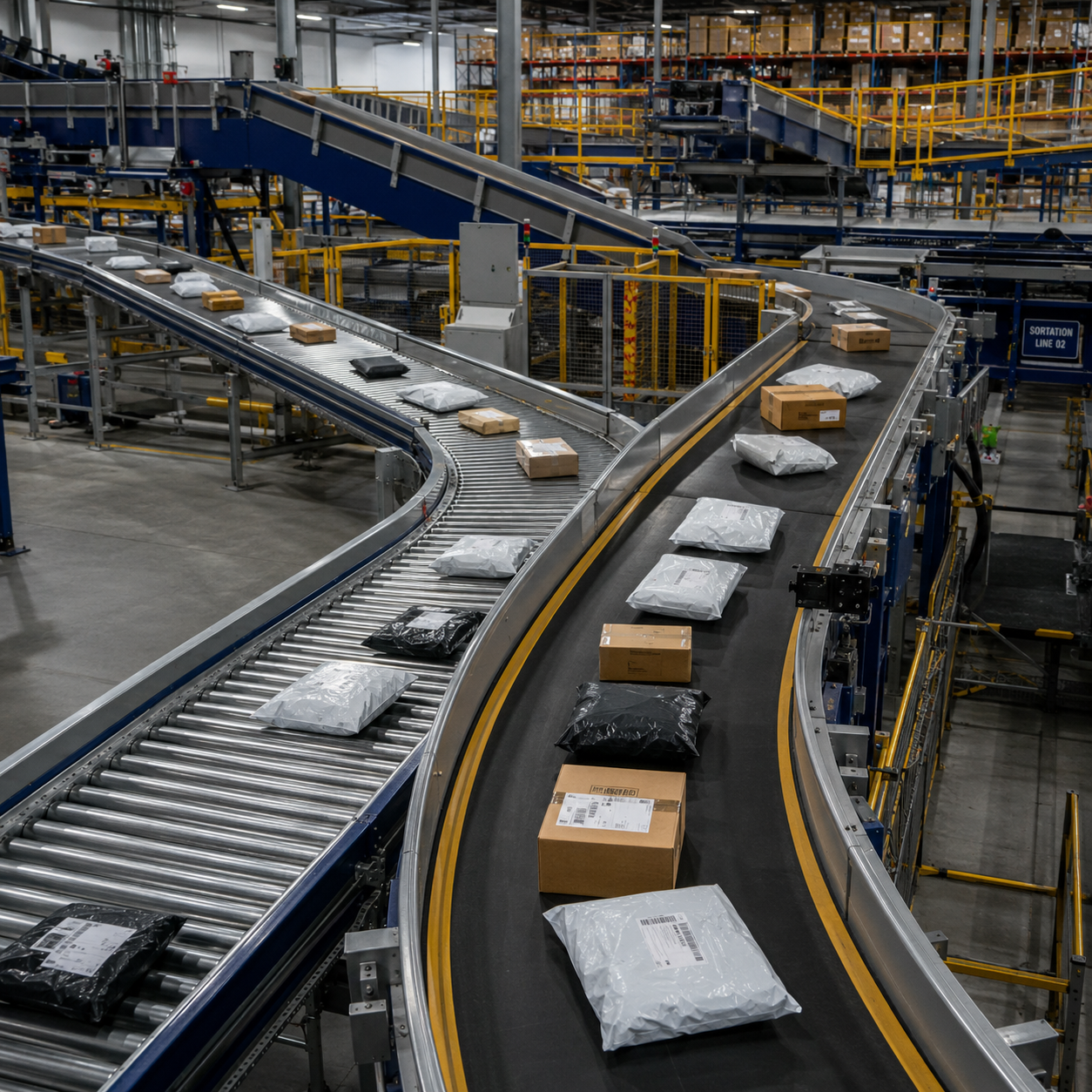
The sort of installation commonly seen in a distribution center conveyor network usually mixes several conveyor types rather than relying on a single line. Inclined belt conveyors handle elevation changes. Curved sections route packages around corners without forcing a manual carry. Roller conveyor sections move straight runs efficiently, especially where cartons need to accumulate or pass through a sorting zone. Guard rails and side guides help keep parcels aligned, while safety fencing and yellow railings keep the operating area controlled.
This combination is practical because warehouse package handling is rarely uniform. A carton, a poly mailer, and a mixed-size parcel do not behave the same way on a line. A parcel sorting line has to handle that variation without demanding constant operator intervention. The equipment shown in typical sorting areas reflects that reality: multiple active lanes, routing points, and enough structural framing to support continuous movement rather than occasional transfer.
Where a warehouse conveyor belt fits in the system
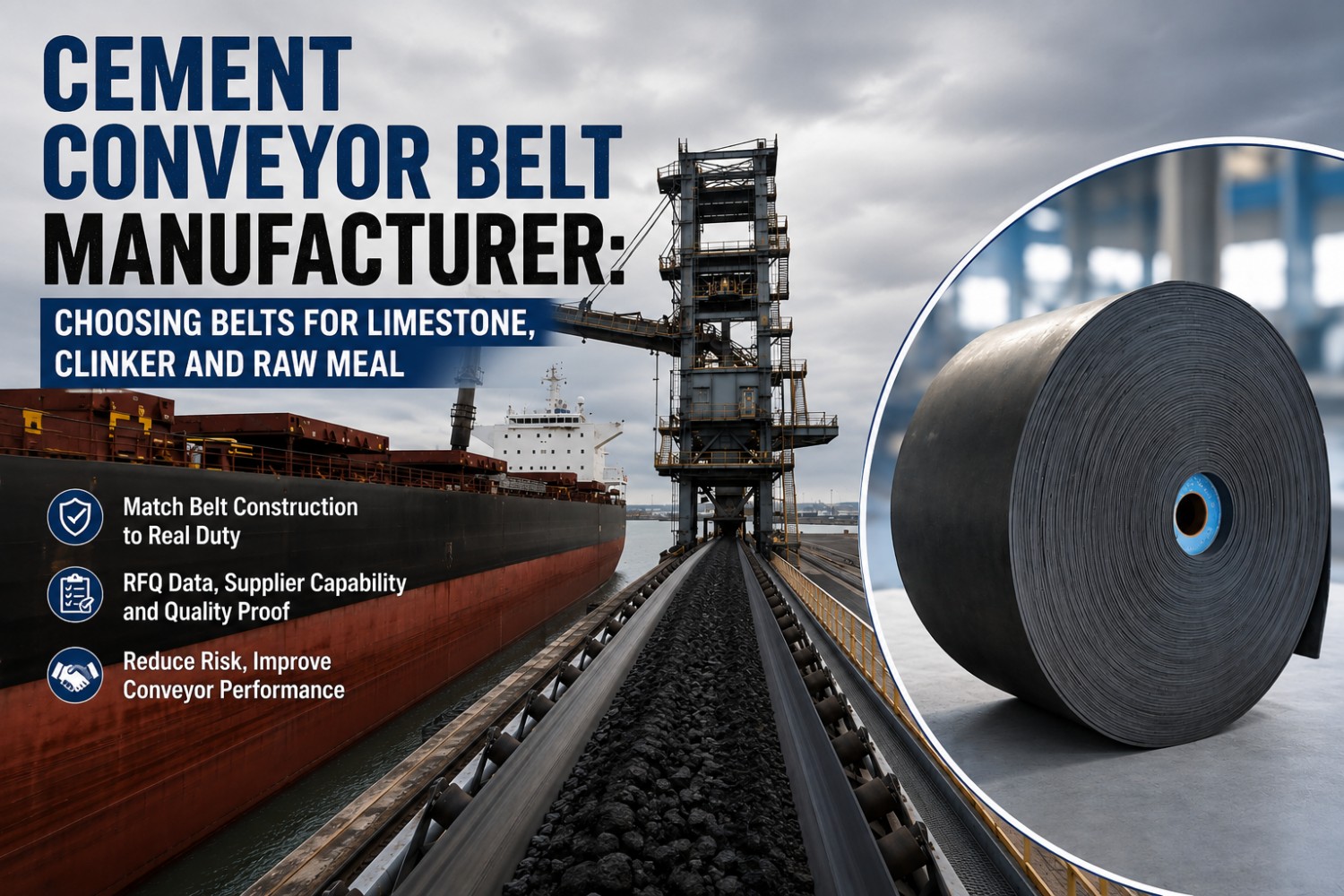
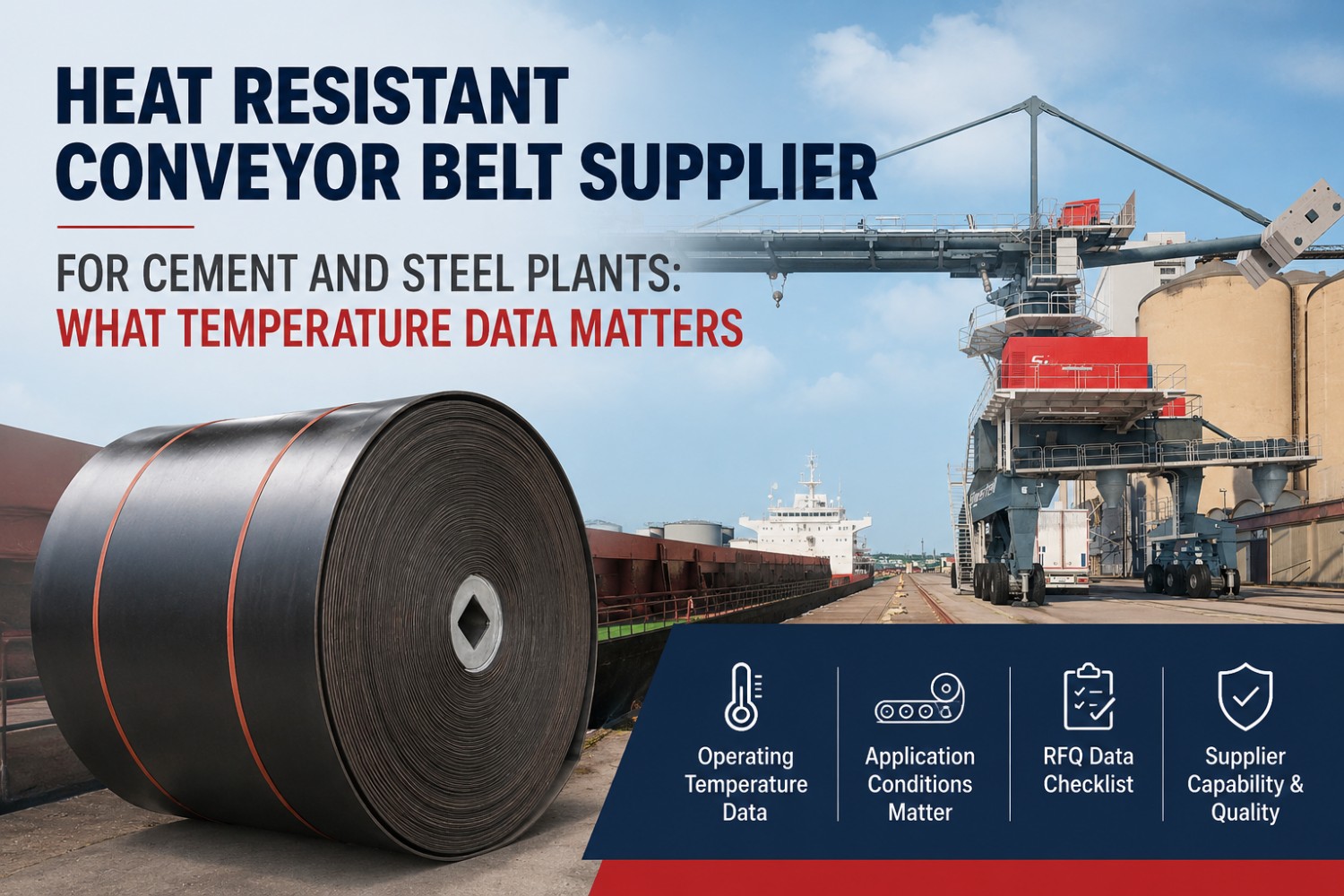
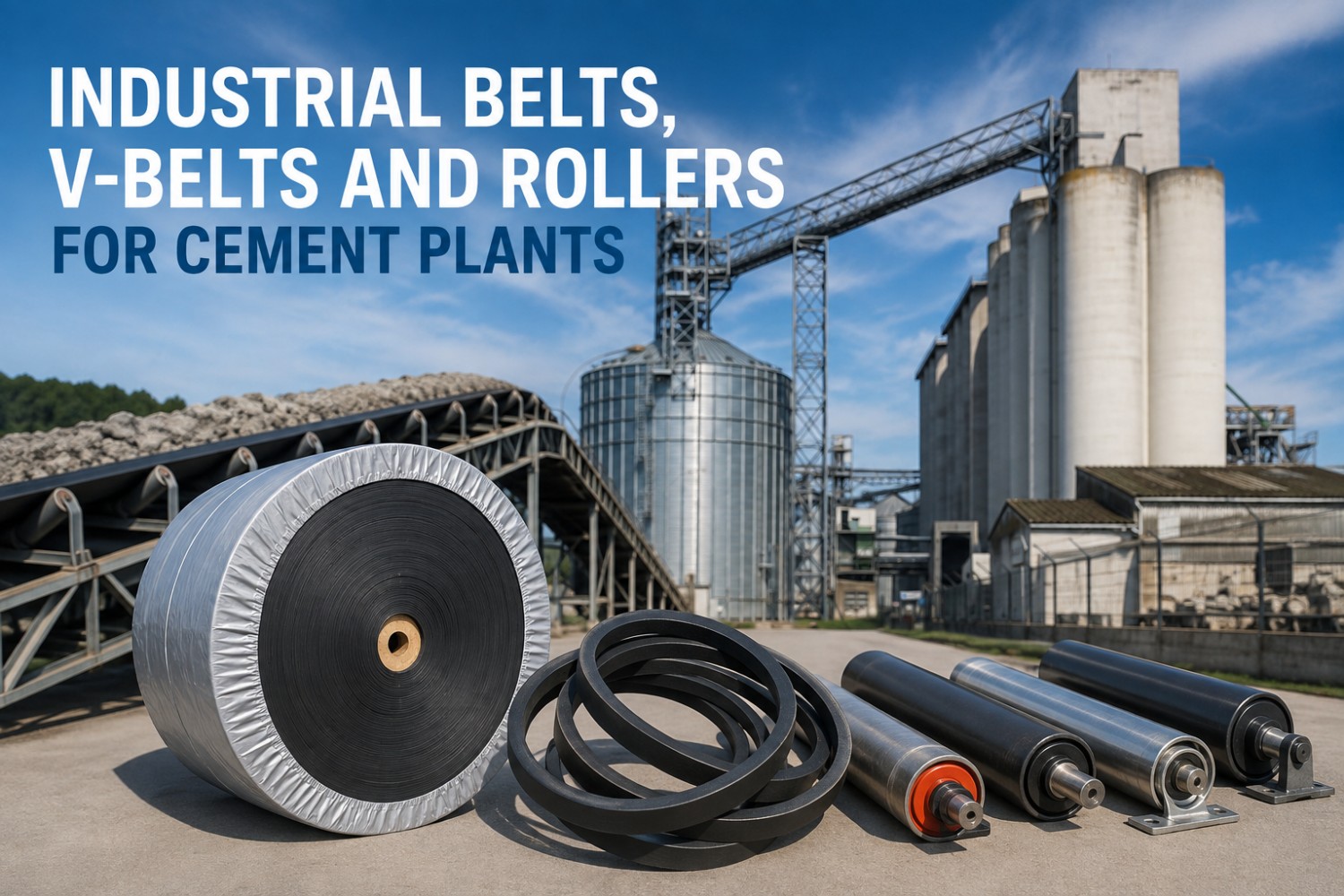
The belt itself is the active surface that makes continuous movement possible. In some systems, the conveyor belt is part of a larger engineered line; in others, belt rolls are supplied in bulk for fabrication or replacement. The visible belt material is often a black rubber or rubber-like surface with a smooth matte finish, chosen because it offers a practical balance of grip and durability for general material handling. Exact compound, reinforcement, and cover layers are not visible from appearance alone, so those details should always be confirmed before purchase.
For buyers, that distinction matters. A belt intended for cartons in an e-commerce logistics center may not be the right choice for abrasive goods, high heat, or special handling environments. Likewise, a replacement roll may look suitable but still need cutting, splicing, or edge finishing before installation. The wrong assumption here can create downtime later, and conveyor downtime has a habit of showing up at the worst possible hour.
Selection criteria that actually affect performance
When choosing a warehouse conveyor belt or specifying belt stock for a project, start with the movement profile, not the catalog photo. Ask what the line must carry, how often, and through what geometry. Straight runs, incline changes, and curved conveyor sections all impose different demands. If the belt is feeding a sorting line, transfer behavior matters as much as surface durability.
Next, look at the operating environment. Dust, carton abrasion, humidity, and packaging debris can all influence belt life. If the system handles mixed parcels, the most important question may be whether the belt stays stable under changing load patterns rather than whether it looks robust. Buyers often focus on width first, but in many warehouses the more useful questions are about tracking, splice method, and maintenance access.
Quick practical checks before ordering
Confirm the belt’s intended application, the conveyor frame geometry, the drive and tension arrangement, and whether the installation is new or a replacement job. If the belt is being supplied as a roll, make sure the storage and handling plan is realistic. Large rolls are convenient for transport, but they are not a complete solution by themselves.
Common mistakes in package handling systems
One common error is specifying for peak throughput only and ignoring day-to-day variability. Another is treating curved conveyor sections as a minor detail when they often create the first symptoms of poor package handling. Cartons may track differently from mailers, and mixed-size shipments can expose weak guide control very quickly.
Another frequent mistake is assuming all conveyor belt stock is interchangeable. It is not. Construction, reinforcement, spliceability, and surface behavior can vary widely, even when two belts look similar at a glance. For engineers and sourcing managers, that means technical confirmation should come before purchase, not after the roll arrives on site.
Buyer-facing advice for warehouse and logistics teams
If you are comparing options for a warehouse conveyor belt, think in terms of system behavior. Will it support stable routing in a parcel sorting line? Will it tolerate the package mix used in e-commerce logistics? Can maintenance staff replace or splice it without shutting down an entire zone? These questions often tell you more than a generic product description.
Also, be cautious about over-specifying where the application is simple and under-specifying where the line is complex. A basic straight transfer may not need anything elaborate, but a distribution center conveyor with incline, curve, and accumulation sections needs a belt choice that fits the full path, not only one segment.
What to ask suppliers before you commit
Ask for belt construction details, intended application range, compatibility with the conveyor frame, and any installation guidance that affects cutting or joining. If you are buying in bulk for fabrication, confirm how the roll is supplied, how it should be stored, and whether there are handling cautions for preserving belt quality. Those questions save time later, especially when the line is built around a fixed schedule.
Next step
For teams planning a new conveyor network or replacing worn belting, the safest approach is to match the belt to the actual package flow, not just the machine footprint. A short technical review of load type, conveyor geometry, and maintenance access will usually prevent a lot of avoidable rework.