
Engineered belt solutions for demanding industries worldwide

Robot Track: Revolutionizing Mobility & Efficiency

  • product introduction
Posted by SINOCONVE On Jun 11 2026

Revolutionizing Mobility with Advanced Robot Tracks


In the fast-evolving world of automation, the robot track emerges as a game-changer for seamless navigation and performance. Designed for robots operating in dynamic environments, this innovative component ensures unparalleled stability and efficiency. Whether in warehouses, manufacturing floors, or outdoor terrains, integrating a high-quality robot track into your robotic systems can transform operational outcomes. At our company, we pride ourselves on delivering cutting-edge solutions that propel industries forward, and the robot track is at the heart of this innovation.

Superior Engineering Behind the Robot Belt


Building on the foundation of the robot track, the robot belt offers a flexible alternative for applications requiring smoother, more adaptable movement. Crafted from premium synthetic rubber compounds, the robot belt provides exceptional resistance to abrasion and environmental stresses, making it ideal for continuous-duty robots. Its high-tensile fibers and steel cord reinforcements deliver the strength needed for heavy loads without compromising on flexibility. By choosing our robot belt, businesses can achieve up to 30% better energy efficiency, reducing downtime and operational costs. This isn't just a component; it's a strategic investment in reliability and productivity.

Enhancing Precision with the Robot Track Belt


For those seeking the ultimate in durability and traction, the robot track belt combines the best of both worlds, offering a hybrid design that excels in rugged conditions. Engineered with patented tread patterns, the robot track belt minimizes slippage and maximizes grip, even on uneven surfaces. Our product features noise-reduction technology, ensuring quieter operations that are perfect for noise-sensitive environments like urban automation setups. Lightweight yet robust, it contributes to fuel savings and lower environmental impact, aligning with modern sustainability goals. Clients who adopt the robot track belt report enhanced robot lifespan and reduced maintenance needs, proving its persuasive value in high-stakes applications.

Optimizing Transmission: The Role of Robot Transmission Belts


No robotic system is complete without a reliable robot transmission belt, which powers the transfer of motion with precision and power. This specialized belt is optimized for high-speed operations, featuring advanced polymer blends that resist heat and stretching under load. In construction, agriculture, and logistics, the robot transmission belt ensures synchronized performance, preventing costly breakdowns. Its easy installation and compatibility with various robot models make it a versatile choice. By integrating our robot transmission belt, you unlock smoother workflows and greater throughput, making a compelling case for upgrading your automation infrastructure today.

Why Choose Our Robot Mobility Solutions?


Our commitment to excellence shines through in every robot track, robot belt, robot track belt, and robot transmission belt we produce. These products are not mere parts; they are engineered masterpieces that drive efficiency, safety, and innovation. Backed by rigorous testing and real-world performance data, they outperform competitors in durability and cost-effectiveness. Imagine your robots navigating complex terrains effortlessly, boosting productivity while cutting expenses. Partner with us to experience the difference—elevate your operations with solutions that set the industry standard for robotic mobility.
Featured Blogs

Tag:

Share On
Featured Blogs
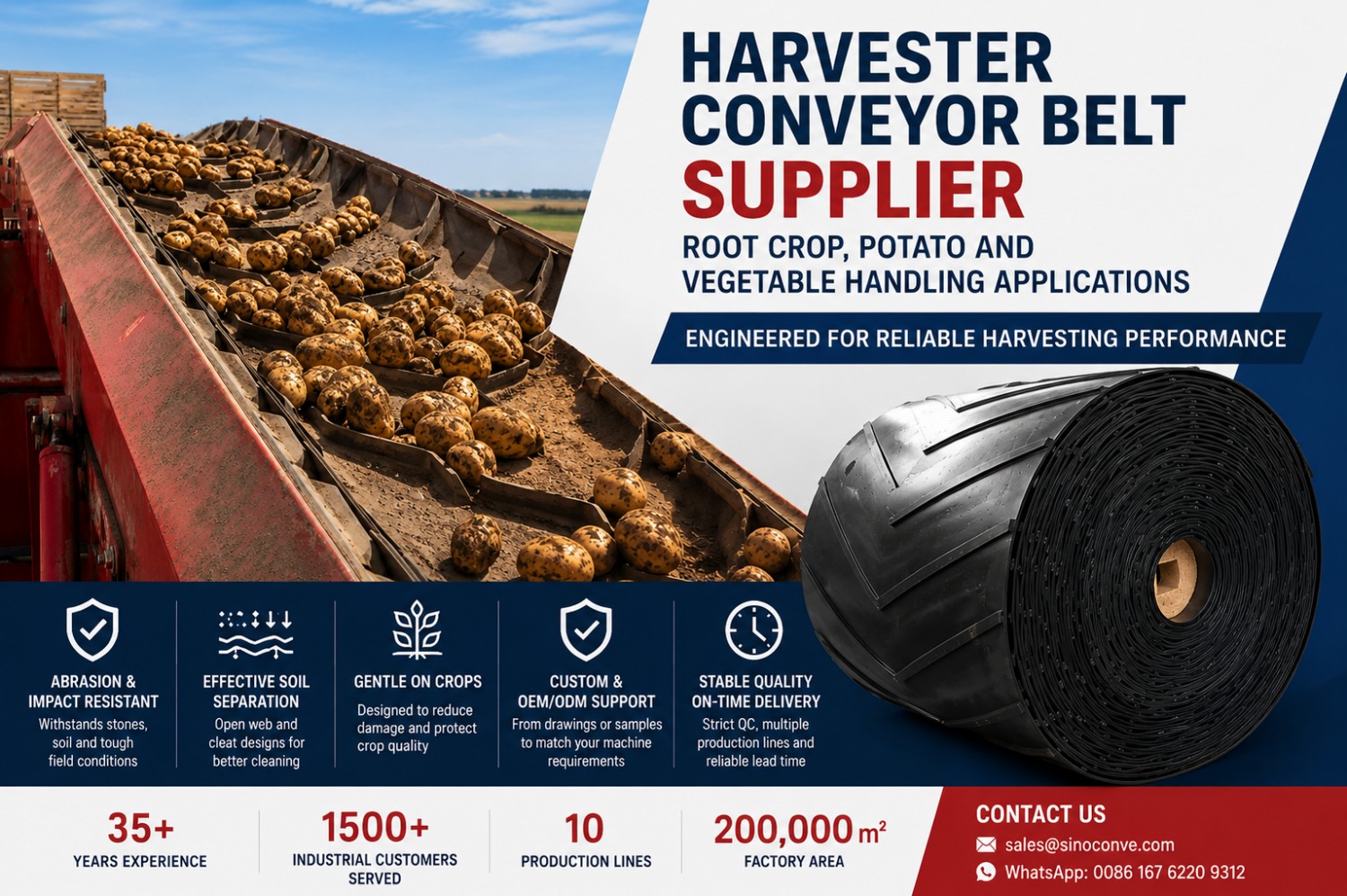
Harvester Conveyor Belt Supplier: Root Crop, Potato and Vegetable Handling Applications

Harvester Conveyor Belt Supplier: Root Crop, Potato and Vegetable Handling Applications

Agricultural OEMs sourcing harvester conveyor belts need to evaluate more than belt width, length and unit price. Root crop, potato and vegetable handling can involve soil separation, crop damage, stones, mud, machine interfaces and application-specific belt or web geometry. This guide explains what to include in an RFQ, how to control sample approval, what proof of manufacturing capability to request, and how to compare suppliers before moving from prototype development to repeat production orders.

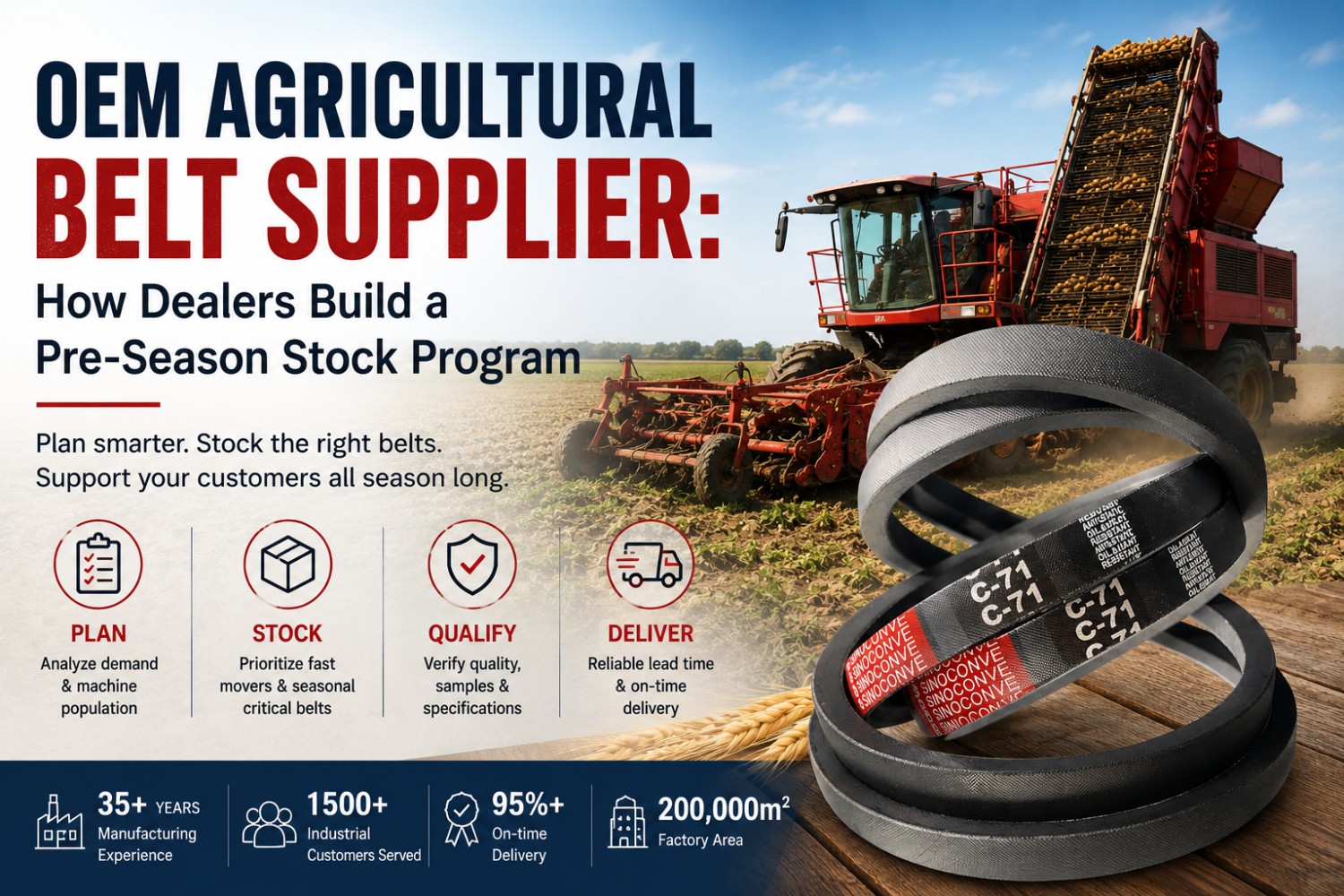
OEM Agricultural Belt Supplier: How Dealers Build a Pre-Season Stock Program

OEM Agricultural Belt Supplier: How Dealers Build a Pre-Season Stock Program

Agricultural belt demand can rise quickly around planting, harvesting, and other seasonal work, making inventory planning critical for equipment dealers and distributors. This guide explains how to build a pre-season agricultural belt stock program using sales history, machine population, SKU classification, sample validation, MOQ, supplier qualification, private-label requirements, and realistic lead-time planning. It also shows buyers what to include in an RFQ when comparing OEM agricultural belt suppliers for repeatable wholesale supply.

Agricultural V-Belt Manufacturer for Harvesters and Farm Machinery Distributors

Agricultural V-Belt Manufacturer for Harvesters and Farm Machinery Distributors

Selecting an agricultural V-belt manufacturer requires more than comparing unit prices. Distributors need to verify harvester and farm machinery belt coverage, construction, replacement compatibility, samples, quality documentation, private-label capability, MOQ and seasonal lead time. This guide explains how agricultural machinery dealers and wholesalers can qualify a V-belt supplier, compare quotations on the same technical basis, reduce specification and inventory risk, and prepare a clearer RFQ for repeat or OEM purchasing programs.

Cement Conveyor Belt Manufacturer: Choosing Belts for Limestone, Clinker and Raw Meal

Cement Conveyor Belt Manufacturer: Choosing Belts for Limestone, Clinker and Raw Meal

Cement plants expose conveyor belts to very different duties, from abrasive limestone and raw materials to hot clinker and long, high-tension transfer lines. This guide helps procurement teams match belt construction to operating conditions, compare EP fabric and steel cord options, evaluate manufacturer capability, verify quality documentation, and prepare a technically complete RFQ. It also explains what buyers should check beyond unit price when qualifying a cement conveyor belt manufacturer for factory-direct supply.

Heat Resistant Conveyor Belt Supplier for Cement and Steel Plants: What Temperature Data Matters

Heat Resistant Conveyor Belt Supplier for Cement and Steel Plants: What Temperature Data Matters

Buying a heat resistant conveyor belt for a cement or steel plant requires more than specifying T1, T2, or T3. This guide explains which temperature data suppliers need, why normal and peak temperatures must be separated, how clinker and hot steel-plant materials affect belt selection, and what buyers should verify before issuing a PO. It also provides a practical RFQ checklist covering belt construction, operating conditions, failure evidence, testing, supplier capability, and documentation.

Industrial Belt Manufacturer for Cement Plants: Conveyor Belts, V-Belts and Rollers from One Supplier

Industrial Belt Manufacturer for Cement Plants: Conveyor Belts, V-Belts and Rollers from One Supplier

Cement plant procurement often involves conveyor belts, V-belts and rollers with very different operating requirements. This guide explains how buyers can evaluate an industrial belt manufacturer for consolidated sourcing without compromising technical qualification. It covers belt selection for limestone and clinker, roller and V-belt RFQ requirements, manufacturing and QC checks, standards, packaging, supplier qualification and the information procurement teams should prepare before requesting a quotation for bulk or recurring plant requirements.

Explore more

We are committed to providing you with better products and services. Welcome to browse more content for details