Chevron Conveyor Belts: Built for Steep Angles, Heavy Loads, and Zero Slippage
In industries where materials must be transported on steep slopes, especially under heavy load conditions, traditional flat belts often fail—causing rollback, material loss, or excessive wear on drive systems.
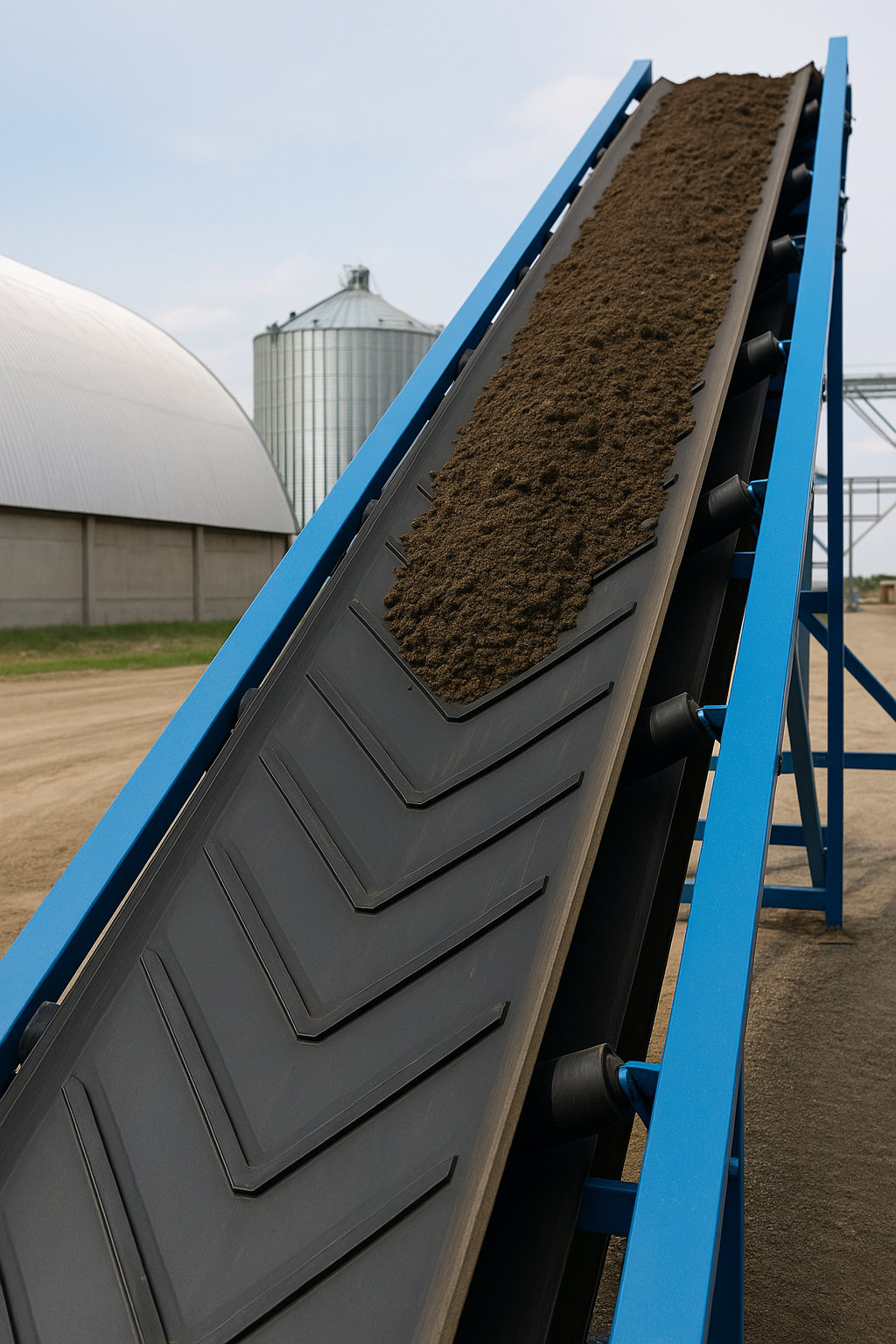
Chevron conveyor belts are purpose-built with molded cleat patterns that provide the grip and control needed for upward transport of bulk or loose materials. Whether you’re dealing with moist grains, crushed ore, or packaged goods on inclines up to 40°, Chevron belts keep everything moving—no slipping, no rollback, and no compromise.
What Makes Chevron Conveyor Belts Ideal for Inclines?
Chevron belts are rubber conveyor belts designed with raised cleats or patterns (usually in a “V” or “U” shape) molded onto the top surface. These cleats act like mini barriers that block and guide material, allowing stable flow even when the conveyor is angled upward or downward.
Unlike flat belts, which rely only on surface friction, Chevron belts mechanically lock material in place—making them essential in elevation-heavy systems.
Core Advantages: Grip, Load Control, and Elevation Efficiency
-
Maximum Traction on Steep Angles
Chevron cleats enable smooth material flow on slopes up to 40°, depending on cleat height and spacing. -
Zero Slippage, Even in Wet or Dusty Conditions
Moisture, dust, or uneven material shapes don’t reduce grip—making Chevron belts ideal for unstable loads. -
Minimized Material Loss
Cleats reduce rollback, bouncing, and material scatter—improving throughput and system efficiency. -
Handles Heavy Loads
With EP, NN, or steel-reinforced carcasses, Chevron belts carry bulk, high-mass materials without deformation. -
Cleans Easily
Available with self-cleaning patterns or optional scrapers for sticky or dusty loads.
Where Chevron Belts Outperform Flat Belts
Chevron conveyor belts are ideal for industries with vertical space constraints, steep conveying paths, or flow control issues, including:
-
Mining & Quarrying – Crushed rock, ore, coal, tailings
-
Agriculture & Fertilizer – Grains, seed, silage, granular fertilizers
-
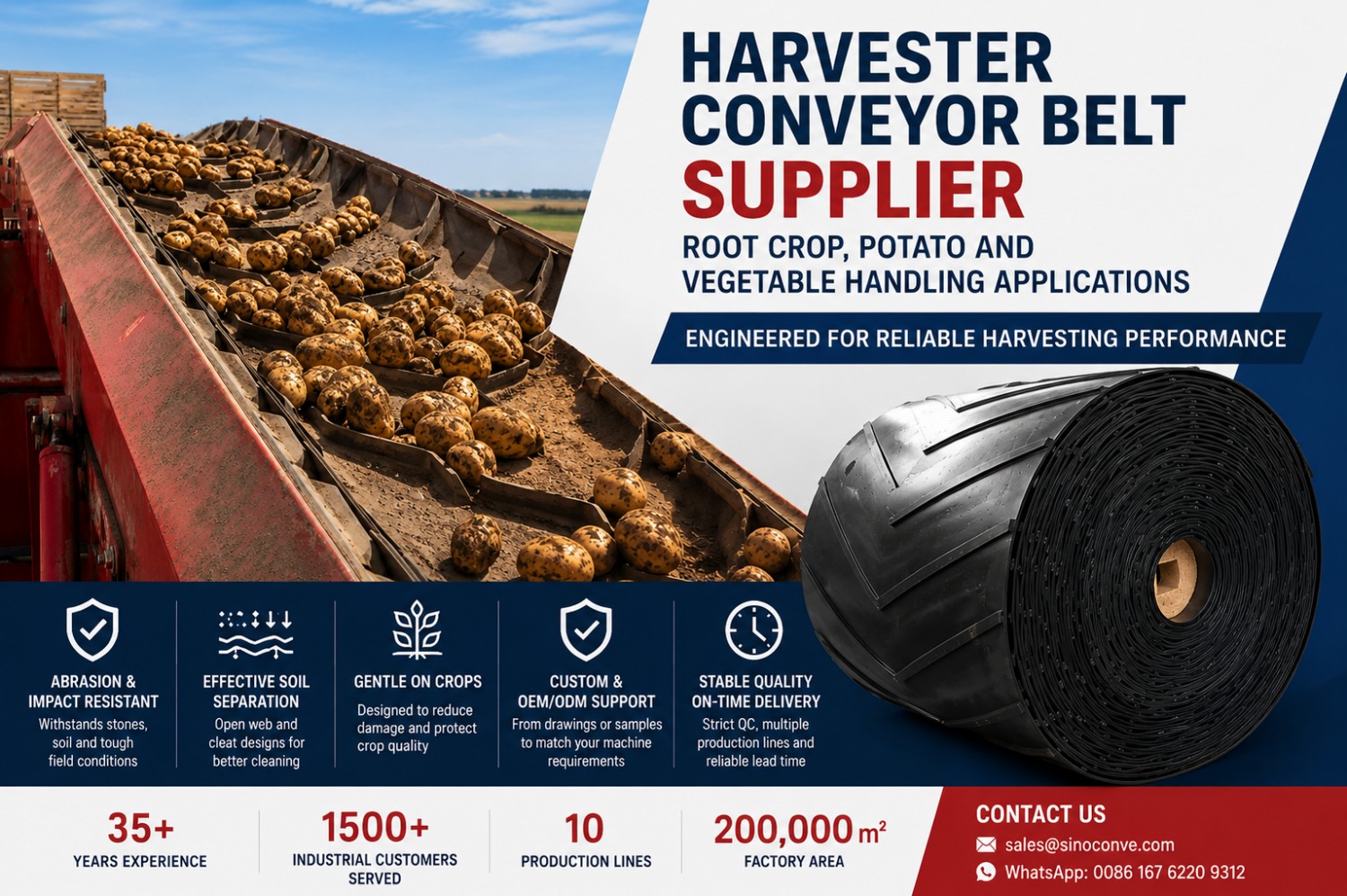
Fruit & Produce Handling – Potatoes, apples, citrus
-
Recycling & Waste Sorting – Scrap materials, shredded plastics, damp refuse
-
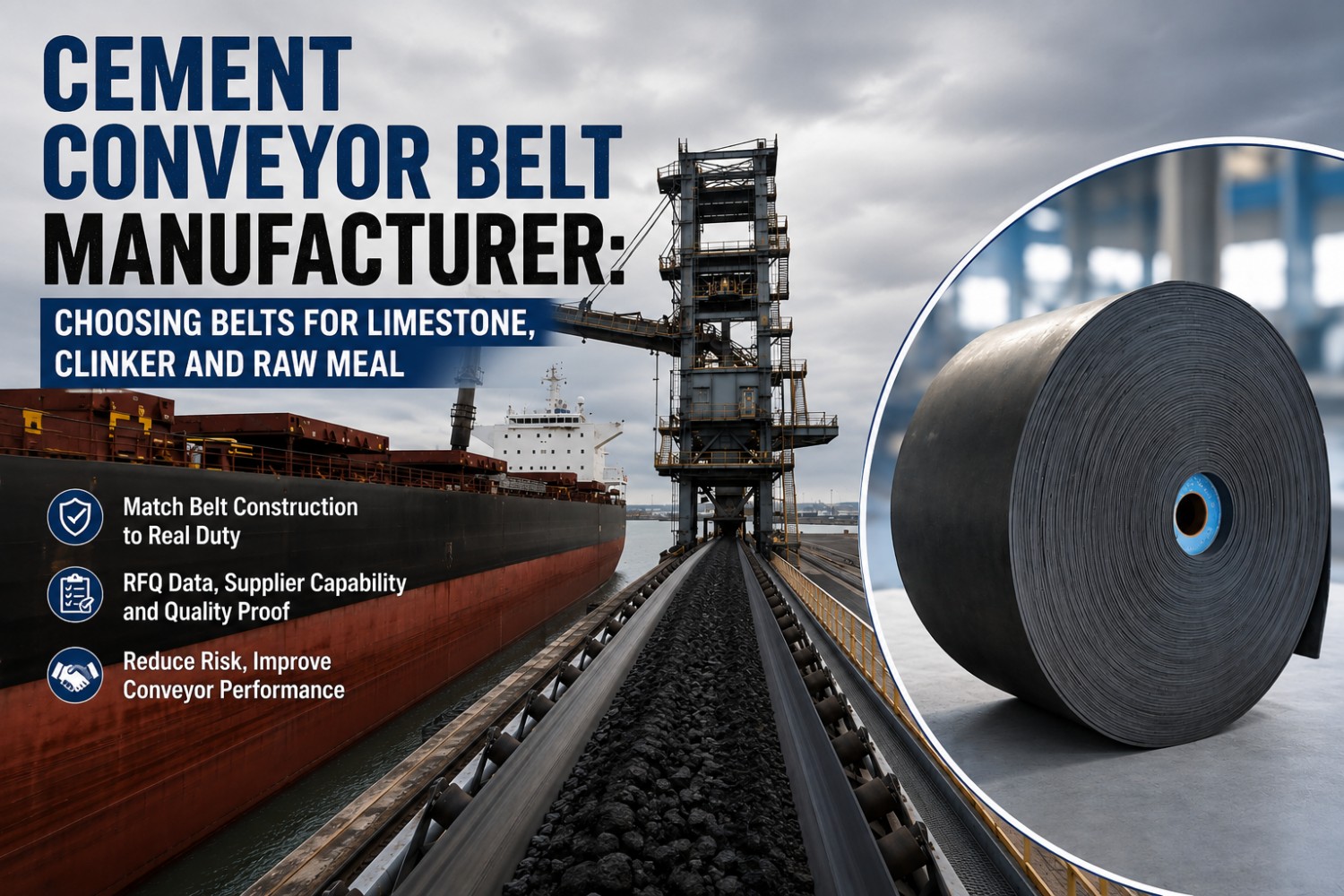
Port Terminals – Loose materials from ship unloading to storage silos
-
Cement & Building Materials – Sand, limestone, bricks, packaged mortar
Understanding Chevron Patterns and When to Use Them
| Pattern Type | Features | Best For |
|---|---|---|
| Open V | General bulk flow | Gravel, coal, fertilizer |
| Closed V | Better material containment | Sand, dust, powdered feed |
| U-shape | Gentle handling | Fruits, parcels |
| Y-pattern | Higher cleat density | Slippery, wet, or fine loads |
| C- or T-cleat | Deep cleats for vertical lifting | Boxes, bags, logs, wrapped items |
Cleat height ranges from 5 mm to 32 mm+, with pitch and belt width customizable to match throughput needs.
How to Select the Right Chevron Belt for Your Application
| Factor | Recommendation |
|---|---|
| Incline angle | Up to 20°: 5–10mm cleats; 30–40°: 15–25mm cleats |
| Material behavior | Rolling/sticky materials need deeper cleats |
| Cleat pattern | Open for dry material, closed/U for flow control |
| Cleaning requirements | Choose smoother cleat types or compatible scrapers |
| Load weight | Reinforced base (EP400–EP630+) for heavy-duty hauling |
| System layout | Confirm pulley diameters and transition zone for cleat clearance |
Why Sinoconve Chevron Belts Deliver in Demanding Environments
Sinoconve manufactures high-performance Chevron belts designed for durability and uptime, offering:
-
Heat-press molded cleats (not glued) for long-term adhesion
-
Standard & custom patterns (V, Y, U, C, T)
-
Carcass: EP100–EP630, optional cross-stiffness layers
-
Rubber grades: Abrasion-, oil-, fire-, or cold-resistant
-
Custom belt widths up to 2200 mm
-
Cleats from 5–32 mm or more, with custom pitch
-
Global delivery with OEM/ODM support and fast lead times
Our Chevron belts are already trusted in 100+ countries across mining, grain logistics, cement plants, and port terminals.
Ready to Move Materials Uphill ?
Whether your system moves wet coal, loose grain, or stacked parcels, Chevron conveyor belts give you the friction, stability, and capacity to overcome steep angles and system limitations.
📩 If you are looking for this type of conveyor belt or want to learn more, please visit our home page or contact us directly. We will get back to you within 24 hours.