
A v belt usually gets blamed only after the machine starts making noise. A fan slows down, a pump loses output, or the pulley area smells hot after a long shift. The belt itself may look simple, but the application decides whether it runs quietly for months or keeps asking for tension adjustment.
The best Application for v belt use is not just any pulley drive that needs a belt. It is a drive where the pulley groove, load pattern, speed, temperature, and maintenance access all match what the belt can handle. That is why the same v belt may work well on a workshop blower but fail early on a dusty agricultural machine.
SINOCONVE supplies classic and cogged V-belts for general machinery, agricultural equipment, workshop drives, HVAC systems, and replacement markets. The point is not to choose the most expensive belt. The point is to choose the one that fits the drive.
What a V Belt Actually Does
A v belt transfers power by pressing its angled sides into the pulley groove. The bottom of the belt is not supposed to carry the main load. If the belt sits too low, too high, or runs in a worn groove, the drive loses grip even if the belt is new.
Compared with a flat belt, the wedge shape gives better traction in a compact pulley drive. Compared with a timing belt, a v belt does not lock into teeth. It can tolerate small shock loads and slight speed variation, which is one reason it still appears in many older and heavy-use machines.
General Industrial Drives: Fans, Pumps, Blowers
The most common Application for v belt systems is still ordinary industrial power transmission. Fans, pumps, blowers, compressors, and mixing machines often run for long hours at steady speed. In these places, a classic v belt makes sense because it is easy to install, easy to replace, and forgiving when the drive is not perfectly clean.
For a plant maintenance team, that matters. A belt used on a cooling fan or water pump does not always need the highest-efficiency design. It needs the right section, correct tension, clean pulley grooves, and enough resistance to heat and surface wear.
Agricultural Machinery: Shock Loads and Dust
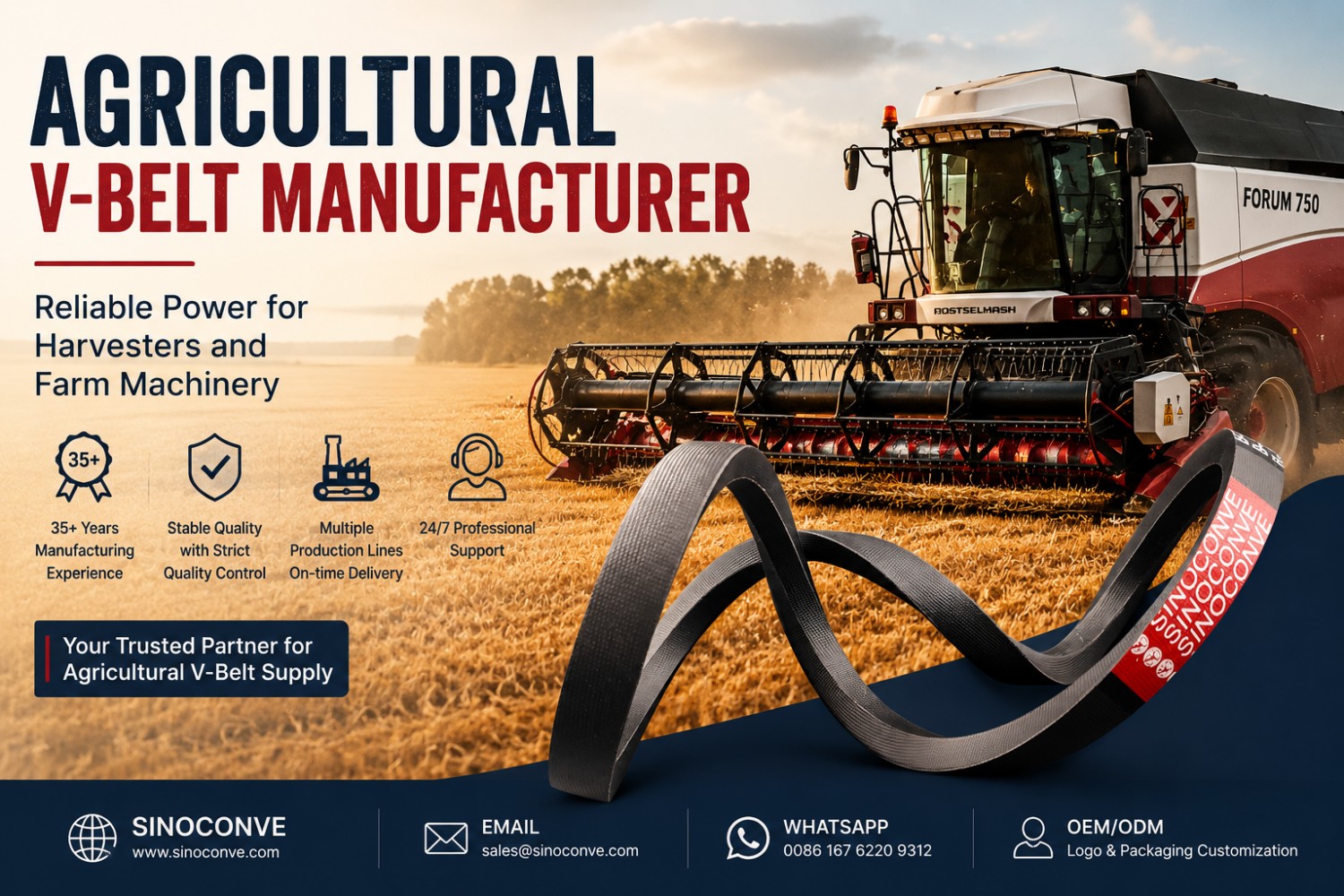
Agricultural equipment is harder on belts than it looks from a catalog page. Dust builds up around pulleys. Loads change suddenly. Machines may sit idle, then run for long hours during harvest.
A wrapped classic v belt is often chosen for these drives because it handles shock reasonably well and is not delicate in field service. Balers, threshers, cutters, and augers all need a belt that can accept vibration without cracking too early. When pulley diameter is small or the drive runs hotter, a cogged version may be worth checking.
Automotive and Compact Drives
In vehicle and small-engine systems, space is usually tight. The belt may need to bend around smaller pulleys while running at higher speed. Heat from the engine bay also shortens the life of ordinary rubber compounds if the material is not matched properly.
This is where cogged V-belts can help. The cut inner profile bends more easily and reduces internal heat. It is not a timing belt and should not be treated as one, but for certain auxiliary drives it can run cooler than a standard wrapped belt.
HVAC and Building Equipment
Large HVAC fans are not dramatic machines, but they punish poor belt selection quietly. A loose belt wastes energy and leaves black dust near the guard. A belt that is too tight loads the bearings. Either way, someone eventually has to open the panel and adjust it.
For HVAC drives, the belt should be chosen around pulley condition, motor load, running hours, and maintenance schedule. A basic v belt can still be enough for many systems. A cogged belt may be useful where heat, small pulleys, or energy loss are recurring complaints.
Classic V Belt or Cogged V Belt?
|
Drive condition |
Usually better choice |
Practical reason |
|
Moderate speed, larger pulley |
Classic v belt |
Simple, stable, easy replacement |
|
Small pulley diameter |
Cogged v belt |
Bends with less internal stress |
|
Dusty field machine |
Classic v belt |
Tolerates rough service well |
|
Hot compact drive |
Cogged v belt |
Runs cooler when matched correctly |
|
Low-cost general repair |
Classic v belt |
Good for standard pulley drives |
|
Repeated slip or heat complaints |
Check cogged option |
May reduce heat and flex fatigue |
What Buyers Should Confirm Before Ordering
The old belt code is useful, but it should not be the only reference. If the previous belt failed early, copying the same size may simply repeat the same problem.
Before ordering, confirm the belt section, top width, inner or pitch length, pulley groove condition, speed, load pattern, and working environment. Oil, dust, outdoor exposure, frequent starts, or misaligned pulleys all change service life.
For distributors and OEM buyers, packaging, printed codes, sample approval, and batch consistency also matter. A single good sample is not enough if later batches vary in length or cord placement.
SINOCONVE V Belt Supply
SINOCONVE V-belts are produced for industrial transmission and replacement use, including classic and cogged designs. For a new project or bulk order, drawings, samples, pulley information, quantity, and working conditions help the supplier match the belt more accurately.
A good Application for v belt selection should start from the machine, not from a product photo. When the drive condition is clear, the belt choice becomes much safer.
FAQ
What is a v belt used for?
It is used to transfer power between pulleys in fans, pumps, compressors, agricultural machines, HVAC units, and workshop equipment.
Is a v belt the same as a timing belt?
No. A timing belt uses teeth for synchronized motion. A v belt works through friction between the belt sides and pulley groove.
When should I choose a cogged V-belt?
Check it when the drive has small pulleys, heat buildup, higher speed, or repeated flexing problems.
What information is needed for quotation?
Belt code, section, length, width, quantity, pulley type, application, and working environment. Photos or samples help when the code is unclear.