
Chevron Conveyor Belt for Steep Bulk Material Handling
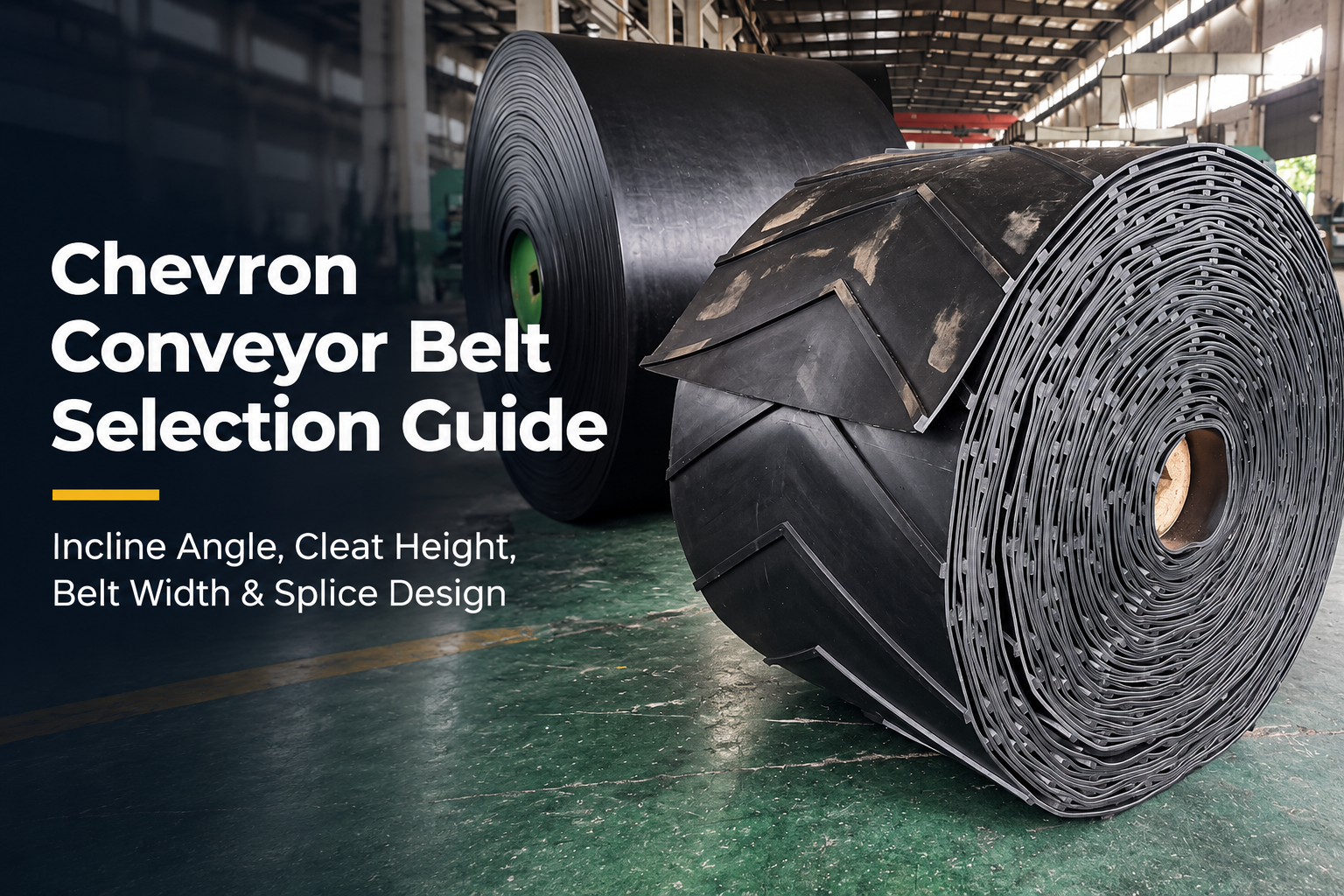
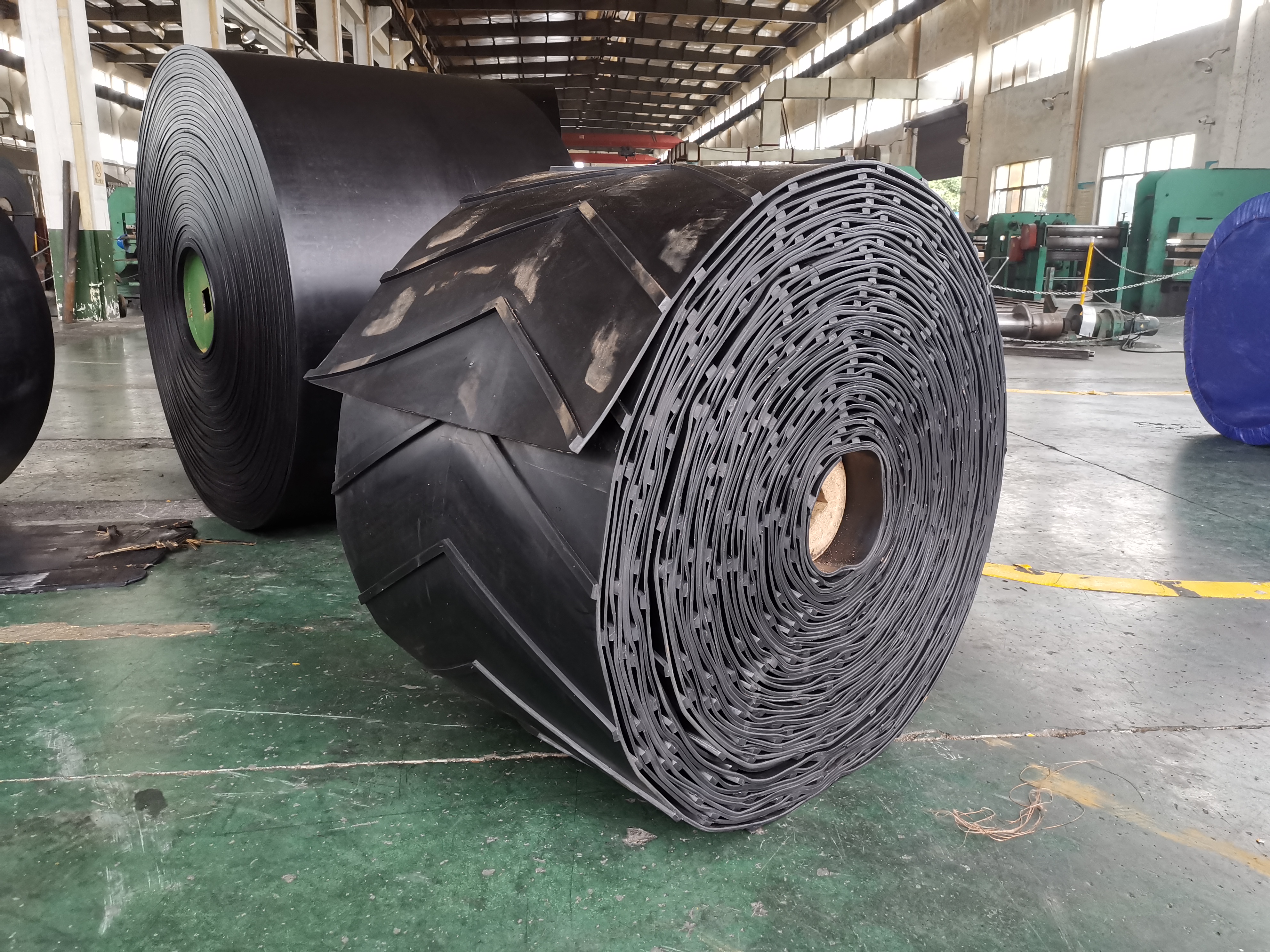
A chevron conveyor belt should not be selected from the profile photo alone. The raised pattern is there for a reason: loose bulk material needs help staying on the belt when the conveyor angle becomes too demanding for a smooth surface. But the pattern only works well when it matches the material, the loading point, and the rest of the conveyor layout.
For sand gravel, crushed stone, screened aggregate, grain, fertilizer, or similar bulk solids, the first question is how the material behaves on the belt. Dry, rounded gravel rolls differently from damp quarry fines. Washed sand may cling to the surface. Mixed aggregate can contain sharp edges that wear the top cover faster than expected. A belt that performs acceptably in one plant may create carryback, edge spill, or cleaning trouble in another.
That is why the choice is not simply between a strong belt and a weak belt. It is a choice between material control, abrasion resistance, pulley compatibility, maintenance access, and the acceptable amount of cleanup around the conveyor.
What the Chevron Pattern Actually Changes
A flat belt depends mainly on surface friction and troughing to keep material moving. Once the conveyor becomes steeper, gravity starts to work against the system. The raised chevron profile interrupts that backward movement. It gives loose material a series of small holding points as the belt climbs.
This does not mean a chevron conveyor belt can solve every incline problem. If the material enters the belt too fast, drops from too high, or lands off center, the profile may wear unevenly or fill with fines. If the belt is installed on pulleys that are too small for the construction, the raised pattern and base belt may also suffer from repeated flexing. The belt surface helps, but it cannot repair poor loading design.
|
Material condition |
What often happens on an incline |
What to check before choosing the belt |
|
Dry sand or fine aggregate |
May slide back or collect between profiles if the surface pattern is too shallow or too close. |
Incline angle, belt speed, cleaning method, and whether fines build up on the return side. |
|
Sand gravel or mixed aggregate |
Larger particles may sit well, while fines move through gaps and create carryback. |
Lump size range, moisture, abrasion level, loading height, and skirt sealing. |
|
Crushed stone |
Sharp edges can cut or polish the profile and top cover. |
Cover grade, impact at loading point, profile wear history, and old belt photos. |
|
Grain or seed |
Material flows easily but can spill at edges if the conveyor is narrow or poorly loaded. |
Belt width, profile height, side guides, and food or agriculture handling requirements. |
|
Wet fines or sticky material |
May pack inside the chevron pattern and reduce grip over time. |
Cleaning access, scraper choice, water exposure, and whether a different belt surface is safer. |
Chevron Belt, Sidewall Belt, and Flat Belt: Do Not Treat Them as the Same Product
The words chevron, cleated, and sidewall are often mixed together in daily purchasing. They are related, but they solve different problems. A traditional chevron conveyor belt uses molded raised patterns on the carrying surface. A sidewall belt adds corrugated walls along the edges and usually transverse cleats. A standard flat rubber belt may still be the best answer when the angle is mild and the material flows predictably.
For an inclined conveyor carrying sand gravel, a chevron pattern may be enough if the belt only needs extra grip. If the line is steep, narrow, or difficult to clean after spillage, sidewalls may deserve consideration. The choice should follow the material route, not the catalog category.
|
Belt option |
Best fit |
Where it can disappoint |
|
Flat rubber conveyor belt |
Horizontal or mild incline transfer with controlled loading and stable material. |
Loose bulk material may slide back if the angle increases. |
|
Chevron conveyor belt |
Inclined conveyor lines carrying sand gravel, aggregate, grain, fertilizer, or similar loose material. |
Not ideal when material is very sticky, profile cleaning is difficult, or containment at edges is the main issue. |
|
Cleated conveyor belt |
Applications needing stronger holding points or defined pockets for product movement. |
Cleats can interfere with cleaners, transitions, and return clearance if not planned. |
|
Sidewall conveyor belt |
Steeper lifts where edge spillage must be controlled and transfer points should be reduced. |
More complex to install, inspect, clean, and splice than a basic chevron belt. |
Selection Points That Matter More Than the Product Name
A buyer asking only for “chevron belt for sand gravel” will usually receive a broad quotation. A buyer who describes the material, angle, and conveyor layout receives a better recommendation. The difference can show up later in belt wear, material loss, and repeated tension adjustments.
Profile height is important, but it is not the only parameter. A taller profile may improve holding power in some conditions. In other conditions, it can trap fines, make cleaning harder, or create return-side clearance problems. Belt width, cover compound, carcass strength, splice method, and pulley diameter still have to match the conveyor.
|
Selection item |
Why it matters |
Buyer should provide |
|
Material handled |
Bulk behavior changes with particle size, shape, and moisture. |
Sand, gravel, crushed stone, grain, fertilizer, or mixed aggregate details. |
|
Incline angle |
Decides whether flat, chevron, cleated, or sidewall design is more suitable. |
Actual angle, not only “inclined conveyor”. |
|
Belt width and speed |
Affects loading stability, edge spill, and throughput. |
Current belt size, target capacity, and line speed if available. |
|
Profile shape and height |
Controls grip but also affects cleaning, bending, and return clearance. |
Old profile photos or required pattern drawing. |
|
Pulley diameter |
Raised profiles and belt carcass must bend safely around the pulley system. |
Drive, tail, snub, and take-up pulley photos or dimensions. |
|
Loading and discharge points |
Poor loading can damage profiles even if the belt itself is correct. |
Photos of chute, skirt, impact zone, and discharge end. |
|
Working environment |
Outdoor weather, dust, water, and abrasion change cover choice. |
Indoor/outdoor use, temperature, moisture, and cleaning routine. |
Where a Chevron Conveyor Belt Usually Fits
Chevron belts are common in quarrying, sand and gravel plants, mobile crushing and screening, agriculture, recycling, construction material handling, and some port or stockyard transfer lines. The common link is not the industry name. The common link is loose material on an inclined conveyor.
In aggregate handling, the belt may move material from a crusher discharge to a screen, from a screen to a stockpile, or from a hopper to a higher process level. On mobile equipment, the profile can help keep material controlled where conveyor length is limited and the machine cannot use a long shallow route. In agriculture, the same basic surface logic may be used for grain, seed, or fertilizer, though cleanliness and gentle handling may become more important than abrasion alone.
Common Failure Signs and What They Usually Suggest
The worn belt usually gives better information than a clean product photo. Before replacing a chevron belt, buyers should look at where the profile is polished, torn, packed with material, or worn unevenly. These marks often point to loading, tracking, or cleaning problems.
|
Observed problem |
Possible cause |
What to inspect |
|
Material rolls back on the incline |
Profile too low, belt speed too high, moisture changed, or incline exceeds the belt design. |
Incline angle, material moisture, profile height, and loading volume. |
|
Chevron profile wears in one lane |
Off-center loading, mistracking, or uneven chute discharge. |
Loading chute, skirt boards, tracking rollers, and old wear pattern. |
|
Fines pack between profiles |
Sticky or damp material, poor cleaning access, unsuitable profile spacing. |
Return-side buildup, scraper type, water exposure, and cleaning schedule. |
|
Edge spill continues after belt replacement |
Belt surface is not the only issue; loading or containment may be wrong. |
Chute alignment, belt width, side guides, loading height, and skirt sealing. |
|
Profile cracks near pulleys |
Pulley diameter, belt stiffness, or repeated flexing may be unsuitable. |
Pulley size, belt construction, splice area, and take-up position. |
|
Splice opens early |
Wrong splice method, contamination, excessive tension, or incompatible profile preparation. |
Splice type, tension setting, pulley transition, and repair workmanship. |
Practical Advice Before Ordering
For a new conveyor, start with the layout. For a replacement belt, start with the failed belt. If the old belt worked for years and finally wore out, copying most of the specification may be reasonable. If the old belt failed quickly, copying the same design without asking why may only repeat the problem.
For SINOCONVE or any conveyor belt supplier, send more than width and length. Share the material name, conveyor angle, pulley photos, loading point photos, and failure marks on the old belt. If the line handles sand gravel, include whether it is dry, washed, damp, or mixed with fines. These details support a more accurate belt recommendation and reduce back-and-forth sample changes.
|
Quotation information |
Useful detail |
|
Belt size |
Width, length, thickness, and whether the belt is open-ended or endless. |
|
Material |
Sand, gravel, aggregate, grain, fertilizer, or other bulk material; include lump size and moisture. |
|
Conveyor layout |
Incline angle, center distance, pulley diameters, and take-up type. |
|
Surface requirement |
Open V, closed V, profile height, chevron pitch, or old pattern photo. |
|
Belt condition |
Photos of worn profile, splice, edge, return side, and loading zone. |
|
Operating condition |
Outdoor use, dust, water, abrasive load, working hours, and cleaning method. |
|
Packing and order needs |
Roll packing, frame packing, quantity, branding, and delivery schedule. |
FAQ
What is a chevron conveyor belt used for?
It is used for carrying loose bulk material on an inclined conveyor where a flat belt may allow rollback or edge spill. Typical materials include sand gravel, crushed stone, grain, fertilizer, and other granular loads.
Is a chevron belt the same as a sidewall belt?
No. A chevron belt has raised profiles on the carrying surface. A sidewall belt has corrugated sidewalls and usually cross cleats. Sidewall belts are used when stronger containment or steeper lifting is required.
Can one chevron pattern handle all sand gravel applications?
No. Dry gravel, damp fines, washed sand, and mixed aggregate can behave differently. Profile height, belt speed, loading point, and cleaning access should be checked before ordering.
Why does material still slide back after using a chevron belt?
Possible causes include insufficient profile height, excessive incline angle, wet or sticky material, high belt speed, poor loading, or worn profiles.
What should I send for a quotation?
Send belt width and length, conveyor angle, material details, pulley photos, loading point photos, old belt failure photos, desired profile, quantity, and packing requirements.
Final Note
A chevron conveyor belt is not just a belt with a raised pattern. It is a material-control choice. The right design helps an inclined conveyor move sand gravel or other bulk materials with fewer spills, less rollback, and more predictable flow. The wrong design can trap fines, wear early, or shift the problem to the loading and cleaning areas. Before buying, match the belt to the material, incline angle, pulley layout, and maintenance conditions. That is where the real performance decision is made.