
Agricultural Harvester Packing Belt: What Buyers Should Check Before Harvest Season
A harvester belt rarely fails at a convenient time. It usually happens when the crop is ready, the weather window is short, and the machine has already been running with dust, moisture, crop residue, and uneven loading for hours. The belt may not break immediately. First it slips. Then the crop flow becomes uneven. A packing section starts feeding too fast on one side. Operators tighten the system, clean the frame, and keep working because stopping is expensive.
That is why an Agricultural harvester packing belt should not be treated as a simple replacement strip. In many harvesting and post-harvest lines, the belt works as a conveyor belt, a positioning surface, and sometimes a cushioning layer at the same time. If the belt surface, reinforcement, splice, and pulley layout do not match the machine, the same failure comes back during the next season.
For buyers, maintenance teams, and agricultural equipment distributors, the better question is not only “What size belt do I need?” It is: what job is this belt doing inside the machine, and what field conditions is it expected to survive?
Where the Agricultural Harvester Packing Belt Actually Works
The phrase Agricultural harvester packing belt can refer to several belt positions. Some belts carry harvested crops from the cutting or picking area. Others move produce toward a packing unit, sorting table, storage hopper, or transfer conveyor. On some machines, the belt is exposed to soil, stems, water, and repeated impact from crop flow. On others, it handles more delicate produce where bruising or surface marking becomes the bigger problem.
This is where a standard agriculture conveyor belt may not be enough. A belt for grain handling does not face the same contact demand as a belt moving fruit or vegetables into packing trays. A belt under a combine’s crop flow does not behave like one in a clean warehouse conveyor. The material may look similar on a quote sheet, but it will not wear the same way in the field.
|
Machine position |
What the belt has to handle |
Selection note |
|
Crop transfer section |
Loose crop flow, dust, intermittent load |
Check surface grip and edge wear resistance |
|
Packing or sorting area |
Product spacing, soft contact, less aggressive handling |
Avoid a surface that marks produce |
|
Inclined transfer |
Rollback risk and uneven feed |
Surface texture or cleats may be needed |
|
Return path |
Residue, pulley contact, cleaning access |
Bottom side and tracking matter |
|
Field replacement belt |
Fast repair during season |
Old code, photos, and machine model reduce errors |
Belt Surface: Grip Is Useful, Too Much Grip Can Be a Problem
A rougher surface can help when crop material slides backward on an incline or shifts before packing. But more grip is not always better. If the belt handles soft produce, an aggressive surface may mark the product or collect residue. If the belt handles grain, straw, or husks, the surface must release material cleanly enough to avoid buildup near rollers and return paths.
Problem: crop flow is uneven near the packing section. Cause: the belt surface is either too smooth for the incline or too contaminated to hold material consistently. Impact: the packing unit receives crop in waves instead of a steady stream. Suggested check: inspect the old belt surface before ordering. Glossy wear, embedded residue, cracked ribs, or polished cleats tell more than the belt name alone.
In this sense, an Agricultural harvester belt is not just about tensile strength. The surface condition determines whether material moves steadily through the machine or keeps asking for manual correction.
Construction Details Buyers Should Not Skip
Most buyers ask for belt width and length first. That is necessary, but it is not enough. A working agricultural belt needs the right combination of surface layer, fabric reinforcement, bottom side friction, splice method, and edge quality.
Fabric reinforcement controls stretch and helps the belt keep its shape under repeated starts and load changes. The top surface controls crop contact. The bottom side must run properly over rollers or pulleys. The splice area matters because many early failures start there, especially when the belt passes around small pulleys or carries uneven crop load.
If the old belt failed early, do not copy it blindly. The old belt is useful evidence, not always the correct specification.
|
Part of the belt |
Why it matters in agricultural use |
|
Top surface |
Controls crop contact, grip, release, and residue buildup |
|
Fabric carcass |
Limits stretch and helps the belt keep shape under load changes |
|
Bottom surface |
Affects running over rollers, pulleys, and return paths |
|
Edge quality |
Important where the belt runs close to guides or frame parts |
|
Splice or joint |
Often the first place to show fatigue on compact layouts |
Real Field Conditions That Shorten Belt Life
Dust and dry crop residue
Dust does more than make the machine dirty. It can settle into pulleys and guide areas, changing how the conveyor belt tracks. Once tracking shifts, the edge begins to rub. Edge wear is not cosmetic; it can expose fabric and reduce belt life.
Moisture and sticky crop material
Wet crop material can stick to the belt surface or return path. This often leads to uneven buildup near rollers. The machine may still run, but the belt starts vibrating or tracking to one side. Cleaning access and surface release should be considered before selection.
Shock load during peak feeding
Harvesters rarely feed material at a perfectly steady rate. Crop volume changes with speed, field density, and operator adjustment. A belt that works during a light test may slip when the machine is full. That is why load pattern matters as much as average capacity.
Small pulley layout
Some agricultural machines use compact belt paths. If the belt is too stiff for the pulley diameter, bending fatigue appears around the splice or edge. A thicker belt may seem stronger, but it may not be the right choice for a tight layout.
Agricultural Harvester Belt vs General Conveyor Belt
A general conveyor belt can move material. An agricultural harvester belt has to move material under dirtier, less predictable conditions. The distinction matters for buyers who replace belts across different machine types.
|
Belt type |
Typical fit |
Risk if selected poorly |
|
General conveyor belt |
Clean or stable material transfer |
May slip or collect residue in field use |
|
Agricultural harvester packing belt |
Crop transfer, packing, sorting, harvesting equipment |
Wrong surface can bruise produce or lose grip |
|
Textured agriculture conveyor belt |
Inclined or unstable crop movement |
May be harder to clean if residue is sticky |
|
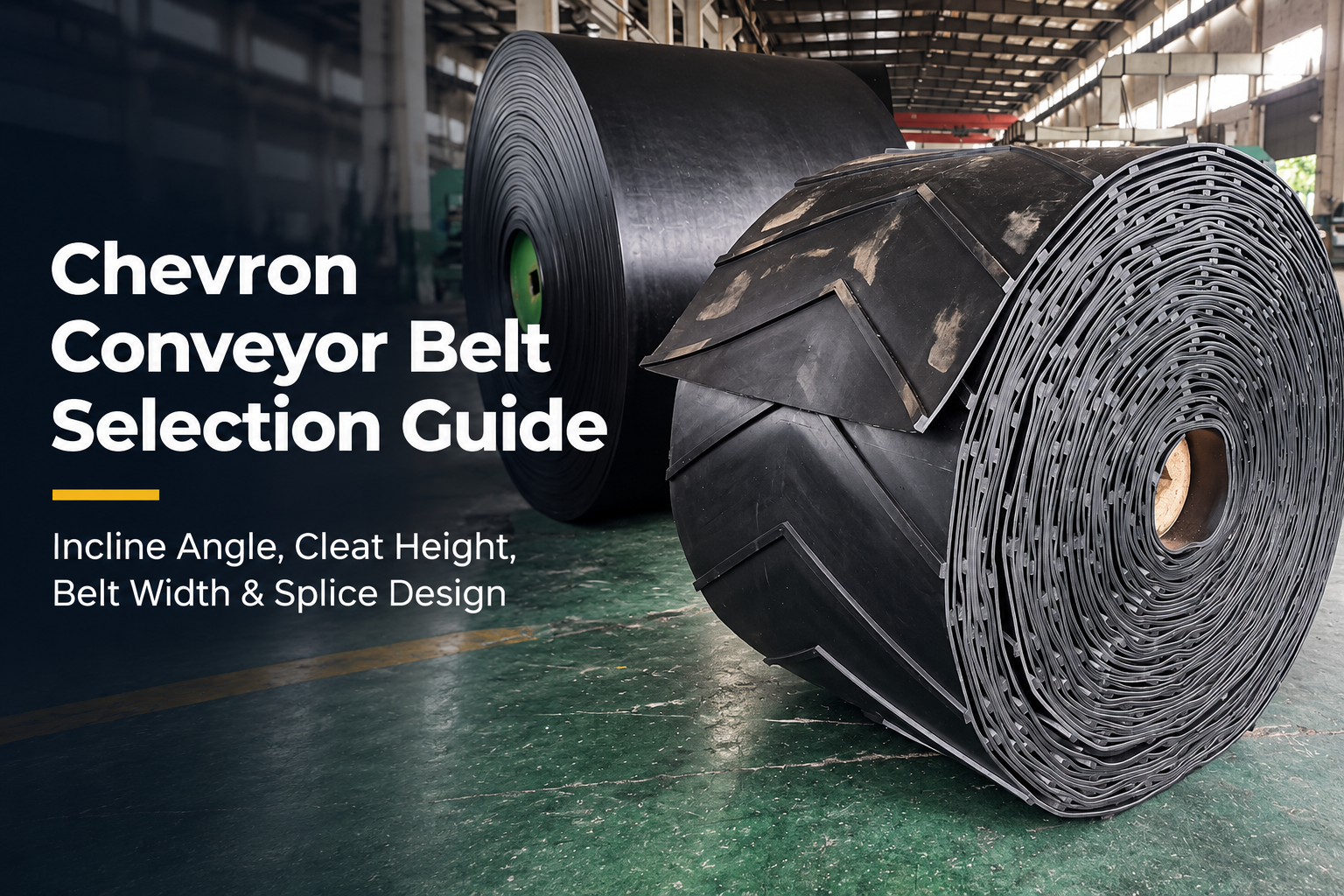
Cleated belt |
Steeper transfer or controlled spacing |
Cleat height and pulley layout must match |
How to Choose the Right Agriculture Conveyor Belt
Start from the machine position, not from a product photo. A belt used near the first crop transfer point may need abrasion and impact resistance. A belt used near packing may need a cleaner surface and gentler contact. A belt under a sorting section may need stable tracking and easy cleaning more than heavy-duty strength.
A practical selection sequence looks like this: identify the belt position, check the old belt code if readable, confirm width and length, review the pulley layout, then look at crop type and working environment. After that, surface pattern and reinforcement can be discussed with the supplier.
For SINOCONVE, this is where “Save Time, Save Money” becomes practical. Clear photos, belt codes, and working details reduce back-and-forth confirmation. They also reduce the chance of sending a belt that fits dimensionally but fails in the field.
Information to Send Before Asking for a Quote
For agricultural belts, a vague request like “I need a harvester belt” usually leads to more questions. A few details can make the quotation faster and more accurate.
|
Information |
Why it helps |
|
Old belt code or marking |
Confirms size or original reference when readable |
|
Belt width and total length |
Basic production dimensions |
|
Machine model and belt position |
Shows whether it works in transfer, packing, sorting, or drive area |
|
Crop or material type |
Helps judge grip, residue, abrasion, or product marking risk |
|
Pulley and roller photos |
Shows groove, diameter, tracking, and layout restrictions |
|
Failure photos |
Explains whether the problem is surface wear, edge damage, splice fatigue, or mistracking |
|
Quantity and packaging needs |
Supports distributor stock, OEM supply, or field replacement planning |
Common Failure Signs and What They Usually Mean
|
Observed sign |
Likely area to check first |
|
Crop slips or rolls back |
Surface texture, belt tension, incline angle |
|
Belt runs to one side |
Pulley alignment, roller buildup, frame contact |
|
Edge frays quickly |
Tracking, guide contact, belt width, pulley layout |
|
Splice opens |
Small pulley bending, wrong joint method, excessive tension |
|
Rubber dust near frame |
Rubbing point, residue buildup, over-tension |
|
Product marking |
Surface texture too aggressive or contamination on belt |
The important point is simple: a failed belt is a record of the machine’s working condition. Photos of the belt surface, splice, edge, pulley area, and return path can help the supplier understand the problem faster than a general product name.
Maintenance Notes for Harvest Season
Maintenance does not need to be complicated. Check tracking before the season starts. Look at the splice. Clean rollers and return paths. Keep the belt tension within the machine’s normal working range; overtightening often moves the problem to bearings, shafts, or splice areas.
During heavy use, pay attention to sound and crop flow. A belt that suddenly becomes noisy, dusty, or uneven is giving an early warning. Waiting until it tears usually costs more than a planned stop.
FAQ
What is an Agricultural harvester packing belt used for?
It is used to move harvested crop material through transfer, sorting, packing, or collection areas inside agricultural machines and related conveyor systems.
Is an Agricultural harvester belt the same as a normal conveyor belt?
Not always. It may share the same basic belt structure, but field dust, crop residue, moisture, impact, and product contact make the selection different.
When should I use a textured or rough surface belt?
Use it when crop material slips, rolls back, or shifts before packing. For delicate produce, the surface should still be checked to avoid marking.
What causes early belt failure on harvesters?
Common causes include wrong surface selection, pulley misalignment, excessive tension, poor cleaning, small pulley bending, and copying an old belt without checking why it failed.
What should I send to a supplier for an accurate quotation?
Send belt width, length, old belt code, machine model, crop type, belt position, pulley photos, failure photos, quantity, and packaging needs if available.
Final Note
An Agricultural harvester packing belt should be selected from the machine position outward: crop type, belt path, surface contact, pulley layout, and field environment. The cheapest belt is not always the lowest-cost belt if it fails during harvest. For buyers comparing conveyor belt and agriculture conveyor belt options, the old belt, the machine layout, and the failure marks are the best starting points.