

Blog
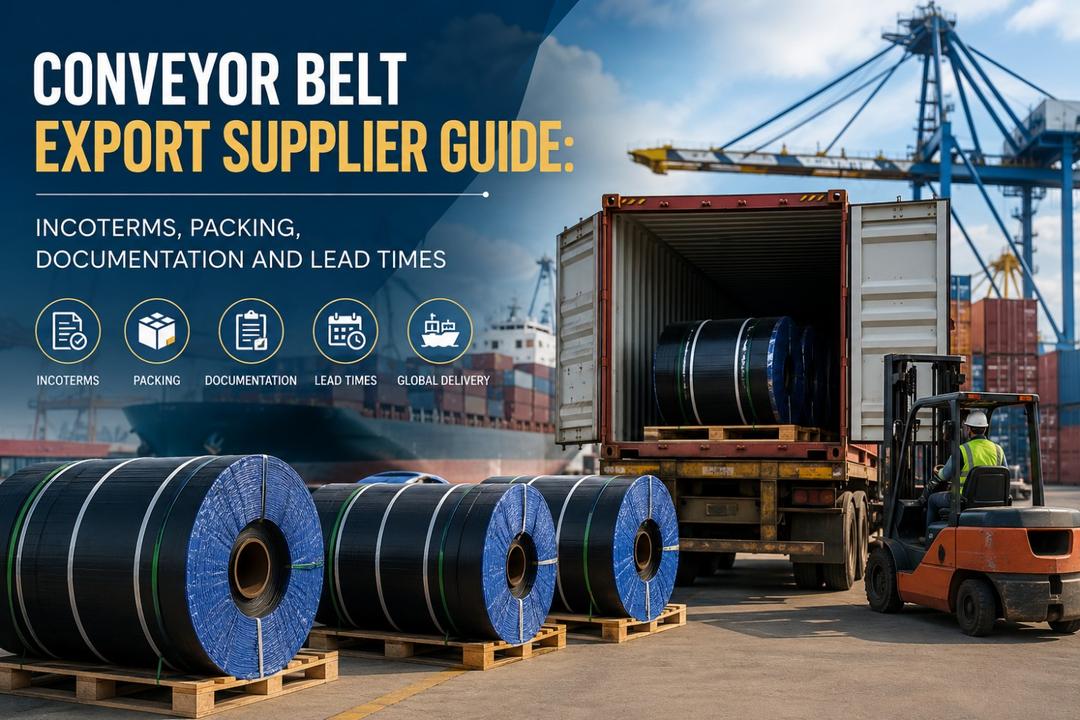
Conveyor Belt Export Supplier Guide: Incoterms, Packing, Documentation and Lead Times
Global conveyor belt procurement involves more than comparing product specifications and FOB prices. This guide explains how buyers can qualify a conveyor belt export supplier by reviewing Incoterms, export packing, shipping and quality documentation, production lead times, inspection controls and manufacturing capability. It also shows procurement teams what to clarify before issuing a purchase order, how to distinguish factory lead time from total delivery time, and which information to include in an export RFQ.
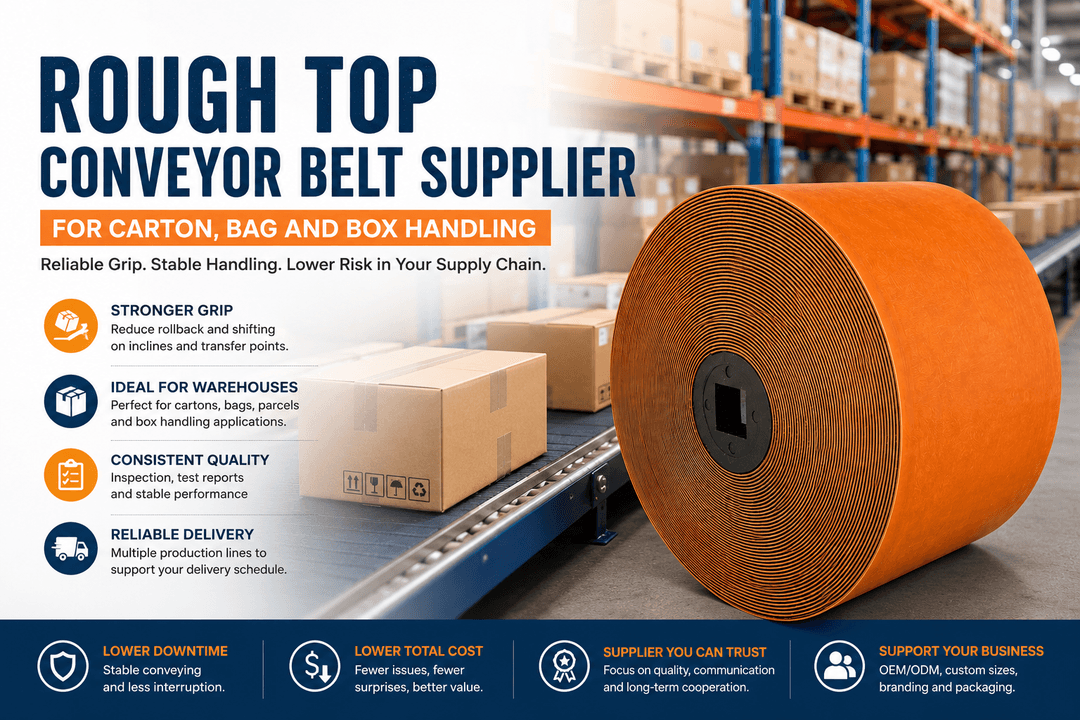
Rough Top Conveyor Belt Supplier for Carton, Bag and Box Handling
Warehouse buyers and distributors need more than a textured surface when sourcing rough top conveyor belts for cartons, bags and boxes. This guide explains how package behavior, conveyor geometry, surface grip and machine data affect belt selection. It also shows what to include in an RFQ, how to evaluate samples, quality control, repeat-order consistency, MOQ, packing and delivery, and how to compare suppliers on the same technical and commercial scope before placing a bulk or replacement order.
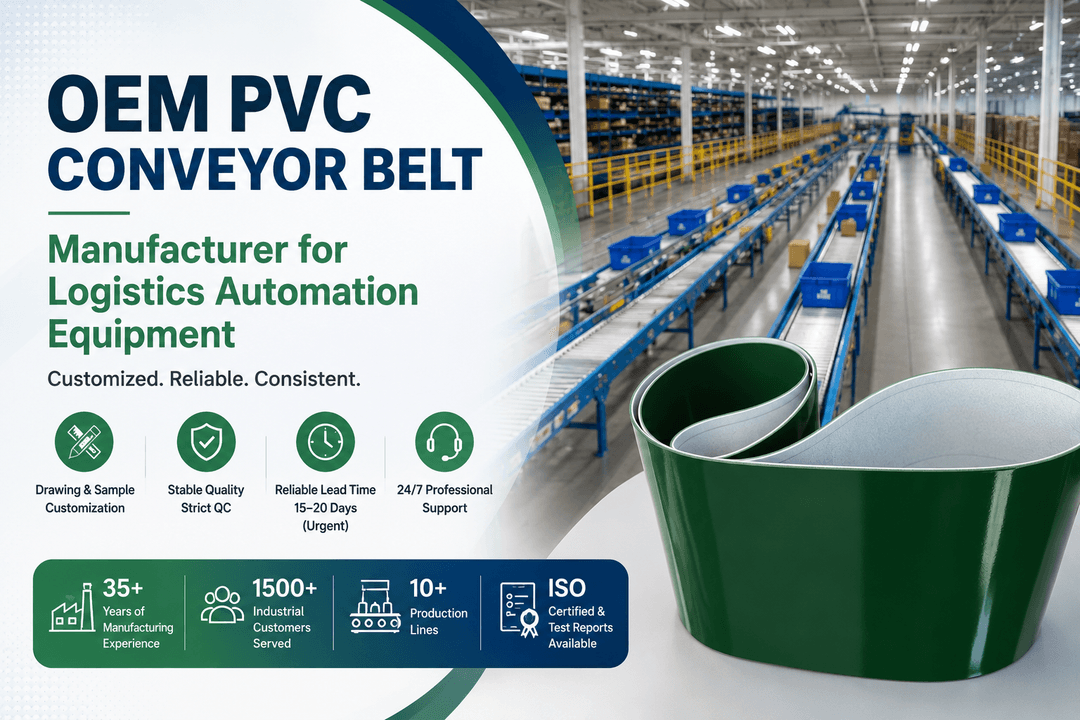
OEM PVC Conveyor Belt Manufacturer for Logistics Automation Equipment
Logistics automation OEMs need more than a PVC conveyor belt that matches width and thickness. This guide explains how to evaluate an OEM PVC conveyor belt manufacturer through application-based specification review, drawing and sample customization, prototype verification, quality control, and repeat-order consistency. It also shows equipment manufacturers what to include in an RFQ, how surface, pulley, splice, tracking, and fabrication requirements affect belt selection, and what to verify before approving mass production.
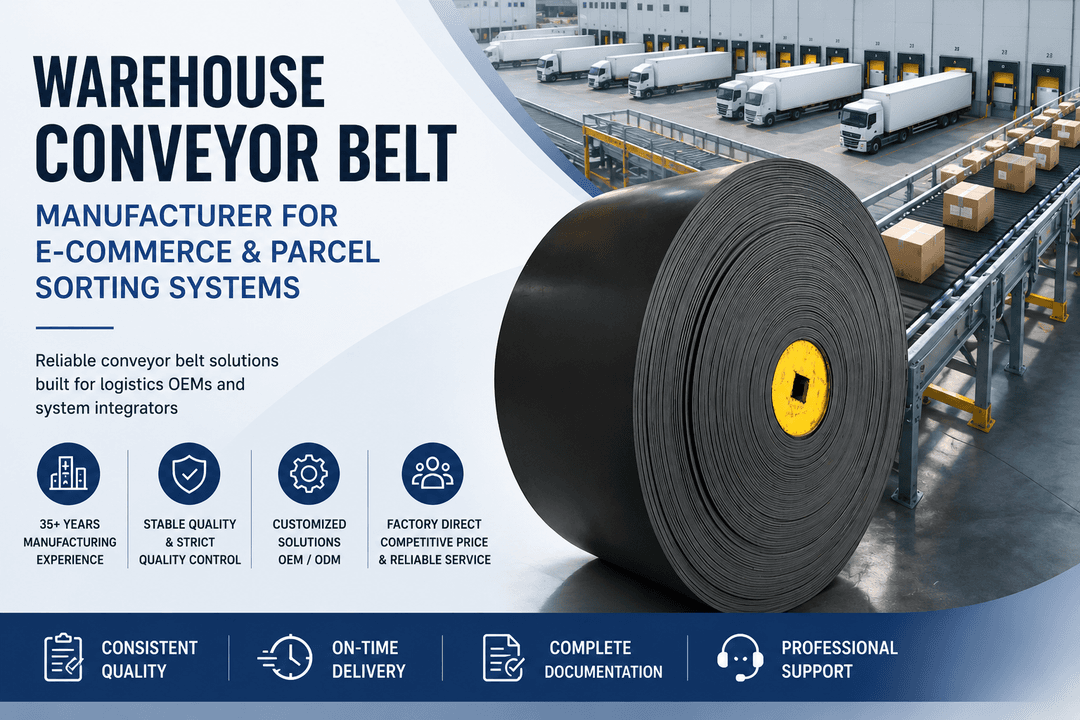
Warehouse Conveyor Belt Manufacturer for E-Commerce and Parcel Sorting Systems
For logistics OEMs and system integrators, sourcing a warehouse conveyor belt requires more than comparing belt dimensions and unit prices. This guide explains how to define parcel-handling requirements, prepare an RFQ, qualify manufacturing and quality-control capabilities, manage customized specifications, evaluate samples, and reduce project-order risk. It also shows what buyers should verify when comparing conveyor belt manufacturers for e-commerce warehouses, distribution centers, parcel sorting equipment, and repeat OEM production.
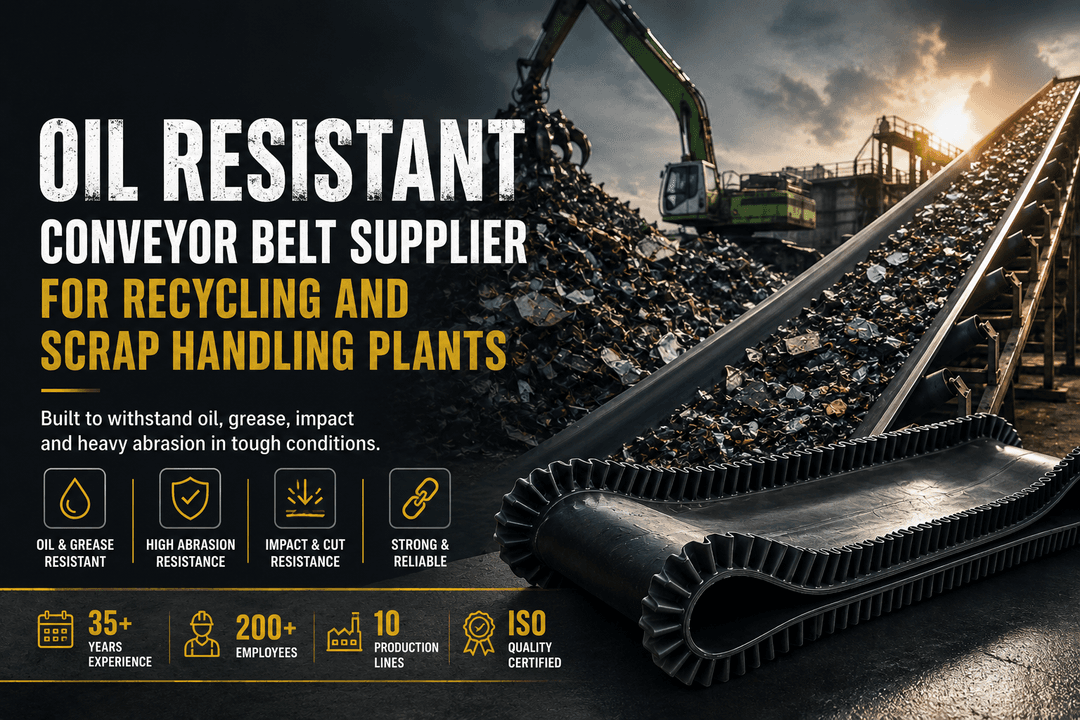
Oil Resistant Conveyor Belt Supplier for Recycling and Scrap Handling Plants
Recycling and scrap handling plants expose conveyor belts to more than oil alone. Sharp metal, irregular loads, impact, grease, hydraulic fluids and changing waste streams can create overlapping belt risks. This guide explains how procurement teams should qualify an oil resistant conveyor belt supplier, define contamination and mechanical requirements, verify testing and QC documentation, evaluate manufacturing capability, structure a comparable RFQ and reduce specification risk before approving samples or placing a bulk order.
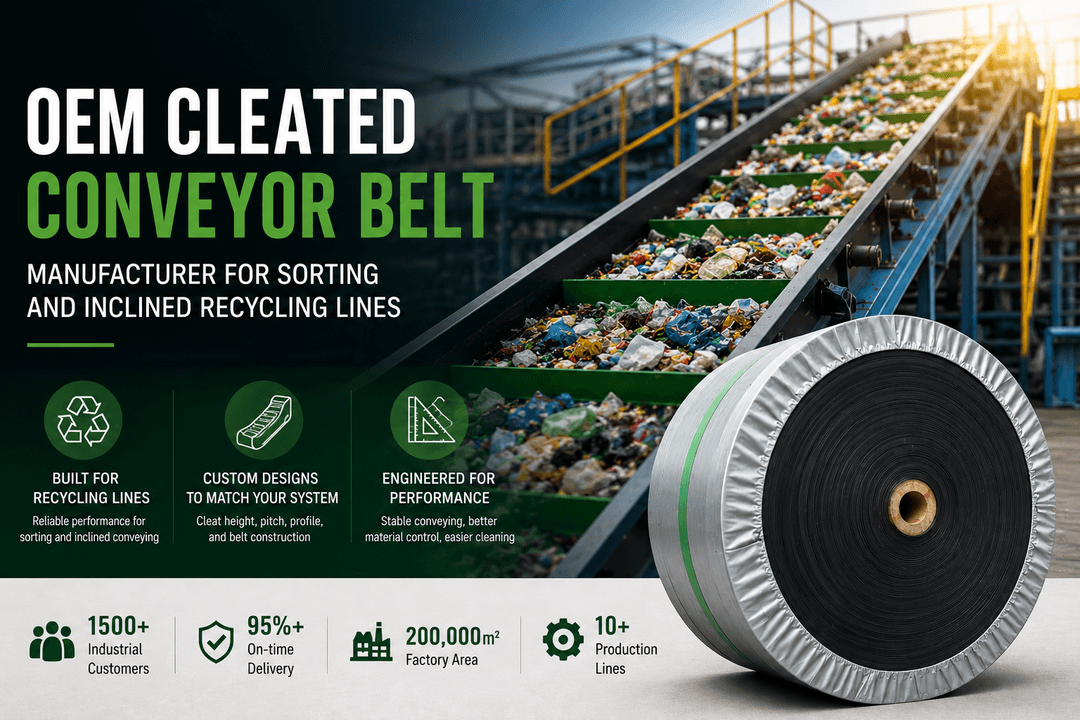
OEM Cleated Conveyor Belt Manufacturer for Sorting and Inclined Recycling Lines
For recycling equipment OEMs and system builders, a cleated conveyor belt must match more than belt width and incline. This guide explains how material behavior, cleat height and pitch, PVC versus rubber construction, pulley diameter, return clearance, splicing and drawing control affect a custom belt project. It also covers supplier qualification, sample and first-batch verification, RFQ preparation and the technical information buyers should provide before ordering cleated belts for sorting and inclined recycling conveyor lines.
Explore more
We are committed to providing you with better products and services. Welcome to browse more content for details