

Engineered belt solutions for demanding industries worldwide

Blog

Blog

Home/Blog
Recent Posts
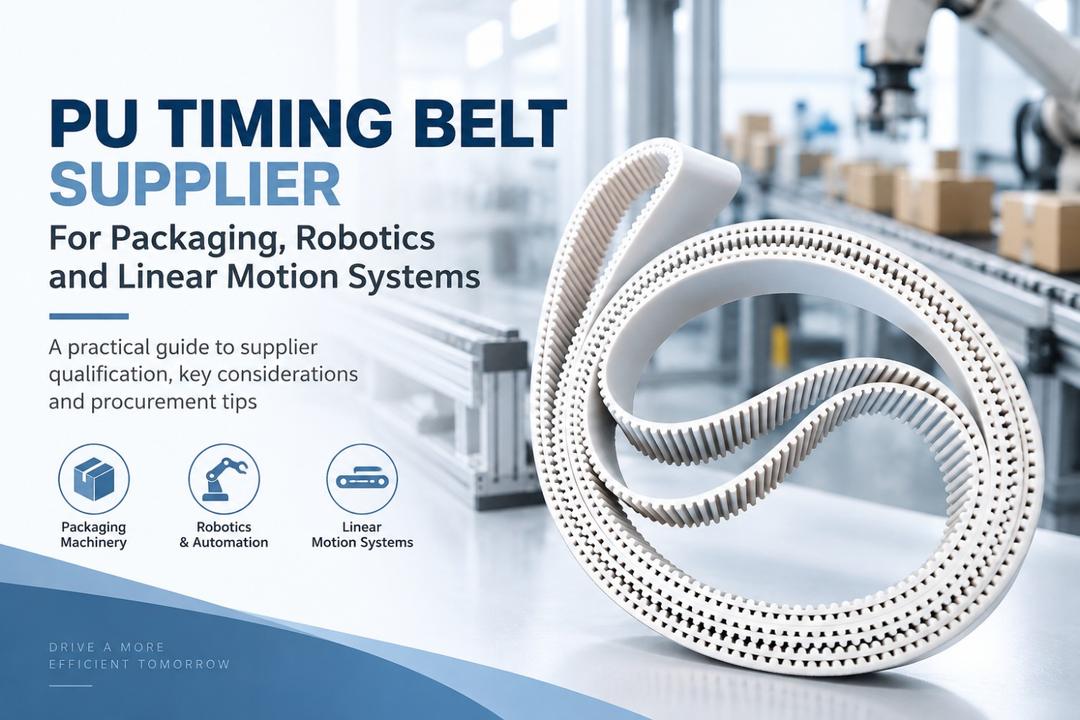
PU Timing Belt Supplier for Packaging, Robotics and Linear Motion Systems

PU Timing Belt Supplier for Packaging, Robotics and Linear Motion Systems

Selecting a PU timing belt supplier for packaging, robotics or linear motion systems requires more than comparing belt price and delivery. OEM buyers need to verify tooth and pulley compatibility, tensile-member construction, working surfaces, motion conditions, sample approval and batch consistency. This guide explains how to qualify polyurethane timing belts technically and commercially, what information belongs in an RFQ, which supplier red flags deserve attention, and how to move from prototype validation to repeatable bulk sourcing.
Conveyor Belt Tracking: Why EP Belts Run Off-Center & How to Stop It

Conveyor Belt Tracking: Why EP Belts Run Off-Center & How to Stop It

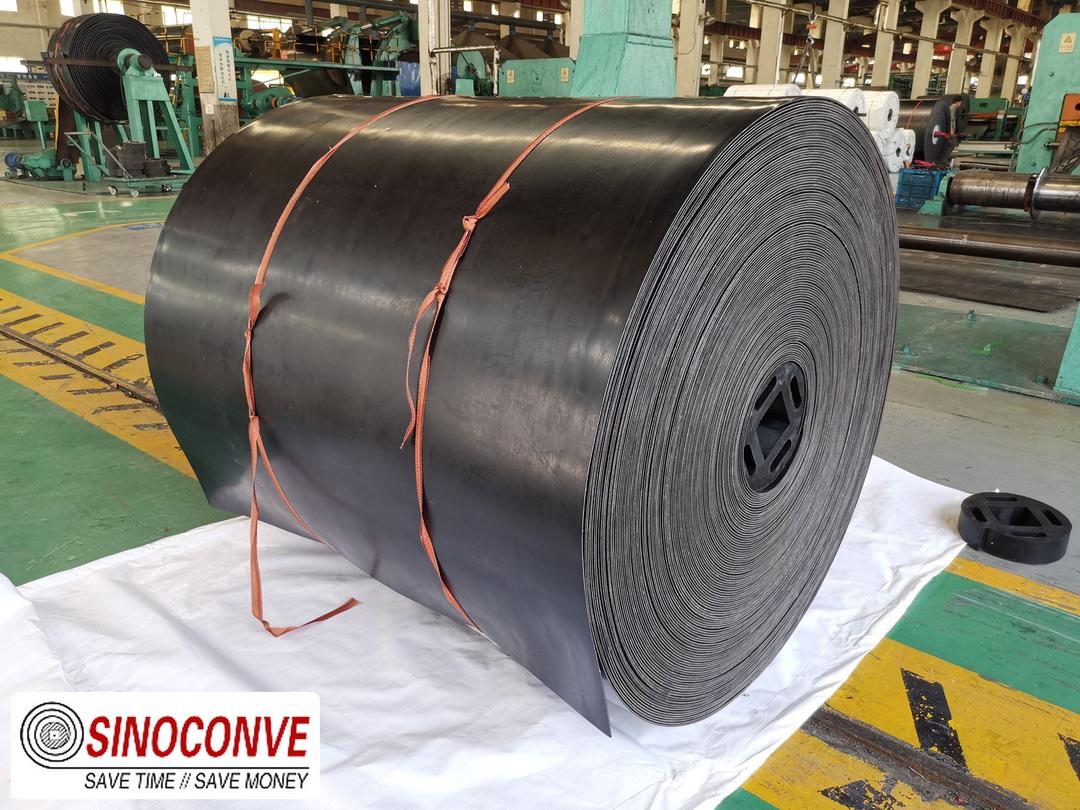
Why do EP conveyor belts run off-center? We cover carcass straightness, square splice joints, even tension, and how to buy a belt that tracks true.

EP vs NN Conveyor Belt: Which Fabric Carcass Should You Choose?

EP vs NN Conveyor Belt: Which Fabric Carcass Should You Choose?

Comparing EP and NN conveyor belt carcasses: elongation, impact resistance, splicing and cost. Practical selection guide for mining and quarry conveyors, with the RFQ data suppliers need.

Conveyor Belt Storage, Handling and Installation: 20-Point Checklist That Prevents Early Belt Damage

Conveyor Belt Storage, Handling and Installation: 20-Point Checklist That Prevents Early Belt Damage

Why do new conveyor belts fail early? Usually poor storage, handling, or installation. SINOCONVE's 20-point field checklist protects every rubber conveyor belt you buy.
Rubber Timing Belt Wholesale Guide for Industrial Distributors and MRO Suppliers

Rubber Timing Belt Wholesale Guide for Industrial Distributors and MRO Suppliers

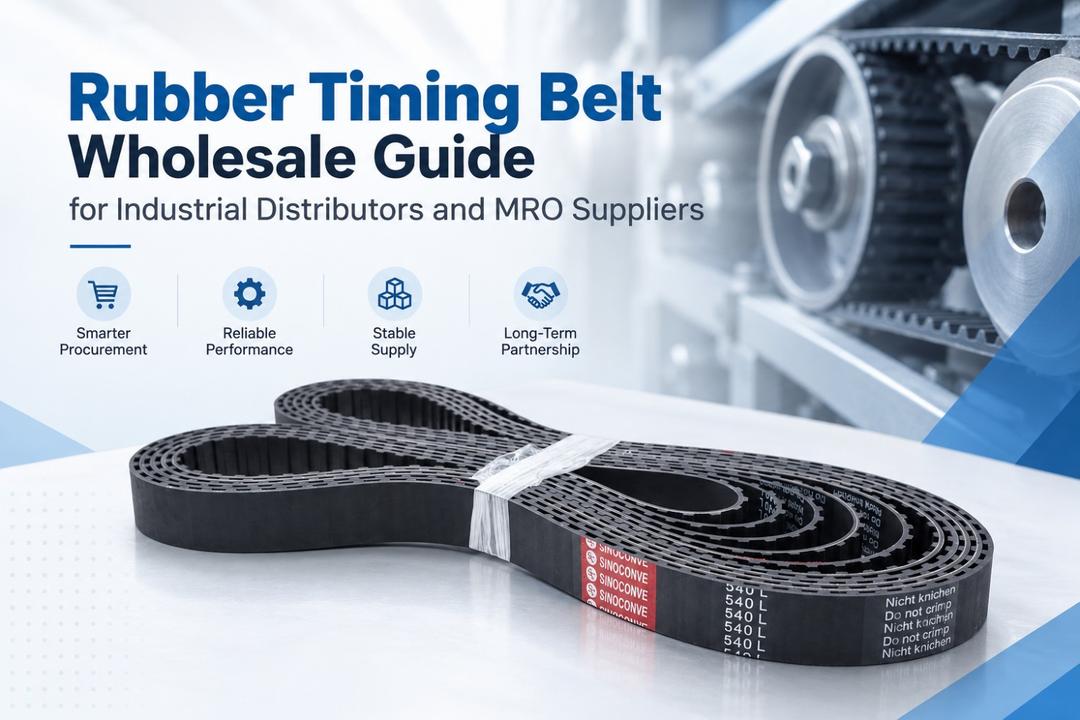
Wholesale timing belt purchasing requires more than comparing unit prices. Industrial distributors and MRO suppliers need to control tooth profile, dimensions, pulley compatibility, sample approval, batch consistency, MOQ, private labeling, QC documentation and repeat-order identification. This guide explains how to prepare a technically comparable rubber timing belt RFQ, evaluate supplier capability, manage multi-SKU inventory risk and verify the commercial details that matter before moving from samples to bulk orders.
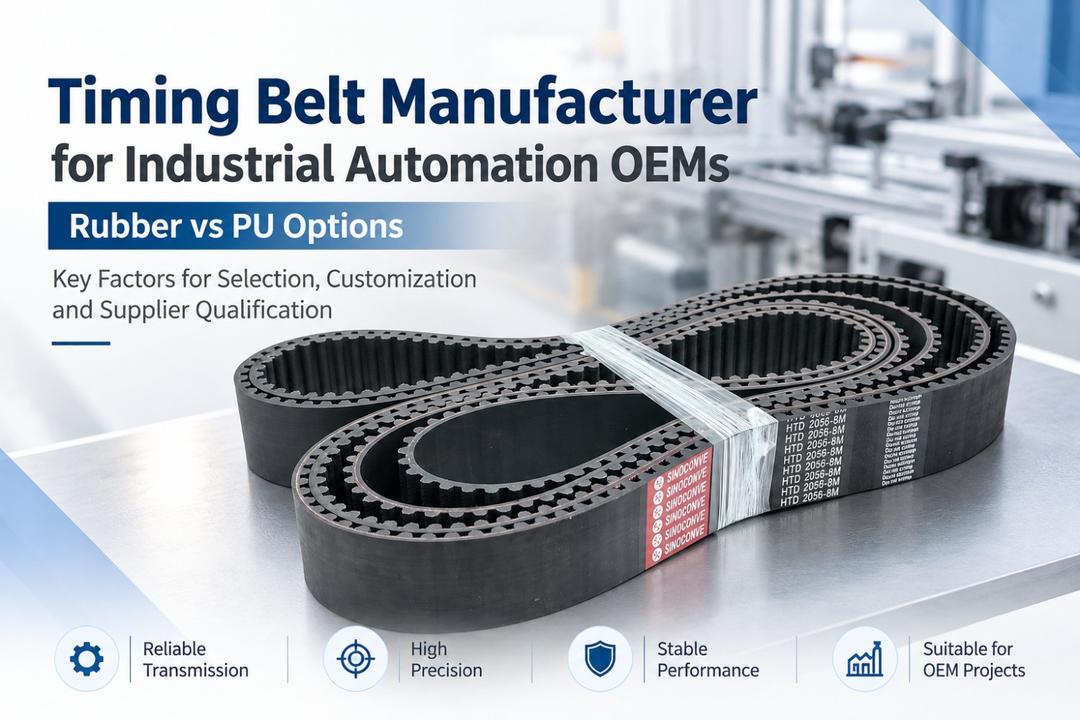
Timing Belt Manufacturer for Industrial Automation OEMs: Rubber vs PU Options

Timing Belt Manufacturer for Industrial Automation OEMs: Rubber vs PU Options

Industrial automation OEMs need more than a timing belt quotation: they need a repeatable specification that works from prototype through mass production. This guide explains how to evaluate a timing belt manufacturer, compare rubber and PU options, verify tooth and pulley compatibility, control drawings and sample approval, and define quality requirements for repeat orders. It also provides a practical RFQ framework for OEM buyers sourcing custom synchronous belts for automation machinery, packaging systems, indexing equipment and other precision drives.

PU Timing Belt Supplier for Packaging, Robotics and Linear Motion Systems

PU Timing Belt Supplier for Packaging, Robotics and Linear Motion Systems

Selecting a PU timing belt supplier for packaging, robotics or linear motion systems requires more than comparing belt price and delivery. OEM buyers need to verify tooth and pulley compatibility, tensile-member construction, working surfaces, motion conditions, sample approval and batch consistency. This guide explains how to qualify polyurethane timing belts technically and commercially, what information belongs in an RFQ, which supplier red flags deserve attention, and how to move from prototype validation to repeatable bulk sourcing.

Read More
EP vs NN Conveyor Belt: Which Fabric Carcass Should You Choose?

EP vs NN Conveyor Belt: Which Fabric Carcass Should You Choose?

Comparing EP and NN conveyor belt carcasses: elongation, impact resistance, splicing and cost. Practical selection guide for mining and quarry conveyors, with the RFQ data suppliers need.

Read More
Rubber Timing Belt Wholesale Guide for Industrial Distributors and MRO Suppliers

Rubber Timing Belt Wholesale Guide for Industrial Distributors and MRO Suppliers

Wholesale timing belt purchasing requires more than comparing unit prices. Industrial distributors and MRO suppliers need to control tooth profile, dimensions, pulley compatibility, sample approval, batch consistency, MOQ, private labeling, QC documentation and repeat-order identification. This guide explains how to prepare a technically comparable rubber timing belt RFQ, evaluate supplier capability, manage multi-SKU inventory risk and verify the commercial details that matter before moving from samples to bulk orders.

Read More
Timing Belt Manufacturer for Industrial Automation OEMs: Rubber vs PU Options

Timing Belt Manufacturer for Industrial Automation OEMs: Rubber vs PU Options

Industrial automation OEMs need more than a timing belt quotation: they need a repeatable specification that works from prototype through mass production. This guide explains how to evaluate a timing belt manufacturer, compare rubber and PU options, verify tooth and pulley compatibility, control drawings and sample approval, and define quality requirements for repeat orders. It also provides a practical RFQ framework for OEM buyers sourcing custom synchronous belts for automation machinery, packaging systems, indexing equipment and other precision drives.

Read More

Explore more

We are committed to providing you with better products and services. Welcome to browse more content for details