

Blog
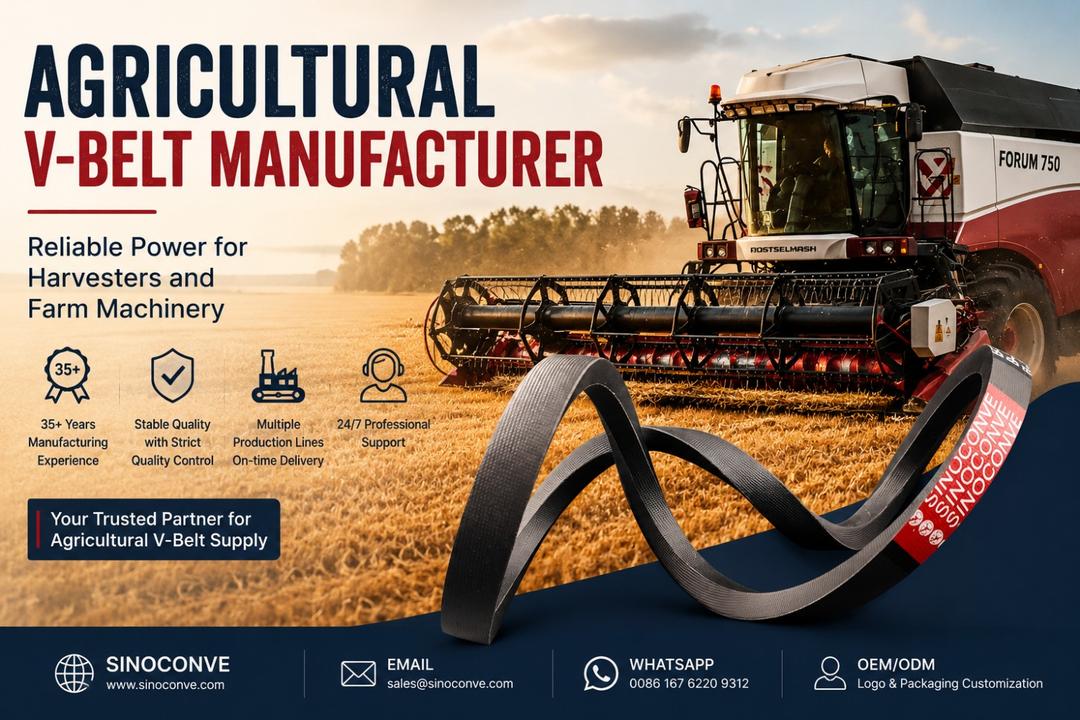
Agricultural V-Belt Manufacturer for Harvesters and Farm Machinery Distributors
Selecting an agricultural V-belt manufacturer requires more than comparing unit prices. Distributors need to verify harvester and farm machinery belt coverage, construction, replacement compatibility, samples, quality documentation, private-label capability, MOQ and seasonal lead time. This guide explains how agricultural machinery dealers and wholesalers can qualify a V-belt supplier, compare quotations on the same technical basis, reduce specification and inventory risk, and prepare a clearer RFQ for repeat or OEM purchasing programs.
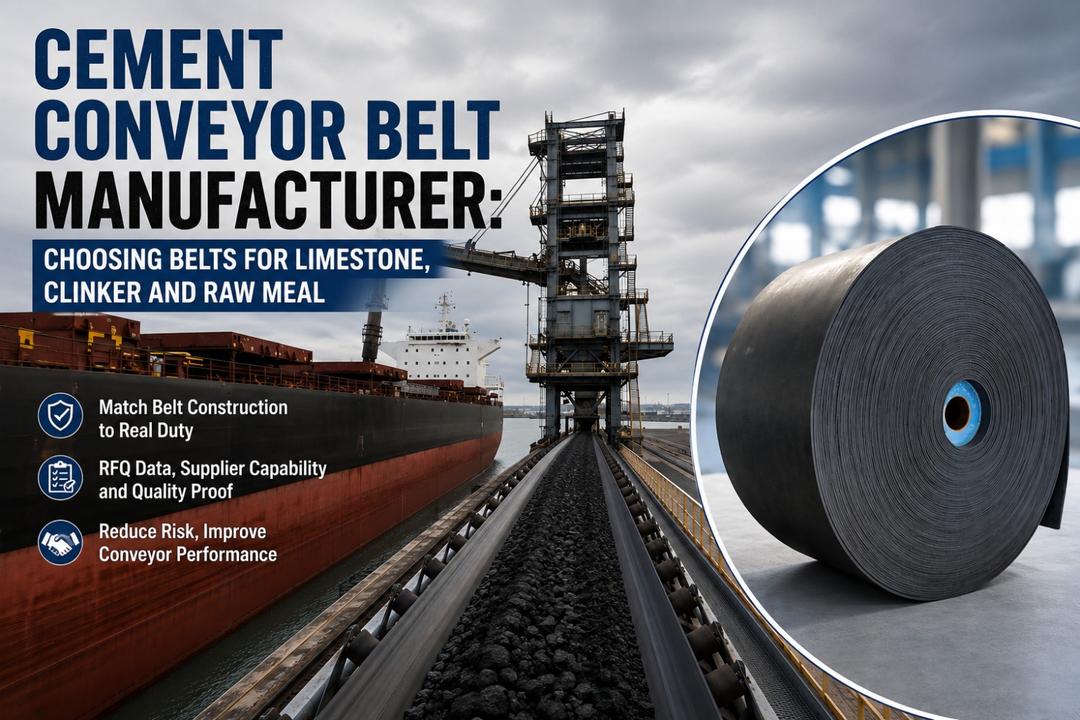
Cement Conveyor Belt Manufacturer: Choosing Belts for Limestone, Clinker and Raw Meal
Cement plants expose conveyor belts to very different duties, from abrasive limestone and raw materials to hot clinker and long, high-tension transfer lines. This guide helps procurement teams match belt construction to operating conditions, compare EP fabric and steel cord options, evaluate manufacturer capability, verify quality documentation, and prepare a technically complete RFQ. It also explains what buyers should check beyond unit price when qualifying a cement conveyor belt manufacturer for factory-direct supply.
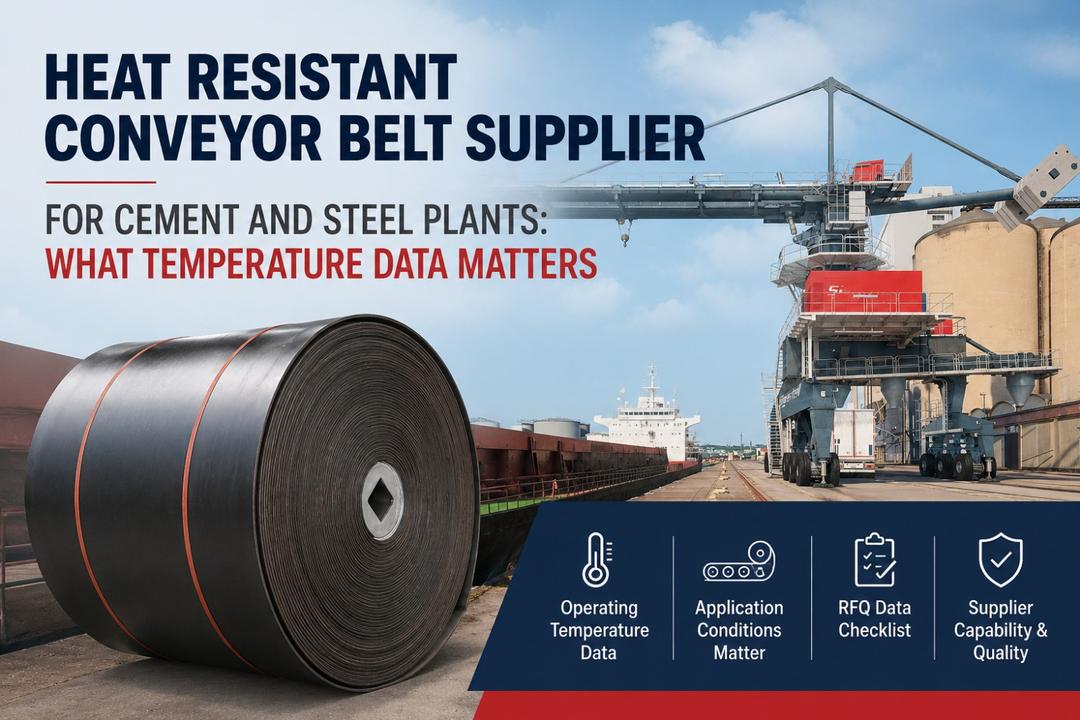
Heat Resistant Conveyor Belt Supplier for Cement and Steel Plants: What Temperature Data Matters
Buying a heat resistant conveyor belt for a cement or steel plant requires more than specifying T1, T2, or T3. This guide explains which temperature data suppliers need, why normal and peak temperatures must be separated, how clinker and hot steel-plant materials affect belt selection, and what buyers should verify before issuing a PO. It also provides a practical RFQ checklist covering belt construction, operating conditions, failure evidence, testing, supplier capability, and documentation.
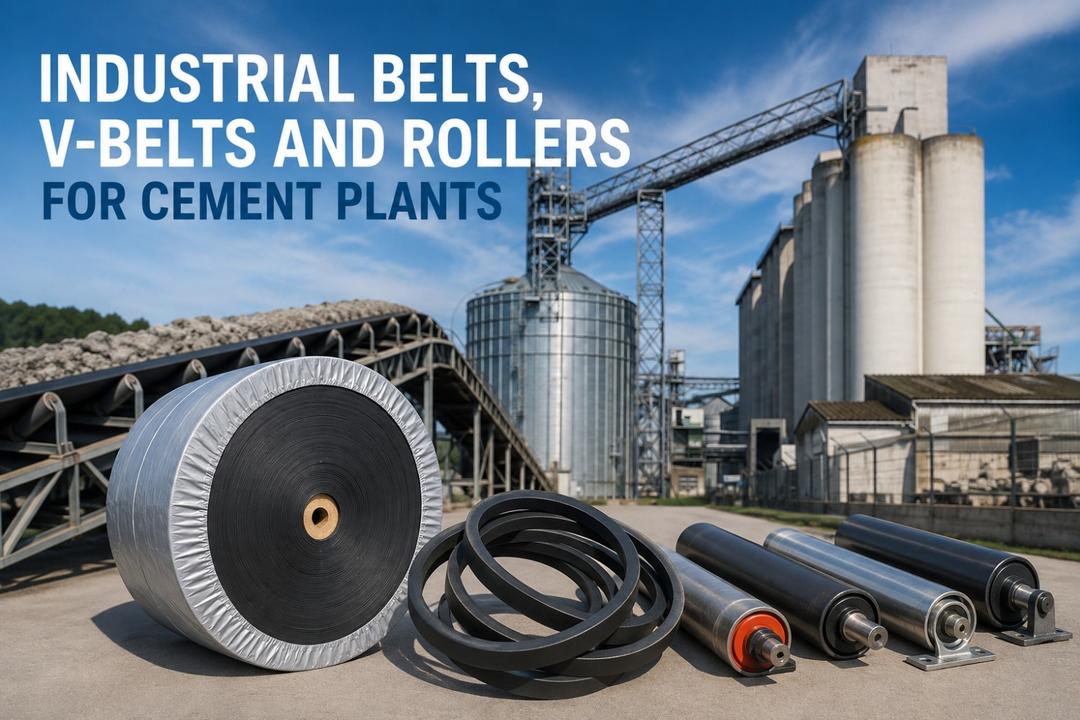
Industrial Belt Manufacturer for Cement Plants: Conveyor Belts, V-Belts and Rollers from One Supplier
Cement plant procurement often involves conveyor belts, V-belts and rollers with very different operating requirements. This guide explains how buyers can evaluate an industrial belt manufacturer for consolidated sourcing without compromising technical qualification. It covers belt selection for limestone and clinker, roller and V-belt RFQ requirements, manufacturing and QC checks, standards, packaging, supplier qualification and the information procurement teams should prepare before requesting a quotation for bulk or recurring plant requirements.
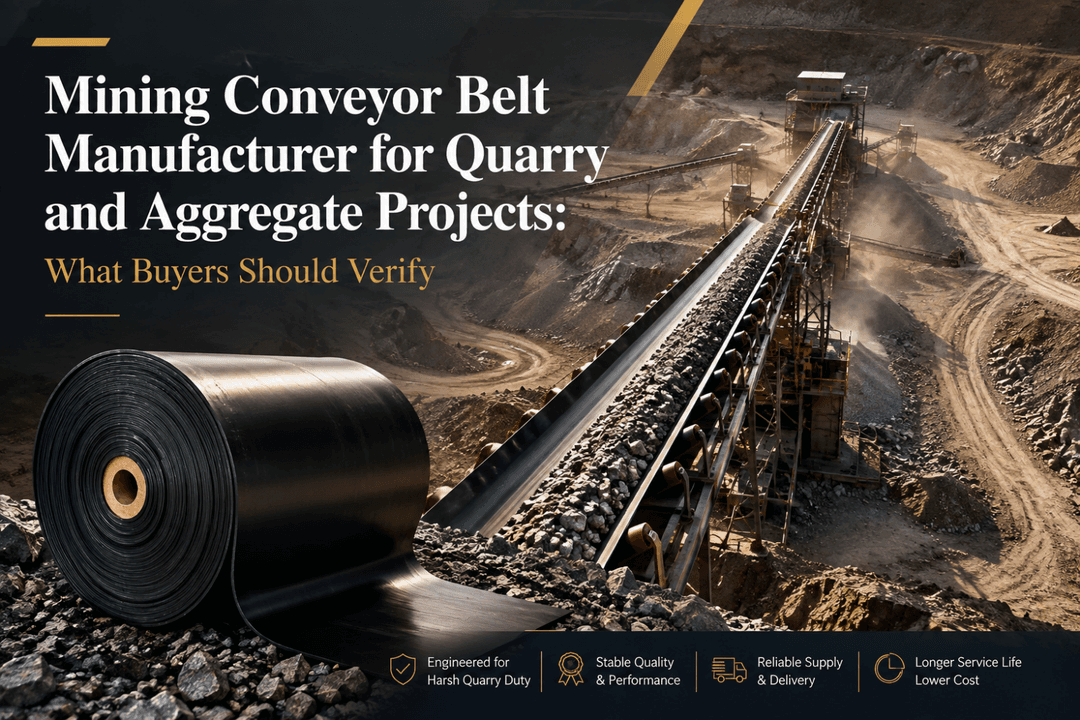
Mining Conveyor Belt Manufacturer for Quarry and Aggregate Projects: What Buyers Should Verify
Quarry and aggregate conveyor belt procurement requires more than comparing price per meter. Buyers need to verify operating conditions, carcass and cover specifications, factory capability, quality-control evidence, repeat-order consistency, production capacity, packaging and delivery commitments. This guide explains how to qualify a mining conveyor belt manufacturer, what information belongs in a project RFQ, how to compare supplier quotations on the same technical basis, and what quarry procurement teams should confirm before approving a bulk order.
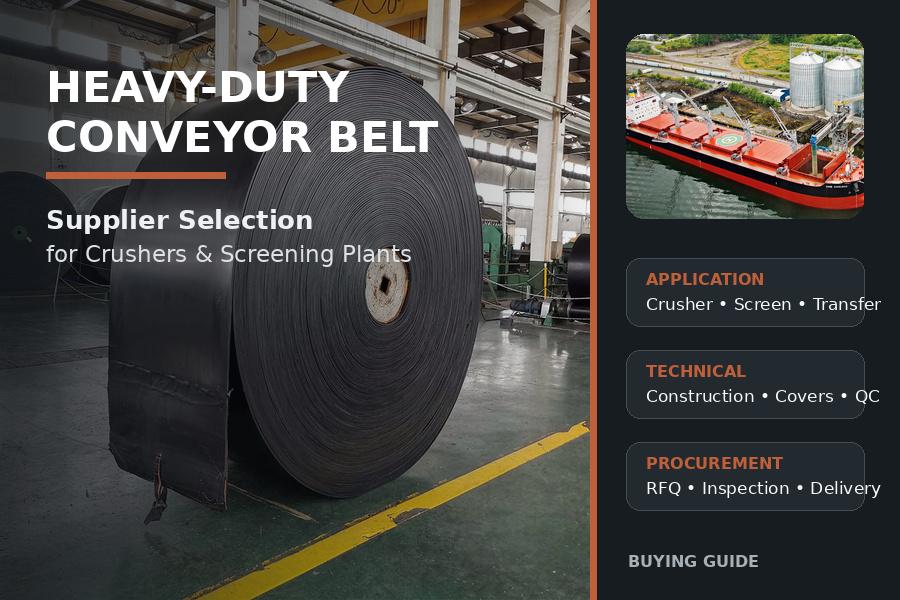
Heavy-Duty Rubber Conveyor Belt Supplier Selection for Crushers and Screening Plants
Selecting a heavy-duty conveyor belt supplier for a quarry or crushing plant requires more than comparing belt prices. This guide explains how EPC contractors and procurement teams can evaluate operating conditions, belt construction, technical submittals, applicable standards, manufacturing capability, QC evidence, commercial terms, and RFQ completeness. It also shows why crusher impact, abrasive material, conveyor geometry, cover performance, carcass selection, inspection documentation, and supplier deviations should be resolved before the final commercial comparison.
Explore more
We are committed to providing you with better products and services. Welcome to browse more content for details