
Transmission Rubber Wrapped V Belt: What It Changes in a Real Drive System
A wrapped belt usually does not get attention until the drive starts complaining. A fan begins to squeal during start-up. A pump loses speed under load. The sheave area feels hotter than it should. Someone tightens the belt, the noise disappears for a few days, and then the same problem returns.
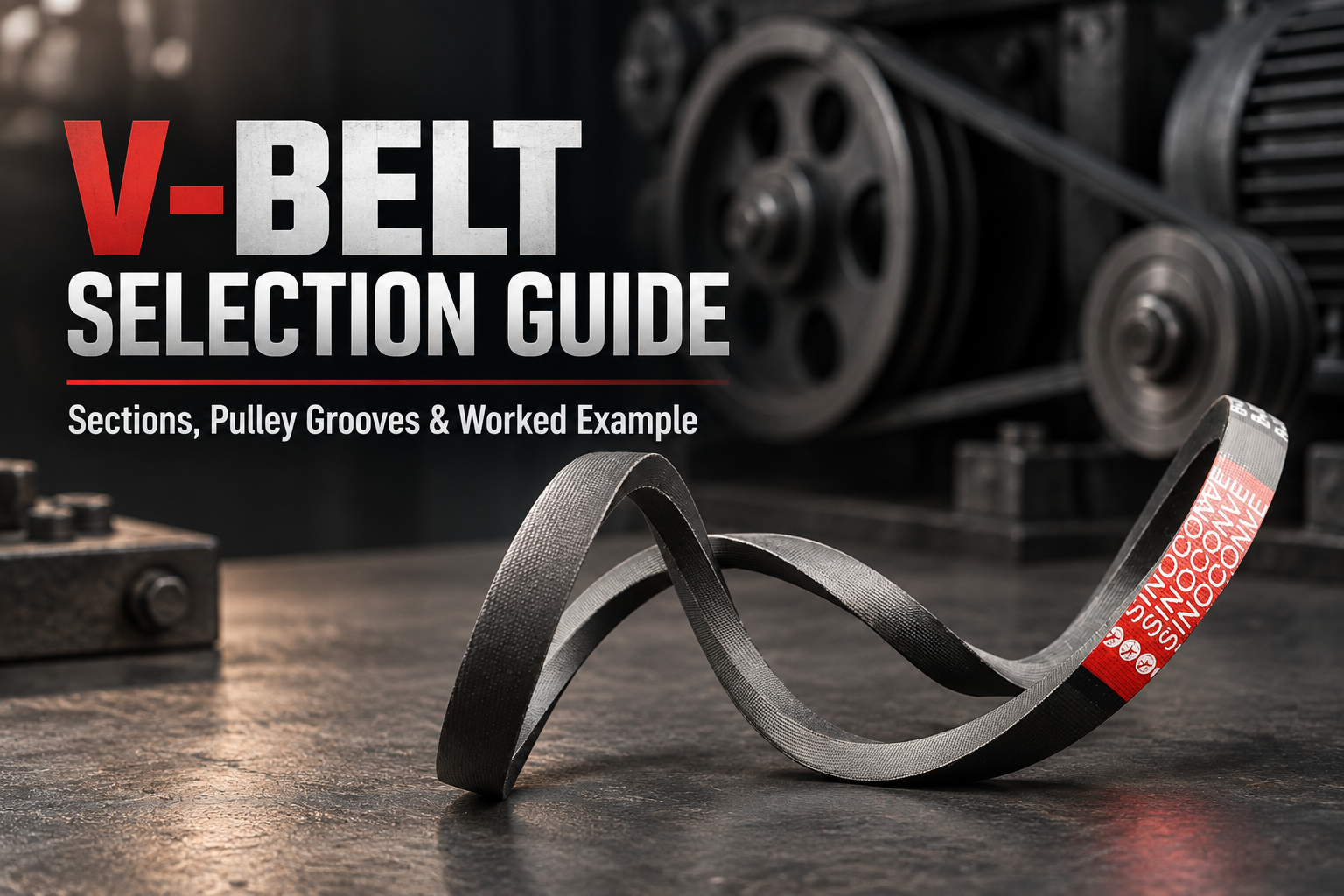
That is the point where the belt should not be treated as a cheap rubber loop only. In many pulley-driven machines, a Transmission Rubber Wrapped v Belt is part of the working behavior of the drive. Its fabric-wrapped outside, rubber body, tension cord, and side contact profile all affect how power is carried from one sheave to another.
A Rubber Wrapped v Belt is still a simple product compared with a gearbox or servo drive. But simple parts fail in practical ways. Wrong section. Worn pulley groove. Too much tension. Oil mist. Dust. A replacement chosen only by appearance. Those are the reasons many wrapped belts fail before the rubber itself has reached its natural life.
What the Wrapped Construction Actually Does
A Wrapped v Belt has a fabric layer around the outside of the belt body. That wrap helps protect the rubber from surface abrasion and gives the belt a controlled running surface in the pulley groove. It is different from a raw-edge cogged belt, where the sidewall is exposed and often chosen for tighter bending or higher heat dissipation.
For many industrial drives, the wrapped construction is useful because it is forgiving. It can handle general workshop conditions, moderate shock loads, dusty pulley areas, and machines where maintenance access is not perfect. The belt still needs correct tension and matched pulleys, but the outer fabric gives it a working surface that suits many conventional V-belt drives.
In practical terms, the Transmission Rubber Wrapped v Belt is often selected for fans, pumps, compressors, agricultural equipment, small conveyors, machine tools, and replacement drives where reliability matters more than compact high-speed design.
Main Parts of a Rubber Wrapped V Belt
|
Part |
What it does |
What buyers should check |
|
Fabric wrap |
Protects the belt surface and controls contact with the pulley groove |
No fraying, broken wrap, or uneven glazing |
|
Rubber body |
Provides flexibility and supports repeated bending |
Cracking, hardening, oil swelling, heat marks |
|
Tension cord |
Carries the pulling load and controls stretch |
Stable length, no early elongation complaints |
|
Side contact area |
Transfers force through the sheave groove |
Correct belt section and pulley fit |
The section and pulley fit matter more than many buyers expect. If the belt rides too high, the sidewalls may not carry load correctly. If it bottoms out in the groove, it can slip even when the tension looks acceptable. A new Wrapped v Belt cannot correct a damaged or mismatched sheave.
Where Wrapped V Belts Make Sense
The best use case is a conventional pulley drive that needs a stable, economical, easy-to-source belt. Not every machine needs a high-performance raw-edge or cogged belt. In a lot of plant equipment, the working question is more basic: will the belt keep running without constant re-tensioning, edge wear, or surface glazing?
That is where a Rubber Wrapped v Belt still earns its place. It handles many ordinary drive layouts well, especially when the pulley diameter, belt section, and operating load are within normal range.
|
Application area |
Why wrapped construction is used |
Common check before ordering |
|
Fans and blowers |
Steady rotary load, regular plant use |
Belt section, pulley groove, run-in tension |
|
Pumps |
Continuous operation with moderate load changes |
Oil mist, alignment, bearing condition |
|
Compressors |
Start-up load and heat around the drive |
Heat marks, pulley wear, matched belt sets |
|
Agricultural machinery |
Dust, vibration, seasonal maintenance pressure |
Old belt code, pulley photos, environment |
|
Small conveyors or workshop machines |
Simple power transfer and easy replacement |
Belt length, guard clearance, spare quantity |
Wrapped V Belt vs Other Belt Choices
A Wrapped v Belt is not automatically better than every other V-belt type. It is better when the drive conditions match its strengths. If the drive uses small pulleys, high belt speed, or requires more flexible bending, another belt construction may be more suitable.
|
Belt type |
Good fit |
Main caution |
|
Rubber Wrapped v Belt |
General industrial drives, fans, pumps, older machines |
Not ideal for every compact high-speed layout |
|
Raw-edge cogged V belt |
Smaller pulleys, better flexibility, some higher-speed drives |
More exposed sidewall; check environment |
|
Banded V belt |
Multi-belt drives with shock load or belt whip |
Requires correct pulley set and alignment |
|
Link V belt |
Field repair, uncertain length, difficult installation |
Not the first choice for every permanent drive |
What Usually Shortens Service Life
Most early failures are not mysterious. A belt that polishes quickly may be slipping. A belt that throws rubber dust may be rubbing, over-tensioned, or running in a poor groove. A belt that cracks across the inner surface may be bending around a pulley that is too small for the section or operating in heat beyond what the compound can tolerate.
Over-tensioning deserves special mention. It is a common reaction to slip, but it often moves the problem from the belt to the bearings. If a drive needs more and more tension to stay quiet, check the sheaves and alignment before blaming the belt supplier.
|
Observed sign |
Likely area to inspect |
|
Squeal at start-up |
Tension, pulley contamination, load spike |
|
Shiny or glazed sidewall |
Slip, wrong section, worn sheave |
|
Frayed fabric wrap |
Pulley edge, guard contact, misalignment |
|
Rubber dust near drive |
Rubbing, excessive tension, pulley wear |
|
Repeated early replacement |
Wrong belt type, heat, oil, poor drive condition |
Information Worth Sending to a Supplier
For a Transmission Rubber Wrapped v Belt inquiry, a photo is useful, but it is not enough. The supplier needs the working context. A belt used on a clean fan and a belt used near an oily pump may share the same printed size while failing for completely different reasons.
|
Information |
Why it helps |
|
Old belt code or section |
Confirms the replacement starting point |
|
Top width and outside length |
Helps when the printed code is worn |
|
Pulley groove photos |
Shows wear, contamination, or mismatch |
|
Machine type and drive position |
Separates fan, pump, compressor, conveyor, or agricultural use |
|
Working environment |
Heat, oil mist, dust, moisture, outdoor exposure |
|
Quantity and packaging needs |
Supports distributor stock, OEM orders, or maintenance spares |
How SINOCONVE Looks at Wrapped Belt Matching
SINOCONVE supplies conveyor belts, transmission belts, timing belts, rubber V-belts, automotive belts, and related industrial belt products for customers in machinery, agriculture, construction equipment, power transmission, and general industrial use.
For wrapped V-belt orders, the useful work often starts before production: confirming the size, checking whether the old belt failed from normal wear or drive problems, and matching packaging or labeling needs for distributors and OEM buyers.
That is also where the company’s “Save Time, Save Money” idea fits. Clear belt information reduces sample mistakes. Correct section matching reduces repeated failure. Proper export packaging reduces damage during shipping. The belt itself is a small component, but the wrong belt can stop a much larger machine.
FAQ
Is a Rubber Wrapped v Belt the same as a raw-edge V belt?
No. A wrapped belt has fabric around the outer body and side contact area. A raw-edge belt has exposed sidewalls and is often chosen for different flexibility or heat behavior.
Where is a Transmission Rubber Wrapped v Belt commonly used?
Fans, pumps, compressors, agricultural machines, small conveyors, workshop equipment, and many conventional pulley drives.
Why does a new wrapped belt still slip?
The belt may be the wrong section, the sheave may be worn, tension may be low, or oil and dust may be present in the groove.
What should I check before ordering?
Old belt marking, belt section, length, pulley groove, machine type, working environment, and whether the belt failed normally or unusually early.
Final Note
A Wrapped v Belt is a practical choice when the drive is conventional, the pulley groove is correct, and the environment fits the belt construction. For buyers comparing Transmission Rubber Wrapped v Belt options, start with the old belt code, then check the pulley and failure marks. That sequence is simple, but it prevents many repeat problems.