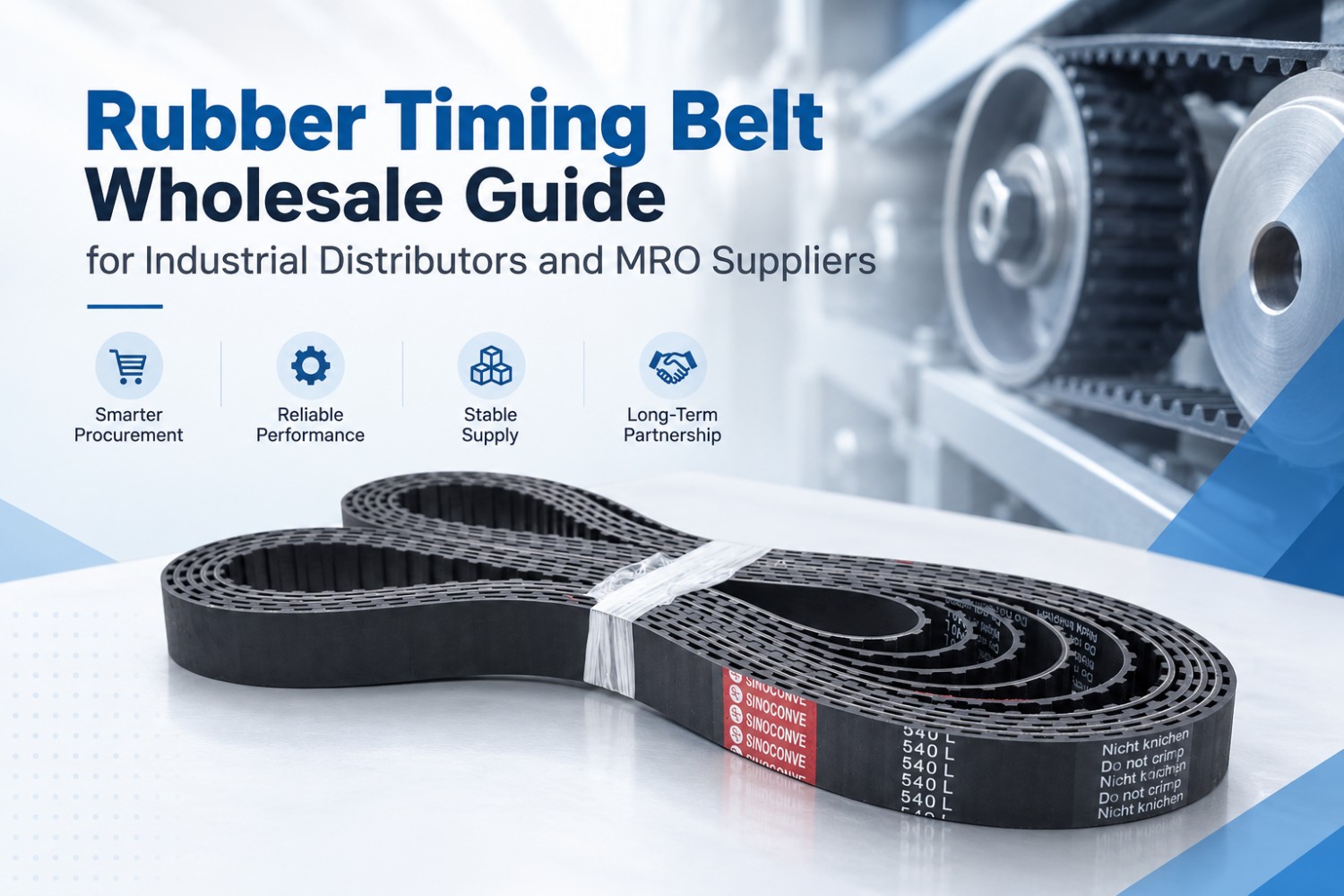
A timing belt can be made from good polyurethane and still fail early if the contact surface is wrong for the job. In many machines the first warning is not a broken belt. It is polished teeth, fine PU dust near the pulley, a squeak at start-up, or a small positioning error that grows after a few weeks of running.
That is why the PU Timing Belt Surface deserves more attention than it usually gets. The body of the belt carries the load, but the surface is where the belt meets pulleys, guides, product supports, back rollers, or added coatings. If that contact is not matched to the application, the belt may still run, but not cleanly.
The Surface Is Where Problems First Show
A PU Timing Belt is normally chosen for accurate motion, clean running, and good wear resistance. Those strengths are real, but they depend heavily on the way the belt surface works inside the drive.
The tooth side has to enter and leave the pulley without rubbing hard against the tooth flanks. The back side may run over support rollers, carry light products, or receive a special cover. In some machines the back surface does almost as much work as the teeth. Packaging lines, light conveying systems, labeling units, and linear positioning equipment often use the belt not only to transmit motion but also to contact the product or a guide surface.
This is where surface finish, fabric facing, coating, hardness, and machining quality start to matter. A belt that looks correct in a catalog may behave differently once it meets dust, oil mist, small pulley diameters, side guides, or repeated start-stop movement.
Common PU Timing Belt Surface Options
|
Surface option |
Where it usually makes sense |
What to check first |
|
Standard PU tooth surface |
General synchronous drives, clean pulley systems |
Pulley profile, tooth pitch, visible rubbing marks |
|
Fabric facing on tooth side |
Lower noise, smoother meshing, reduced tooth wear |
Fabric bonding and pulley cleanliness |
|
Back-side PU surface |
Light conveying or support roller contact |
Back roller diameter and surface friction |
|
High-friction coating |
Product carrying, indexing, light transfer work |
Product material, required grip, cleaning method |
|
Low-friction surface treatment |
Guided motion or sliding contact areas |
Guide rail material and contact pressure |
Not every belt needs a coating. For many drives, a standard PU tooth surface is enough. Coatings become useful when the belt has a second job: holding a package, reducing sliding, protecting the back side, or changing the contact behavior with a guide.
When a Coated Rubber or PU Timing Belt Makes Sense
A coated Rubber Timing Belt or a coated PU belt is usually selected after the machine creates a specific contact problem. The coating is not there for appearance. It changes friction, wear behavior, or surface protection.
On a packaging machine, a high-friction backing may stop cartons from shifting during indexing. On a printing or labeling line, a softer surface may protect the product while the tooth side keeps the timing accurate. In a small conveyor unit, a coated back surface can help the belt carry light parts without using a separate conveyor belt.
The risk is over-specification. A thick or soft coating can change pulley clearance, increase bending stress, or make tracking less stable if the belt was not designed for it. Before choosing a coating, the buyer should confirm whether the belt will run only as a drive belt, or whether it will also touch products, rollers, vacuum plates, or side guides.
PU Timing Belt Surface Application by Machine Type
|
Machine or system |
Surface issue that often appears |
Practical surface choice |
|
Packaging machine |
Products slide during indexing |
Back coating or higher-friction surface |
|
Automated assembly line |
Position drift after repeated cycles |
Stable tooth surface and low stretch cord |
|
Printing or labeling equipment |
Marks on product or unstable feeding |
Smoother backing or controlled-friction layer |
|
Light conveying system |
Belt must carry and synchronize at once |
Coated back or custom surface profile |
|
Linear motion unit |
Noise or tooth polish near pulleys |
Fabric facing or better pulley match |
|
Custom fixture drive |
Belt needs holes, slots, or guides |
Machined PU belt with checked reinforcement layout |
A good PU Timing Belt Surface application starts with contact mapping. Which side touches the pulley? Which side touches the product? Does the back side pass over rollers? Are there vacuum holes, guide rails, or clamps? Once those questions are clear, the surface choice becomes much easier.
Surface Wear Tells You What Went Wrong
Timing belt failure is not always dramatic. Often the surface tells the story before the belt stops the machine.
Polished teeth usually point to friction or pulley mismatch. PU dust near one edge may suggest side rubbing. Fabric fraying can mean contamination, poor tracking, or too much contact pressure. Cracks around holes or punched areas are often linked to stress concentration, especially if the holes sit too close to reinforcement cords.
These signs are useful because they separate belt problems from system problems. Replacing the belt may make the machine run again, but if the pulley, tension, guide, or coating choice is wrong, the same mark will return.
For any PU Timing Belt Surface application, the safest approach is to identify every contact point before selecting the coating, facing, or backing material.
What Buyers Should Confirm Before Ordering
|
Information to send |
Why it helps |
|
Tooth pitch and belt width |
Confirms pulley compatibility |
|
Belt length or number of teeth |
Prevents wrong loop size |
|
Pulley diameter and layout |
Checks bending and tooth engagement |
|
Back-side contact details |
Determines whether coating is needed |
|
Product material being carried |
Helps match friction level |
|
Oil, dust, cleaning, or temperature exposure |
Checks surface and compound suitability |
|
Photos of wear marks |
Shows whether the failure is surface, tension, or alignment related |
|
Drawing for holes or profiles |
Avoids cutting into reinforcement zones |
For custom belts, drawings matter more than general descriptions. A supplier can discuss a coated surface, fabric facing, perforation, guide profile, or backing material only after the drive layout and contact points are clear.
Quality Points That Are Easy to Miss
Surface consistency is one of them. A coated belt should not have soft spots, uneven thickness, bubbles, or loose edges. Tooth surfaces should be cleanly molded, without rough flashing that catches in the pulley groove. If holes or grooves are added later, their position should be checked against cord placement.
Batch consistency also matters for OEM and distributor orders. One good sample is not enough if the next batch bends differently or has a slightly different surface feel. For machines that depend on repeatable feeding or indexing, that small change can show up in the process.
FAQ
What does PU Timing Belt Surface mean?
It refers to the working contact layer of a PU timing belt, including the tooth side, back side, fabric facing, coating, or any added surface treatment used for grip, wear control, or product contact.
When is a coated PU Timing Belt needed?
Usually when the belt touches more than pulleys. Product carrying, sliding contact, guide rollers, vacuum plates, or delicate materials may require a special backing or surface finish.
Does coating affect timing accuracy?
It can, if the coating changes bending behavior, clearance, or tracking. The tooth pitch and pulley match still control timing accuracy, but surface changes must not interfere with the drive geometry.
What should be sent for a quotation?
Send belt pitch, width, length or tooth count, pulley diameter, surface requirement, working environment, drawings for holes or profiles, and photos of the current belt if it is a replacement.
Final Note
A PU Timing Belt Surface should be chosen from the machine outward, not from the catalog inward. Start with the contact points, then the belt structure, then the surface treatment. That order usually avoids the common mistake of choosing a good belt with the wrong surface for the actual work.