
Farm Chevron Conveyor Belt: Practical Selection for Inclined Crop and Bulk Handling
On a farm conveyor, the belt surface is often judged too late. Grain starts rolling back at the incline. Fertilizer leaves a dusty trail under the return side. A belt that looked acceptable during installation begins to polish where bags sit against the pattern. The first reaction is usually to tighten the belt. Sometimes that helps for a short period. Often it only moves the problem to the splice, the bearings, or the belt edge.
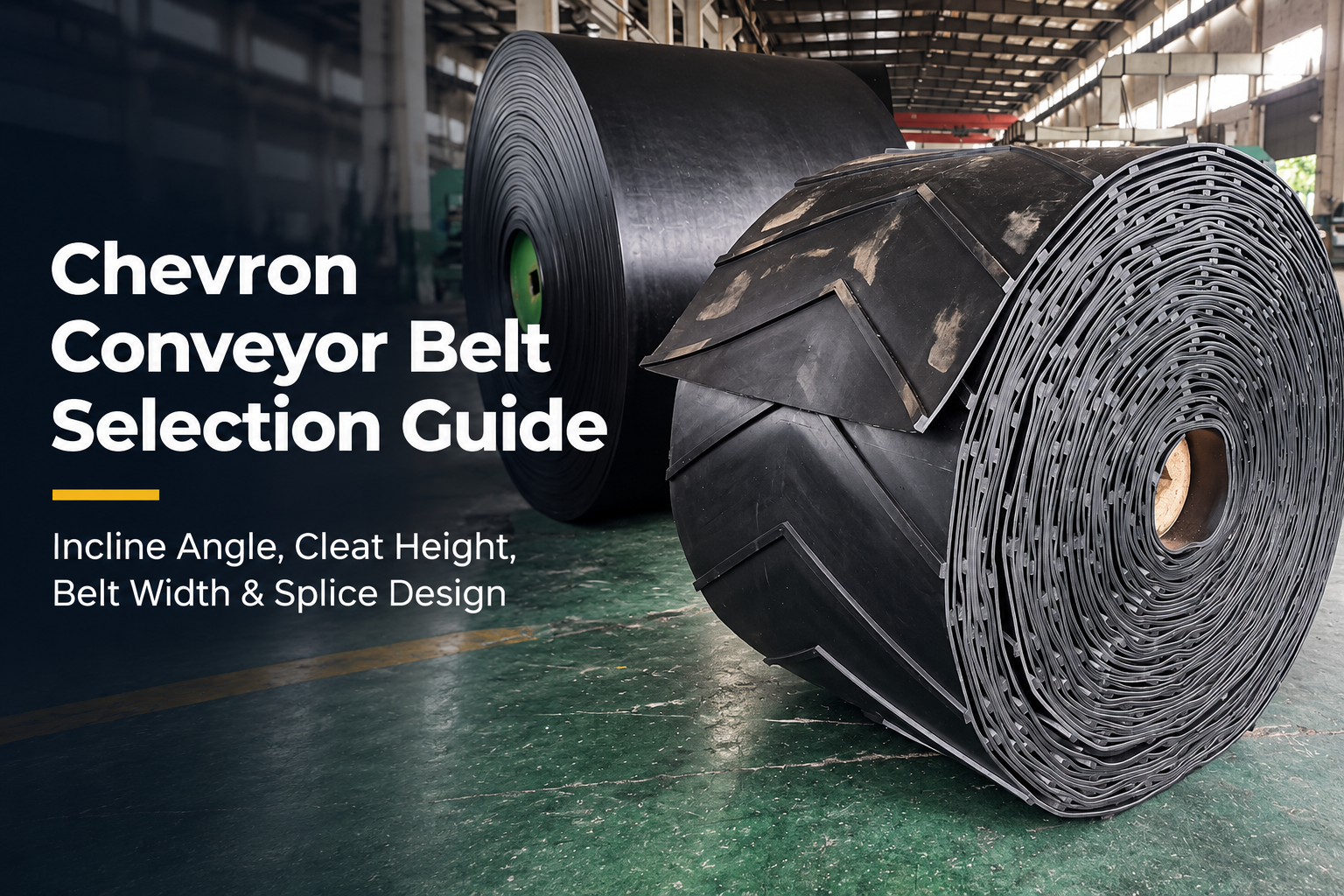
A Farm chevron conveyor belt is useful when the material needs more holding force than a smooth belt can provide, but it still has to bend around pulleys, clean reasonably well, and survive field residue. That balance matters. Chevron profiles are not decorative ribs. They change how the material sits on the belt, how residue clears, and how stress travels through the cover and carcass.
For agricultural buyers, the practical question is not simply whether a chevron conveyor belt can carry grain or feed uphill. The better question is whether the pattern height, base belt, cover compound, splice method, and conveyor layout match the material being moved. A belt that works well for dry corn may not behave the same with wet silage, dusty fertilizer, or mixed crop residue.
Where a Farm Chevron Conveyor Belt Actually Earns Its Place
Chevron belts are usually considered when flat belts start losing control on short inclines or loading sections. In farm use, that may mean grain moving into a storage bin, feed ingredients rising into a processing machine, harvested crops moving from one level to another, or fertilizer bags being handled on a mobile unit.
The reason is straightforward. The raised V pattern gives loose or rolling material a small shoulder to sit against. It can reduce rollback and spillage when the conveyor angle is beyond what a smooth surface can comfortably handle. But if the conveyor is nearly horizontal, or if the material is sticky and hard to clean, a chevron surface may not be the best first choice.
This is where a supplier should ask more than belt width and length. The crop type, moisture level, lump size, belt speed, pulley diameter, and cleaning routine all affect whether a Farm chevron conveyor belt is the correct option.
|
Farm handling point |
What the belt needs to control |
Risk if the belt is wrong |
|
Grain elevator or short incline |
Rollback and side spillage |
Material slides back, operator increases tension, joint wears early |
|
Feed or fertilizer transfer |
Dust, moisture, uneven flow |
Pattern fills with residue; bottom cover carries dirt into return rollers |
|
Harvest discharge section |
Crop volume changes and field debris |
Edge fraying, tracking drift, local cover wear |
|
Mobile farm conveyor |
Quick setup and changing conveyor angle |
Wrong tension or pulley diameter stresses the belt |
|
Packing or sorting line |
Product stability without bruising or marking |
Too aggressive a pattern may disturb softer products |
Chevron Pattern Is Only One Part of the Selection
Many buyers focus on the chevron height first. It matters, but it is not the whole decision. Cleat height and spacing should match the material size and angle, and manufacturers of belt cleats commonly treat pattern, height, and spacing as application-specific details rather than universal numbers. Accessories such as cleats, tracking guides, edge profiles, and sidewalls are also used on conveyor and processing belts when the machine needs better product control or tracking support.
For farm conveying, the base belt still has to carry the load. If the fabric carcass is too light, the belt may stretch or mistrack even though the chevron surface grips well. If the cover rubber is not suited to abrasion from dry grain, sand, or fertilizer dust, the pattern can wear down before the belt body is otherwise worn out. If the pulley diameter is too small for the belt thickness and pattern, the belt may flex badly at the splice or around the return path.
A chevron conveyor belt should therefore be selected as a complete belt system: cover grade, carcass, pattern, splice, pulley layout, and cleaner access. The profile alone cannot compensate for a poor conveyor frame or a loading point that drops material too hard onto one section of the belt.
|
Selection factor |
Why it matters on farm conveyors |
What to confirm before ordering |
|
Material condition |
Dry grain, wet crop residue, fertilizer, feed, and soil behave differently |
Material name, moisture, particle size, stickiness |
|
Conveyor angle |
Higher inclines need more holding force and better loading control |
Actual working angle, not only machine design angle |
|
Chevron height and pitch |
Controls rollback, but also affects cleaning and pulley bending |
Material size, pulley diameter, return path clearance |
|
Base belt construction |
Carcass strength affects tracking, tension, and splice life |
Belt width, length, ply/EP rating if available |
|
Cover rubber |
Abrasion, moisture, oil, and outdoor exposure change wear pattern |
Working environment and old belt surface photos |
|
Splice method |
Farm conveyors often need field repair but still require stable joint running |
Shutdown window, pulley size, joint preference |
Three Field Problems That Point to the Wrong Belt Choice
1. Material rolls back even after tension adjustment
The usual cause is not always low belt tension. The incline may be too steep for the surface, the material may be too round or dry, or the loading point may be feeding too much material into one section of the belt. Tightening the belt can reduce visible slip for a while, but it may overload bearings and pull extra stress into the splice. The better check is surface pattern, feed rate, angle, and pulley layout.
2. The chevron pattern wears faster in one lane
One-sided wear usually points toward uneven loading, tracking drift, or material being concentrated near one edge. If fertilizer or grain always enters from the side, the belt surface does not wear evenly. A wider belt or stronger cover may help, but the loading chute and centering of material should be checked first.
3. Residue builds up on the return side
Wet crop residue, fines, and fertilizer dust can pack into the pattern and return under the conveyor. Once residue reaches return rollers, tracking problems often follow. The issue may require better cleaning access, a different surface profile, or a scraper position change. Choosing a deeper chevron without considering cleaning can make this problem worse.
|
Observed issue |
Likely cause |
Practical response |
|
Grain rolls back on incline |
Pattern too low, feed too heavy, belt speed mismatch |
Check angle, loading volume, chevron height, and speed |
|
Pattern polishes quickly |
Repeated slip or abrasive material contact |
Review cover grade, material size, and belt tension |
|
Belt runs to one side |
Pulley buildup, uneven loading, guide contact |
Inspect return rollers, pulley face, and loading centerline |
|
Joint opens early |
Small pulley, over-tension, wrong splice method |
Check pulley diameter, belt thickness, and shutdown limits |
|
Residue carries back |
Sticky material, poor release, weak cleaning access |
Review surface profile, scraper position, and cleaning routine |
When Chevron Is Better Than a Flat Belt, and When It Is Not
A Farm chevron conveyor belt is often the better choice for inclined movement of loose material. It is less useful when the belt mainly runs flat and the main concern is easy cleaning or product release. This is why copying a belt from another farm can be risky. Two conveyors may look similar, but one may carry dry grain while the other handles damp feed or dusty fertilizer.
A flat belt may be enough for horizontal transfer. A rough top belt may help with packaged goods. A cleated belt may be needed when product spacing or strong rollback control is required. Chevron sits between these options: more grip than smooth rubber, usually easier to run than high cleats, but still dependent on the material and conveyor geometry.
|
Belt surface |
Better fit |
Main caution |
|
Smooth rubber belt |
Flat farm transfer, easy release, simple cleaning |
May allow rollback on incline |
|
Rough top belt |
Packaged goods, cartons, bags, light grip needs |
Not designed for loose bulk on steeper inclines |
|
Farm chevron conveyor belt |
Grain, feed, fertilizer, light bulk on incline |
Pattern must match material and pulley layout |
|
Cleated belt |
Stronger spacing or steeper controlled movement |
Cleat bonding, return clearance, cleaning gaps |
|
Sidewall belt |
Containment where loose material spills sideways |
More complex return path and cleaning |
What to Send Before Asking for a Quotation
A useful inquiry for a chevron conveyor belt should describe the working condition. Size is necessary, but it does not tell the supplier why the old belt failed or what the new belt must solve. Photos are often more useful than long descriptions: the old belt surface, splice area, loading point, pulley area, and return side can show where the problem starts.
|
Information to send |
Why it helps |
|
Belt width, length, and thickness |
Basic production and price calculation |
|
Material handled: grain, feed, fertilizer, soil, crop residue, bags |
Determines surface grip, cover grade, and cleaning need |
|
Conveyor angle and working layout |
Decides whether chevron is needed and how aggressive it should be |
|
Pulley diameter and pulley photos |
Checks whether belt thickness and pattern can bend safely |
|
Old belt photos and failure marks |
Shows wear lane, edge damage, splice issues, and residue pattern |
|
Operating environment |
Moisture, dust, outdoor exposure, oil, or seasonal use |
|
Quantity and packaging requirement |
Helps plan samples, batch order, labels, and export packing |
How SINOCONVE Looks at Farm Belt Matching
SINOCONVE supplies conveyor belts, transmission belts, timing belts, V belts, and related roller products for industrial and agricultural applications. For a farm belt inquiry, the useful work starts before production: checking the material, the incline, the machine position, and the failure mark left by the old belt.
This is where Save Time, Save Money fits into the selection process. A clearer inquiry saves time before quotation. A belt matched to the real conveyor angle and material saves money after installation. The aim is not to sell the deepest pattern every time. It is to avoid the wrong surface, wrong splice, or wrong base belt for the job.
FAQ
What is a Farm chevron conveyor belt used for?
It is used to move loose or rolling farm materials, such as grain, feed, fertilizer, soil, or crop residue, especially on inclined conveyors where a smooth belt may allow rollback.
Is a chevron conveyor belt always better than a flat belt?
No. A chevron surface helps when grip is needed, but it can make cleaning harder in sticky or wet applications. Flat or lightly textured belts may be better on some horizontal lines.
How do I choose the right chevron height?
Start with the material size, moisture, conveyor angle, loading volume, and pulley diameter. A deeper pattern is not always better if it creates bending or cleaning problems.
Why does a farm chevron belt fail early?
Common reasons include uneven loading, excessive tension, wrong pulley diameter, poor tracking, abrasive residue, weak splice choice, or a pattern that does not match the material.
What should I send for a quotation?
Send belt dimensions, material handled, conveyor angle, pulley photos, old belt photos, failure symptoms, quantity, and packaging needs.
Final Note for Buyers
A Farm chevron conveyor belt should be selected from the material and machine layout outward. Start with what is being moved, how steep the conveyor is, where the old belt wore out, and whether the belt needs grip, release, or easier cleaning. After those points are clear, price comparison becomes much more meaningful. Without them, even a well-made chevron conveyor belt can be installed into the wrong problem.