
Link V Belt Guide: Where Twist Link V Belts Make Sense
A link V belt is not the first belt most mechanics reach for on a standard automotive engine. Modern vehicles usually use molded V belts, multi-rib belts, or serpentine belts made for a fixed pulley layout. A link belt sits in a different category. It is built from interlocking segments, so length can be adjusted by adding or removing links.
That one feature changes where the belt becomes useful. In workshops, older machinery, farm equipment, test rigs, fans, pumps, and some non-critical auxiliary drives, a link V belt can solve a practical problem: the machine needs to run, the exact molded belt is not on the shelf, and downtime is already costing money.
For automotive-related maintenance, a twist link V belt is usually more useful as a service, retrofit, or temporary replacement option than as a direct substitute for every OE belt. The pulley groove, speed, load, guard clearance, and belt path still decide whether it belongs there.
What Makes a Link V Belt Different
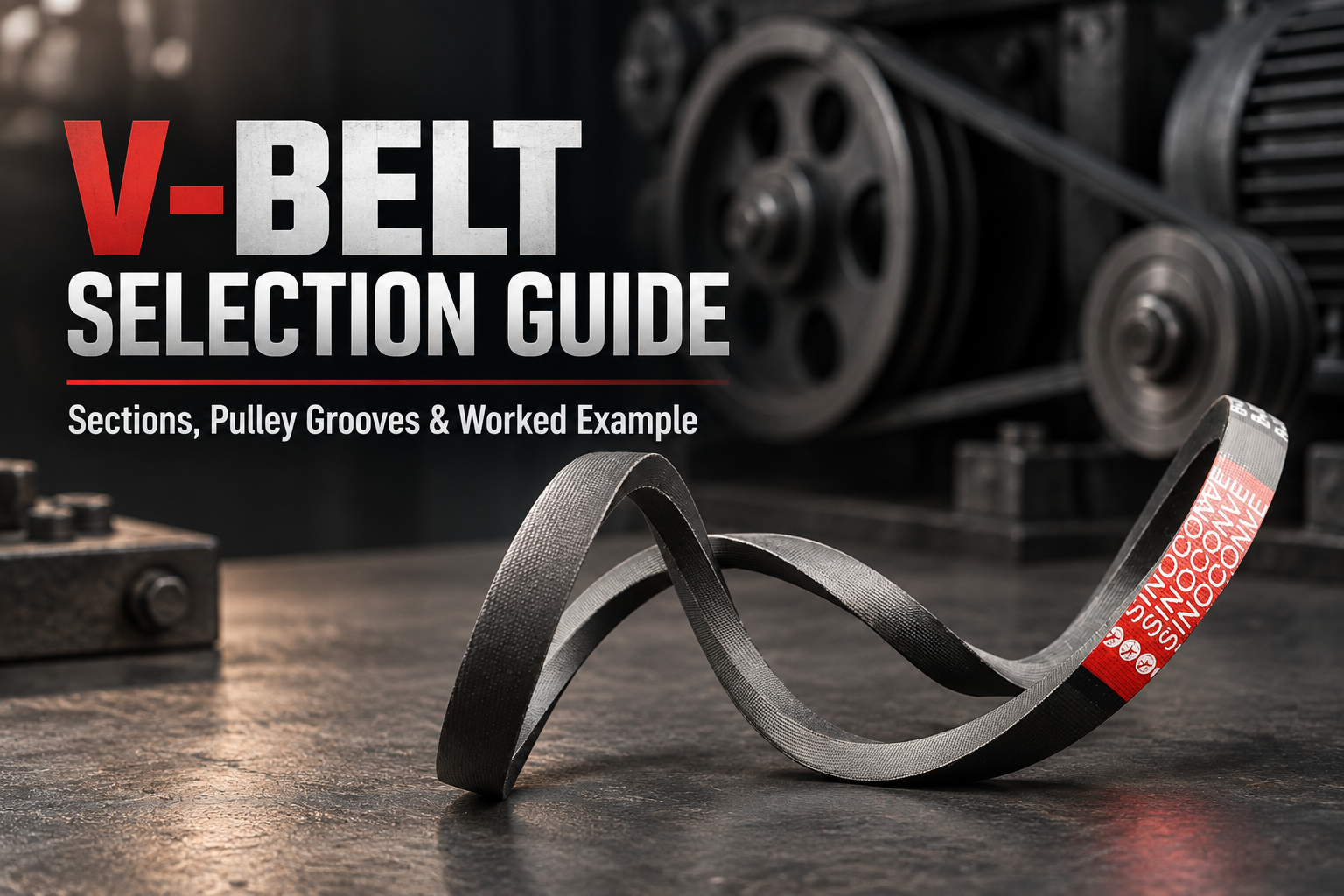
A conventional V belt is one continuous molded loop. Its length, section, reinforcement, and rubber compound are fixed at production. A link V belt is assembled from multiple detachable links. The links lock together and form a V-shaped running profile that sits inside the pulley groove.
The advantage is obvious during maintenance. If the drive center distance is awkward, the old belt marking is gone, or the machine cannot be dismantled easily, an adjustable belt can save time. The trade-off is just as important: it must be checked more carefully for fit, tension, and running stability after installation.
Link V Belt vs Standard Molded V Belt
|
Belt Type |
Where It Works Well |
Main Caution |
|
Standard molded V belt |
Fixed OEM drives, higher-speed continuous duty, known belt code |
Requires correct length and section from the start |
|
Link V belt |
Maintenance replacement, emergency repair, older machinery, difficult installation paths |
Not suitable for every high-speed or high-load drive |
|
Twist link V belt |
Adjustable-length drives, fan and pump drives, workshop machines, field repair |
Needs careful seating and re-tensioning after run-in |
Automotive Use: Be Careful With the Word “Replacement”
The original article described link V belts as an automotive efficiency upgrade. That is too broad. In automotive systems, belt drives can run at high speed, near heat, and around compact pulley layouts. If a drive was designed for a specific molded rubber belt or multi-rib belt, changing to a segmented belt without checking the design is risky.
A twist link V belt may make sense on older vehicles, workshop equipment, engine test benches, vintage machinery, or auxiliary pulley drives where the load is moderate and the pulley groove matches. It is less suitable where the belt must meet a strict OE specification, run at very high speed, or pass through tight guards with little clearance.
Where Twist Link V Belts Are Commonly Used
|
Application |
Why a Link Belt Helps |
What to Confirm First |
|
Workshop fans and blowers |
Fast replacement without full disassembly |
Pulley section and running speed |
|
Pumps and small compressors |
Adjustable length helps with older frames |
Load level and belt temperature |
|
Agricultural or garden equipment |
Useful when the old belt code is unreadable |
Pulley wear, dust, guard clearance |
|
Vintage automotive or test rigs |
Can keep equipment running when exact belts are hard to source |
Duty level and alignment |
|
Temporary field repair |
Reduces stoppage while the correct molded belt is sourced |
Whether the drive is safe to run temporarily |
What Buyers Should Check Before Ordering
Do not choose a link V belt by appearance only. The belt has to match the pulley section. If it rides too high, the sides may not grip correctly. If it sinks too deep, the belt can bottom out and lose the wedge action that makes a V belt work.
For a supplier, the most useful details are the old belt code if available, pulley groove width, outside belt path length, machine model, photos of the pulleys, expected speed, and whether the belt is for permanent use or temporary repair. Those details reduce guessing, which is the practical meaning of SINOCONVE’s “Save Time, Save Money” approach.
Common Installation Mistakes
A link belt is forgiving, but not magic. Over-tensioning is common because users try to stop slip by pulling the belt tighter. That may quiet the drive for a while, but it can overload bearings and shorten pulley life.
Another mistake is ignoring pulley condition. A polished, worn, or contaminated groove will damage a new belt quickly, whether it is a molded belt or a link V belt. After installation, the belt should be run briefly, stopped, inspected, and re-tensioned if the manufacturer or supplier recommends it.
Inspection Signs After Installation
|
Observed Sign |
Likely Cause |
Next Check |
|
Belt climbs out of groove |
Wrong section, misalignment, excessive vibration |
Check pulley profile and shaft alignment |
|
Visible dust after short running |
Pulley wear or too much slip |
Inspect groove surface and tension |
|
Repeated noise under load |
Low tension, oil contamination, overloaded drive |
Clean pulleys and review load |
|
Links show uneven bending |
Small pulley, poor seating, wrong belt path |
Check minimum pulley size and clearance |
FAQ
Is a link V belt the same as a normal V belt?
No. Both run in V pulleys, but a link V belt is made from removable segments. A normal V belt is a molded endless loop.
Can a twist link V belt be used in automotive drives?
Sometimes, but not as a universal replacement. It depends on pulley groove, speed, load, temperature, and whether the drive requires an OE-style belt.
Why do maintenance teams keep link belts in stock?
They are useful when the exact belt length is unclear, the machine is hard to dismantle, or a temporary repair is needed before the correct belt arrives.
What information should be sent for a quote?
Send belt section, required length or belt path, pulley photos, machine model, quantity, and whether the belt is for emergency repair or long-term operation.
Final Note
A link V belt is valuable when flexibility and quick maintenance matter. A standard molded belt is still better for many fixed, high-speed, or OEM-controlled drives. The best choice starts with the pulley system, not with the belt name alone.