
Light Conveyor Belt Solutions for Efficient Fruit Handling
Fruit handling lines usually fail in small places before they fail as a whole: a wet apple rolls at a transfer point, a berry tray shifts before inspection, or wash water carries pulp back under the return side. None of these issues can be solved by choosing a light conveyor belt by color or thickness alone. The belt has to match the fruit, the moisture level, the transfer angle, the cleaning routine, and the machine layout.
A pvc conveyor belt is common in fruit sorting, washing, grading, and packing equipment because it can be fabricated with different surfaces, sidewalls, cleats, guides, and splice styles. That flexibility is useful, but it also creates room for mistakes. A food conveyor belt used for dry cartons is not automatically suitable for wet fruit contact. A fruit conveyor belt with sidewalls may control rolling fruit well, but it can also create cleaning gaps if the line is not designed for it.
Start with the Fruit, Not the Belt Photo
Different fruits ask different things from the belt surface. Round fruit tends to roll. Soft fruit bruises if the transfer is too sharp. Washed fruit brings water, wax, juice, pulp, and sometimes cleaning chemicals into the belt area. Packed fruit trays may need stable positioning more than aggressive grip.
That is why the same light conveyor belt cannot be recommended for every fruit line. A smooth surface may release fruit cleanly after washing, while a textured surface may help stabilize cartons or trays. Corrugated sidewalls can help contain loose fruit on an incline, but they should be checked against pulley diameter, return clearance, and cleaning access before production.
|
Fruit / product condition |
What usually matters |
Belt-related risk |
|
Round fruit such as apples or oranges |
Controlled movement and containment |
Rolling at transfer points or on inclines |
|
Soft fruit or delicate produce |
Gentle transfer and low-impact handling |
Bruising, marking, or compression damage |
|
Washed fruit |
Drainage, release, and cleaning access |
Residue buildup, carryback, or hygiene concerns |
|
Fruit trays or cartons |
Stable tracking and product positioning |
Skewed packages before inspection or sealing |
|
Mixed-size produce |
Surface choice and side containment |
Small fruit escaping under guides or sidewalls |
Where a PVC Conveyor Belt Fits in Fruit Processing
A pvc conveyor belt is often selected for light to medium product movement in indoor fruit handling lines. It can be useful in sorting tables, inspection conveyors, grading sections, packing discharge lines, and short inclined transfer points. The real value is not only the PVC material. It is the ability to match the top surface, running side, edge finish, and attachments to the machine.
In a fruit washing line, the belt may need easy release and quick cleaning. In a packing line, stable carton movement may matter more. In a sorting line, the surface should not interfere with product rotation or visual inspection. If the belt is used near water or fruit residue, the joint and edges deserve extra attention because contamination and delamination often start there.
|
Line position |
Possible belt choice |
What buyers should check |
|
Washing discharge |
Smooth or lightly textured pvc conveyor belt |
Release, water carryback, edge sealing, cleaning method |
|
Sorting / grading line |
Flat food conveyor belt with stable tracking |
Product visibility, lateral drift, transfer height |
|
Inclined fruit transfer |
Fruit conveyor belt with sidewalls or cleats |
Incline angle, fruit size, return clearance |
|
Packing discharge |
Light conveyor belt for trays or cartons |
Product base material, belt speed, transfer point |
|
Inspection conveyor |
Clean surface with low product marking |
Color contrast, residue, surface wear |
Sidewalls, Cleats, and Guides Are Not Decoration
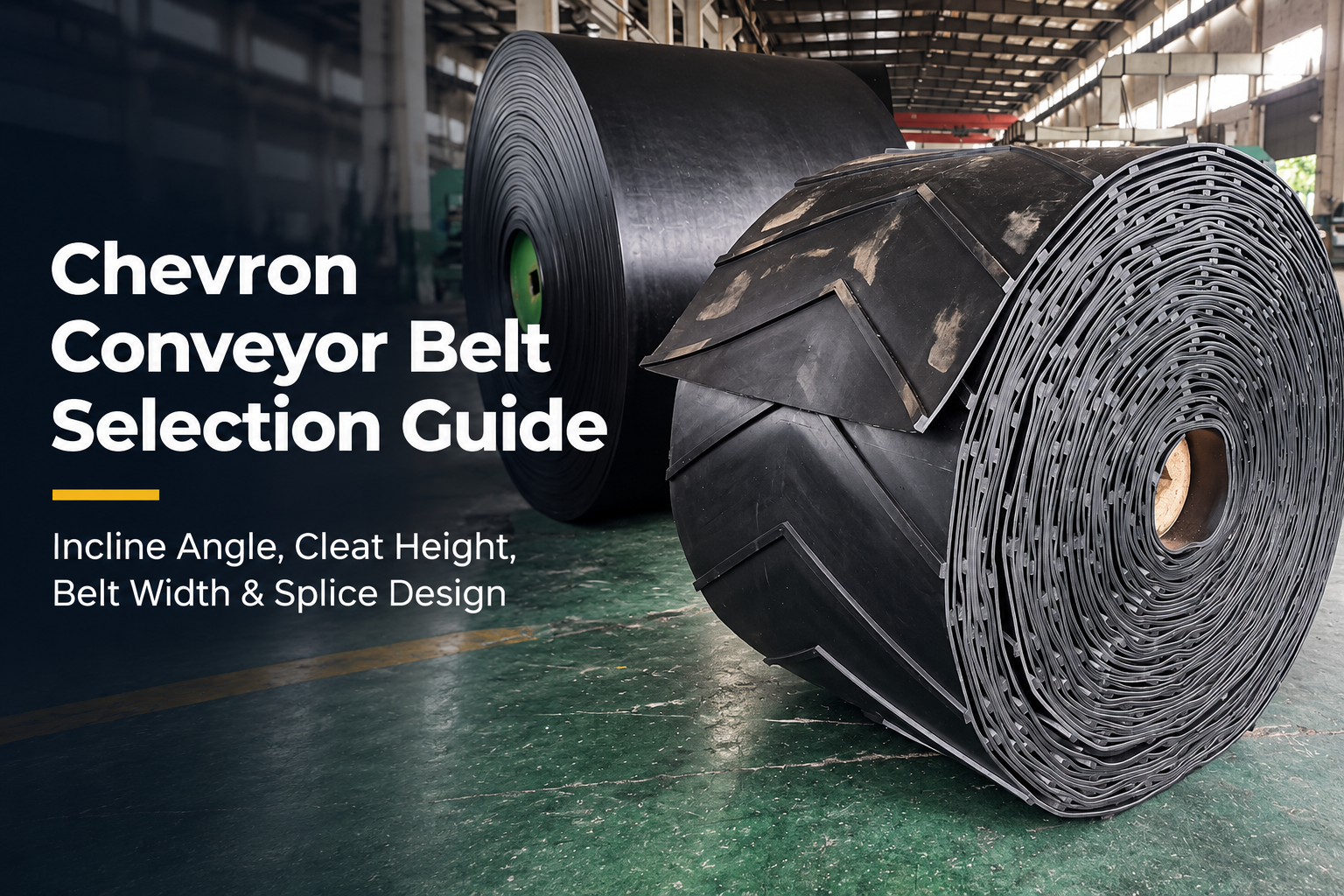
The original product description highlights a blue fruit conveyor belt with raised corrugated sidewalls. That structure can make sense when loose fruit must stay inside the belt path, especially on short inclined sections or where the machine footprint is limited. Still, sidewalls are not automatically better. They add bonding points, bending demands, and cleaning surfaces.
Cleats or flights help control spacing or reduce rollback, but they also affect pulley bending and return-path clearance. Tracking guides can help a belt stay centered, but only if the pulley or bed has a matching groove. A good Customized PVC belt decision should solve a specific handling problem instead of adding every possible feature.
|
Feature |
Useful when |
Risk if mismatched |
|
Smooth PVC surface |
Fruit needs clean release after washing or sorting |
May allow rolling or sliding on incline |
|
Light texture |
Cartons, trays, or dry fruit need extra stability |
Can collect residue if cleaning is weak |
|
Corrugated sidewalls |
Loose fruit needs side containment |
Cleaning gaps and return clearance problems |
|
Cleats / flights |
Spacing or uphill transfer is required |
Fruit impact, cleat wear, pulley stress |
|
Tracking guide |
Line has side force or tracking drift |
Wrong groove layout can create edge wear |
Common Failure Signs on Fruit Conveyor Belts
A fruit line often gives warning signs before a belt has to be replaced. Fruit begins to roll back after cleaning. The belt edge starts rubbing the frame. A joint clicks over a small roller. Residue collects where the sidewall meets the base belt. These are not just maintenance details; they are clues for the next specification.
If a food conveyor belt fails early, the cause may not be weak material. It may be excessive tension, a pulley that is too small for the belt thickness, a surface that holds fruit pulp, or a splice that does not tolerate repeated washdown. Looking at the old belt is usually more useful than repeating the same part number without checking why it failed.
|
Observed issue |
Likely cause |
What to check before reordering |
|
Fruit rolls or drifts |
Surface grip mismatch, incline angle, belt speed |
Fruit size, surface finish, transfer point, sidewalls |
|
Residue builds near sidewalls |
Cleaning access or sidewall geometry problem |
Wash method, corner buildup, return path |
|
Belt tracks to one side |
Pulley buildup, uneven tension, guide mismatch |
Roller face, guide groove, edge wear marks |
|
Joint opens early |
Wrong splice style or repeated small-pulley bending |
Pulley diameter, belt thickness, cleaning chemicals |
|
Surface cracks or hardens |
Material not matched to heat, UV, ozone, or cleaning routine |
Operating environment and cleaning process |
What to Send Before Ordering a Fruit Conveyor Belt
A useful inquiry should describe the working condition, not just the belt width and length. If the belt handles wet fruit, say so. If the old belt failed near the sidewall, send a photo. If the line has a small nosebar or tight pulley, include the diameter. These details help the supplier avoid choosing a belt that looks right but runs poorly.
SINOCONVE's Save Time, Save Money approach fits this kind of work: clearer application information before production reduces sample mistakes, repeated confirmation, and installation rework after delivery.
|
Information to send |
Why it matters |
|
Belt width, length, and thickness |
Basic production and quotation details |
|
Old belt photos and machine position |
Shows surface, edge, splice, and tracking marks |
|
Fruit type and product condition |
Affects grip, release, bruising risk, and residue |
|
Conveyor angle and speed |
Helps decide surface, sidewalls, cleats, or guides |
|
Pulley diameter and layout photos |
Checks whether belt and splice can bend correctly |
|
Cleaning method and chemicals |
Important for food conveyor belt edge and joint design |
|
Failure symptoms |
Prevents repeating the same selection mistake |
|
Quantity and packaging requirement |
Supports sample planning, labels, and export packing |
Practical Selection Advice
For dry, flat fruit cartons, a simple light conveyor belt may be enough. For loose fruit on an incline, a sidewall or cleated fruit conveyor belt may be more suitable. For wet lines, the best choice may depend less on grip and more on release, edge sealing, and cleaning access. For small pulleys, flexibility and splice thickness may matter more than belt strength.
The safest selection path is simple: define the fruit first, then the contact condition, then the conveyor layout, and only then the belt structure. A pvc conveyor belt can be a good solution, but only when the surface, fabric, sidewall, guide, and joint match the actual fruit handling problem.
FAQ
What is a light conveyor belt used for in fruit handling?
It is used for sorting, washing discharge, inspection, grading, packing, and short transfer sections where loads are lighter than heavy industrial bulk conveying.
When should I choose a pvc conveyor belt for fruit lines?
Choose it when the line needs clean indoor conveying, flexible fabrication, stable product movement, and practical surface or sidewall customization.
Is a food conveyor belt always the same as a fruit conveyor belt?
No. A food conveyor belt may meet general food-contact needs, but a fruit conveyor belt also has to match rolling behavior, moisture, bruising risk, and cleaning access.
Are corrugated sidewalls always better for fruit?
No. They help contain loose fruit on some inclines, but they can create cleaning and bending issues if the pulley layout or return path is not suitable.
What should I send for a quotation?
Send belt size, old belt photos, machine position, fruit type, conveyor angle, pulley layout, cleaning method, failure signs, quantity, and packing requirements.
Final Note for Buyers
A fruit conveyor belt should be selected from the product and the machine outward. The belt surface controls how fruit moves. The sidewall or cleat controls containment. The splice and pulley layout decide whether the belt can run smoothly over time. When those details are clear, a light conveyor belt becomes more than a simple replacement part; it becomes part of a more stable fruit handling process.