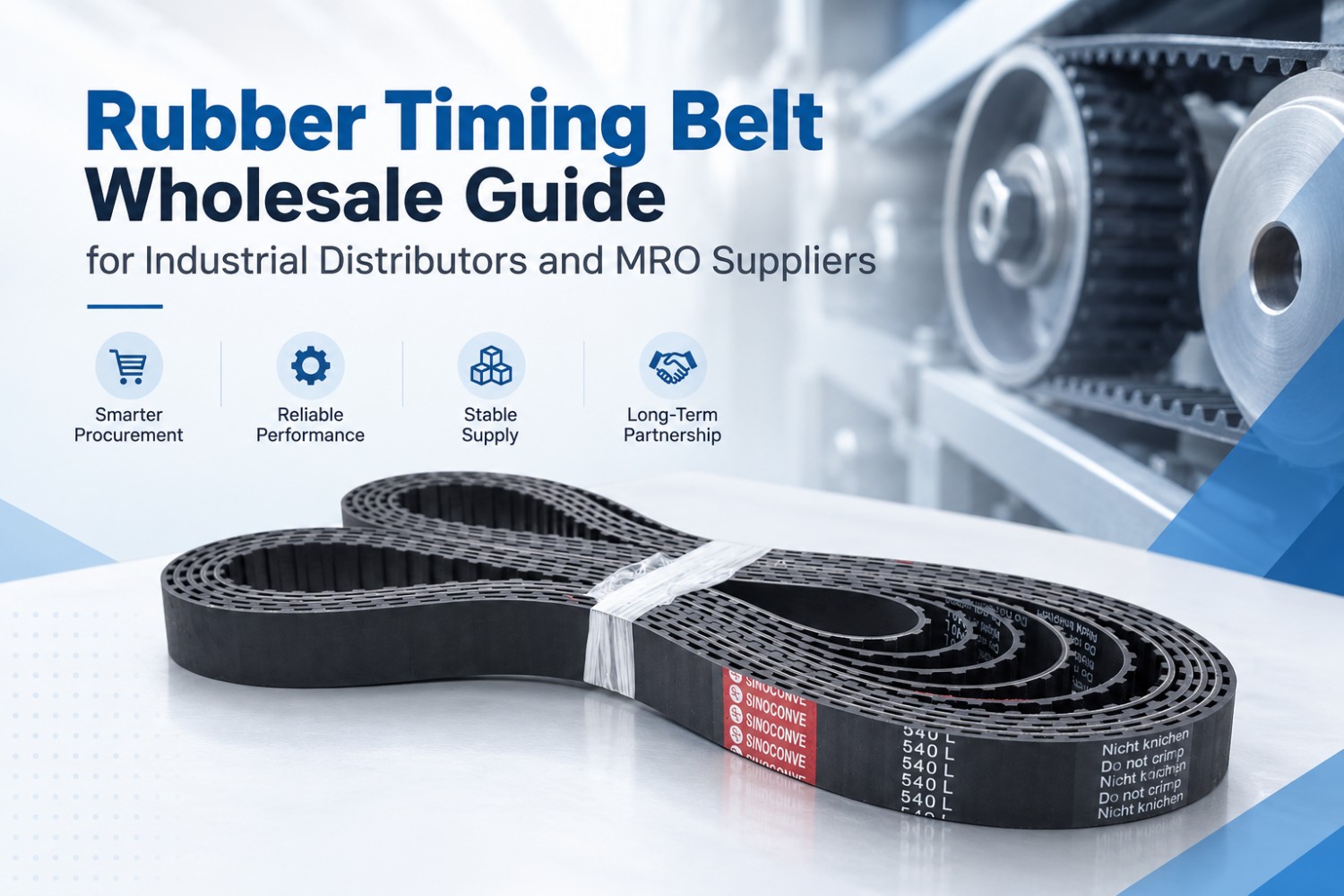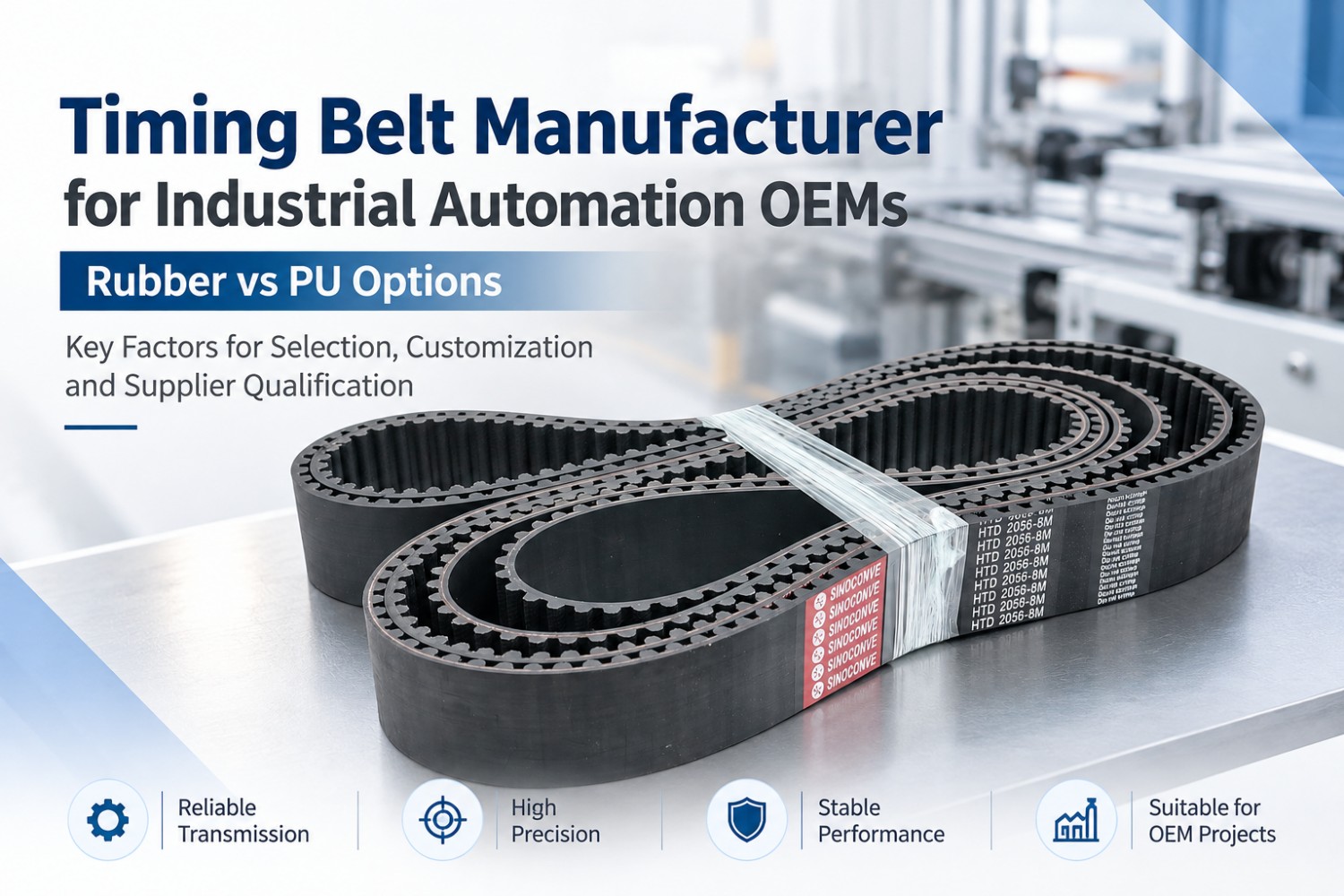

A timing belt normally gets judged by its tooth pitch, tensile cord, and length code. That is fair, but it misses a detail that often shows up first in actual use: the belt surface. The outside may glaze. The tooth side may polish unevenly. A fabric facing may start to fray at the edge. None of these signs look dramatic at first, yet they can change how quietly and accurately a drive runs.
That is why Rubber Timing Belt Surface design matters. It is not just a finish added after the belt is made. It is the contact layer between the belt, the pulley, the guide rail, the back-side idler, or sometimes the product being moved. In clean positioning equipment, the surface has to stay stable. In machinery with oil mist, dust, heat, or repeated start-stop cycles, the surface also has to resist wear without becoming brittle or slippery.
What the Surface Actually Has to Do
A Rubber Timing Belt is built to transmit motion through molded teeth. The teeth keep the pulley relationship synchronized, while the tensile member limits stretch. The surface still has work to do around those main parts. It protects the body of the belt, affects noise, changes friction, and in some layouts decides whether the belt can run against back-side rollers without wearing out too early.
On some drives, the tooth side is the main concern. On others, the back surface is more important because the belt bends over reverse rollers or touches support plates. In light conveying or indexing systems, the surface may even contact the product directly. A belt that looks correct in size can still fail early if the surface is wrong for the contact conditions.
Common Surface Options
|
Surface choice |
Where it usually helps |
What buyers should check |
|
Standard rubber surface |
General power transmission, normal pulley drives |
Pulley condition, tension, working temperature |
|
Fabric facing on tooth side |
Quieter running, reduced tooth wear, smoother pulley contact |
Fabric bonding, edge condition, tooth profile match |
|
Back-side coating |
Back idlers, product contact, extra wear protection |
Coating thickness, flexibility, pulley diameter |
|
High-friction coating |
Positioning, light conveying, parts that need grip |
Product surface, cleaning method, risk of residue buildup |
|
Low-friction surface treatment |
Sliding contact, guide surfaces, reduced drag |
Guide material, dust level, belt speed |
The right surface is usually selected from the machine layout, not from a catalog photo. A belt running only between two pulleys has different needs from a belt that also touches a guide plate or carries small components. This is where coated Rubber Timing Belt designs become useful. The coating can add grip, reduce wear, protect the belt back, or adjust the contact behavior without changing the basic timing function.
Where Coated Rubber Timing Belts Make Sense
A coated Rubber Timing Belt is often specified when the standard belt body is mechanically suitable but the surface has to deal with something extra. That may be product contact, reverse bending, abrasion from guide rails, or a need for cleaner handling in a packaging or assembly line.
The coating should not be treated as a universal upgrade. A thick coating may add protection, but it can also affect flexibility and pulley clearance. A high-grip surface can help with indexing parts, but it may collect dust in a dirty plant. A smooth back coating may reduce drag, but only if the guide surface and belt tension are correct. The surface solves one problem only when it is matched to the drive.
Typical Applications
|
Application area |
Surface issue that usually appears |
Practical surface direction |
|
Packaging machines |
Product slipping or inconsistent indexing |
Grip coating or stable back surface |
|
Automated assembly |
Position error after long running time |
Wear-resistant tooth facing and stable rubber compound |
|
Robotics and light automation |
Noise, dust, repeated acceleration |
Clean running surface, accurate tooth profile |
|
Textile and printing equipment |
Back-side wear from rollers or guides |
Back coating with controlled friction |
|
General machinery |
Glazing, cracking, uneven tooth polish |
Correct compound, tension, and pulley match |
In automotive timing drives, surface stability is more about heat aging, tooth wear, and long-term flexibility. In industrial automation, the conversation often shifts toward positioning accuracy, contact friction, and how the belt behaves after thousands of cycles. Both are timing belt questions, but the surface failure signs can be different.
What Usually Shortens Surface Life
Surface damage is not always caused by poor belt quality. Sometimes the belt is only showing a problem that started elsewhere in the system. Misaligned pulleys polish one edge. Excessive tension overheats the belt. A worn pulley groove damages the tooth surface. Oil mist softens some materials and leaves the belt looking shiny before it starts to crack.
Maintenance teams often notice the symptom before they identify the cause. A rubber back that has gone glossy, tooth fabric that looks burned, fine rubber dust near the guard, or a belt that starts sounding different after a shift change can all point to surface stress.
Selection Notes for Buyers
|
Information to confirm |
Why it matters |
|
Tooth pitch and belt width |
The coating cannot fix a wrong pulley match |
|
Back-side contact or no back-side contact |
Determines whether a back coating is needed |
|
Pulley diameter |
Too small a pulley can crack a stiff coating |
|
Working temperature and oil exposure |
Affects rubber aging and surface hardness |
|
Product contact requirement |
Grip, marking, cleanliness, and residue matter |
|
Current failure sign |
Glazing, cracking, dust, fraying, or tooth wear point to different causes |
For sourcing teams, it helps to send more than the belt length. A photo of the belt path, the pulley side, the back-side contact area, and the old belt marking can prevent a wrong recommendation. If the machine already has a surface failure pattern, describe it before asking for a replacement. That detail is usually more useful than asking for the cheapest Rubber Timing Belt.
Quality Checks Before Using a New Belt
Before installation, the surface should be checked under good light. Look for uneven coating thickness, fabric lifting, damaged edges, surface bubbles, or tooth defects. After installation, run the machine briefly and listen. A new belt that immediately squeals, walks to one side, or heats up at the back surface is asking for an alignment check, not just more tension.
For batch purchasing, consistency matters. One good sample is not enough if the production batch varies in coating thickness, length stability, or tooth accuracy. This is especially important for OEM buyers using coated Rubber Timing Belt products in repeat equipment builds.
Rubber Timing Belt Surface vs Belt Body
|
Item |
Main job |
Common problem if wrong |
|
Rubber body |
Flexibility and environmental resistance |
Cracking, hardening, early aging |
|
Tensile cord |
Length stability and load control |
Stretch, timing error, poor tracking |
|
Tooth profile |
Positive engagement with pulley |
Jumping, noise, tooth wear |
|
Rubber Timing Belt Surface |
Contact behavior, wear protection, grip or slip control |
Glazing, fraying, product slip, surface dust |
|
Coating layer |
Special handling or contact requirement |
Peeling, stiffness, wrong friction level |
FAQ
What is Rubber Timing Belt Surface?
It is the working contact layer of the belt, including the tooth surface, back surface, fabric facing, or coating. It affects wear, noise, grip, and contact stability.
When should a coated Rubber Timing Belt be used?
Use it when the standard belt size is correct but the surface needs extra grip, wear protection, lower friction, or product-contact behavior.
Does coating change timing accuracy?
The timing accuracy still depends mainly on tooth profile, pulley match, and tensile cord stability. A poor coating choice can affect running behavior, so clearance and flexibility should be checked.
What information should be sent for a quotation?
Send belt pitch, width, length, tooth profile, pulley layout, contact surface, working environment, quantity, and photos of the old belt if available.
Final Note
A Rubber Timing Belt can have the right pitch and still be the wrong belt for the job if the surface is ignored. The safer way to select is to look at the full contact path: pulley teeth, back rollers, guide surfaces, product contact, and the environment around the drive. Once those details are clear, the surface choice becomes much less of a guess.