
Aramid Fiber PU Timing Belt: Superior Strength and Efficiency
A timing belt normally fails quietly at first. A little tooth wear. A slightly polished running surface. More noise around the pulley set. By the time the drive starts missing position or asking for tension adjustment again, the belt has already been telling its story for a while.
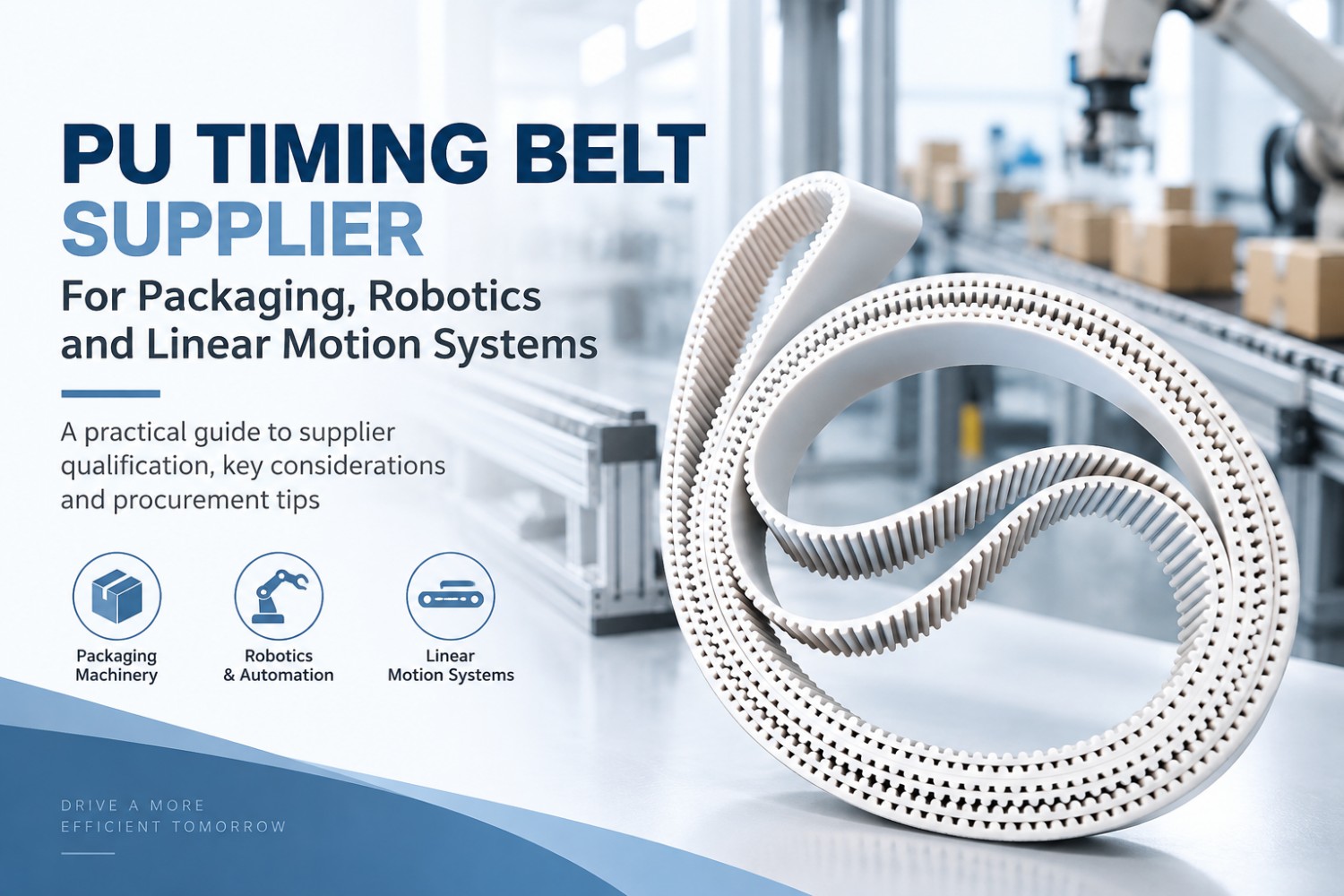
That is why reinforcement matters. In a regular polyurethane timing belt, the PU body gives wear resistance and clean tooth formation. The tension member inside decides how much the belt stretches under load. An Aramid fiber PU timing belt is built for applications where low weight, stable length, and repeated flexing all matter at the same time.
It is not the belt for every drive. It is the belt for cases where a standard option starts to show its limits: fast indexing, compact pulleys, start-stop motion, light-to-medium conveying, or automation lines where a small positioning error becomes a production problem.
What Aramid Fiber Changes Inside the Belt
The working part of a timing belt is not only the tooth surface. The cords buried inside the belt carry tension every time the pulley pulls the drive forward. If those cords elongate too much, the pitch relationship changes. The teeth may still look acceptable, but the machine no longer sees the same timing accuracy.
Aramid fiber is used because it combines high tensile strength with low weight. Compared with heavier reinforcement materials, aramid cord can help the belt stay flexible while keeping elongation under control. That becomes useful in drives where the belt bends frequently, accelerates often, or runs around smaller pulley layouts.
A PU timing belt with aramid reinforcement is often chosen for motion systems where steel cord stiffness would be unnecessary or less convenient. The point is not simply strength. It is the balance between strength, flexibility, and weight.
The PU Body Still Does Most of the Surface Work
Polyurethane gives the belt its formed tooth shape and outside surface behavior. In many industrial settings, PU handles abrasion better than soft rubber compounds and keeps a clean profile on molded or machined teeth. That helps when the belt works with precision pulleys, guide tracks, or backing fixtures.
The tooth surface has to enter and leave the pulley groove without scuffing too quickly. The back side may also contact rollers, guides, or product supports, depending on the machine. When a belt is used for conveying as well as timing, the back surface becomes part of the design conversation, not just an afterthought.
This is where a coated or modified surface can be considered. Some applications need more grip. Others need lower friction. Some need holes, profiles, or special backings. The basic Aramid fiber PU timing belt provides the timing structure; the surface treatment adapts it to the job.
Where This Belt Type Makes Sense
The following table is not a universal selection chart. It is closer to the way a buyer or engineer starts narrowing the choice before sending drawings or samples.
|
Application |
Why aramid + PU can help |
What still needs checking |
|
Packaging and indexing lines |
Low stretch during repeated starts |
Tooth pitch, pulley match, belt width |
|
Light conveyor timing drives |
Stable movement without heavy reinforcement |
Back-side wear, product contact, tracking |
|
Automated assembly |
Good positioning repeatability |
Acceleration load and guide layout |
|
Printing or labeling equipment |
Cleaner motion at controlled speed |
Surface friction and pulley wear |
|
Custom perforated belts |
Light structure with design flexibility |
Hole position, edge strength, minimum pulley size |
When a Standard PU Timing Belt May Be Enough
Not every machine needs aramid fiber. If the load is light, the center distance is short, and the drive speed is moderate, a standard PU timing belt may already be practical. Over-specifying the belt can add cost without solving a real problem.
The stronger case for aramid appears when the system keeps asking for length stability, smoother flexing, or lower moving mass. If the old belt shows early elongation, repeated retensioning, edge fatigue, or tooth wear from unstable meshing, then reinforcement should be reviewed.
A good supplier should ask about the drive before recommending material. Pitch and width alone are not enough. The same belt code can behave differently on two machines if one runs dry and clean while the other deals with dust, guide pressure, or frequent load changes.
Coatings, Perforations, and Custom Backing
Many buyers ask for an Aramid fiber PU timing belt because the base structure sounds strong. Sometimes the more important detail is the surface. A belt running under a product needs a different surface than one working only between timing pulleys.
Back coatings can change grip, noise, and wear. Perforations can help with vacuum holding, fixture mounting, or machine-specific timing positions. Profiles can be added when the belt carries product rather than simply transferring motion.
These additions should be decided from drawings or machine photos. A coating that works well on cartons may not suit oily parts. A perforated belt needs enough remaining material around the holes to keep strength and tracking stable. Customization is useful only when the details are controlled.
Selection Details Worth Confirming Before Ordering
|
Detail to confirm |
Why it matters |
|
Pitch and tooth profile |
Must match pulley geometry |
|
Belt width and total length |
Affects load capacity and replacement fit |
|
Cord material |
Controls stretch, flexibility, and working tension |
|
Pulley diameter |
Too small may shorten belt life |
|
Back-side contact |
Important for rollers, guides, or product support |
|
Operating environment |
Oil, dust, moisture, cleaning agents, and temperature change surface behavior |
|
Custom holes or profiles |
Need drawing control, not verbal description only |
Common Signs the Belt Is Not Matching the Drive
A belt problem is not always caused by poor belt quality. Pulley wear, wrong tension, guide pressure, or a contaminated running area can damage even a good product.
Watch for polished teeth, fine PU dust near the pulley, edge shaving, repeated loss of tension, uneven tracking, or small cracks around perforated areas. These signs point to a mismatch somewhere in the system. Replacing the belt without checking the drive may only reset the same failure cycle.
For maintenance teams, keeping the old belt code and a few clear photos is useful. The printed marking may fade by the time a replacement is needed. A record of length, width, pitch, tooth profile, and any coating or hole pattern saves time during the next order.
How SINOCONVE Can Support Custom Timing Belt Needs
SINOCONVE supplies timing belt products for industrial transmission and conveying applications. For buyers asking about an Aramid fiber PU timing belt, the useful starting point is not a general catalog name. It is the working condition of the machine.
Drawings, samples, pulley details, belt codes, and application photos help confirm whether aramid reinforcement, a standard PU timing belt, a coated backing, or a perforated structure is the better route. For OEM orders and replacement projects, that early confirmation reduces the risk of receiving a belt that looks correct but behaves differently once installed.
FAQ
What is an Aramid fiber PU timing belt?
It is a polyurethane timing belt reinforced with aramid fiber cords. The PU body forms the teeth and working surface, while the aramid cords help control stretch and keep the belt light and flexible.
Is it stronger than a standard PU timing belt?
It can offer better tension stability in the right application, but strength alone is not the whole decision. Pulley size, load pattern, speed, and surface contact still decide whether it is the right belt.
Can the belt be coated or perforated?
Yes, if the application requires it. Coating, holes, profiles, and backing choices should be confirmed with drawings or samples rather than guessed from a short product name.
What information is needed for a quotation?
Send belt pitch, width, length, tooth profile, cord requirement, quantity, working environment, and any drawings or photos of the existing belt and pulleys.
Closing Note
An Aramid fiber PU timing belt is most useful when the drive needs stable timing, controlled stretch, and good flexibility without unnecessary belt weight. The safest choice starts with the machine: pulley geometry, load, speed, surface contact, and environment. Once those details are clear, the belt specification becomes much easier to match.