
When a Farm Belt Becomes the Weak Point
In agricultural machinery, a belt rarely gets attention when the machine is running well. The problem starts when a cutter slows down, a pump loses output, or a combine stops during the busiest part of the season. A small belt then becomes a very expensive delay.
That is why an Agricultural transmission V belt has to be judged differently from a light workshop drive belt. Farm equipment works in dust, moisture, vibration, heat, and repeated shock loads. A belt that looks acceptable on a clean pulley drive may not last long on a baler, harvester, mower, irrigation pump, or grain handling line.
The job sounds simple: move power from one pulley to another. In real field work, the belt also has to tolerate sudden starts, uneven crop load, slipping risk, and long running hours with limited maintenance access. This is where the quality of the v belt and its match with the pulley system matter more than the catalog picture.
What an Agricultural Transmission V Belt Has to Handle
A transmission belt used on farm machinery does not live in a stable environment. Dust works into pulley grooves. Crop residue builds up around guards. Oil mist or grease may reach the belt surface. Outdoor storage adds sun, humidity, and temperature changes before the machine even starts.
A good Agricultural transmission V belt therefore needs more than a strong-looking rubber body. It needs stable cord reinforcement, clean sidewall contact, proper flexibility, and a compound that does not harden too quickly under heat and aging. If the belt stretches, the drive slips. If the belt becomes too stiff, it runs hot and may crack near the bending zone.
For buyers, the important point is not whether the product is called an Agricultural Belt or a standard v belt. The real question is whether the section, length, tensile cord, cover, and pulley match the working duty.
Common Agricultural Belt Applications
Different farm machines ask different things from the same basic belt shape. The table below keeps the comparison practical, not theoretical.
|
Machine or system |
What the belt drives |
What to check before ordering |
|
Tractors and small power units |
Fans, pumps, auxiliary drives |
Section, length, pulley groove wear |
|
Combine harvesters |
Threshing, cleaning, fan or auxiliary drives |
Shock load, dust, replacement access |
|
Balers and mowers |
Cutters, rollers, pickup mechanisms |
Load changes, belt grip, sidewall wear |
|
Irrigation pumps |
Pump drive or motor-to-pulley transmission |
Moisture, alignment, running hours |
|
Grain handling equipment |
Augers, conveyors, elevators |
Dust, start-stop frequency, tension range |
|
Agricultural processing lines |
Fans, blowers, light conveyors |
Speed, pulley diameter, maintenance interval |
Classic, Cogged, and Banded: Which Belt Fits the Work?
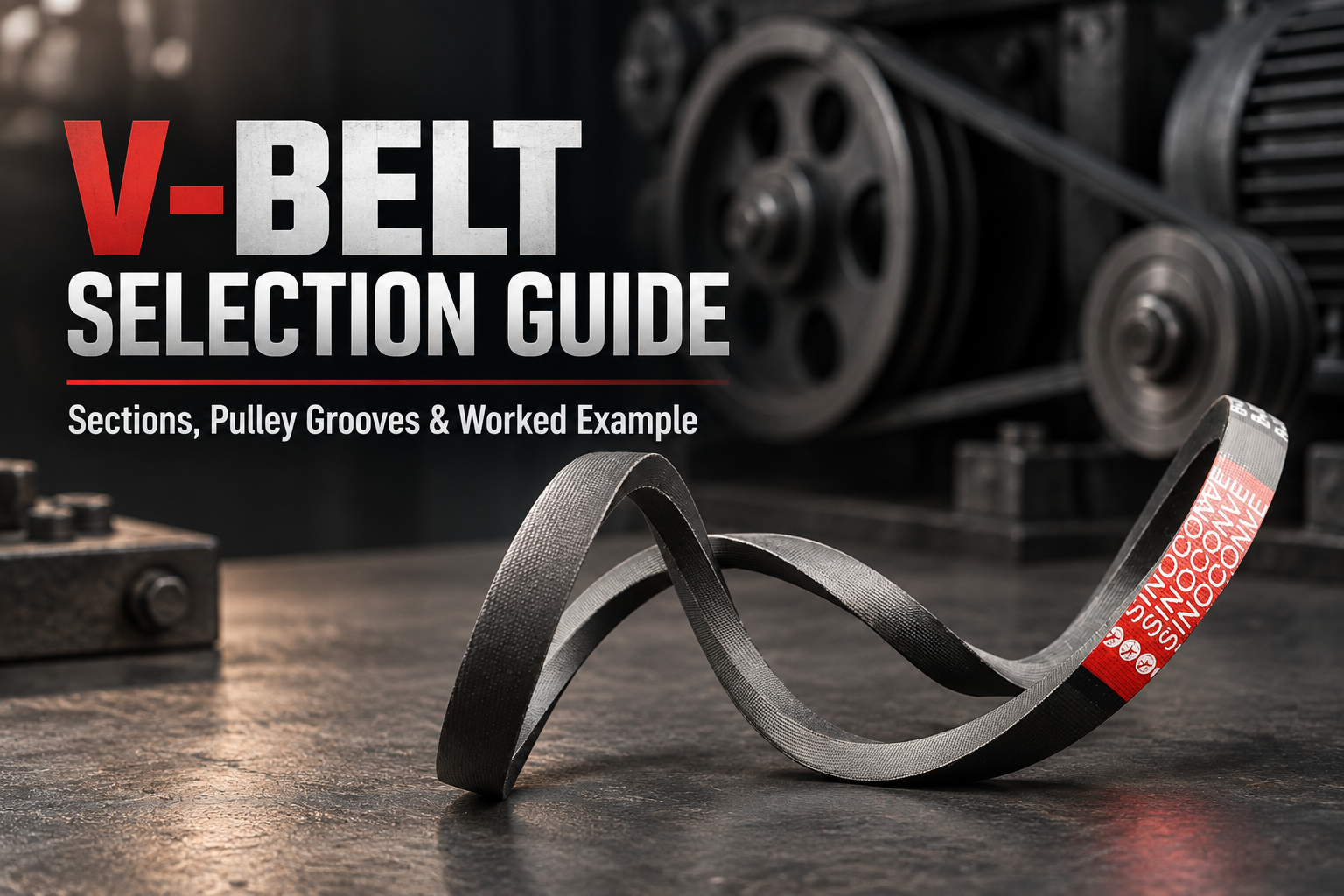
A classic wrapped v belt is still common on many agricultural drives because it tolerates general use and is easy to replace. It suits many fans, pumps, and moderate-speed drives where pulley diameter and load are not extreme.
A cogged v belt bends more easily around smaller pulleys. The notched inner side can help reduce heat buildup in compact or higher-speed layouts. It is not a timing belt. The cogs are there for flexibility, not tooth engagement.
A banded v belt is useful where several belts run together and vibration or belt whip becomes a problem. Some heavy agricultural drives use banded construction because separate belts may twist, roll, or load unevenly under shock.
So the right transmission belt is not chosen by name alone. The drive layout decides. Pulley diameter, groove profile, center distance, torque load, and available space usually narrow the choice quickly.
Why Belt Fit Matters More Than Brand Claims
A premium belt installed in the wrong groove will still fail early. That sounds obvious, but it happens often in replacement work. The old belt may be worn narrow. The printed code may be half gone. The pulley may already be polished or damaged. Ordering by eye can create a second repair before the first one is finished.
For an Agricultural transmission V belt, side contact is everything. The belt should grip on its angled sides, not bottom out in the pulley groove. If it bottoms out, the drive loses wedge action and starts slipping. If it rides too high, wear concentrates near the top edge and the belt may roll under load.
Tension is another common source of trouble. Too loose, and the belt heats up from slip. Too tight, and the bearings take extra load. Neither condition helps the belt or the machine.
Information Worth Sending to a Supplier
For SINOCONVE or any belt supplier, these details are more useful than a general request for an Agricultural Belt.
|
Information |
Why it helps |
|
Printed belt code or model |
Fastest way to match section and length |
|
Machine model or application |
Shows expected duty and load pattern |
|
Top width and outside length |
Useful when the printed code is missing |
|
Photos of pulley grooves |
Helps identify groove wear or profile mismatch |
|
Working environment |
Dust, oil, moisture, heat, outdoor storage |
|
Order quantity and packaging need |
Important for distributor and replacement stock |
Where SINOCONVE Agricultural Belt Supply Fits
SINOCONVE supplies v belt and transmission belt products for industrial and agricultural use. For agricultural machinery, the discussion should start with the machine and drive condition, not only the belt label. Model references such as 3J-160S or HB-3020LW can be useful when they match the actual machine requirement, but the pulley and load conditions still need to be checked.
For OEM buyers, maintenance teams, and parts distributors, batch consistency also matters. A sample that works once is not enough if the next shipment varies in length, section, or cord stability. This is especially true for Agricultural Belt orders used across seasonal equipment fleets.
Maintenance Signs That Should Not Be Ignored
A belt does not always fail suddenly. It often warns the operator first. Squealing at start-up, rubber dust near the pulley, glazing on the sidewall, cracks across the bending area, or repeated tension adjustment all point to a drive problem.
Sometimes the belt is the problem. Sometimes the pulley is. A new Agricultural transmission V belt will not solve misalignment, damaged grooves, or a seized bearing. Before replacing belts repeatedly, check the drive as a system.
FAQ
What is an Agricultural transmission V belt used for?
It is used to transfer power between pulleys on tractors, harvesters, balers, pumps, grain handling machines, and other agricultural equipment.
Is an Agricultural Belt different from a standard v belt?
Sometimes yes. The shape may look similar, but the compound, cord strength, cover, and working duty can be different for farm machinery.
When should a cogged v belt be considered?
Usually when the drive uses smaller pulleys, higher speed, or needs better bending flexibility. It still has to match the pulley profile.
What causes early belt failure in farming equipment?
Wrong size, worn pulleys, poor alignment, over-tension, oil contamination, dust buildup, and shock loads are common causes.
What should I provide for a quotation?
Send the belt code, size, machine model, photos, quantity, application, and working environment. That gives the supplier a real basis for matching the belt.
Final Note
The best v belt choice for farm machinery is usually not the belt that sounds strongest on paper. It is the belt that fits the pulley, handles the load, survives the environment, and can be replaced without confusion during the season.
For agricultural drives, confirm the specification early. Once the machine is in the field, the cheapest belt mistake is rarely cheap.