
Engineered belt solutions for demanding industries worldwide

Link V Belt Guide: Where Twist Link V Belts Make Sense

  • product introduction
Posted by SINOCONVE On Jun 09 2026

Link V Belt Guide: Where Twist Link V Belts Make Sense

A link V belt is not the first belt most mechanics reach for on a standard automotive engine. Modern vehicles usually use molded V belts, multi-rib belts, or serpentine belts made for a fixed pulley layout. A link belt sits in a different category. It is built from interlocking segments, so length can be adjusted by adding or removing links.

That one feature changes where the belt becomes useful. In workshops, older machinery, farm equipment, test rigs, fans, pumps, and some non-critical auxiliary drives, a link V belt can solve a practical problem: the machine needs to run, the exact molded belt is not on the shelf, and downtime is already costing money.

For automotive-related maintenance, a twist link V belt is usually more useful as a service, retrofit, or temporary replacement option than as a direct substitute for every OE belt. The pulley groove, speed, load, guard clearance, and belt path still decide whether it belongs there.

What Makes a Link V Belt Different

A conventional V belt is one continuous molded loop. Its length, section, reinforcement, and rubber compound are fixed at production. A link V belt is assembled from multiple detachable links. The links lock together and form a V-shaped running profile that sits inside the pulley groove.

The advantage is obvious during maintenance. If the drive center distance is awkward, the old belt marking is gone, or the machine cannot be dismantled easily, an adjustable belt can save time. The trade-off is just as important: it must be checked more carefully for fit, tension, and running stability after installation.

Link V Belt vs Standard Molded V Belt

Belt Type

Where It Works Well

Main Caution

Standard molded V belt

Fixed OEM drives, higher-speed continuous duty, known belt code

Requires correct length and section from the start

Link V belt

Maintenance replacement, emergency repair, older machinery, difficult installation paths

Not suitable for every high-speed or high-load drive

Twist link V belt

Adjustable-length drives, fan and pump drives, workshop machines, field repair

Needs careful seating and re-tensioning after run-in

Automotive Use: Be Careful With the Word “Replacement”

The original article described link V belts as an automotive efficiency upgrade. That is too broad. In automotive systems, belt drives can run at high speed, near heat, and around compact pulley layouts. If a drive was designed for a specific molded rubber belt or multi-rib belt, changing to a segmented belt without checking the design is risky.

A twist link V belt may make sense on older vehicles, workshop equipment, engine test benches, vintage machinery, or auxiliary pulley drives where the load is moderate and the pulley groove matches. It is less suitable where the belt must meet a strict OE specification, run at very high speed, or pass through tight guards with little clearance.

Where Twist Link V Belts Are Commonly Used

Application

Why a Link Belt Helps

What to Confirm First

Workshop fans and blowers

Fast replacement without full disassembly

Pulley section and running speed

Pumps and small compressors

Adjustable length helps with older frames

Load level and belt temperature

Agricultural or garden equipment

Useful when the old belt code is unreadable

Pulley wear, dust, guard clearance

Vintage automotive or test rigs

Can keep equipment running when exact belts are hard to source

Duty level and alignment

Temporary field repair

Reduces stoppage while the correct molded belt is sourced

Whether the drive is safe to run temporarily

What Buyers Should Check Before Ordering

Do not choose a link V belt by appearance only. The belt has to match the pulley section. If it rides too high, the sides may not grip correctly. If it sinks too deep, the belt can bottom out and lose the wedge action that makes a V belt work.

For a supplier, the most useful details are the old belt code if available, pulley groove width, outside belt path length, machine model, photos of the pulleys, expected speed, and whether the belt is for permanent use or temporary repair. Those details reduce guessing, which is the practical meaning of SINOCONVE’s “Save Time, Save Money” approach.

Common Installation Mistakes

A link belt is forgiving, but not magic. Over-tensioning is common because users try to stop slip by pulling the belt tighter. That may quiet the drive for a while, but it can overload bearings and shorten pulley life.

Another mistake is ignoring pulley condition. A polished, worn, or contaminated groove will damage a new belt quickly, whether it is a molded belt or a link V belt. After installation, the belt should be run briefly, stopped, inspected, and re-tensioned if the manufacturer or supplier recommends it.

Inspection Signs After Installation

Observed Sign

Likely Cause

Next Check

Belt climbs out of groove

Wrong section, misalignment, excessive vibration

Check pulley profile and shaft alignment

Visible dust after short running

Pulley wear or too much slip

Inspect groove surface and tension

Repeated noise under load

Low tension, oil contamination, overloaded drive

Clean pulleys and review load

Links show uneven bending

Small pulley, poor seating, wrong belt path

Check minimum pulley size and clearance

FAQ

Is a link V belt the same as a normal V belt?

No. Both run in V pulleys, but a link V belt is made from removable segments. A normal V belt is a molded endless loop.

Can a twist link V belt be used in automotive drives?

Sometimes, but not as a universal replacement. It depends on pulley groove, speed, load, temperature, and whether the drive requires an OE-style belt.

Why do maintenance teams keep link belts in stock?

They are useful when the exact belt length is unclear, the machine is hard to dismantle, or a temporary repair is needed before the correct belt arrives.

What information should be sent for a quote?

Send belt section, required length or belt path, pulley photos, machine model, quantity, and whether the belt is for emergency repair or long-term operation.

Final Note

A link V belt is valuable when flexibility and quick maintenance matter. A standard molded belt is still better for many fixed, high-speed, or OEM-controlled drives. The best choice starts with the pulley system, not with the belt name alone.
Featured Blogs

Tag:

Share On
Featured Blogs
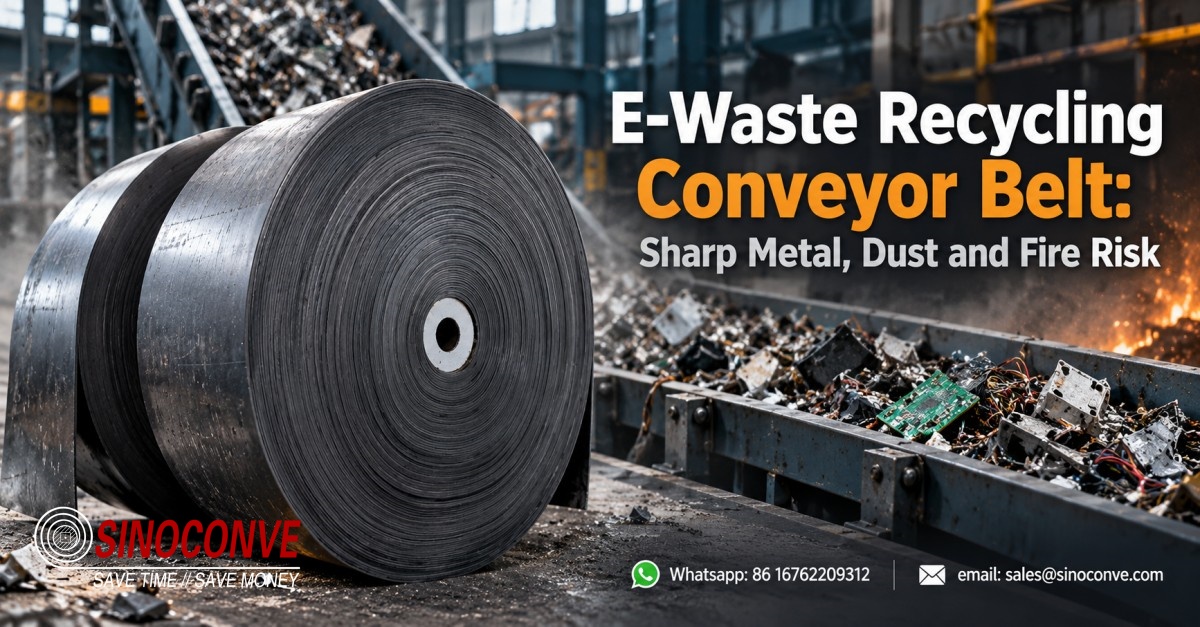
E-Waste Recycling Conveyor Belt: Sharp Metal, Dust and Fire Risk

E-Waste Recycling Conveyor Belt: Sharp Metal, Dust and Fire Risk

Electronic waste is not one material. A single line carries complete units, stripped cases, shredded mix, fine powder and loose cable, and each of those attacks a belt differently. Sheet metal with a torn edge cuts; repeated impact from the same edge dents and chips; wire and foil wrap around anything that rotates; dust from shredding sticks to a damp cover and comes back on the return run. The risk that separates e-waste from other recycling duty is the battery. A damaged cell in the feed is an ignition source, and once it is on the belt the belt becomes fuel, so compound choice, housekeeping and stop-and-clear discipline matter more than headline specifications. This guide covers each segment of the flow, the difference between cutting and puncture, why wrapping starts where material leaves the intended path, how to keep the fire case first in decisions, and what to ask a supplier and inspect on arrival.

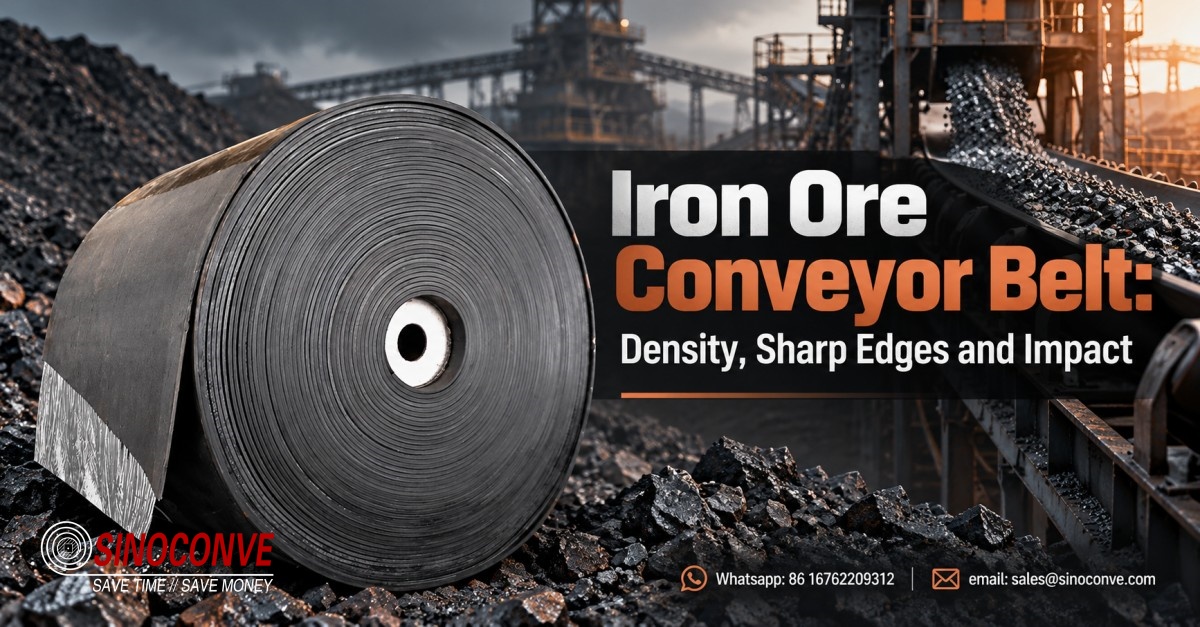
Iron Ore Conveyor Belt: Density, Sharp Edges and Impact

Iron Ore Conveyor Belt: Density, Sharp Edges and Impact

Iron ore punishes a belt in three ways at once: it is heavy, it arrives sharp, and it lands hard. That combination changes what to specify. A cover chosen for slow abrasion loses to a cover chosen for cutting, because the damage is a gouge rather than a polish. The carcass question is not simply heavy duty either. It is whether the line needs the impact tolerance of fabric plies at the loading point or the low stretch of steel cord over a long haul, and the answer often differs between the mine conveyor and the overland run that follows it. This guide works from the load itself: what bulk density and lump shape do to the belt cross section, why cut resistance and abrasion resistance are separate properties, how the loading point decides service life more than the carrying run does, and how fines and moisture turn into carryback, misalignment and edge damage. It closes with what to specify, what to inspect on delivery, and the questions worth settling before the belt is ordered.

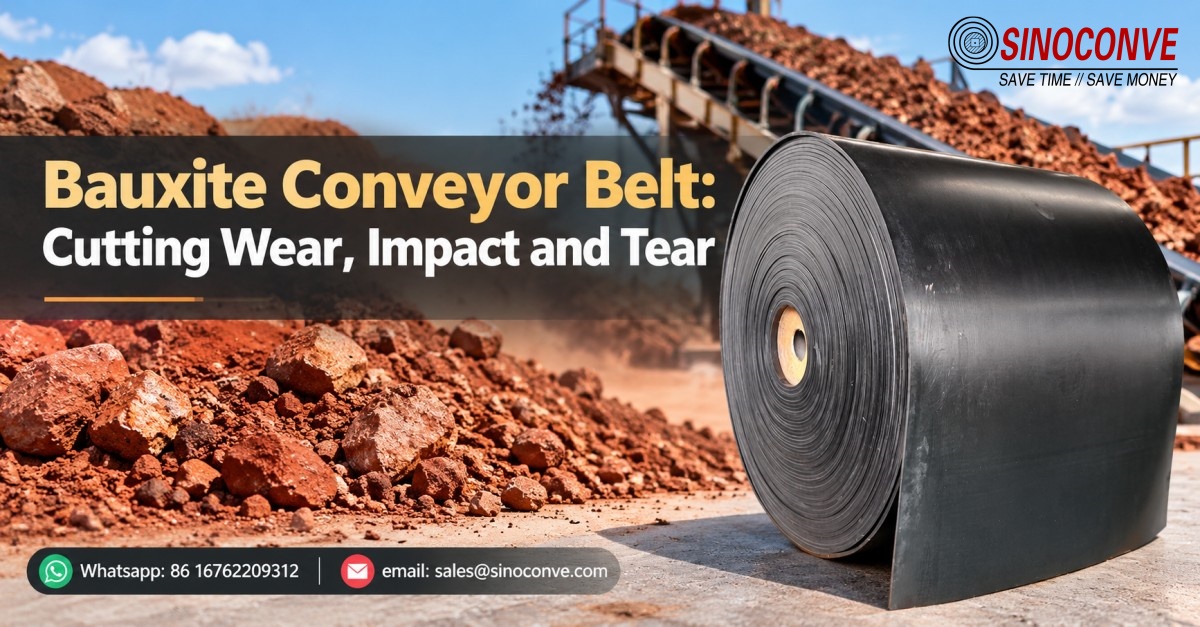
Bauxite Conveyor Belt: Cutting Wear, Impact and Tear

Bauxite Conveyor Belt: Cutting Wear, Impact and Tear

Bauxite does not polish a cover away the way fine sand does. The lumps arrive angular, often wet, and they land hard, so the damage is cutting and impact rather than slow grinding. That single fact changes what to specify: a cut-resistant cover matters more than a hard one, the loading point matters more than the carrying run, and tear protection earns its place because a jammed lump or a piece of tramp steel is what actually stops a bauxite line. Lateritic ore and sedimentary ore behave differently again, one sticky and wet, the other blocky and dry, and a belt chosen for one will disappoint on the other. This guide works from the ore body to the ship loader: lump shape and wear mode, the two ore types side by side, impact at the transfer, tear and tramp metal, wet-season carryback and cleanout, long overland and terminal runs where splice count becomes the availability limit, and the questions to put in a tender. A closing section draws the line against wet acidic concentrate duty.

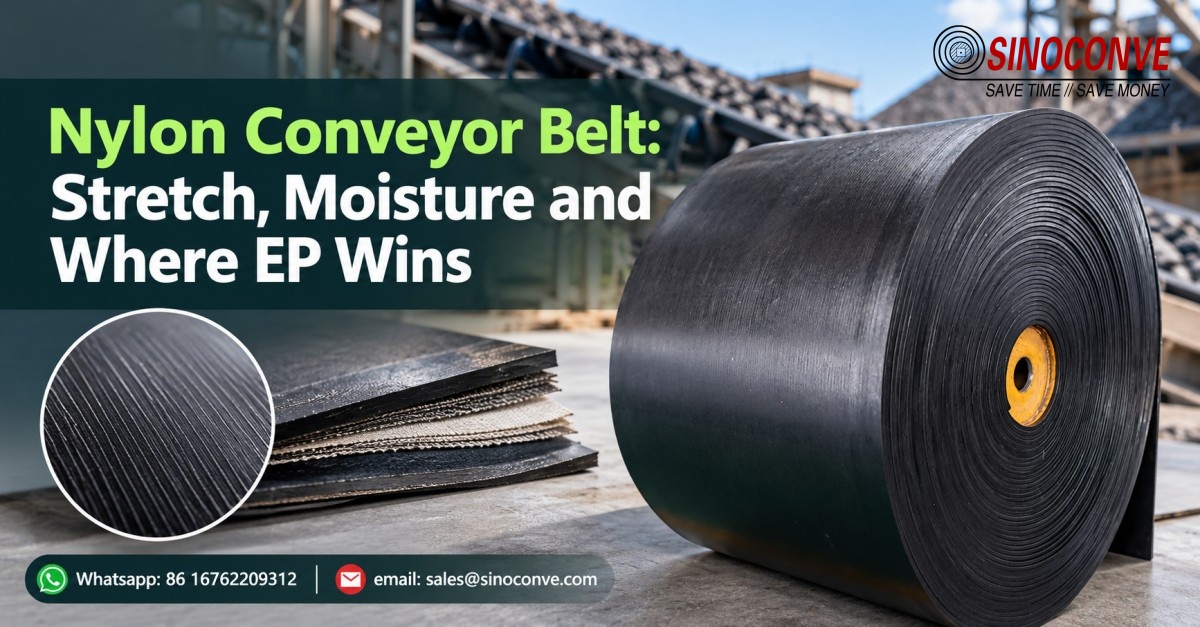
Nylon Conveyor Belt: Stretch, Moisture and Where EP Wins

Nylon Conveyor Belt: Stretch, Moisture and Where EP Wins

Nylon and polyester both arrive as fabric plies, and both arrive under the same word: fabric belt. The difference shows up months later, in tension travel and in what the carcass does after a wet season. Nylon stretches further under the same load and recovers more of that stretch, which helps at a hard loading point and hurts on a long incline where take-up travel is already tight. Polyester holds its length and resists moisture better, which is why a wash plant or a humid tunnel tends to end up on EP even when the duty looks mild. This guide separates the two on the criteria that actually decide a purchase: elongation and take-up, impact at the transfer, troughing and spillage at depth, moisture regain in the carcass, and what each one does at the splice. It then sets out a selection matrix for distance, start-stop frequency, wetness and impact, and the questions to settle in a tender before the belt is ordered. Where nylon wins, it says so; where it loses, it says that too.

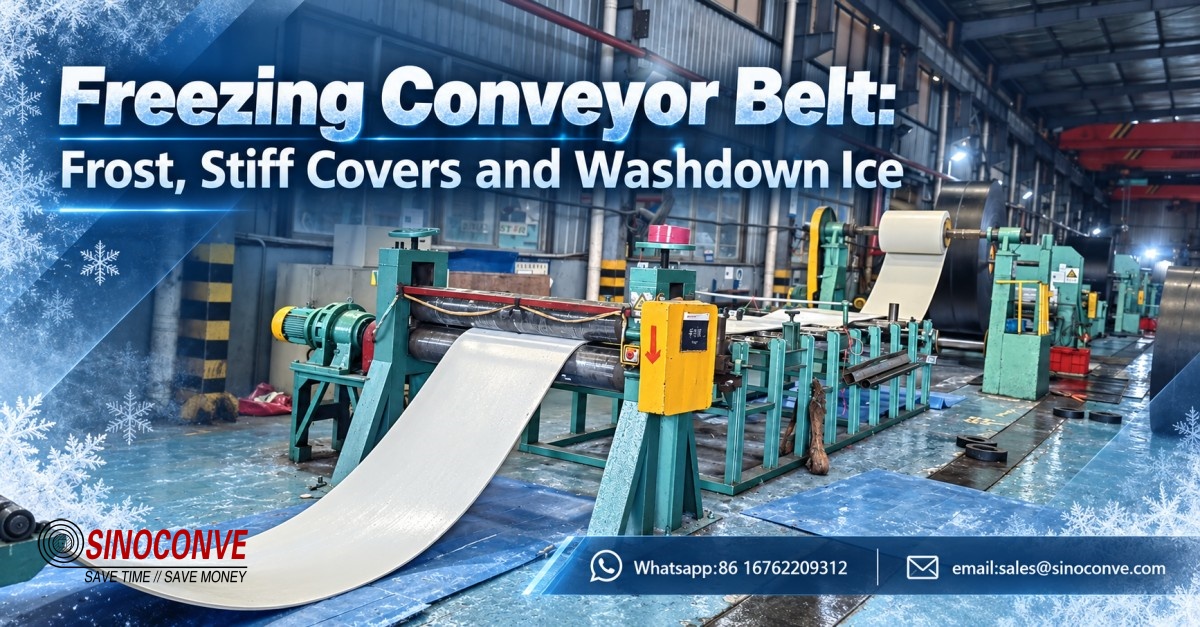
Freezing Conveyor Belt: Frost, Stiff Covers and Washdown Ice

Freezing Conveyor Belt: Frost, Stiff Covers and Washdown Ice

A freezing line damages a belt in a sequence that has little to do with load. The cover stiffens in the cold, so a small pulley starts to crack it; frost forms where warm air meets the cold section and the surface loses grip; then washdown water arrives for hygiene and freezes before the belt dries. Those three effects argue with each other - the compound that stays flexible in the cold is not always the one that releases product or survives a chlorinated cleaner. This guide separates them instead of treating frozen food as one material, and follows the line from raw material intake through preparation, the freezer entry and exit, packing and cold store transfer. It covers why a white belt is chosen for reasons other than colour, where ice collects on idlers and tension ends, how sidewalls and cleats behave when the rubber is stiff, and which questions belong in a tender before a belt is ordered.

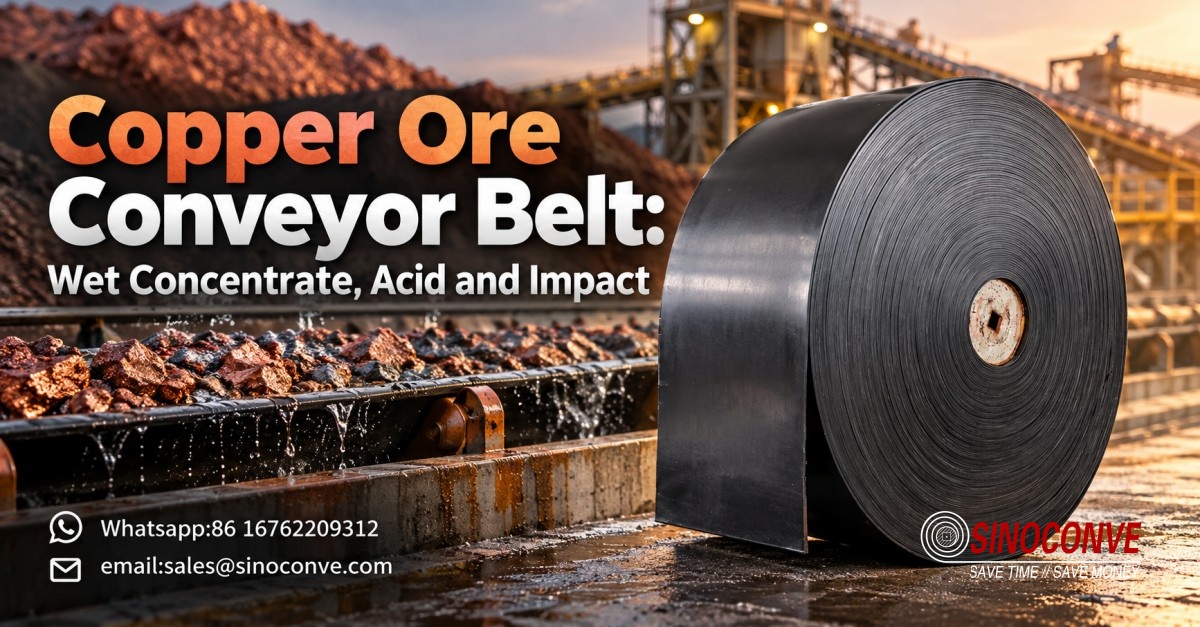
Copper Ore Conveyor Belt: Wet Concentrate, Acid and Impact

Copper Ore Conveyor Belt: Wet Concentrate, Acid and Impact

Copper concentrate does not wear a belt out; it soaks the carcass and then breaks the cover at the transfer. Filter cake leaves the concentrator wet, and that water is not clean - it carries residual reagents and sulphates that keep working on polyester fabric long after the surface looks dry. Add the drop at the stockpile and the ship loader, and you get two separate failures on one line: hydrolysis from inside and impact damage from outside. This guide follows the ore from the primary crusher through concentrator feed, filter cake, stockpile reclaim and port loading, and treats each stage as its own duty rather than one generic mine specification. It explains why abrasion resistance alone is the wrong purchase criterion here, how impact beds and chute geometry decide whether a lump dents the cover or reaches the plies, why wet sticky concentrate turns the return side into a carrying side, and where acid, process oil and a humid splice all shorten the same component.

Explore more

We are committed to providing you with better products and services. Welcome to browse more content for details