
OEM Conveyor Belt Manufacturer: What Industrial Buyers Should Check Before Ordering
A buyer can order a conveyor belt by width, length, and thickness. That is enough to make a belt. It is not always enough to make the right belt.
The problem usually appears after the first shipment reaches the site. The belt fits the frame, but the top cover wears too quickly. The splice opens before the maintenance team expected. The printed logo is correct, but the packaging was not strong enough for sea freight. In another case, the belt sample works in a light test, then fails when sharp aggregate, wet clay, or hot clinker is put on the line.
That is the real difference between buying from a catalogue and working with an OEM conveyor belt manufacturer. OEM work is not just putting a customer name on a roll. For industrial buyers, it means matching the rubber compound, carcass strength, surface design, marking, packing, and repeat-order control to the actual conveyor system.
OEM Work Starts Before Production
A serious OEM rubber conveyor belt order should start with application details. If the buyer only sends a belt size, the supplier can quote quickly, but the risk remains with the buyer. If the buyer sends the material, conveyor length, angle, pulley diameter, working temperature, old belt photos, and failure marks, the factory can make a much better judgement.
This is where a conveyor belt manufacturer earns its value. The job is not to push the strongest belt every time. Sometimes a heavier belt creates new problems: larger pulley demand, harder tracking, higher joint stress, or unnecessary cost. In other cases, a cheaper light-duty belt looks attractive until the cover is cut open at the loading point.
|
OEM item |
What it changes |
Why buyers should care |
|
Cover compound |
Abrasion, heat, oil, flame, or general-purpose performance |
The cover usually fails first when material and rubber grade do not match. |
|
Carcass structure |
Fabric type, ply number, tensile strength, belt flexibility |
Too weak can stretch or tear; too heavy can create pulley and splice problems. |
|
Surface design |
Flat, chevron, cleated, rough top, sidewall, or special pattern |
Surface design decides whether material slides, rolls back, or stays controlled. |
|
Brand marking |
Logo, belt code, batch number, edge printing, packaging label |
Useful for distributors, repeat orders, and after-sales tracing. |
|
Packing method |
Pallet, steel frame, PVC board, woven wrapping, export protection |
Poor packing can damage a correct belt before it ever reaches the conveyor. |
Rubber Conveyor Belt Construction Still Comes First
A logo cannot rescue a bad specification. Before discussing color, label, or packaging, the base rubber conveyor belt has to make sense for the machine.
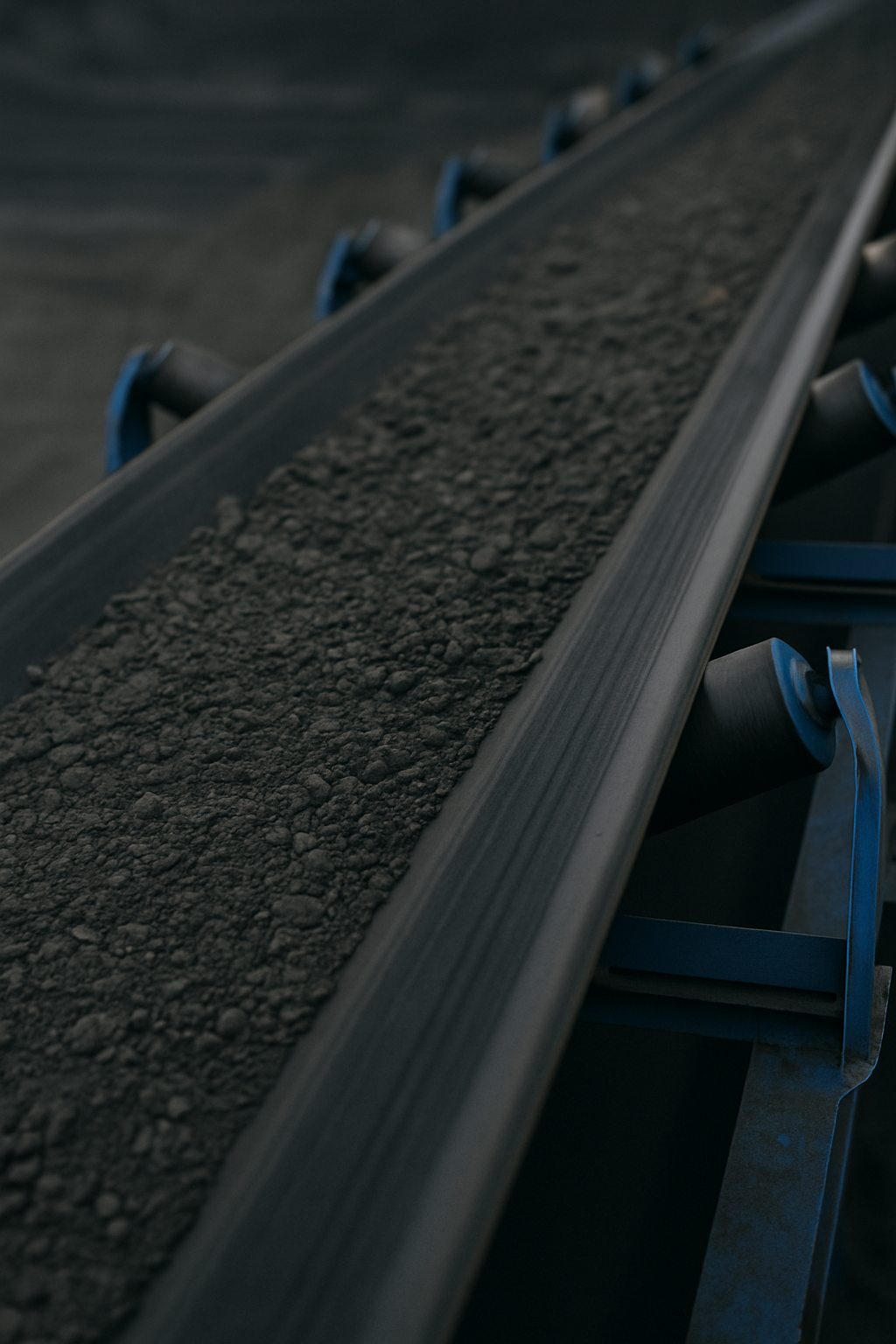
For a mining or quarry line, the top cover may face repeated impact from lump material. If the chute drops material from too high, the cover will be hit in the same zone every shift. A stronger carcass will not solve that by itself. The buyer needs the right cover grade, a suitable loading design, and sometimes better impact support.
In cement handling, heat changes the discussion. A general-purpose belt may look normal during installation, then harden or crack when exposed to hot material. For port or fertilizer handling, moisture and chemical exposure may become the bigger issue. In recycling lines, sharp edges can cut the cover even when the belt strength is enough.
A rubber conveyor belt manufacturer should ask these questions early. If not, the quote may be low, but the belt may not survive the actual duty.
|
Application condition |
Common mistake |
Better OEM discussion |
|
Sharp aggregate or ore |
Only increasing belt thickness |
Check cover abrasion grade, loading impact, belt speed, and support bed. |
|
Hot cement or clinker area |
Using a standard cover because the size matches |
Confirm material temperature range and whether heat-resistant cover is needed. |
|
Inclined bulk conveying |
Ordering a flat belt for a steep section |
Discuss chevron, cleat, or sidewall design according to material flow. |
|
Outdoor or humid site |
Ignoring storage and packing conditions |
Confirm cover compound, edge protection, roll wrapping, and shipping method. |
|
Distributor repeat orders |
Relying on verbal descriptions |
Use fixed drawings, belt codes, batch labels, and approved samples. |
Where OEM Rubber Conveyor Belt Orders Often Go Wrong
Most disputes do not start with dramatic failure. They start with small differences that were not confirmed: the old belt had a different carcass, the pulley was smaller than expected, the cover was too soft for the material, or the cleat height was copied from a photo instead of a drawing.
One common issue is copying a competitor sample without knowing where it was used. A sample cut from a grain conveyor may not belong on a quarry conveyor. Another is asking several factories for the lowest price while giving each one different information. Then the buyer compares numbers that are not really comparable.
A third mistake is treating packaging as an afterthought. Export rubber belts are heavy, and long shipping routes are not gentle. If the roll is not protected well, the edge can be bruised, the surface can be marked, or moisture can enter the packing. The belt may be technically correct and still arrive in poor condition.
|
Risk sign |
What may happen later |
Practical fix |
|
Only belt width and length are provided |
Factory guesses cover grade, carcass, and joint requirement |
Send application details and old belt photos before price comparison. |
|
No pulley diameter confirmed |
Belt may be too stiff for the drive layout |
Confirm smallest pulley and whether belt flexibility is critical. |
|
No material information |
Cover wears, cuts, swells, or cracks early |
Describe material type, lump size, temperature, moisture, and chemicals. |
|
No approved packing method |
Roll damage during shipping or unloading |
Confirm pallet, steel frame, wrapping, and label requirements. |
|
No sample control |
Repeat orders slowly drift from the first approved belt |
Keep drawings, batch records, and agreed specification sheets. |
How to Evaluate an OEM Conveyor Belt Manufacturer
A capable OEM conveyor belt manufacturer should be able to talk about more than product names. Buyers should look for three things: production capability, technical communication, and consistency after the first order.
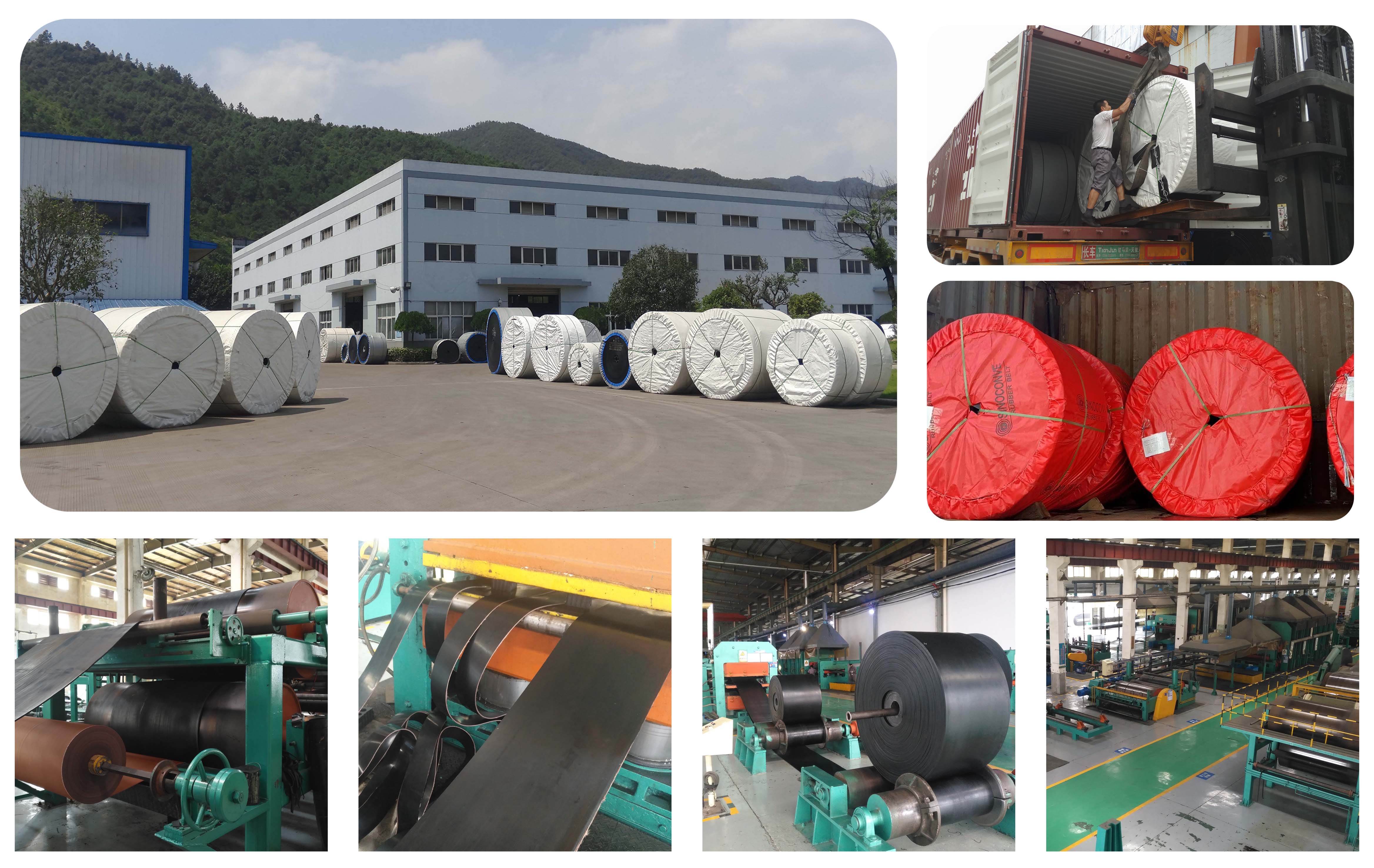
Production capability matters because conveyor belts are not small accessories. Width range, thickness control, vulcanization quality, cover bonding, roll handling, and packaging all affect final delivery. Technical communication matters because many buyers do not have a perfect drawing. The manufacturer has to turn field information into a workable belt specification.
Consistency is the part many buyers underestimate. One good sample is useful. Stable repeat production is more valuable. For distributors, EPC buyers, and maintenance teams, a stable supplier reduces the time spent explaining the same requirement again and again.
|
What to check |
Good sign |
Risk sign |
|
Application questions |
Supplier asks about material, conveyor angle, pulley, temperature, and failure history |
Supplier quotes immediately from size only. |
|
Customization control |
Drawings, samples, logo marking, edge printing, and packaging are documented |
Customization is discussed only in chat messages. |
|
Quality communication |
Cover grade, carcass, thickness tolerance, bonding, and test reports can be discussed |
Only general words like durable and heavy duty are used. |
|
Export packing |
Packing method is matched to roll size, shipping route, and unloading conditions |
Packing is not confirmed until the end. |
|
After-sales handling |
Batch records and photos help identify cause when problems occur |
Every problem is simply blamed on improper use. |
Where SINOCONVE Fits in OEM Belt Supply
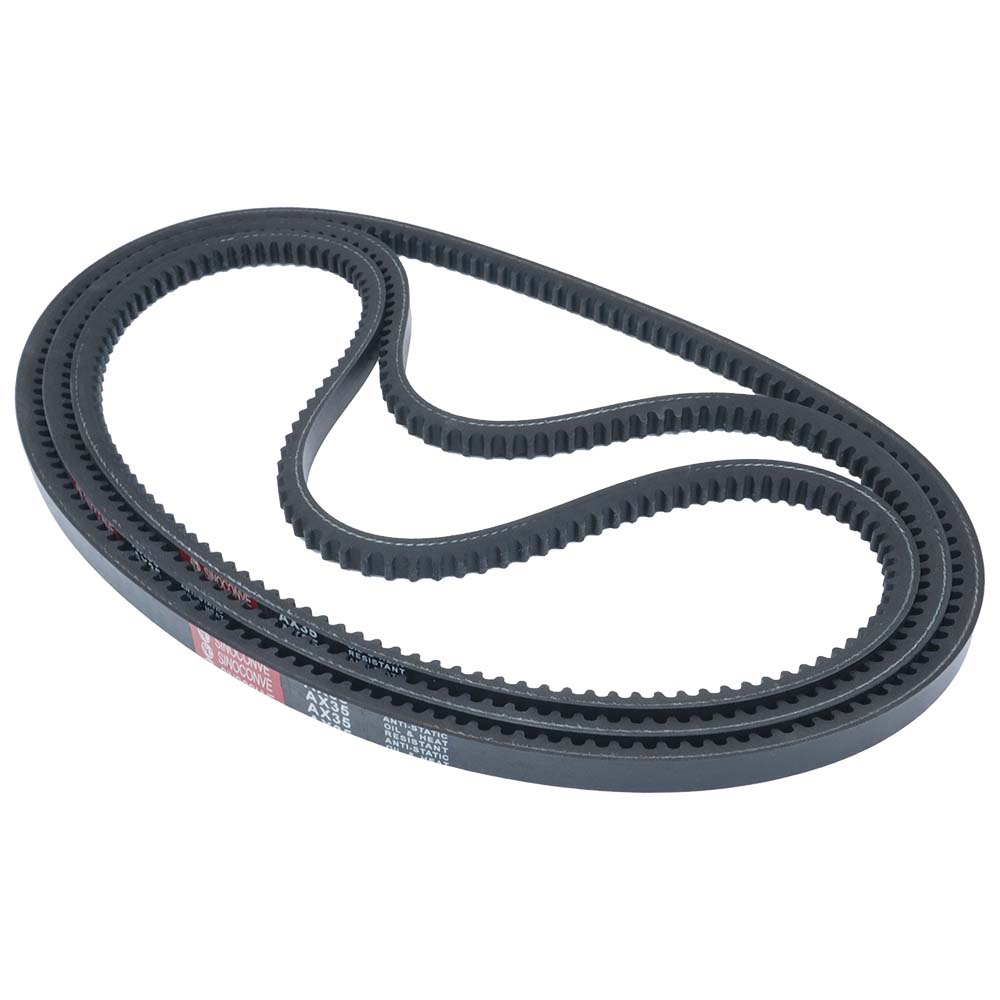
As a rubber conveyor belt manufacturer, SINOCONVE supplies conveyor belts, transmission belts, timing belts, V belts, rubber belts, and conveyor rollers for industrial applications. For OEM rubber conveyor belt projects, the useful part is not only production. It is the process of turning a buyer's field condition into a belt that can be repeated: same marking, same packing, same specification logic.
For mining, cement, construction, port handling, agricultural machinery, logistics, and general manufacturing, the belt specification may change sharply from one site to another. A belt for dry packaged goods is not the same as a belt for wet aggregate. A belt for a short transfer conveyor is not the same as one running over a longer structure with higher tension.
This is also where SINOCONVE's idea of Save Time, Save Money fits naturally. Time is saved when the first inquiry includes the right information. Money is saved when the belt is not replaced early because the cover, carcass, or surface design was guessed.
|
Buyer type |
What they usually need |
OEM value |
|
Distributor |
Stable markings, repeatable specification, export packing, low confusion in reorders |
Private label and consistent batch control. |
|
EPC or project buyer |
Belt matched to site drawings and material handling conditions |
Technical confirmation before bulk production. |
|
Maintenance team |
Replacement belt that solves the previous failure, not just copies the old size |
Failure photos can guide cover and carcass selection. |
|
Equipment manufacturer |
Belt dimensions, surface style, packaging, and documentation aligned with machine assembly |
OEM supply supports regular machine production. |
Information Buyers Should Send Before Asking for Price
A good quotation is usually built from boring details. That is not a problem; it is how industrial purchasing works. The more clearly the buyer describes the conveyor, the less room there is for wrong assumptions.
|
Information to provide |
Why it matters |
|
Belt width, length, and thickness |
Basic sizing, but not enough by itself. |
|
Old belt marking or drawing |
Helps identify carcass, strength, cover grade, and previous specification. |
|
Material being conveyed |
Sharp, hot, wet, oily, or sticky material changes cover selection. |
|
Lump size and loading point condition |
Large impact may require stronger cover and better support. |
|
Conveyor angle and layout |
Flat, inclined, short transfer, long conveyor, or return path problems affect design. |
|
Pulley diameter and splice method |
Belt flexibility and joint design must match the conveyor. |
|
Photos of failure marks |
Edge wear, cover cuts, splice opening, or tracking marks often reveal the real cause. |
|
Logo, label, and packing requirement |
Important for OEM branding, distributor sales, and export delivery. |
OEM Does Not Mean Over-Specifying Everything
Some buyers think better OEM supply means making every belt thicker, stronger, and more expensive. That is not always good engineering. A belt that is too heavy for the pulley system may run badly. A high-grade cover may be wasted if the application is light packaging. A complex surface pattern may create cleaning problems where a plain belt would work better.
The better approach is to decide where the real risk sits. If the old belt failed at the top cover, focus on material impact and cover grade. If the edge frayed, check tracking and frame contact. If the splice opened, review pulley diameter, joint method, and tension. If the belt arrived damaged, talk about packing, not only rubber quality.
This way, OEM work becomes a practical tool instead of a label.
FAQ
What does an OEM conveyor belt manufacturer actually do?
It produces belts according to buyer requirements such as size, cover grade, carcass structure, logo marking, surface design, and packaging. For industrial belts, application matching is often more important than branding alone.
Is an OEM rubber conveyor belt different from a standard belt?
It can be. The base construction may be similar, but the compound, thickness, surface pattern, edge marking, roll packing, and documentation can be adjusted for the buyer or equipment project.
How do I compare conveyor belt manufacturer quotations?
Do not compare price alone. Confirm whether each supplier quoted the same cover grade, carcass, thickness, splice option, packing method, and application condition.
Should I choose a factory or a trading company?
A factory can be useful when the project needs technical adjustment, repeat production, private labeling, or direct control of packing and quality. A trading company may still be convenient for mixed product sourcing, but technical confirmation becomes more important.
What should I send to a rubber conveyor belt manufacturer for OEM quotation?
Send belt size, old marking, material handled, conveyor layout, pulley diameter, working environment, photos of the old belt, failure marks, quantity, logo requirement, and packing method if available.
Final Buyer Note
The right OEM conveyor belt manufacturer should help reduce uncertainty. A buyer should not need to guess whether the belt will fit the pulley, survive the material, or arrive safely after shipping. Those details belong in the specification stage.
For OEM rubber conveyor belt orders, start with the working condition, then confirm construction, then discuss branding and packaging. That order saves time, prevents avoidable mistakes, and usually saves money long before the belt reaches the conveyor.