
Why the rubber V belt is still everywhere in industrial drive systems
A rubber V belt looks simple enough, but it still carries a lot of industrial work. In pulley-driven machines, especially where space is tight and loads change through the shift, the rubber V belt remains a practical way to transfer rotational power without the complexity of gears or chains. The reason is not nostalgia. It is the combination of grip, flexibility, and low-cost maintenance that keeps this belt relevant in modern plants and in the field.
For sourcing teams and maintenance engineers, the real question is rarely whether a V-belt works. It is which belt profile, size marking, and construction fit the machine without inviting slip, premature wear, or repeated downtime. That matters even more in agricultural machinery, where dusty conditions, shock loading, and long operating hours make belt choice a small decision with large consequences.
What the belt is doing in the machine
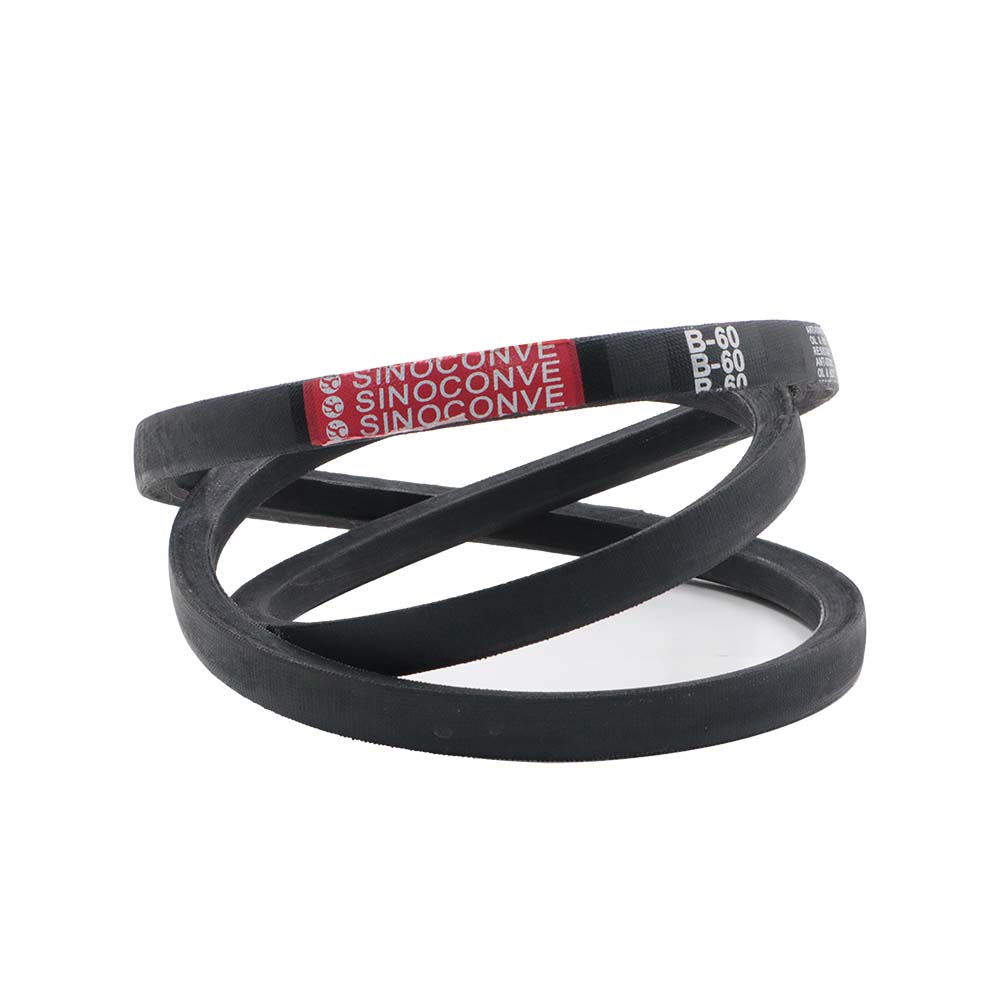
A V-belt runs in a pulley groove and uses its trapezoidal profile to create frictional engagement. That shape helps the belt seat properly and transmit torque efficiently. In the product shown, the belt appears to be a continuous endless loop with a narrow V profile and a textile-wrapped outer surface. The visible marking “B-60” suggests a B-section designation, although the exact standard basis for that size should always be verified against the machine spec sheet or the pulley set in use.
The printed branding “SINOCONVE” also matters from a buyer’s perspective. It does not tell you everything about the belt’s compound or reinforcement, but it does give you a traceable product identity. In industrial purchasing, that is often the first step toward avoiding mismatched replacements.
Where rubber V belts still make the most sense
These belts are common in industrial machinery, HVAC fans, pumps, compressors, workshop equipment, and many belt-and-pulley assemblies. They are especially useful where designers want a compact drive with some tolerance for alignment variation. That said, “tolerance” should not be mistaken for forgiveness. A belt that is slightly off-center on a lightly loaded fan drive may survive for months; the same behavior on a harvester under dust and vibration may not be nearly as forgiving.
For agricultural machinery, the rubber V belt remains a familiar choice because it can be replaced quickly and does not demand specialized tools. In a harvester, for example, uptime often depends on whether a spare belt of the correct section is already on hand. That is one reason the visible size marking is more than a label. It is a field-service clue.
Key traits buyers should check before ordering
Profile and size marking
The first filter is the belt section. A B-section belt is not interchangeable with other sections just because the length seems close. Groove geometry, sidewall contact, and pulley compatibility all matter. The “B-60” marking is helpful, but the safe move is to confirm the belt standard and the effective length convention used by your supplier or equipment maker.
Construction details
From the photo, the belt appears to be a wrapped rubber belt rather than a raw-edge style, though that should be treated cautiously. Wrapped belts can be a sensible choice for many general-purpose drives because they often handle everyday industrial service well. What you cannot see from a photo is just as important: cord material, reinforcement layout, compound formulation, and resistance to heat, oil, or abrasion. Those characteristics may decide whether the belt lasts a season or a lot longer.
Surface condition
For any replacement belt, look for uniform profile, clean edges, and no visible cracking. The sample shown appears intact, which is what you want from a new or unused belt. If the belt has been stored poorly, however, even a visually clean part can hide stiffness or aging. That is a practical caution many buyers overlook.
Trend analysis: what is changing in belt selection
The market is not abandoning rubber V belts, but expectations around them are changing. Buyers now want clearer marking, faster identification, and better consistency across batches. Maintenance teams also want belts that can be specified with less guesswork. In agriculture and general industry, that pushes the conversation away from “a belt that fits” and toward “a belt that fits, lasts, and is easy to replace in the field.”
Another trend is more disciplined sourcing. Plants are less willing to stock generic substitutes when the drive is critical. A visually similar belt may look acceptable on the shelf and still be a poor match in service. For that reason, section verification and pulley compatibility checks are becoming standard practice rather than optional diligence.
Common buying mistakes
The most common mistake is treating length as the only variable. It is not. Section, groove fit, and duty level all matter. Another frequent error is assuming that a branded belt automatically matches every B-section application. It may be a solid product, but the machine still dictates the specification.
There is also the habit of replacing one worn belt with whatever is nearby. That works until the drive starts slipping, heating up, or wearing unevenly. In multi-belt drives, matching matters too. Even a good belt can underperform if it is paired with an old, stretched mate.
Practical advice for sourcing and maintenance teams
If you are buying a rubber V belt for industrial equipment or agricultural machinery, start with the pulley specification, then confirm the section, length designation, and belt construction style. Ask for the exact standard basis of any size code, especially when a marking like B-60 is used. If the application is demanding, ask the supplier what the belt is designed to resist, but do not assume unverified claims apply to your use case.
For maintenance planning, keep a record of the belt section, the machine model, and the installed pulley set. That small habit saves time during seasonal maintenance, and it reduces the chance of ordering a near-match that looks right but behaves badly.
What to do next
If you are evaluating a replacement belt or building a spare-parts list, the sensible next step is to match the belt marking to the machine requirement and confirm the pulley groove profile. If the drive is in agricultural machinery or a harvester, pay extra attention to service conditions and storage. In belt drives, the cheapest mismatch is often the most expensive lesson.