
A rubber conveyor belt quote can look simple: width, length, grade, quantity, delivery. In practice, the price is rarely decided by one line item. Two belts with the same width may sit in very different cost ranges once cover grade, fabric strength, thickness, surface pattern, splice requirement, and export packing are included.
This is why Rubber Conveyor Belt Price needs to be discussed together with the application. A belt used for light packaged goods is not priced like a belt carrying sharp stone in a quarry. A standard flat belt is not priced like a heat-resistant belt for a cement plant. The lowest number on a quotation can be attractive, but it does not always survive the working site.
For buyers, the useful question is not only “How much per meter?” The better question is: what specification will run long enough, with fewer stoppages, and without creating maintenance trouble later?
Why Rubber Conveyor Belt Price Changes So Much
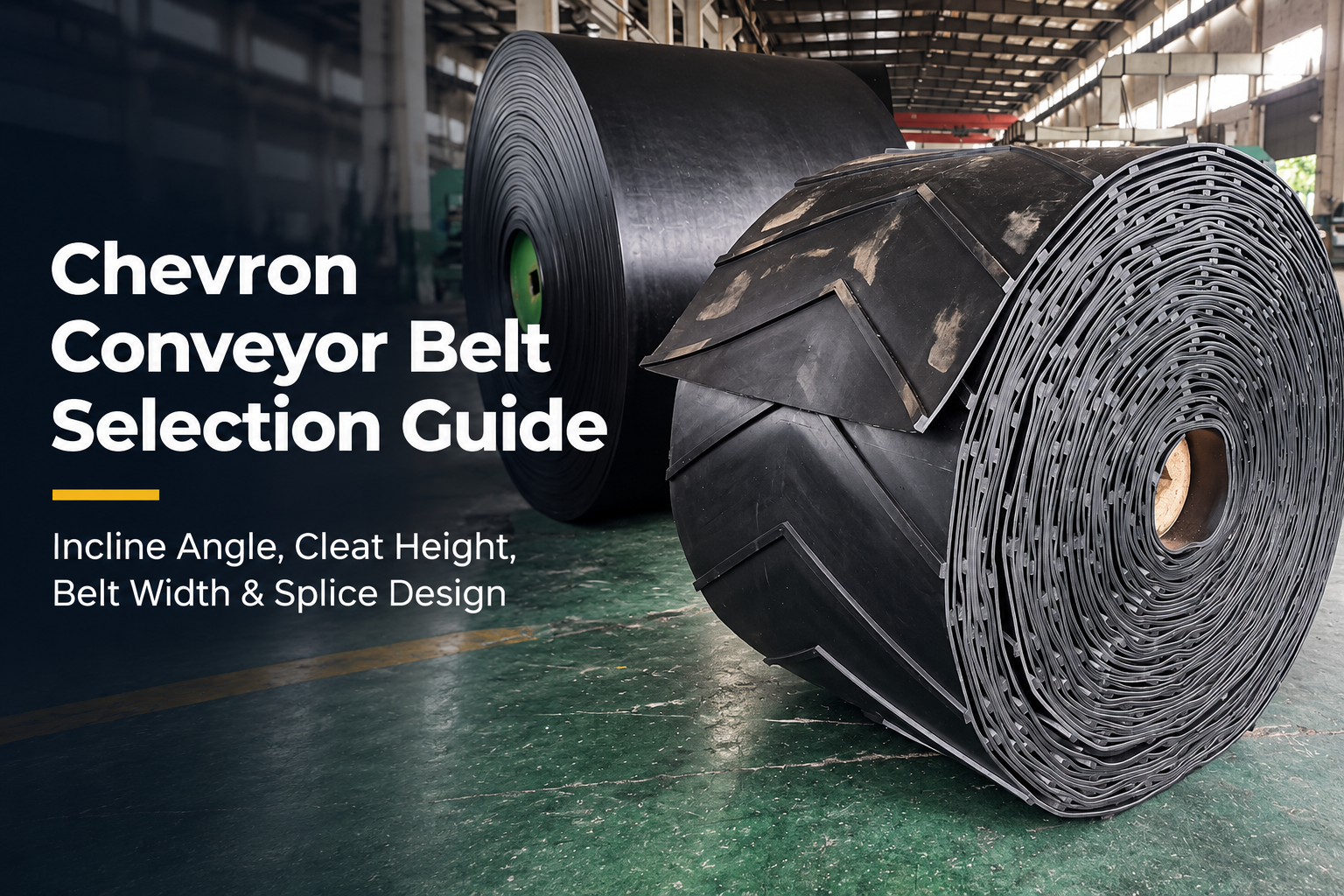
The first cost driver is belt construction. A fabric conveyor belt, a steel cord belt, a chevron belt, and a sidewall belt are not built the same way. They may all be rubber conveyor belts, but the internal reinforcement and manufacturing process are different.
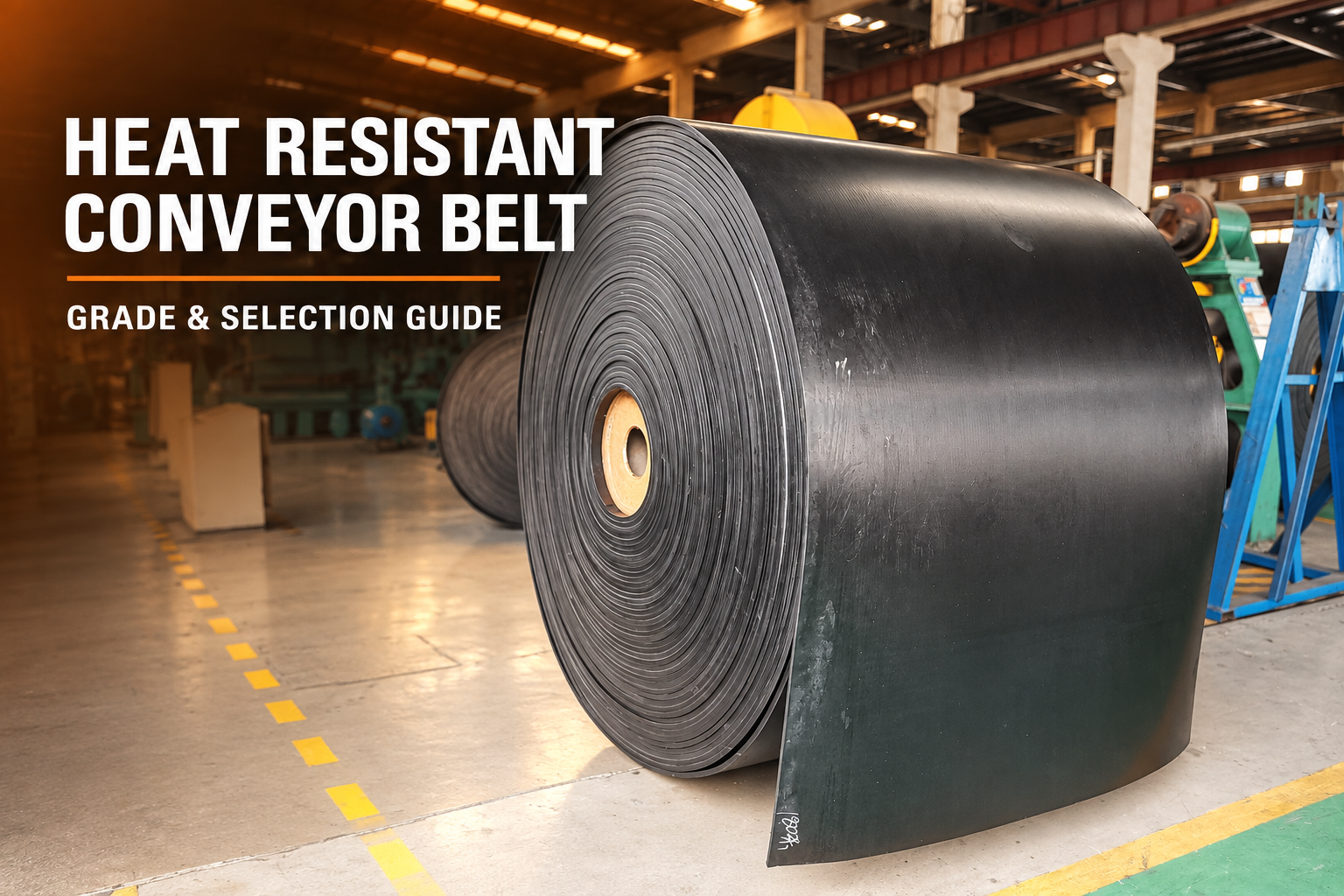
Cover compound matters as well. General-purpose rubber can work well on normal material handling lines. Abrasion-resistant rubber is needed when the material is sharp or heavy. Heat-resistant grades are used around hot clinker, foundry sand, or heated industrial material. Flame-resistant belts may be required in certain mining or safety-sensitive environments.
Then comes size. Wider belts, thicker covers, higher tensile strength, and longer lengths all increase material use. Custom colors, branding, packaging, edge treatment, or special patterns also affect the final offer.
So Rubber Conveyor Belt Price is not a fixed shelf price. It is the result of specification, workload, and risk level.
Main Factors Behind the Price
|
Price Factor |
Why It Affects Cost |
What Buyers Should Confirm |
|
Belt width and length |
More rubber, fabric, or steel cord material |
Conveyor frame size and required belt length |
|
Carcass type |
EP fabric, NN fabric, or steel cord carry different tension loads |
Working tension, conveyor length, load condition |
|
Cover grade |
Abrasion, heat, oil, or flame resistance changes compound cost |
Material temperature, abrasion level, safety requirement |
|
Cover thickness |
Thicker covers improve wear allowance but use more rubber |
Loading impact and expected service life |
|
Belt pattern |
Chevron, rough top, sidewall, or cleated designs need extra processing |
Incline angle and material flow behavior |
|
Splicing requirement |
Endless belts or prepared splices add labor and process time |
On-site joining method and installation access |
|
Packaging |
Export packing protects belts during long transport |
Roll size, container loading, moisture protection |
When a Cheap Belt Becomes Expensive
A low price can still be the right choice if the belt is used in a light-duty line. The problem starts when price is separated from the operating conditions.
A quarry belt with a thin general cover may look cheaper at purchase. If sharp aggregate cuts through the top cover early, the buyer pays again through downtime, labor, emergency shipping, and lost production. The accounting changes quickly.
The same applies to hot material. A standard rubber belt near a high-temperature discharge point may crack or harden earlier than expected. It may not fail on the first day. It usually fails after enough heat cycles have done their work.
That is why serious Industrial Conveyor Belt Suppliers usually ask about the material first. Stone, coal, cement clinker, grain, fertilizer, cartons, and recycled waste do not treat a belt the same way.
How a Rubber Belt Company Should Quote
A reliable Rubber Belt Company should not send a price before understanding the belt duty. At minimum, the supplier should confirm belt width, length, ply strength, cover grade, cover thickness, material handled, operating temperature, and whether the belt needs a flat, chevron, sidewall, or endless structure.
Sinoconve works in conveyor belts, transmission belts, timing belts, rubber V-belts, automotive belts, and conveyor rollers. The company’s factory background in industrial conveying and transmission gives it a practical reason to ask these details before quoting. A wrong specification wastes both sides’ time.
This is also where the company idea of “Save Time, Save Money” makes sense. It should not mean choosing the cheapest belt every time. It means helping a buyer avoid repeated confirmation, wrong production, early failure, or unnecessary replacement.
For a distributor, project buyer, or plant maintenance team, a clear quotation is more useful than a vague low price. It should show what the belt is, what standard or grade it follows, how it will be packed, and what information still needs confirmation.
Comparing Industrial Conveyor Belt Suppliers
|
Supplier Check |
Good Sign |
Warning Sign |
|
Technical questions |
Supplier asks about material, temperature, width, tension, and application |
Supplier quotes only by width and length |
|
Product range |
Flat belt, chevron belt, steel cord belt, sidewall belt, and rollers available |
Limited range but claims every belt is suitable |
|
Quality control |
Clear inspection, test report, or standard reference can be discussed |
Only general words like “high quality” |
|
Customization |
OEM size, logo, color, packaging, or drawings can be handled |
No clear answer on non-standard sizes |
|
Export experience |
Packing and delivery terms are discussed early |
Shipping protection is treated as an afterthought |
|
After-sales support |
Supplier can discuss replacement or quality issue handling |
No process after shipment |
This kind of comparison helps buyers screen Industrial Conveyor Belt Suppliers before focusing only on price. A supplier with stable production and clear communication may not always be the cheapest, but it often reduces purchasing risk.
Information to Send Before Asking for a Price
A better inquiry usually gets a better quotation. Buyers can save time by sending the following information at the beginning:
|
Information |
Example |
|
Belt width |
800 mm, 1000 mm, 1200 mm |
|
Belt length |
Total length or roll length |
|
Belt type |
Flat, chevron, steel cord, sidewall, heat-resistant |
|
Material handled |
Coal, stone, cement, grain, fertilizer, cartons |
|
Working environment |
Indoor, outdoor, wet, dusty, hot, corrosive |
|
Conveyor angle |
Flat line or inclined conveyor |
|
Required standard |
DIN, RMA, ISO, AS, or buyer’s own requirement |
|
Quantity |
Trial order, replacement batch, project order |
|
Packing need |
Roll packing, pallet, export protection |
This table is simple, but it answers most of the questions a Rubber Belt Company will ask before calculating price. It also reduces back-and-forth messages when buyers compare several Industrial Conveyor Belt Suppliers.
Application-Based Price Thinking
|
Application |
Belt Cost Concern |
Practical Note |
|
Mining and quarry |
Abrasion, impact, high tension |
Cover grade and carcass strength matter more than the lowest price |
|
Cement plant |
Heat, dust, continuous running |
Heat-resistant grades may be needed near hot material |
|
Port and bulk handling |
Long runs, moisture, high throughput |
Splice quality and corrosion-related packaging should be considered |
|
Agriculture and grain |
Moisture, dust, moderate abrasion |
Standard belts may work if temperature and load are controlled |
|
Logistics and packaging |
Smooth running, low damage, stable delivery |
Surface type and tracking may matter more than heavy strength |
|
Recycling |
Mixed material, sharp objects, contamination |
Price should include wear risk and cleaning conditions |
A Rubber Conveyor Belt Application always changes the pricing logic. One belt may be cheap for a warehouse line and completely wrong for a stone crusher. Another belt may seem expensive until it prevents a shutdown in a 24-hour plant.
FAQ
What determines Rubber Conveyor Belt Price?
Width, length, carcass type, cover grade, cover thickness, belt pattern, splice requirement, quantity, and packing all affect price. The conveyed material and working environment are usually the starting points.
How do I know whether a quotation is reasonable?
Compare the specification first, not only the total number. If two offers use different cover grades or tensile strengths, they are not the same belt.
Should I choose the cheapest Rubber Belt Company?
Not always. A low price may be fine for light-duty use, but heavy-duty sites should compare quality control, production capability, packing, and after-sales response as well.
What should I send to Industrial Conveyor Belt Suppliers for a fast quote?
Send belt width, length, type, material handled, temperature, conveyor angle, quantity, standard requirement, and photos or drawings if available.
Why can prices change between orders?
Rubber, fabric, steel cord, labor, packaging, and freight can change over time. Custom specifications and urgent production schedules may also affect the final offer.
A Practical Buying Note
Rubber Conveyor Belt Price should be treated as part of the whole operating cost, not just a purchase number. A good belt choice reduces downtime, prevents repeated replacement, and keeps the conveyor running with fewer surprises.
For Sinoconve, that is the practical side of “Save Time, Save Money.” The belt should match the work, the quote should be clear, and the buyer should know what is being paid for before production starts.