
Conveyor Belt Solutions for Sustainable Industrial Operations
In many plants, belt waste does not look like waste at first. It looks like one more belt roll stored near the workshop, one more emergency splice, one more roller change during a short shutdown window. Nobody counts it as a sustainability issue until the same conveyor keeps consuming parts faster than expected.
That is usually where the real discussion should start.
For a mining site, the problem may be sharp aggregate cutting into the top cover. For a cement plant, clinker heat may harden the rubber before the belt body is actually worn out. At a port or outdoor logistics yard, moisture, sunlight, and long running hours may slowly change how the belt tracks. In agriculture, soil and crop residue can turn a light-duty belt into the wrong belt very quickly.
So sustainable industrial operations are not built only by buying greener products. They are built by choosing components that do not fail early in the first place.
A conveyor belt that lasts closer to its intended service life creates less replacement waste. A roller that turns freely reduces drag and protects the belt edge. A transmission belt that is properly matched to the drive runs with less slip and fewer adjustment problems. These are not dramatic changes, but they are the kinds of decisions that maintenance teams see every week.
For buyers, the more practical question is simple: why did the last belt fail?
If the answer is abrasion, heat, oil, impact, poor tracking, weak splice performance, or carryback around the return side, the next order should not be copied from the old purchase record without review. Reordering the same belt by width and thickness may feel efficient, but it can also repeat the same failure pattern.
Sustainability Starts With Service Life
The easiest belt waste to avoid is the belt that should not have failed yet.
That sounds basic, but many replacement decisions still begin with size, price, and delivery time. Those details matter, of course. They just do not explain whether the belt is suitable for the material. A 500 mm belt carrying packaged cartons and a 500 mm belt carrying sharp stone are not doing the same job. The same is true for rubber covers, roller sets, cleaners, pulleys, and transmission belts.
In heavy-duty conveying, early failure often comes from a mismatch between the working condition and the selected component. The belt may be too light for impact at the loading zone. The cover may not resist the material. The rollers may be seized or misaligned. The cleaner may be too aggressive for the belt surface. Each problem adds friction, heat, wear, or downtime.
A longer service life is not only a maintenance benefit. It means fewer replacement rolls shipped, fewer emergency repairs, less discarded rubber, and less pressure to keep unnecessary spare stock on site. For a plant manager, that is also a cost issue. For a sustainability team, it is a measurable waste issue. For a buyer, it is a specification issue.
|
Working condition |
Common belt risk |
More suitable belt direction |
|
Sharp stone, ore, aggregate |
Fast top-cover wear, cuts, edge damage |
Abrasion-resistant rubber conveyor belt or reinforced EP belt |
|
Hot clinker, ash, steel plant material |
Cover hardening, cracking, splice stress |
Heat resistant conveyor belt matched to temperature exposure |
|
Coal or enclosed dusty route |
Fire risk, dust accumulation, safety compliance pressure |
Flame resistant conveyor belt with required standard check |
|
Oily or greasy material |
Cover swelling, surface softening, slip |
Oil resistant conveyor belt with compatible compound |
|
Inclined bulk handling |
Rollback, spillage, low throughput |
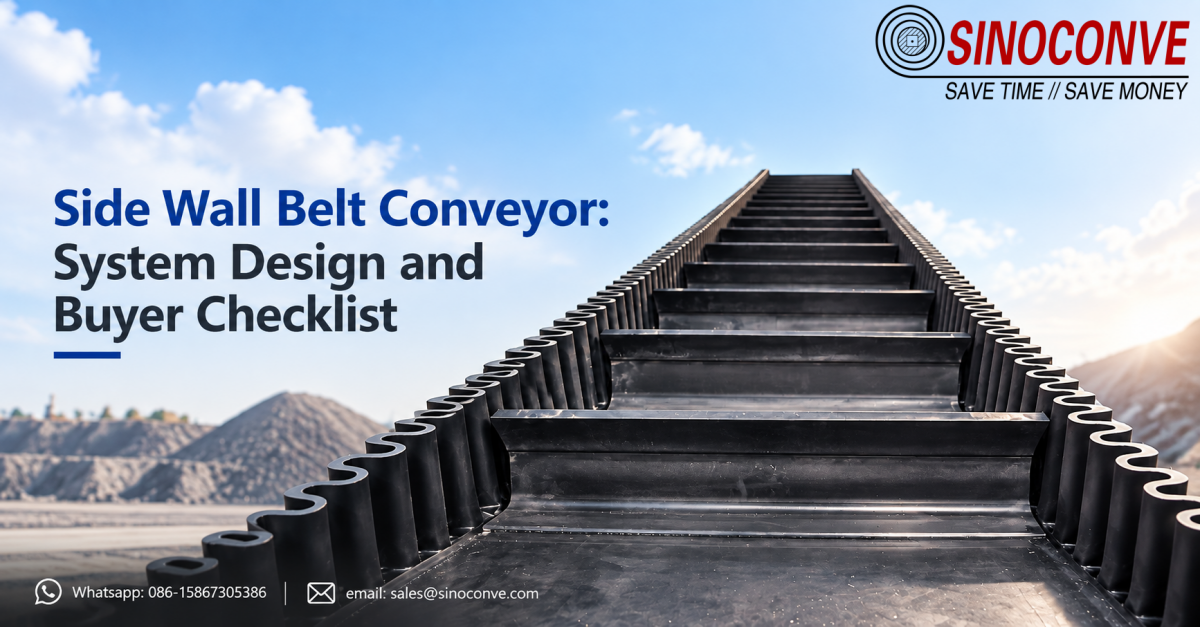
Chevron or sidewall conveyor belt based on angle and material behavior |
|
Packaging, logistics, food-related lines |
Over-specification with heavy rubber belt, cleaning difficulty |
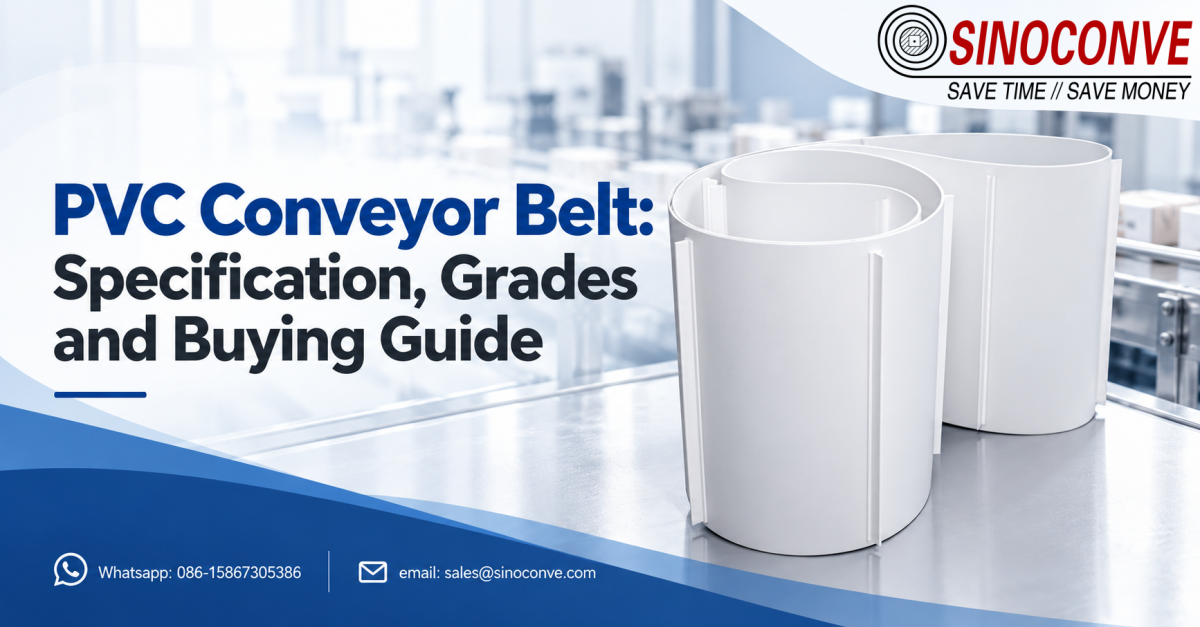
PVC conveyor belt or PU conveyor belt where suitable |
Application-Specific Selection Is the Real Sustainability Step
A durable conveyor belt is not durable in every application. This is why a buyer should not start with a product name alone. Start with the material: particle size, sharpness, moisture, temperature, oil content, dust, and loading impact. Then look at the conveyor: length, lift height, pulley diameter, belt speed, chute design, cleaner pressure, and available maintenance access.
Climate resilience makes this more important. Outdoor conveyors face rain, sunlight, seasonal humidity, and temperature swings. Mining and quarrying conveyors face dust and impact. Cement and steel plants add heat. Agriculture adds soil, residue, and seasonal peaks. A belt that survives one condition may age quickly in another.
|
Buyer question |
Why it matters |
What to send to the supplier |
|
What material is being conveyed? |
Material behavior decides cover grade, belt strength, and surface design. |
Material name, lump size, moisture, temperature, sharpness, photos. |
|
Where did the old belt fail? |
Failure marks often reveal the real mismatch. |
Photos of top cover, edge, splice, return side, loading point. |
|
How is the material loaded? |
Impact and off-center loading shorten belt life. |
Chute photo, drop height, loading point layout, skirt condition. |
|
What rollers and pulleys are installed? |
Seized rollers, worn lagging, and wrong pulley diameter damage belts. |
Pulley diameter, roller type, idler spacing, photos. |
|
How often is the system inspected? |
Poor maintenance turns small issues into early replacement. |
Inspection routine, cleaner type, tension method, shutdown window. |
Conveyor Rollers Are Part of the Sustainability Equation
Many belt problems begin under the belt. A roller that does not rotate freely increases drag. A damaged impact roller lets the belt take more shock at the loading zone. A poor return roller can scrape, vibrate, or encourage mistracking before anyone notices from the walkway.
For sustainability, this matters because the belt is often blamed after the damage is already visible. The root cause may be a roller, idler frame, pulley lagging, or cleaner. Replacing the belt without correcting those parts is not maintenance; it is a repeat order waiting to happen.
|
Roller type |
Main role |
What can go wrong if ignored |
|
Carrier roller |
Supports loaded belt on the carry side |
Higher rolling resistance, uneven support, cover fatigue |
|
Return roller |
Supports the return side of the belt |
Return-side wear, noise, tracking drift |
|
Impact roller |
Absorbs loading shock at transfer points |
Top cover cuts, carcass damage, splice stress |
|
Self-aligning roller |
Helps correct belt deviation |
Persistent mistracking and edge damage if missing or seized |
|
Rubber disc roller |
Helps shed sticky material on return side |
Carryback buildup, return-side abrasion, cleaning problems |
Power Transmission Belts Also Affect Waste and Energy Use
Sustainability in a conveying system is not limited to the main conveyor belt. Motors, fans, pumps, crushers, packaging machines, and agricultural machinery also depend on power transmission belts. A drive belt that slips wastes energy and creates heat. A belt that is too tight overloads bearings. A belt that is not matched to pulley grooves may fail long before the machine itself has a problem.
Rubber V belts, wrapped V belts, cogged V belts, banded V belts, timing belts, and ribbed belts all solve different drive problems. The right choice is the one that keeps the machine running steadily with fewer adjustments, not simply the lowest-priced replacement.
|
Drive situation |
Possible belt choice |
Buyer check |
|
High load with vibration |
Banded V belt |
Pulley alignment, belt section, shock load |
|
Compact high-speed drive |
Ribbed belt or PK belt |
Rib profile, pulley grooves, tensioner condition |
|
Synchronous motion required |
Rubber timing belt or PU timing belt |
Pitch, tooth profile, pulley match |
|
Outdoor agricultural machinery |
Agricultural V belt or special transmission belt |
Dust, moisture, seasonal load, old belt code |
|
General industrial drive |
Wrapped V belt or cogged V belt |
Speed, temperature, oil exposure, pulley condition |
A Practical Maintenance Plan Reduces Waste Better Than Emergency Repair
A good maintenance plan does not need to be complicated. It needs to be repeated. The best time to study a conveyor belt is not after the splice opens or the edge tears. It is when the first small pattern appears: one side polishing, one roller heating, one cleaner wearing unevenly, one loading point making a little more dust than before.
Those details are easy to miss during a busy shift. They are also the details that separate planned replacement from emergency shutdown.
|
Inspection point |
What to look for |
Why it matters |
|
Top cover |
Cuts, cracking, hardening, uneven polishing |
Shows abrasion, heat, impact, or chemical mismatch |
|
Belt edge |
Fraying, rubbing, uneven damage |
Often points to tracking or structure problems |
|
Splice or joint |
Opening, cracking, abnormal noise over pulley |
Early splice failure can stop the whole line |
|
Rollers and idlers |
Seized rollers, abnormal sound, uneven rotation |
Raises drag and damages belt surface |
|
Pulley lagging |
Wear, contamination, uneven grip |
Affects tracking, slip, and belt tension |
|
Cleaner and scraper |
Overpressure, uneven blade wear, carryback |
Wrong cleaner setup can damage the belt or leave material buildup |
Packaging, Storage, and Purchasing Choices Still Matter
Industrial buyers sometimes treat packaging as an afterthought. It is not. A belt roll with damaged edges, poor wrapping, water exposure, or deformation during storage may already be compromised before installation. Strong packaging is not the same as excessive packaging; the goal is to protect the belt without adding unnecessary waste.
Responsible purchasing also means choosing a supplier who asks the right application questions. A low-cost belt that fails early can create more waste than a better-matched belt with a higher first price. This is especially true when freight, installation labor, shutdown time, and emergency stock are included in the calculation.
SINOCONVE supports conveyor belt, conveyor roller, and power transmission belt selection for mining, cement plants, steel plants, power plants, ports, logistics, agriculture, construction, and general industrial machinery. The purpose is not to push the strongest belt into every application. The purpose is to match belt structure, roller support, and transmission components to the working condition so the system runs longer with fewer avoidable replacements.
|
Information buyers should provide |
Why it helps |
|
Material handled and photos |
Helps confirm abrasion, heat, oil, impact, or cleaning requirements |
|
Old belt specification or marking |
Provides a starting point for replacement comparison |
|
Failure photos |
Shows whether the issue is cover wear, edge damage, splice failure, or tracking |
|
Conveyor length, width, speed, and pulley size |
Prevents wrong belt strength or bending selection |
|
Working environment |
Outdoor exposure, humidity, dust, temperature, and chemical contact affect belt choice |
|
Packaging and stock requirements |
Supports safer shipping, storage, and repeat purchasing |
FAQ
How can conveyor belts support more sustainable industrial operations?
They support sustainability mainly through longer service life, fewer emergency replacements, lower material waste, and more stable operation. The belt must be matched to the working condition, not only to width and thickness.
Is a more expensive belt always more sustainable?
No. Over-specification also wastes money and material. A sustainable choice is the belt that fits the load, temperature, abrasion, pulley layout, and maintenance reality of the line.
Why do conveyor rollers affect belt service life?
Rollers support belt movement. If they seize, misalign, or fail at the loading zone, they can create friction, impact damage, mistracking, and unnecessary belt wear.
Are PVC conveyor belts suitable for heavy-duty applications?
Usually not for mining, quarrying, cement, or steel plant bulk handling. PVC belts are more common in light-duty, packaging, logistics, and some food-related applications. Heavy-duty lines normally need rubber conveyor belts or special constructions.
What should buyers send before asking for a conveyor belt recommendation?
Send material details, conveyor layout, old belt specification, failure photos, pulley information, loading point photos, working environment, and quantity or packaging needs.
Final Note
Sustainability in industrial conveying is not only a branding topic. It is a maintenance and specification topic. A belt that lasts longer, a roller that turns properly, a cleaner that does not damage the cover, and a transmission belt that does not slip all reduce waste in small but practical ways.
The best starting point is the old failure. Find out why the previous belt or component did not last. Then choose the next conveyor belt solution around the application, not around habit. That is usually where the real savings begin.